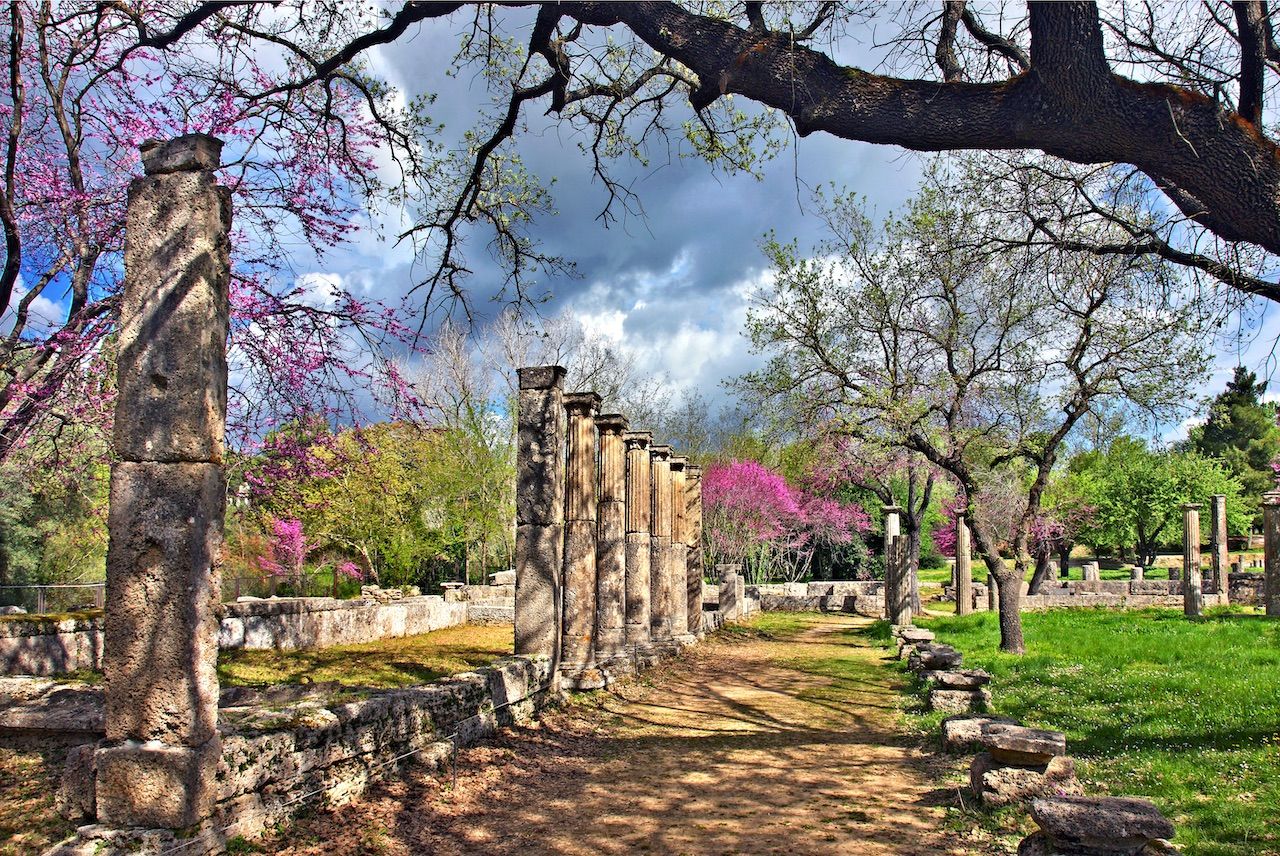
"Ancient Olympia in the western Peloponnese is the origin of the Olympic games. At about a four-hour drive from Athens, this is a much longer day trip, but you won’t regret the extra effort. A 443-foot-tall chryselephantine statue of Zeus, known as one of the seven wonders of the ancient world, used to stand here until it was destroyed in the 5th century AD.Go to the Archaeological Museum of Olympia to see the renowned marble sculpture of Hermes of Praxiteles, an ideal representation of classical beauty and technique. Also, the museum has the richest collection of copper objects in the world. Visit the stadium and the Temple of Hera, which may have lost much of its glory now, but it is one of the oldest Greek monuments. Every two years at the temple’s altar, the Olympic flame is lit to start its journey around the world before it reaches the host country of the Winter or Summer Olympics. Note that the opening hours of the archaeological site differ from summer to winter. A one day-ticket will give you access to the site with over 30 monuments, as well as to three different museums." - MATADOR_NETWORK
Absolutely fantastic experience as we were one of only a few tourists within the exceptionally well restored ruins on a cold January morning. Had the stadium entirely to ourselves where I won the 10 m dash (with no competition) 😎 Absolutely do not miss the archaeological museum, it was well worth it and included in the entry fee for the archaeological site. Did not visit the historical museum.
Anders J.
Google
Splendid! Such a beautiful place.
The ancient site is very impressive and the museum is worth visiting.
Arrive early to avoid the crowd(the tourist and school buses starts rolling in around 11am) and allow yourself a couple of hours as it is big.
Entry is €20 per person, but every 1st Sunday of the month is free! 😉
Arnaud L.
Google
Impossible to describe the weight of history of this place… the road to reach Olympia might be a bit long but the reward is here: the actual place where Olympic Games were invented ! No need to take a guide, everything is well explained by the written indications. Running 100 m in the antique Olympic stadium is an unique experience. Expect 2 hours minimum to visit the site and one more hour for the museum.
Noeleen N.
Google
Beautiful. Very interesting historical cite with affordable ticket pricing. The accompanying meusems was also great. Just check times in winter months as they close earlier in some museums. Lots to see!
Chris T.
Google
A must visit when visiting the peloponnese, has so much history and great things too see. I went because my wife is really into old things but as a neutral I found the place fascinating with information boards all around the site telling you what each rock was and what it was for.
The tickets are well priced for what's included and will take up 3 hours or more of your day. There's also plenty of shaded areas as it does get hot in the sun.
Jelle
Google
Very interesting to see, where the Olympics originated (both the historical site itself as the two museums)
One about the history of the site, the other one about the history of the (old) Olympic Games.
With one ticket you can visit all three locations. It is a walkable distance from each other.
As for the archaeological site... amazing!!!
Lisa K.
Google
We spent hours here. It's absolutely amazing. We first came on the August full moon but due to local fires it was closed. We spent 3-4 hours in the 2 museums and we had about an our in the archaeological site, we could have done with at least another 30 minutes at least. It really is impressive and a must for visiting.
The ticket for the 2 museums and site costs 20 euro per person. Children were free.
You can purchase your tickets at all 3 places and where ever you buy it that's where you have to enter first.
Eirini M.
Google
One of the worlds’ most visited monuments. It is an experience not to miss. Tip:you may also find 3D binoculars/ augmented reality somewhere in town (we didn’t know but we saw many people using them) to help you understand how the building used to be in ancient times.