Mike N.
Yelp
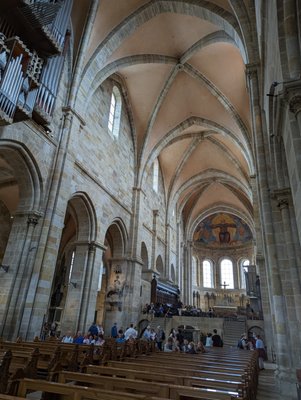
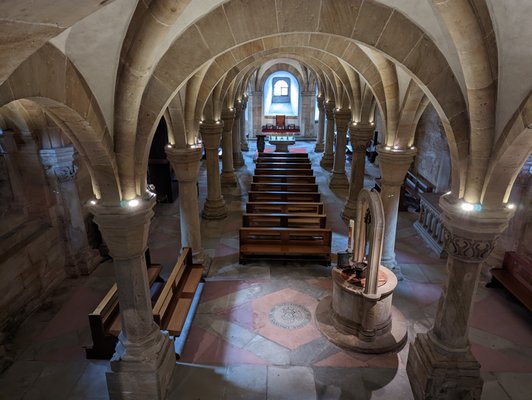
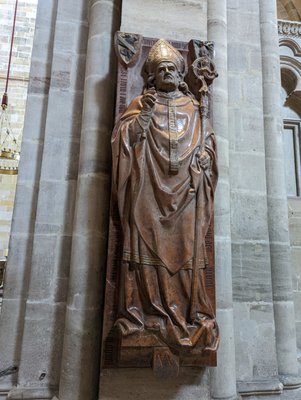
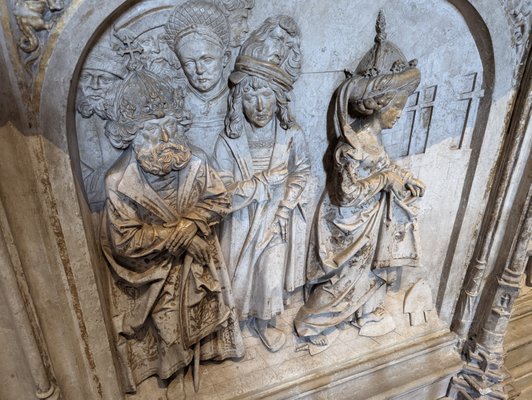
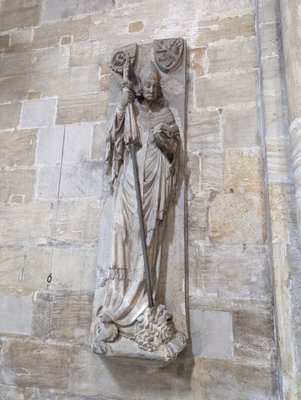
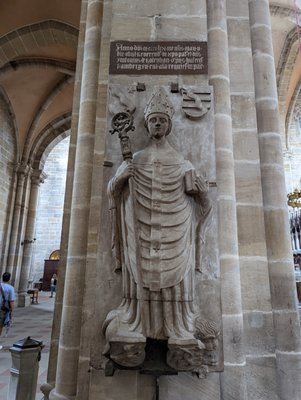
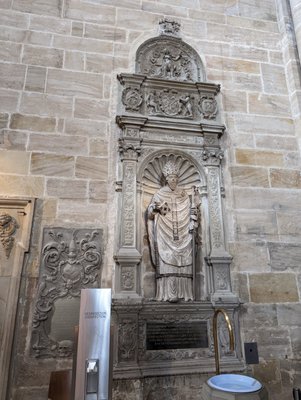
With more than 1,000 years of history, this cathedral is simply magnificent. A "Castrum Babenberg" existed on the Domberg (Cathedral Hill) and was mentioned in 902 for the first time. It was founded in 1002 by King (and later crowned as the Holy Roman Emperor by pope Benedict VIII in 1014) Heinrich (Henry) II and consecrated in 1012. Emperor Heinrich II died in 1024, and his wife empress Kunigunde in 1040. With the tomb of the couple, the cathedral contains the remains of the only imperial couple that was canonized. The second bishop Suidger of Bamberg was elected as Pope Clemens II. in 1046. His last resting place in the Bamberg Cathedral is the only preserved tomb of a pope in Germany and north of the Alps.
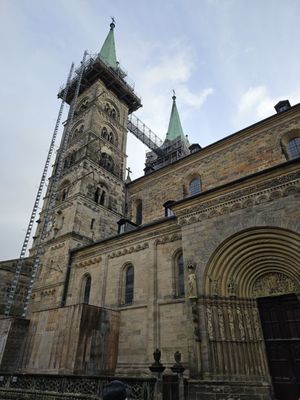
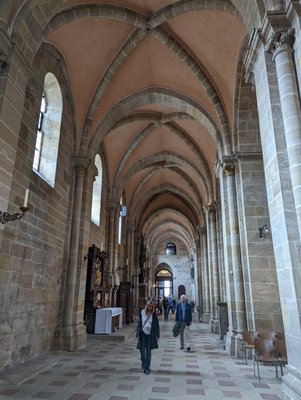
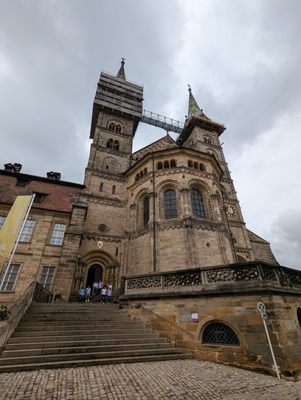
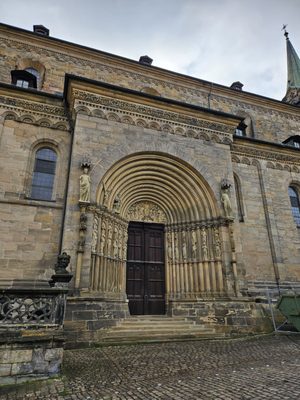
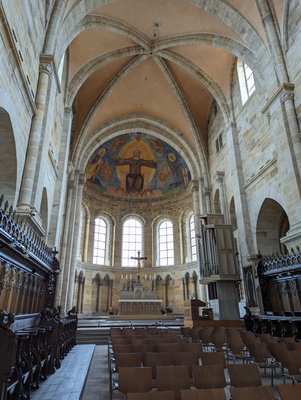
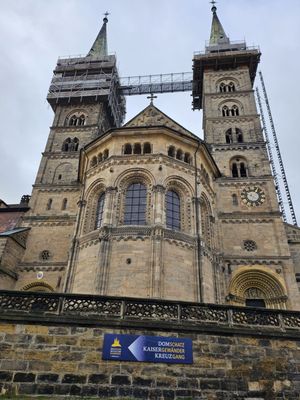
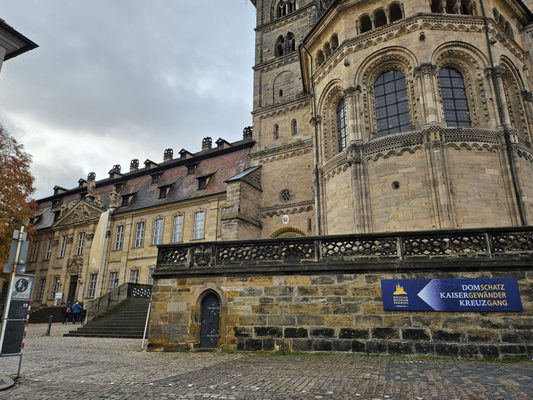
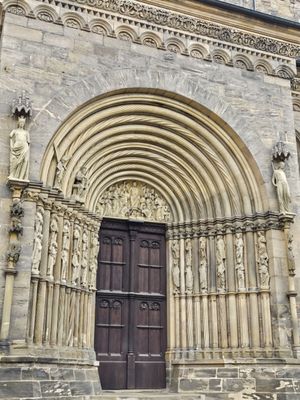
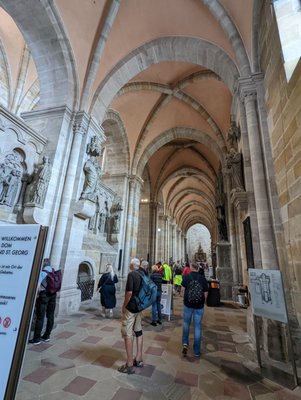
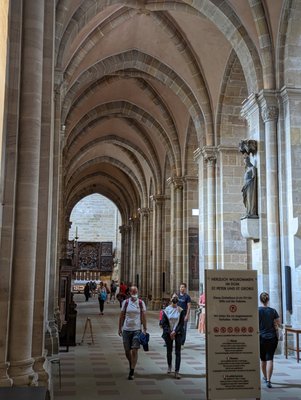
After the first two cathedrals burned down in the 11th and 12th centuries, the current structure, a late Romanesque building with four large towers, was built in the 13th century.
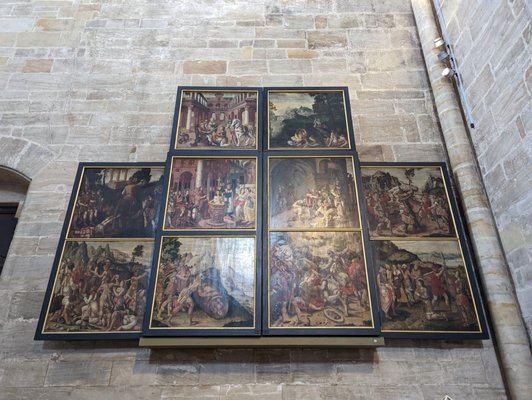
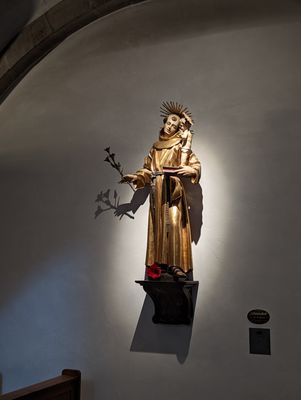
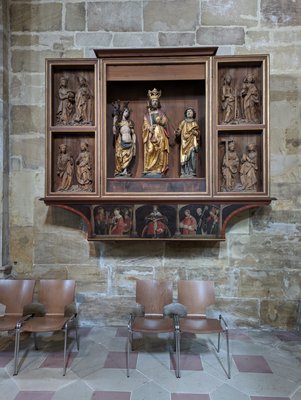
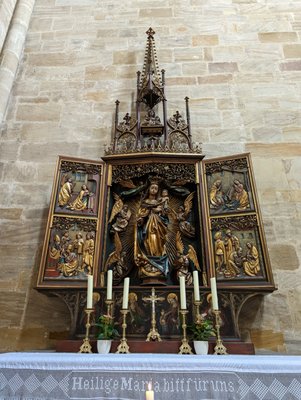
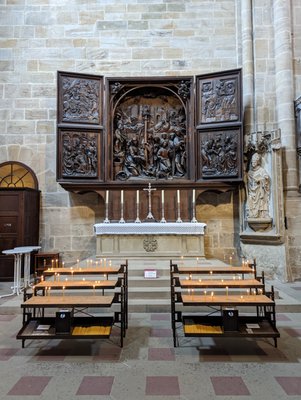
The cathedral is about 94 m long, 28 m broad, 26 m high, and the four towers are each about 81 m high. It contains many works of art, including the marble tomb of the Emperor Heinrich II and his wife, the Empress Kunigunde, considered a masterpiece of the sculptor Tilman Riemenschneider, and carved between 1499 and 1513.
Another well-known treasure of the cathedral is an equestrian statue known as the Bamberg Horseman (German: Der Bamberger Reiter). This statue, possibly depicting the Hungarian king Stephen I, most likely dates to the period from 1225 to 1237.