Basílica de Sant Feliu
Basilica · Girona ·

Basílica de Sant Feliu

Basilica · Girona ·

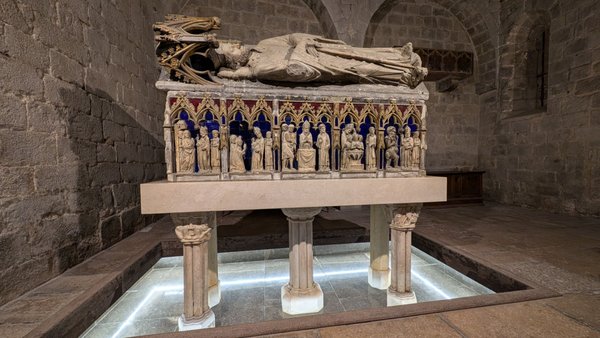
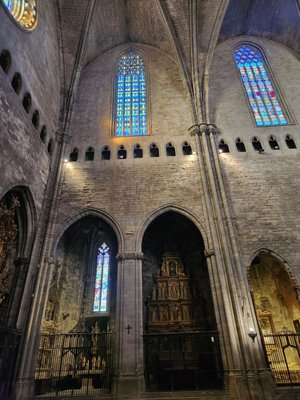
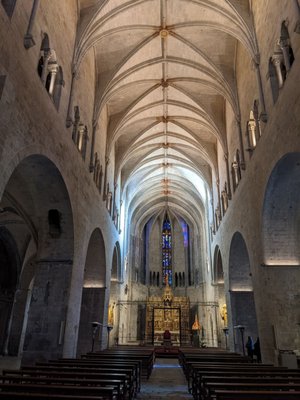
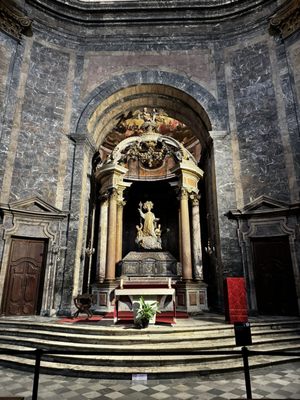
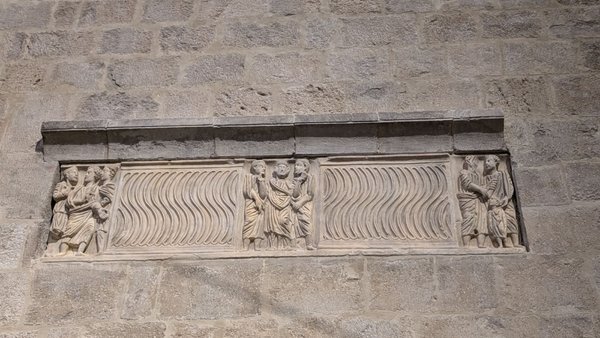
Romanesque, Gothic, and Baroque architecture with sarcophagi
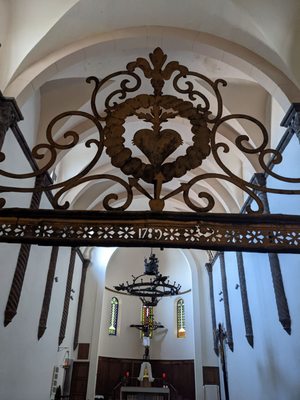
Basílica de Sant Feliu by null

Information

Carrer Trasfigueres, 4, 17004 Girona, Spain Get directions

Information

Static Map

Carrer Trasfigueres, 4, 17004 Girona, Spain Get directions

+34 972 20 14 07
catedraldegirona.cat
@patrimonicatedraldegirona

Features

Last updated

Dec 14, 2025

Powered By

You might also like

Terms of Use • Privacy Policy • Cookie Policy
 © 2025 Postcard Technologies, Inc.
@nomadicmatt
6,681 Postcards · 1,174 Cities

10 Things to See and Do in Girona, Spain (Updated 2025)

"Visible from many spots around Girona, the Basilica de Sant Feliu is an eye-catching Gothic church that almost looks like a castle; it was the first cathedral in Girona and remained the only one until the 10th century. Inside are historic works of art, including a 14th-century sculpture of Christ and Christian and non-Christian sarcophagi dating to the fourth century. Admission is 7.50 EUR." - Matthew Kepnes

https://www.nomadicmatt.com/travel-blogs/things-to-see-and-do-in-girona/
Basílica de Sant Feliu

Przemyslaw K.

Google
Visiting the Basilica of Sant Feliu was one of my favorite moments in Girona. It sits just below the cathedral, but in many ways it feels even more ancient and authentic. Knowing that the first church here was built in the 4th century, over the tomb of Saint Feliu, makes the place feel truly special. You can see the layers of history in every stone. The mix of styles is beautiful: the solid Romanesque base, elegant Gothic arches, and touches of Baroque detail show how the church evolved over hundreds of years. The bell tower is stunning up close — slender and graceful, rising high above the old town. Inside basilica is very calm. I loved the collection of Roman and early Christian sarcophagi, carved with such detail that they almost feel alive. The main altar, where the relics of Saint Feliu rest, has a quiet, sacred atmosphere that’s easy to feel even if you’re not religious. It’s a place that combines history, beauty, and peace in a very natural way. Tickets cost only €12 and includes entrance to nearby cathedral and art museum. Audio guides available if you want to know the place better and more detailed.

James B.

Google
Girona, Spain, I was completely captivated by its medieval charm. Wandering through the old town… narrow stone alleyways, ancient archways, and The Girona Cathedral was especially breathtaking. It’s grand staircase and imposing façade are stunning in person. This I recall from GOT. As a fan of Game of Thrones, exploring the old town was cool. Many parts of the medieval center and the cathedral steps were filming locations. Girona’s medieval center offers the perfect blend of history, atmosphere, and fantasy. A must-visit for anyone who loves architecture, culture, or Game of Thrones

Lotte Van C.

Google
Its incredibly beautiful... in my opinion its way cooler on the inside then the cathedral. The tickets are quit cheap. If you're in Girone you HAVE to go check this place i swear its breathtaking 😍.

Kevin I.

Google
Sat across the street to have lunch and found the Basilica very nice to look at. Some missing or destroyed parts on top of the right side tower. I did not enter.

Elizabeth K.

Google
I took an audio guide in Spanish, and my husband took one in English. It was very convenient and interesting! There were few people, I recommend going on a weekday.

Steven S.

Google
Probably more photographed than the cathedral because of the cool spire. Don’t miss visiting it.

Pasha

Google
Very nice local church ⛪️

Jiri K.

Google
The Basílica de Sant Feliu is a wonderful addition to the Girona Cathedral, and when combined with the charming old city, they form a beautiful Girona panorama. With its picturesque setting among narrow, shady streets, charming cafes, and shops, it offers the perfect opportunity to enjoy a lovely time in Girona.
google avatar

Rohan D.

Yelp
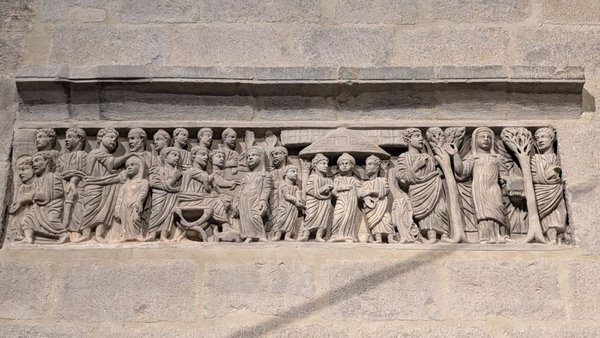
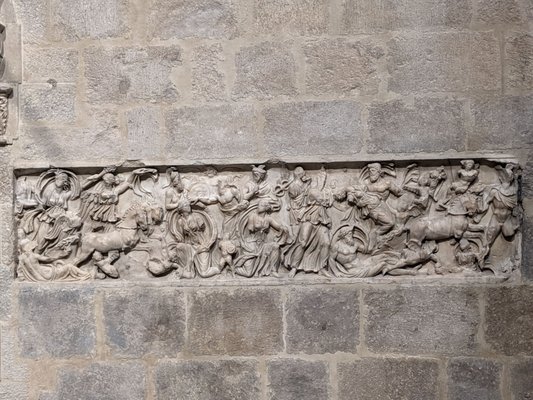
This truly amazing Romanesque cathedral is the centerpiece of this well preserved, living, 10th century Catalan village. The first time I came to Barcelona I missed Girona as a day trip and now that I've been here I insist if you're in Catalonia you simply must experience this. A full day maybe two. The massive church is not just Romanesque, there are Gothic and Baroque elements. There are 8 pagan and early Christian sarcophagi (the 4th century), the recumbent Christ dates back to the 14th century by sculptor Aloi de Montbrai. It's just breathtaking. There is an admission fee, I can't remember what it was because a visit here is truly a priceless experience. It is up a steep climb but just take your time, rest a bit, climb on. Do not miss this.
google avatar

Amy L.

Yelp
We weren't very impressed as compared to the cathedral. Yet, the sarcophages from the 3rd century near the altar were quite interesting - get an audio guide, otherwise it hard to figure out what's shown there.
google avatar

Shayla B.

Yelp
A beautiful church that was once known as Girona's only cathedral up until the 10th century. It's well known for its' gothic structure, interior artwork, and slim bell tower. The church is named after and dedicated to St. Felix of Girona. I did a walking tour of Girona and the Basilica of Sant Feliu was one of the highlights. It isn't nearly as popular or as crowded as the nearby Girona Cathedral, but it still holds a great significance to the city. I did not get to tour the inside of the church, but the facade is charming enough to warrant a visit even if you don't go inside. If you're able to embark on a guided walking tour of the city, you'll learn a lot about the history of the church. Since Girona is small, most tours include the Basilica of Sant Feliu and you'll be able to walk through most of the downtown area in one day. It's worth a stop and at least a walking tour if you're planning to explore Girona.
google avatar

Ann G.

Yelp
A must visit when in town. Gorgeous Basilica, excellent audio guide, and steps from the Catedral. Buy the combo ticket to tour both landmarks.
google avatar

Michael S.

Yelp
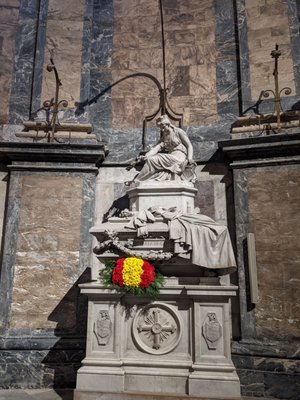
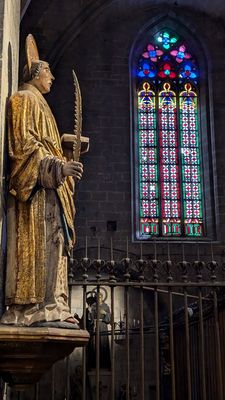
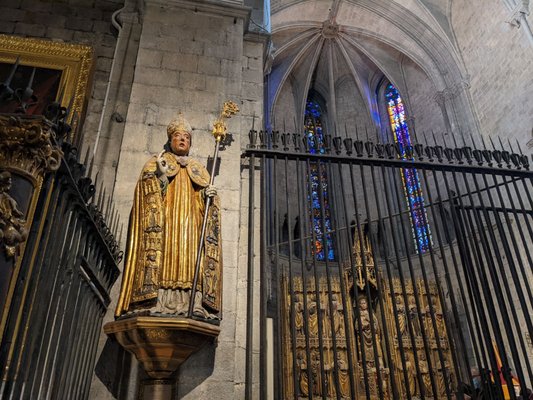
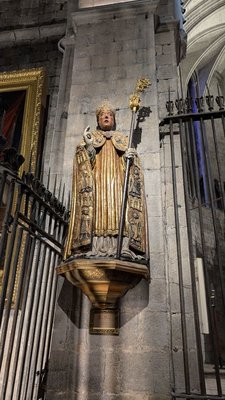
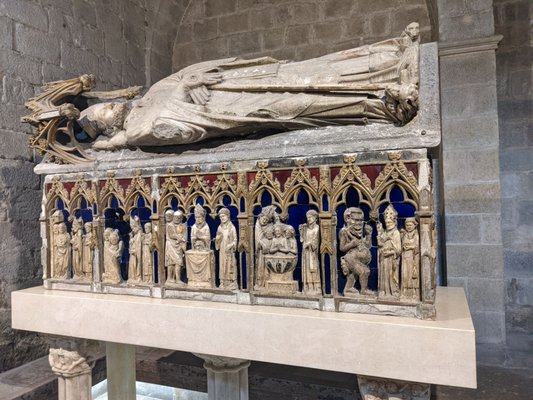
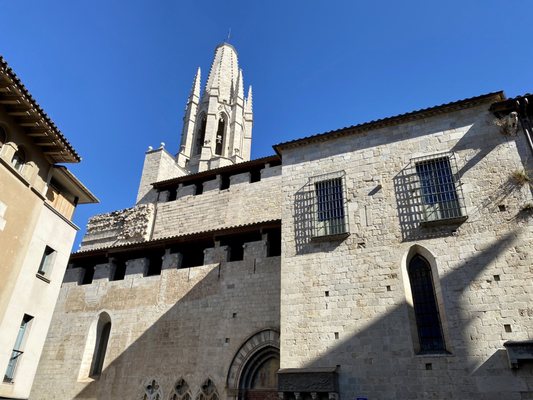
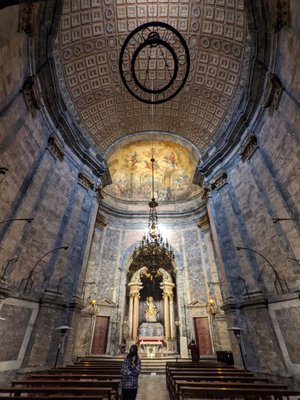
Basílica de Sant Feliu stands on the banks of the Riu Onyar (Onyar River) in Girona like a guardian and beacon for this historic Catalan city. It is often ranked as the city's 2nd most iconic church (after nearby Catedral de Girona) even though Sant Feliu is actually Girona's oldest cathedral going back to before the 10th century. The history, serenity, and architecture all were inspirational and worth the 7€ admission fee including an audio guide. Construction of the current church began in the 1300s. The mix of architectural eras and styles at Sant Feliu include its landmark bell tower constructed from the 14th to 16th centuries, gothic nave with ribbed vaulting and baroque façade added in the 18th century. Two saints are highlighted throughout the basilica: Saint Felix (Sant Feliu) and Saint Narcissus (Sant Narcís) whose baroque marble and jasper chapel was added from 1782-1792. Catalan Saint Felix of Girona was martyred in 304 in the city while traveling from Carthage with Saint Cucuphas as an early christian missionary. His feast day is celebrated August 1st. Meanwhile, October 29th is the Saints Day of Sant Narcís who is considered the patron saint of the Girona. His 1328 sepulchre for his remains displays him reclining and scenes from his life. His tomb was smashed in 1285 when French invaders broke into the church; however, the city was saved when flies came out of the tomb to kill thousands of French soldiers and horses. Legend has it that St. Narcissus protected the city twice more from France in 1653 and 1808. In Basilica Sant Feliu, You'll also find eight Roman 2nd-4th century early christian sarcophagi, the tomb of the valiant Álvarez, and numerous altars, paintings, and sculptures including the Recumbent Christ from the 14th century by Aloi de Montbrai and paintings of Manuel Tremulles. In May 2011, Pope Benedict XVI bestowed the title of Minor Basilica on the church. Services are held Sundays and holidays, but visitors can explore the basilica from 10:00 a.m. - 5:30 p.m. daily except Sundays which opens at 1:00 p.m.
google avatar

David J.

Yelp
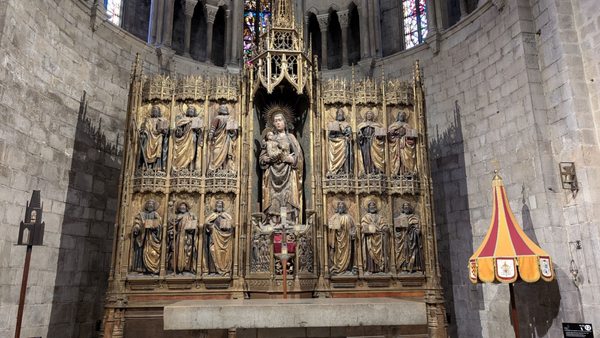
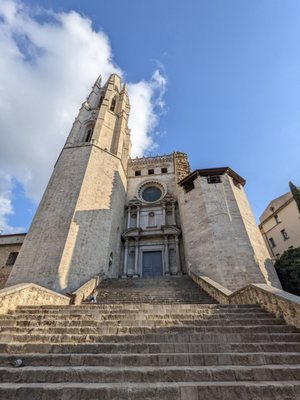
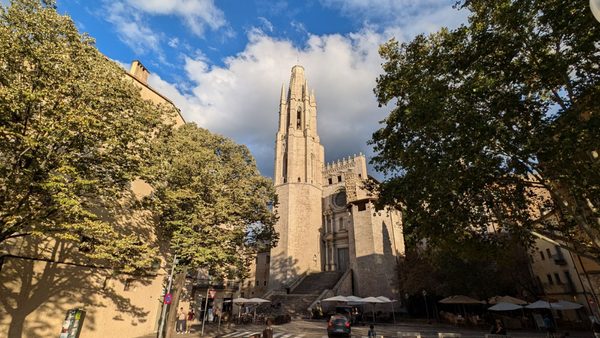
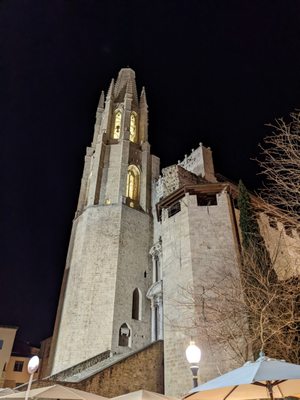
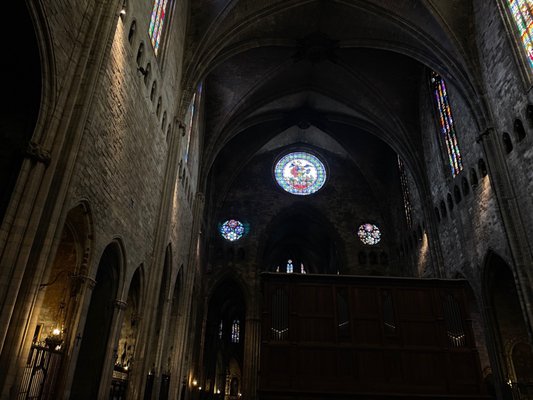
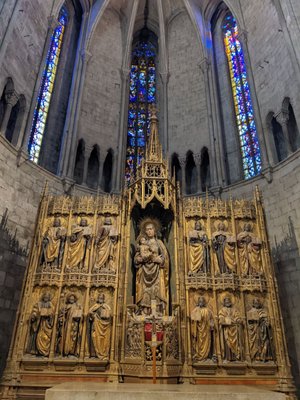
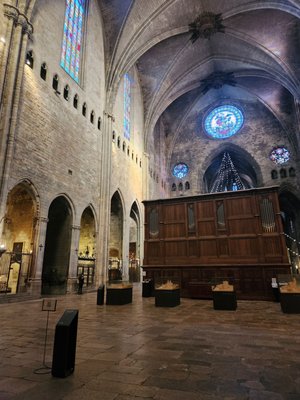
Aside from the Cathedral, the other major landmark on Girona's old city area is the church of Sant Feliu. Unusually for a Spanish church, the church has an impressive Gothic spire, albeit truncated, after the upper part collapsed in the 17th century. History The church was built on the grounds of an ancient cemetery on the route of the Via Augusta. The church is named after St Felix, whose remains were allegedly found in the churchyard. The church also contains relics of St Narcis, patron saint of Girona. The church contains elements from Romanesque to the Baroque periods, although most of the present structure dates from the 13th century onwards. The building The front (West) façade is dominated by the tower, which rises in stages to its truncated spire and on the right, an unusual fortified tower. The frontage decoration dates from the late 15th century and is in a restrained classical style, rising to a large rose window. The interior is dark and gloomy, largely thanks to the fact that the church was built to be heavily fortified, as it stood adjacent but outside the city's defences. Most notable are the early Roman pagan and Christian sarcophagi in the walls of apse, but the 16th-century altarpiece and a 14th-century alabaster reclining Christ are also worth a look.