Kento M.
Google
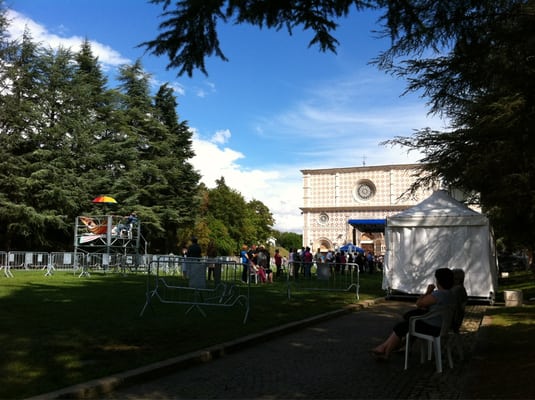
The Basilica di Santa Maria di Collemaggio, rising just outside the walls of L’Aquila, is one of the most beautiful and historically significant churches in central Italy—a masterpiece of medieval Abruzzese architecture and a timeless symbol of faith, humility, and forgiveness.
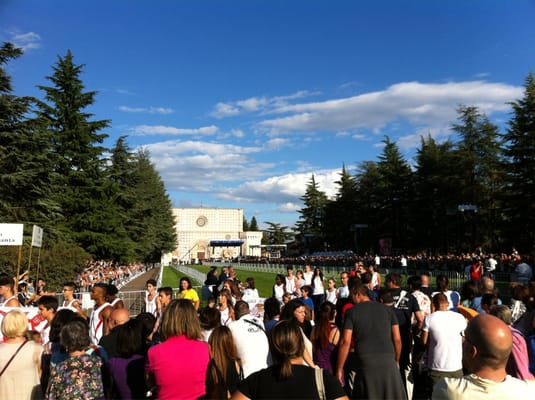
Founded in 1288 by the hermit Pietro da Morrone, who would later become Pope Celestine V, the basilica was built after he experienced a divine vision of the Virgin Mary on the hill of Collemaggio. On August 29, 1294, it became the site of his papal coronation—the only pope ever crowned outside Rome—and it was here that he instituted the Perdonanza Celestiniana, the first plenary indulgence in history, predating even the Jubilee Year of the Catholic Church. Since then, every year on August 28–29, thousands of pilgrims pass through its Holy Door (Porta Santa) seeking spiritual renewal and forgiveness.
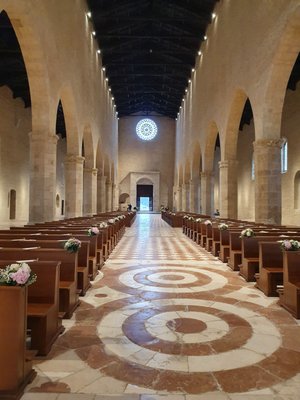
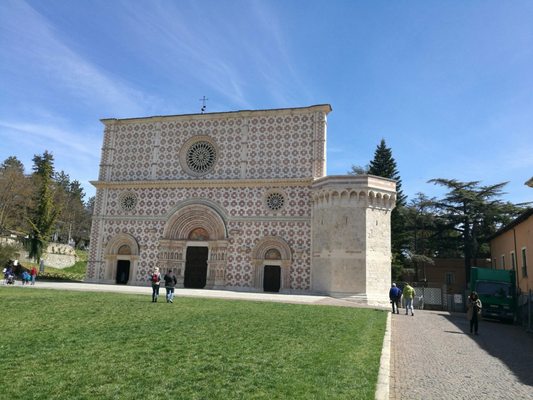
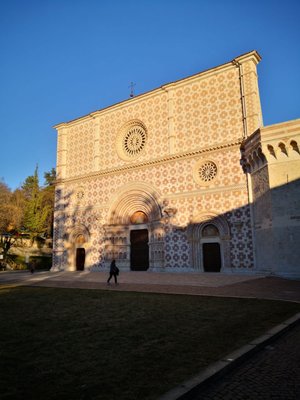
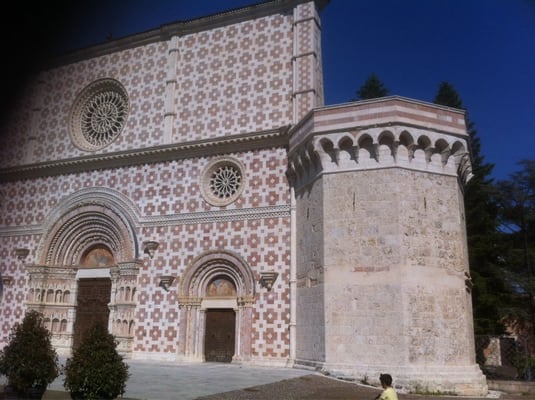
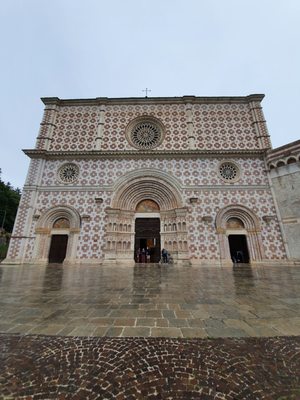
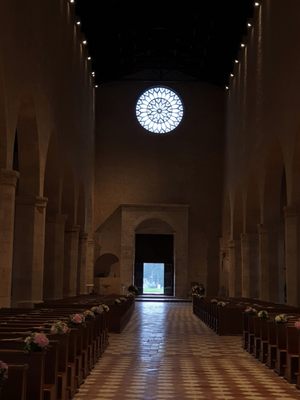
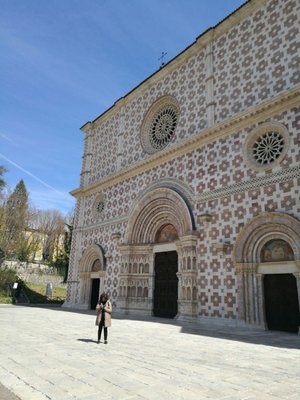
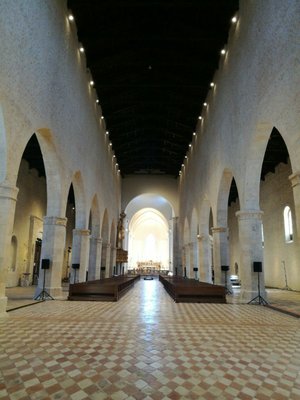
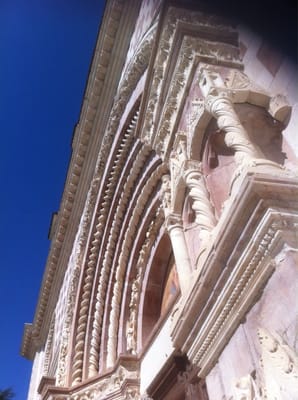
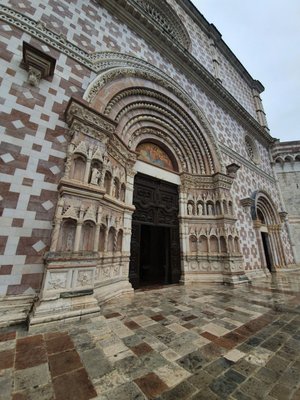
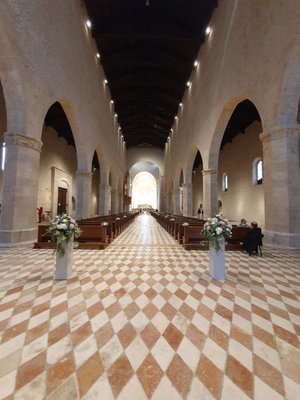
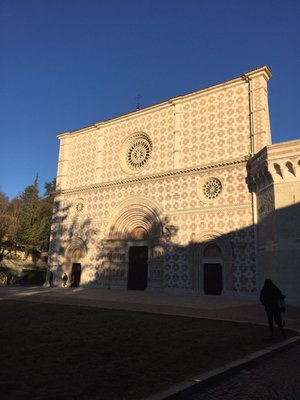
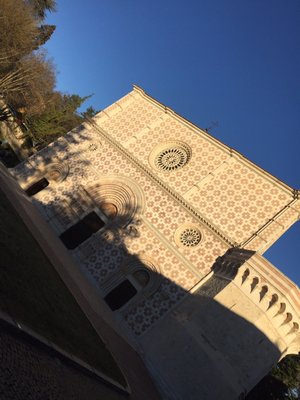
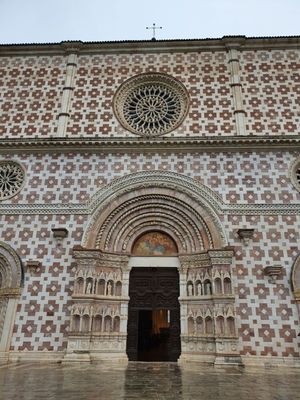
The basilica’s façade is one of Italy’s most distinctive: a geometric tapestry of pink and white limestone, arranged in diamond and square patterns, with three rose windows symbolizing the Holy Trinity. The central portal, richly carved with floral and symbolic motifs, opens into a vast interior of serene simplicity—three naves divided by octagonal pillars, a stone floor mirroring the pink-and-white geometry of the exterior, and soft light filtering through narrow Gothic windows.
Inside lies the tomb of Pope Celestine V, an exquisite Renaissance monument sculpted in 1517 by Girolamo da Vicenza, and numerous frescoes from the 13th to 16th centuries depicting Marian scenes and episodes from the saint’s life. The Holy Door, located on the left side of the church, is adorned with a lunette fresco of the Virgin and Child with Saints John the Baptist and Celestine V, a constant reminder of mercy and redemption.
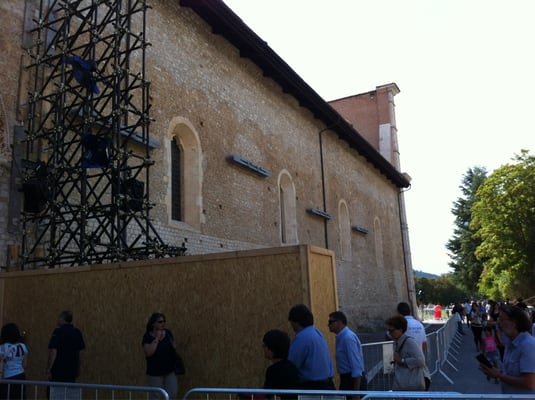
Although the basilica was gravely damaged in the 2009 L’Aquila earthquake, it was meticulously restored and reopened in 2017, its reconstruction hailed as a model of heritage preservation and even awarded the European Heritage Award / Europa Nostra Prize in 2020. Today, Santa Maria di Collemaggio stands not only as a spiritual sanctuary but also as a symbol of resilience and rebirth—its luminous stones reflecting both the enduring faith of its founder and the unbroken spirit of the people of L’Aquila.