Chris I.
Yelp
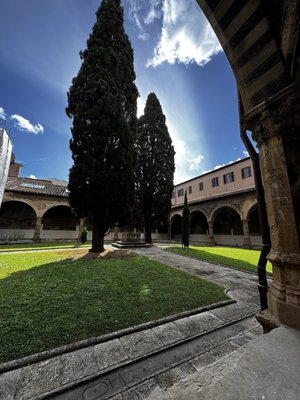
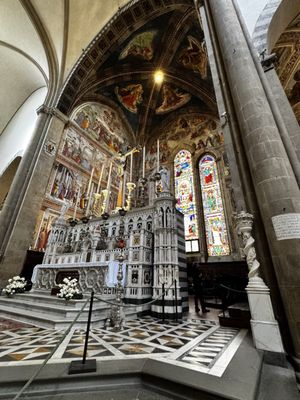
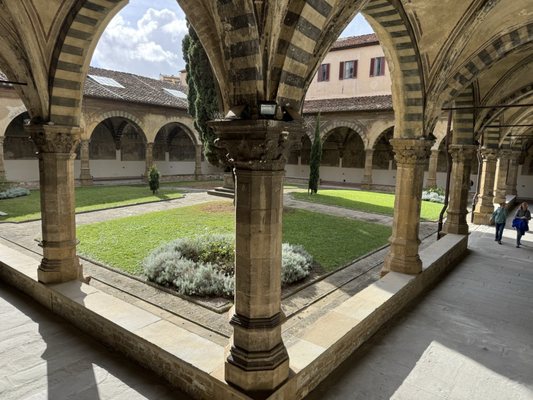
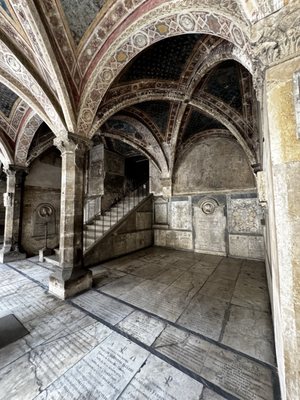
BASILICA DI SANTA MARIA NOVELLA On the original site of the Dominican 'Santa Maria delle Vigne', the building of this magnificent church started in the middle of the 13th century, lasting for some hundred years. It is situated opposite the eponymous ;-) train station serving central Florence and stands facing one of the largest piazzas in town.
Photo link: http://i221.photobucket.com/albums/dd76/Textklick/Qype%20pix/47b43907.jpg
One in fact that noted translator Longfellow (The Divine Comedy) described as the mecca for foreigners.
Photo link: http://i221.photobucket.com/albums/dd76/Textklick/Qype%20pix/2f27e82e.jpg
Once the builders had finished, the 'decorators' moved in and in the main chapel alone, they included names such as: Baccio D'Agnolo
Bronzino
Giotto di Bondone
Tino di Camaino
Nardo di Cione
Duccio
Lorenzo Ghiberti
Domenico Ghirlandaio
Filippino Lippi
Benedetto da Maiano
Tommaso Masaccio
Nino Pisano
Paolo Uccello
Giorgio Vasari and
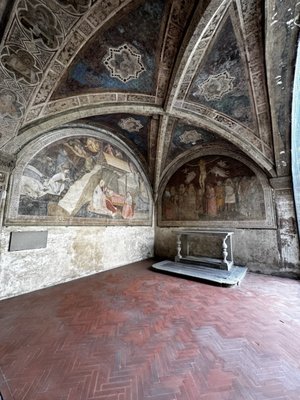
Michelangelo. What disappoints me is the fact that photography is not allowed, although that is a reasonable request, given the fact that these magnificent frescoes have survived so long. Unlike paintings, frescoes are a subtle and sensible idea. Apart from anything else, they cannot be stolen (well at least not physically).
Photo link: http://i221.photobucket.com/albums/dd76/Textklick/Qype%20pix/f3914882.jpg
Together with the stained glass windows and other masterpieces, they are breathtakingly beautiful. Do visit and when there, also check out the Spanish Gallery in the chapter house. It was closed when we visited (another excuse to visit Florence yet again) and I have it on very good authority that the Spanish Chapel is really worth seeing. See also Wikipedia: http://en.wikipedia.org/wiki/Basilica_of_Santa_Maria_Novella