David J.
Yelp
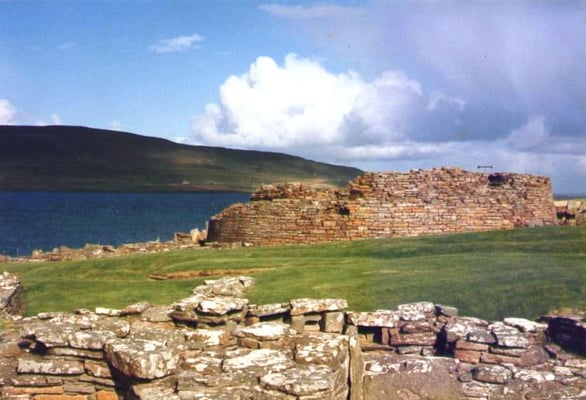
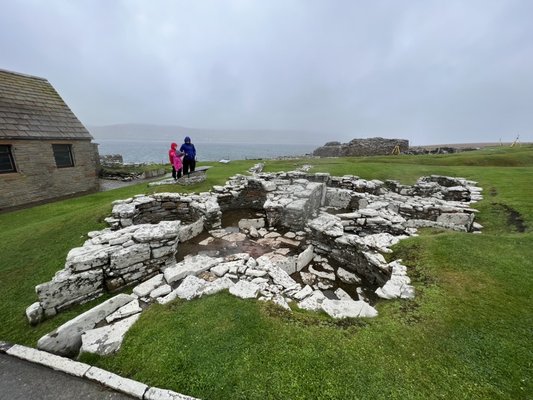
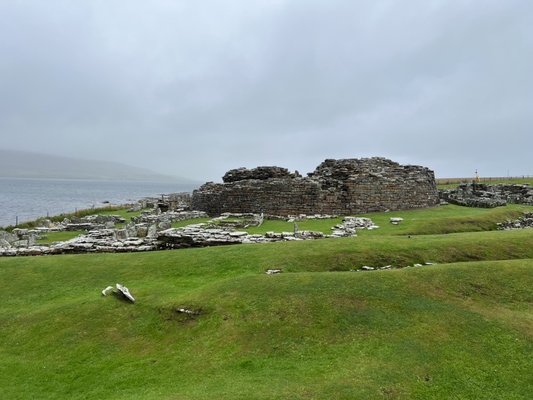
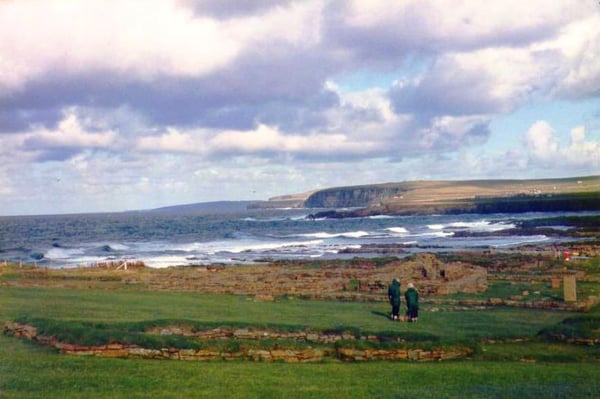
This is a ruined Iron-Age broch and associated prehistoric village from around the first or second century BC, with an absolutely spectacular setting, at the end of a promontory overlooking Eynhallows Sound and the island of Rousay.
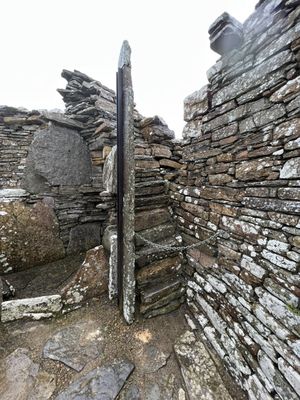
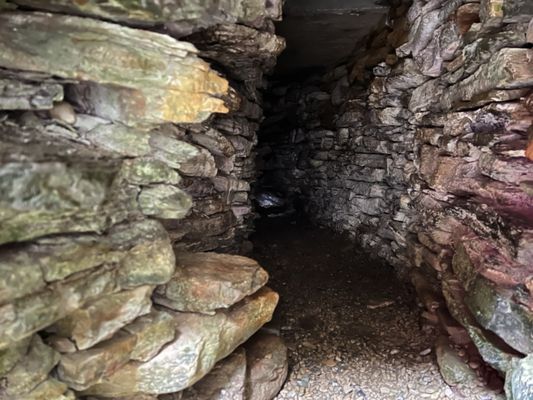
Brochs are unique to Scotland, and their exact function is still not precisely known. Essentially, a broch is a tower, originally about 10m high, with a double wall with passages in it, and a central area presumed to have been open to the air. The towers taper slightly to the towards the top, giving them a shape akin to power station cooling towers. There was usually a single, low entrance to the tower from the outside, and no windows to the outside, but small openings to the interior. Some of them are isolated, and others form part of iron-age villages, but are nearly always by the sea.
The most commonly accepted theory is that they were defensive structures, which could be easily sealed off from attackers: livestock would shelter in the central area, and the inhabitants in the spaces within the walls. As well as protection, their height may have provided a look-out function as well. Locations close to the sea were always vulnerable to pirates and other sea-faring enemies, so the locals would need somewhere to escape to quickly.
In the case of Gurness, the broch was part of a village complex, which also had an outer wall, and three ramparts for additional defence. The broch itself was probably about 8m (26ft) high, and 20m (65ft) in diameter, which is rather wider than the classic broch shape. The village may have had about 40 families at its peak, but had declined and appears to have been abandoned around 100AD. The stones were then taken from the broch for other buildings - a trend that appears to have been kept up throughout history, so that the broch is now only 3.5m high.
The site was then occupied by successive waves of immigrants, from the Scottish Picts in the 5th century, to the Vikings, who appear to have used the site for a burial. Thereafter, the site seems to have been left alone until the excavations in 1929 revealed the true extent of the site.
Facilities at the site are fairly basic: there is a car-park, and a small ticket-office and shop, with an interpretation display. Some of the site is accessible by wheelchair via the grassy slopes, but assistance is recommended, and it is not suitable in wet weather.
The site is 180m from the car park and, for those intrepid enough to get there by bus (route 96), it's a 45 minute walk from the village of Evie. There are also tours of this and other archeological sites organised from Kirkwall - enquire at Tourist Information. If you are driving, it is easy to make a day-long circuit of Orkney Mainland which takes in Maeshowe, Skara Brae, the circles at Stenness and Brodgar, and Gurness.