Carrière Wellington
Historical landmark · Arras ·

Carrière Wellington

Historical landmark · Arras ·

WW1 tunnels, WWI history exhibits, guided tours, and memorials

Carrière Wellington by null

Information

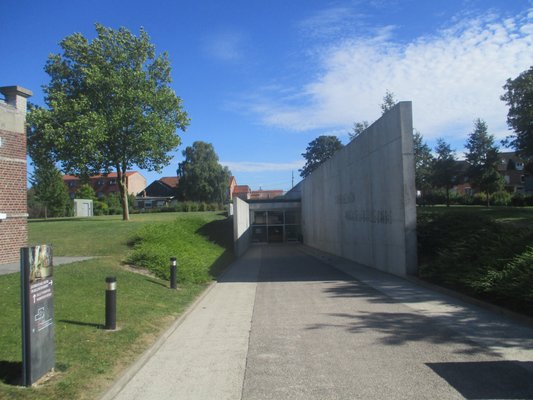
Rue Arthur Deletoille, 62000 Arras, France Get directions

Information

Static Map

Rue Arthur Deletoille, 62000 Arras, France Get directions

+33 3 21 51 26 95
carrierewellington.com
@carrierewellington

Features

wheelchair accessible parking lot
assistive hearing loop
wheelchair accessible entrance
wheelchair accessible restroom

Last updated

Nov 3, 2025

Powered By

You might also like

Terms of Use • Privacy Policy • Cookie Policy
 © 2025 Postcard Technologies, Inc.

Hamish M.

Google
A profoundly moving experience, the tour of the tunnels flowed effortlessly from start to finish, Merci Isabelle and our guide Mathais. A worthy tribute of rememberance to the Kiwis who worked underground to prepare for the 1917 Battle of Arras, a humbling experience that is sensitive to the memory of those men and to their living descendants. Thank you to everyone involved in preserving the history. Lest we forget.

Malcolm G.

Google
An excellent starting point if you are going to visit the various memorials in the area. The guided tour of the underground areas and the history explanation is detailed and very sobering to see what the soldiers went through over 100 years ago.

Melissa M.

Google
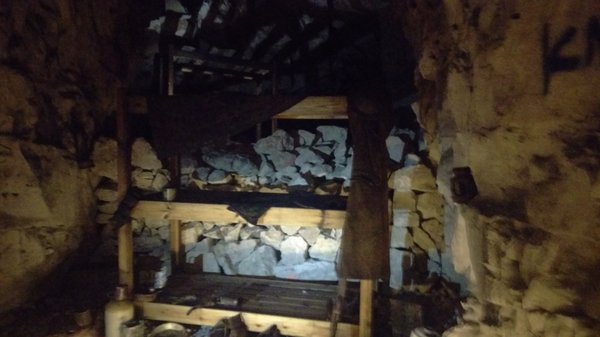
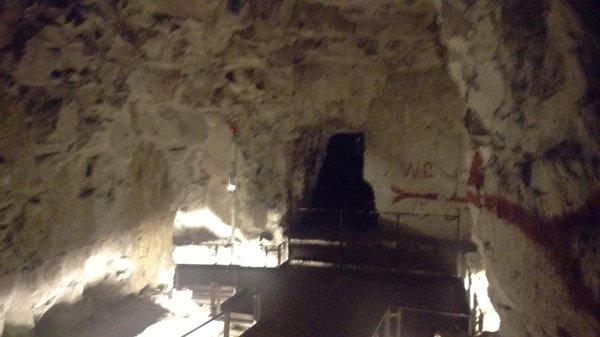
We had a tour guide named Manon who explained the Battle of Arras and how thousands of French and Brits worked to build the tunnel. We were brought underground and it was cold and dark, a combination of videos and sounds made the experience even more vivid. North France made a perfect world war tour

Dennis G.

Google
I highly recommend visiting this site. Especially for people interested in history and for those who lost a family member on that fateful day. For me, it was an emotional day as I was walking in the footsteps of my great grandfather who lost his life in the Battle of Arras. The guide was really good, however, I would have preferred if the tour was solely in English as opposed to bilingual, I felt we missed some points.

Peter C.

Google
Truly impressive ww1 tunneling site occupied by the Kiwis prior to the 1917 battle of Arras. Guided tour with an English speaking guide , the subterranean tour is fascinating, sad, and stunning all at once.

Kevin M.

Google
Very interesting tour. Our guide was knowledgeable, telling us about the preparation for and the Battle of Arras. Definitely worth it.

Dimitris

Google
Below the city of Aras there is an extensive network of underground galleries, known as "Les Boves". These tunnels, which later became shelters for soldiers during World War I, are a unique and historic underground world. Excavated from the Middle Ages (and possibly from Roman times), the tunnels under Aras were originally used as storage areas by merchants and provided the limestone needed for the buildings built there until the 19th century. From the autumn of 1916, special tunnels were being constructed to connect the old ones to each other so that they would be ready for battle. There were 500 of them, built by the New Zealand Tunnel Company, which exploited experienced British miners, as well as the so-called "Bantam Soldiers", who were relatively short for British soldiers. For four months, the workers dug in eight-hour shifts, 24 hours a day. By the morning of the Battle of Aras (April 1917), they had completed 20 kilometers of electrically lit tunnels. The tunnels were named after New Zealand"s capital, Wellington (Carrière Wellington) and eventually turned into more than just tunnels, housing large warehouses, meeting rooms, kitchens, toilets, a hospital and a small railway network. The individual tunnels were named after New Zealand cities, from north to south, so that soldiers could find their way underground. The network of underground tunnels stretched about 20 kilometers below the city and allowed soldiers to go directly to the front lines of the war. 24,000 soldiers were underground the night before the battle. Used both as shelters and for the movement of troops during the offensive, the tunnels contributed to the success of the Battle of Aras. Despite the many casualties - an estimated 158,000 Allied soldiers and about 120,000 Germans were killed - the sudden attack in April 1917 was generally regarded as a tactical success, leading the Allies to the final victory. During World War II, the tunnels were reused by locals as shelters against air raids before being resealed in 1945 and forgotten, until they were rediscovered in 1990. In 2008 the tunnels were opened to the public as part of a new museum dedicated to the memory of those who served in World War I, with a particular focus on the tunnel workers and soldiers who lived and fought under the city.

Nigel S.

Google
Visitor centre with gift shop and tours of part of the cave system below the city of Arras. The caves were originally medieval chalk pits but these were joined together in 1916/17 by a regiment of New Zealand army tunnelers, creating a cave system capable of housing 28,000 British troops and their supplies prior to the April 1917 Battle of Arras. The tour lasts approx 90 minutes and is excellent, interesting and evocative.