Mike N.
Yelp
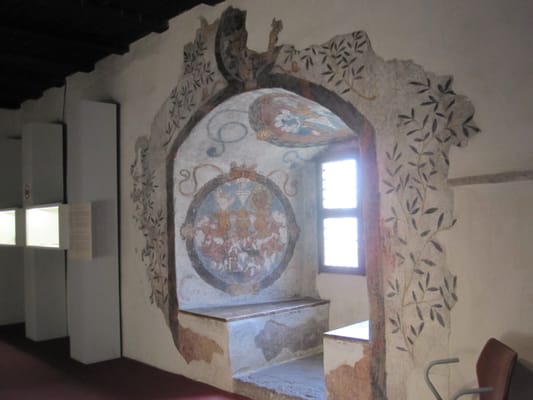
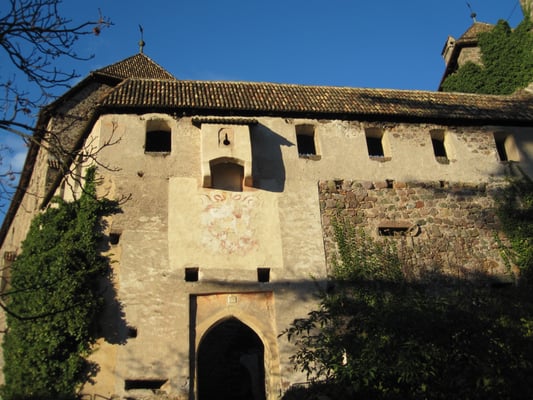
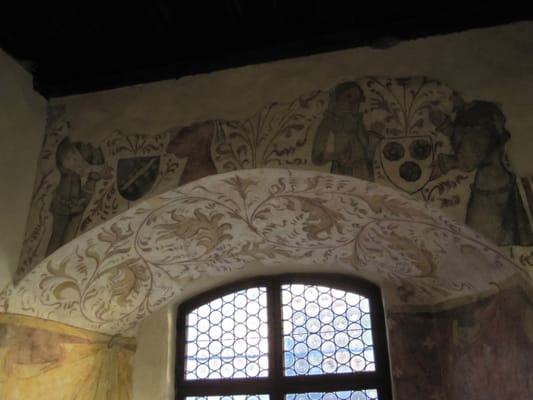
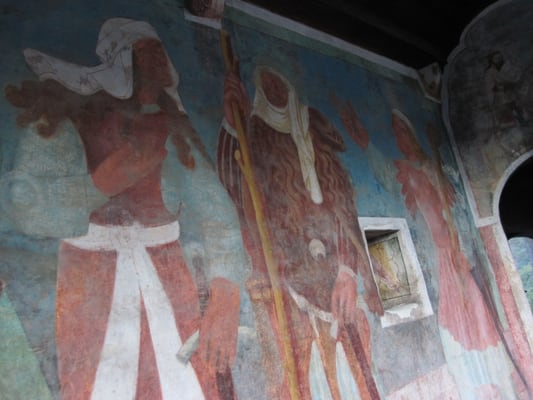
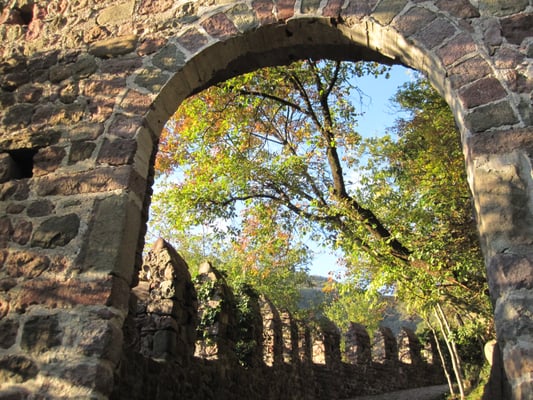
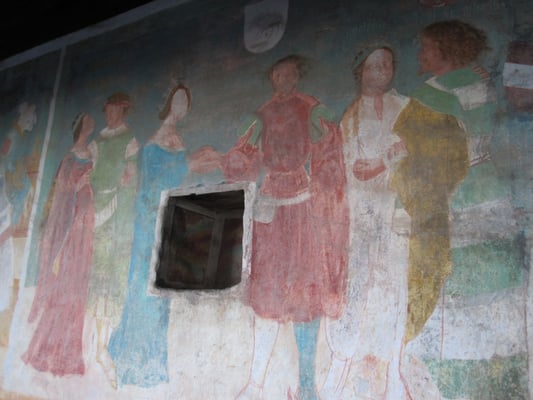
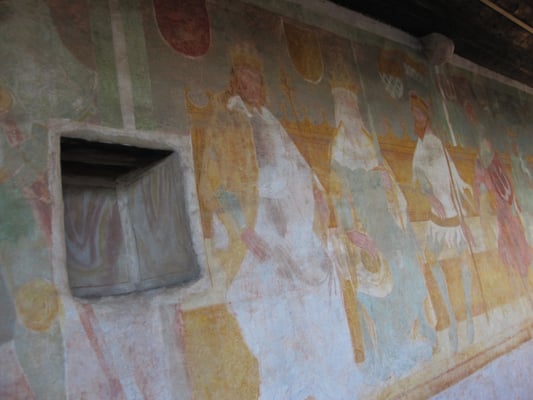
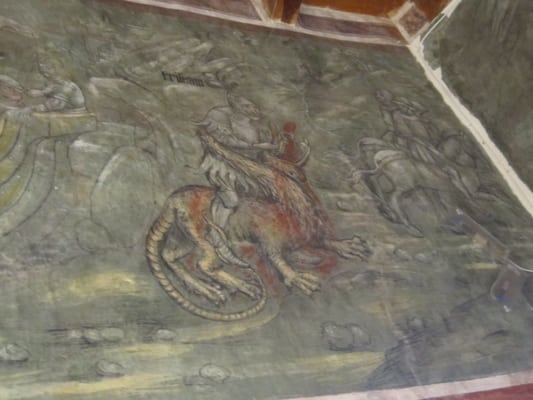
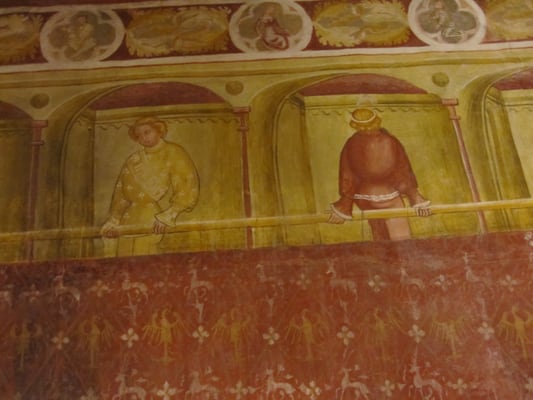
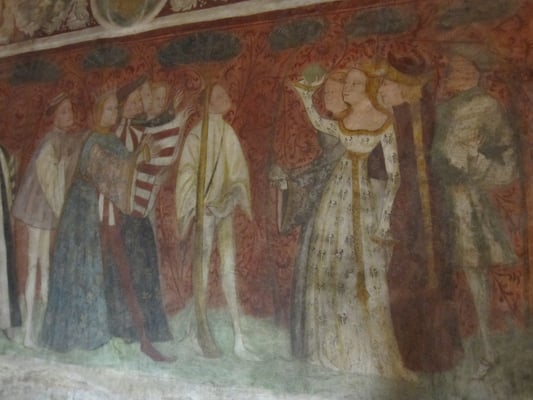
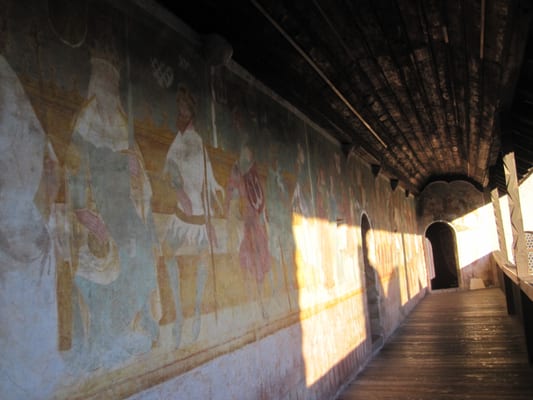
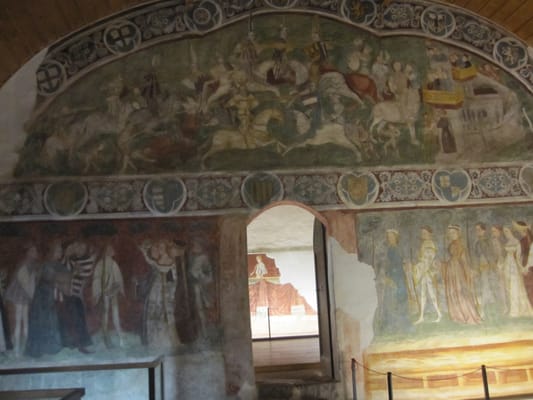
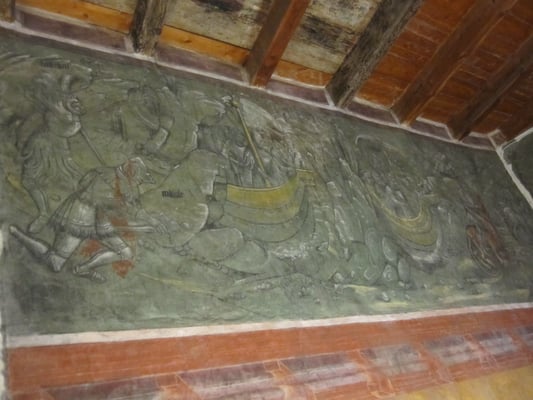
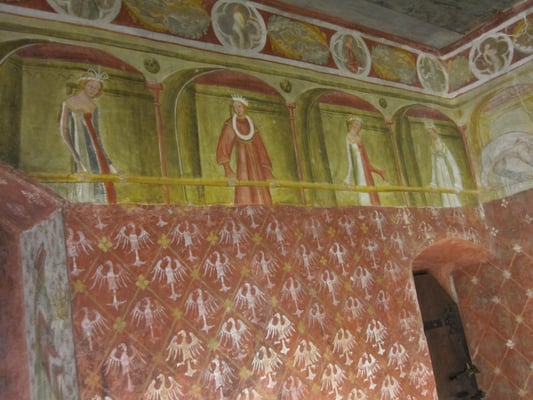
Schloss Rankelstein or Castel Roncolo is a medieval castle on the outskirts of Bolzano, Italy. It is located on a protected porphyry rock along the Val Sarentino Road. Castel Roncolo is particularly famous for its frescos dating back to Mediaeval times. It illustrates authentic knight sagas, literature scenes, court ladies and life on the farm as well as hunting scenes. There's also a castle tavern in the courtyard.
I was told there would be a shuttle bus from the city center to the castle parking lot (beneath the castle hill) by the hotel concierge (This turned out to be a misinformation. We were told when we made it to the castle, it was discontinued during the COVID pandemic, and it never got resumed). No problem, we just followed the trail next to the Talfer River, and enjoyed our two-hour easy hike (except from the bottom of the castle hill to the top; about 20 mins of climbing, I don't recommend strollers) to and from the castle. The trail besides the river turned out to be very pleasant. We saw some castles and mansions along the way, mountains in distance, we crossed the river on several bridges. I'd recommend this short easy hike.
Here's some history of the castle: In 1237, the original complex was built by the Lords of Wangen, and in 1385, the wealthy merchants Franz and Niklaus Vintler purchased it. This family had it decorated with frescoes and equipped with components that facilitated life in those times, e.g. a pivy and a cistern for water storage. From the 15th century on, it continually kept changing hands, the castle was repeatedly modified and frescoes and paintings were added. A gunpowder explosion in the southern part of the castle destroyed parts of it in 1520, including a circular wall and a donjon, which had to be reconstructed. In 1672, a lightning bolt caused a fire which destroyed the east part of Castel Roncolo, which has no longer been renovated. From the 18th century on, it was no longer inhabited and kept deteriorating. Only when Josef con Görres recognized the value of the frescoes and reported it to Ludwig I of Bavaria, architects and artists started examining the paintings. This continues to the present day.