David J.
Yelp
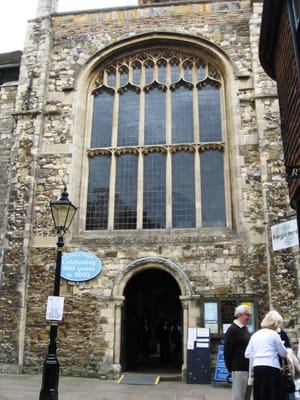
St Mary's stands at the very heart of Rye, atop the hill in the centre of the town and surrounded by the quaint streets and ancient houses for which this Cinque Port is known.
History
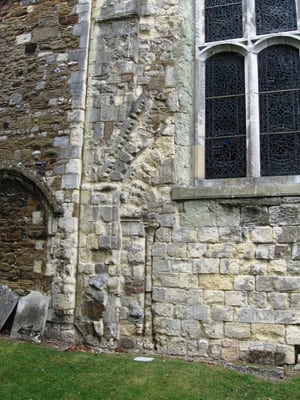
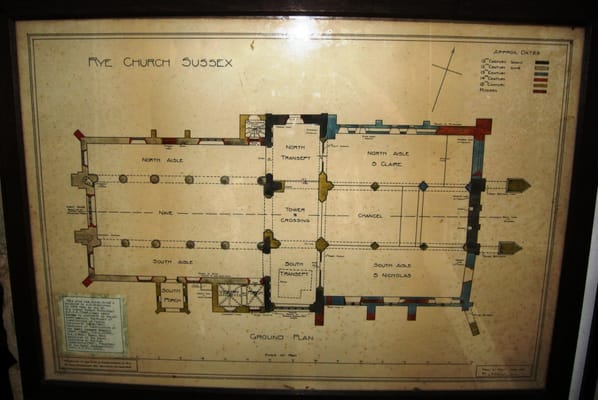
Although a church was almost certainly present before the Norman conquest in 1066, the present building dates from the early 12th century, where the transepts survive from a cruciform church probably similar in size to the present structure. The nave arcades were replaced early in the 13th century, and the aisles are from around the same period or slightly later.
The 13th century provided the chapels either side of the chancel, the north (Clare Chapel) being slightly earlier from around 1220. The 14th century provided porches to both aisles, as well as additional buttressing. A new south porch was added in the 15th century, the south and part of the north chancel arcades were renewed, and the present crossing and tower inserted. The main 16th century addition was the tower clock - inserted in 1561-2, it is one of the oldest still functioning in situ.
The town's turbulent history in the front line of the mediaeval wars with France is reflected in the church: during a raid in 1377, both town and church were burned (the nave walls still bear the scorch marks), the church roof collapsed and the French carried off the bells. These were later recovered from France by a reprisal raid, by the townsmen of Rye and nearby Winchelsea in 1378. Less happily, the authorities felt that the town had put up insufficient resistance to the French raiders and some of the leading townspeople who survived the attack were hanged and quartered as traitors.
The church
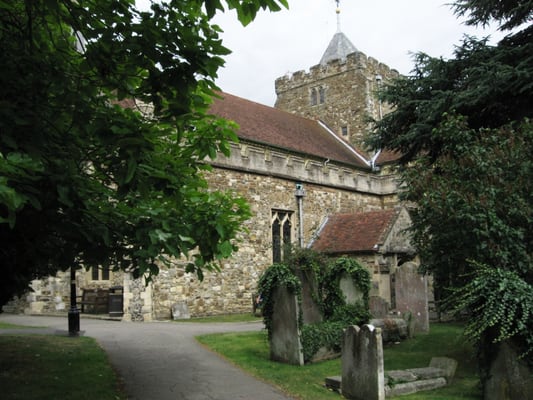
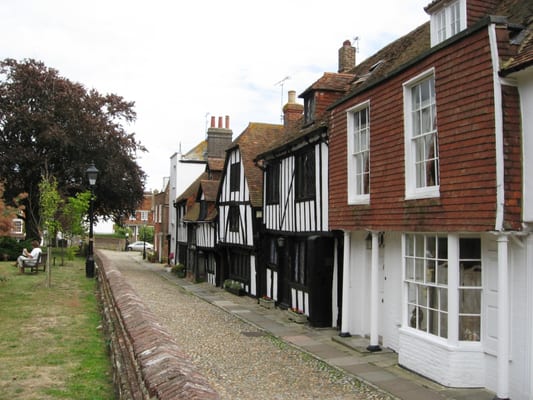
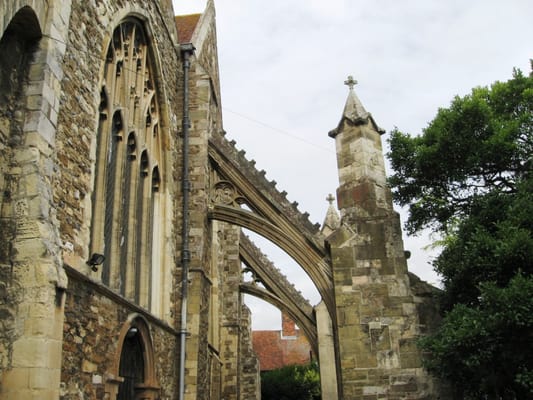
The church's location is almost perfect: accessed by narrow cobbled streets, its tree-filled churchyard is lined with old houses, many timber-framed. However, the intimate setting means it is hard to appreciated the scale of the church until you enter. Before doing so, it is worth a walk around the outside to see the impressive buttressing added over the years, particularly around the chancel.
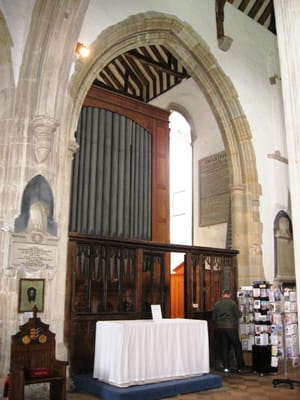
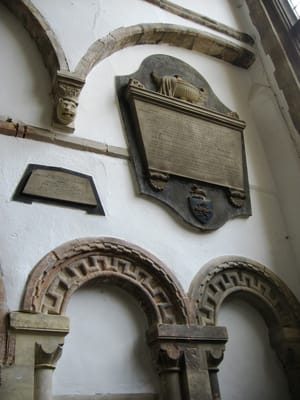
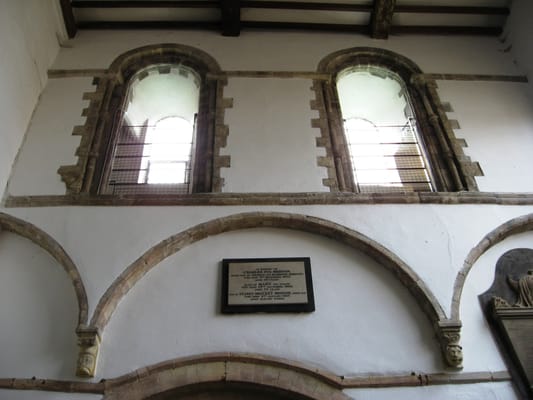
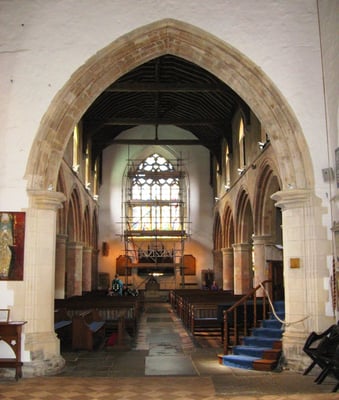
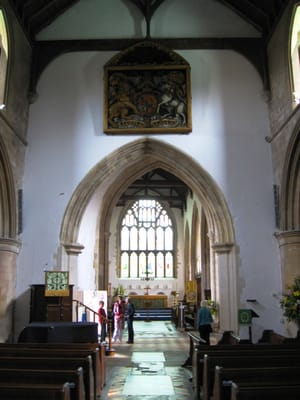
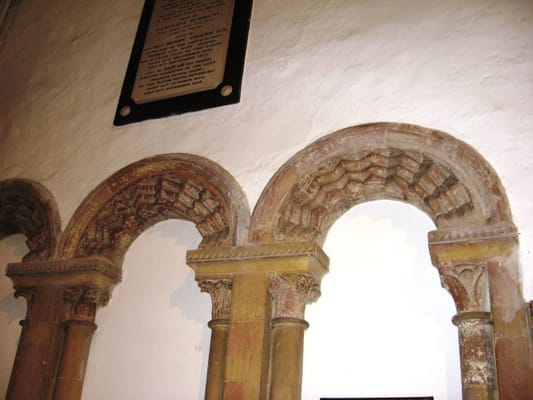
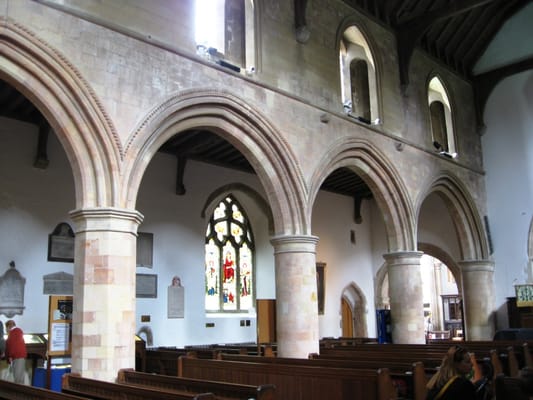
Inside, the north walls of the transepts are the best place to look for the earliest elements, with Norman blank arcades on corbels of grotesque heads, and others with crenellation and chevron decoration. The original 12th century Norman arches lead into the nave arcades. The nave itself is impressive, with five bays of barely pointed arches on round and octagonal piers, but most of the windows are Victorian replacements.
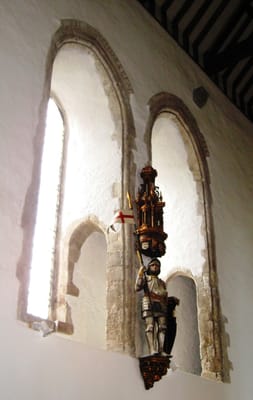
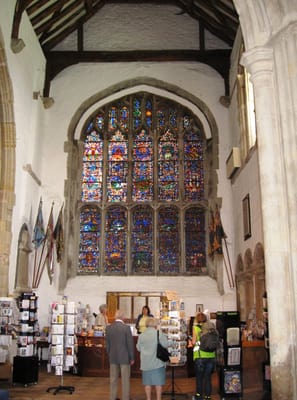
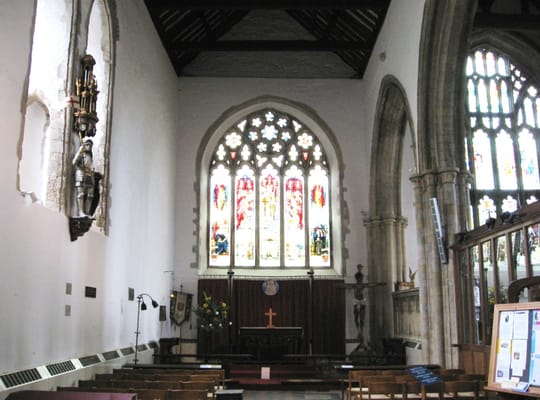
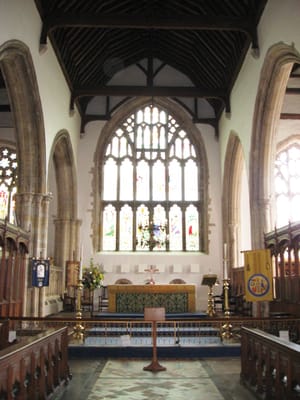
The chancel's 15th century rebuilding also makes it an impressive space, leading to the original 15th century east window. To the north, the Clare Chapel has classic Early English Gothic lancets, although the east window is Victorian. On the south side, the chapel is now the choir vestry: it has paired lancets, shafted inside and each topped with an oculus window.
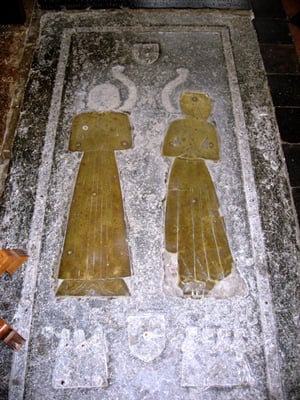
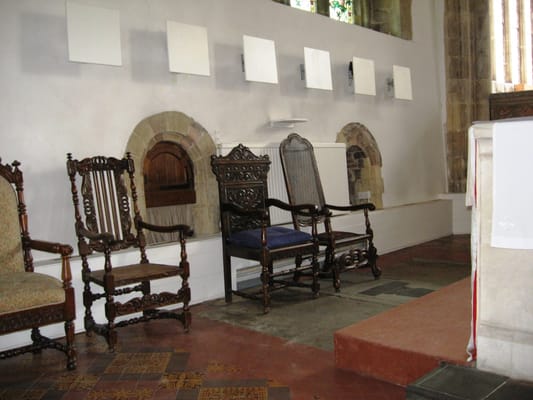
The church has generous fixtures and fittings. The screens into the Chancel Chapels are late 14th century and Perpendicular in style. In the Clare Chapel is a late mediaeval brass, and the pulpit has 16th century panels. The clock has a pendulum, replaced in 1810, which swings down into the crossing.
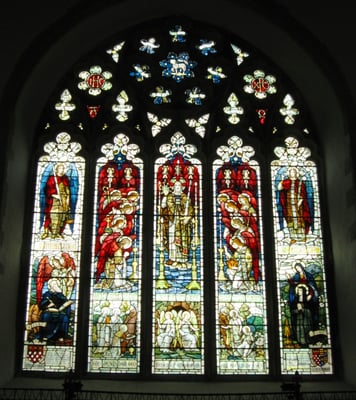
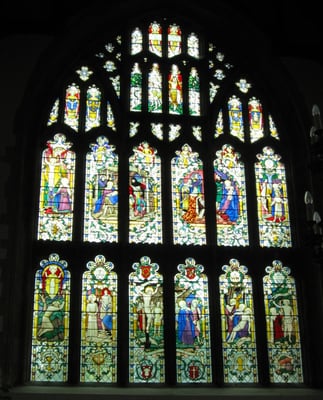
There are many memorials from the 18th and 19th centuries. Notable stained glass includes aisle windows by both Kempe and Morris, and windows donated by the novelist and former Mayor, E F Benson, in the south transept and the western wall of the nave.
Finally, if you want really excellent views over the town and its surroundings, for a few pounds you can climb the church tower.
Practicalities
The church is a busy place - the most visited, apparently, in Chichester Diocese after the Cathedral itself. There is a small shop in the south transept selling cards, books and gift items. Car parking around the church is severely limited (as it is in the old town generally) but it is only a short distance - albeit steeply uphill - from the various car parks dotted around the centre.