Chris I.
Yelp
SECRET FLORENCE. A VISIT TO REMEMBER
Wikipedia says:
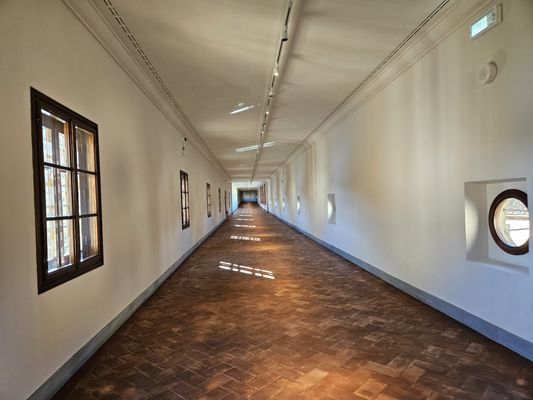
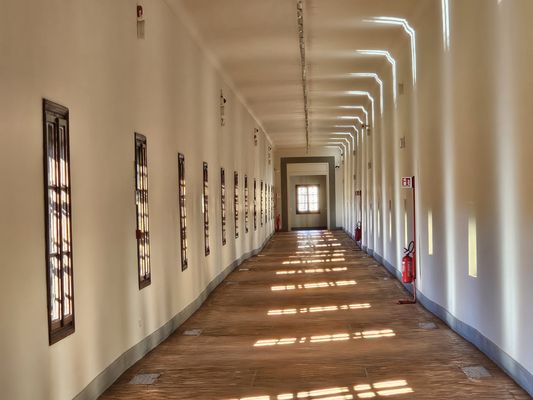
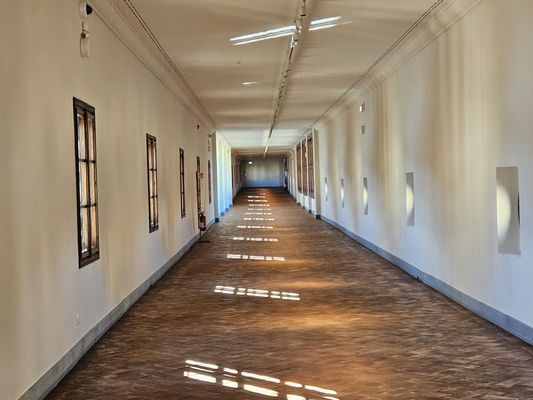
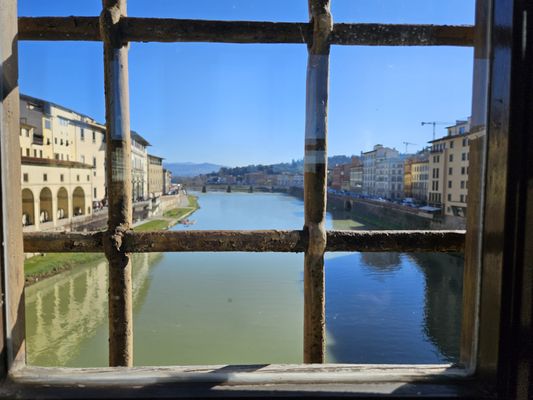
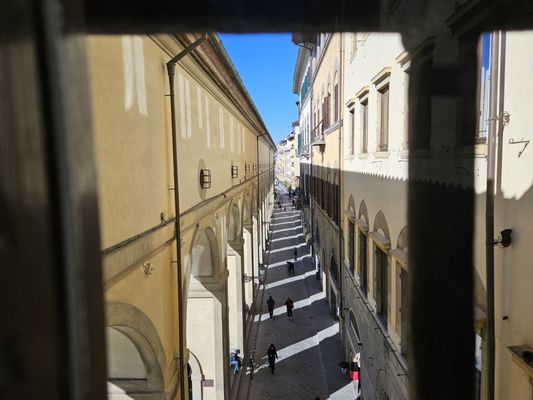
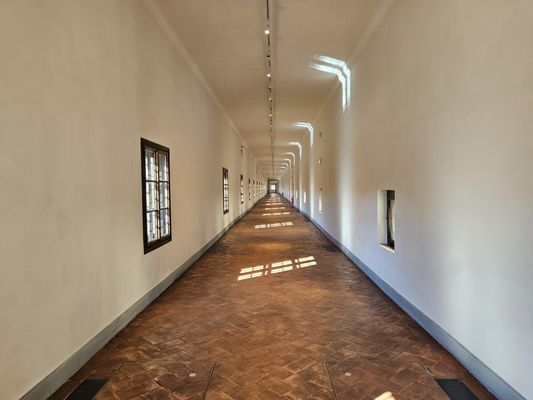
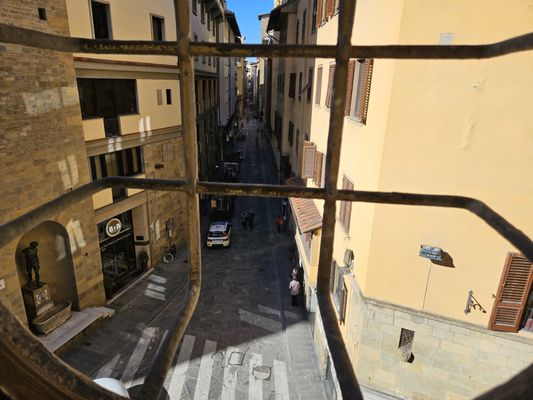
"The Vasari Corridor (Italian: Corridoio Vasariano) is an elevated enclosed passageway in Florence, central Italy, which connects the Palazzo Vecchio with the Palazzo Pitti. Beginning on the south side of the Palazzo Vecchio, it then joins the Uffizi Gallery and leaves on its south side, crossing the Lungarno dei Archibusieri and then following the north bank of the River Arno until it crosses the Ponte Vecchio. At the time of construction the Torre dei Mannelli had to be built around using brackets because the owners of the tower refused to alter it. The corridor covers up part of the façade of the chiesa di Santa Felicità. The corridor then snakes its way over rows of houses in the Oltrarno district, becoming narrower, to finally join the Palazzo Pitti. Most of it is closed to visitors. (See 1. below)
History and overview
The Vasari Corridor was built in 5 months by order of Grand Duke Cosimo I de' Medici in 1565, to the design of Giorgio Vasari. It was commissioned in connection with the marriage of Cosimo's son, Francesco, with Johanna of Austria.
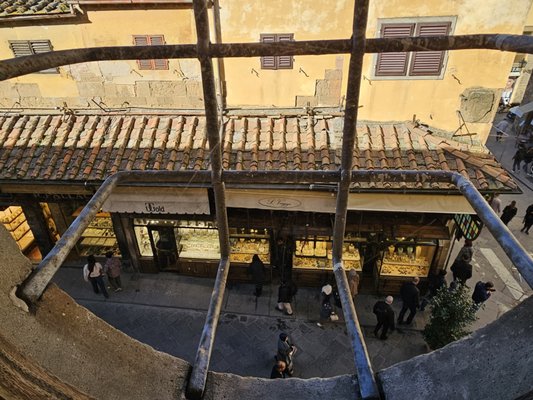
The idea of an enclosed passageway was motivated by the Grand Duke's desire to move freely between his residence and the government palace, when, like most monarchs of the period, he felt insecure in public, in his case especially because he had replaced the Republic of Florence. The meat market of Ponte Vecchio was moved to avoid its smell reaching into the passage, its place being taken by the goldsmith shops that still occupy the bridge. At the latter extremity, the corridor was forced to pass around the Mannelli's Tower, after the staunch opposition of that family to its destruction.
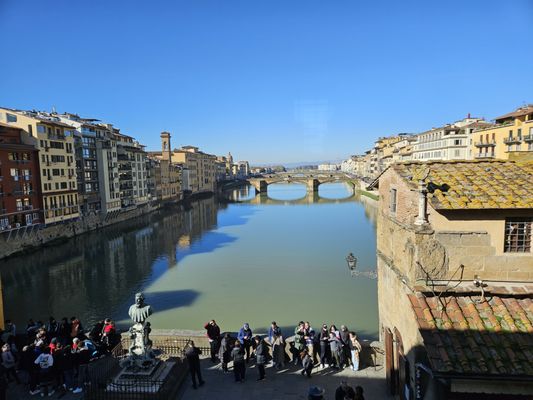
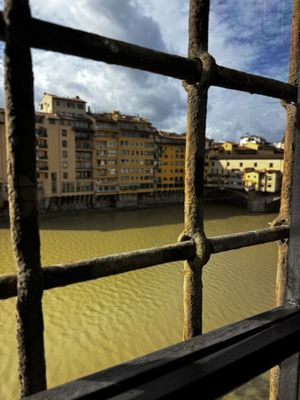
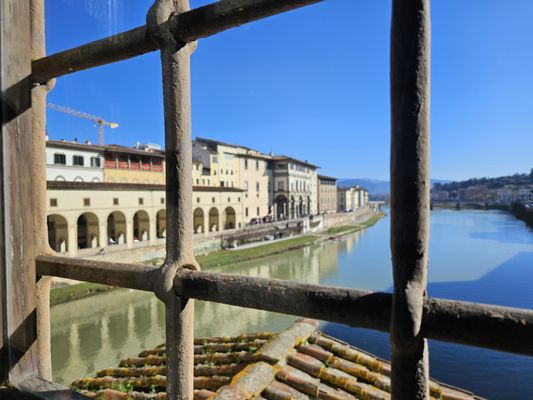
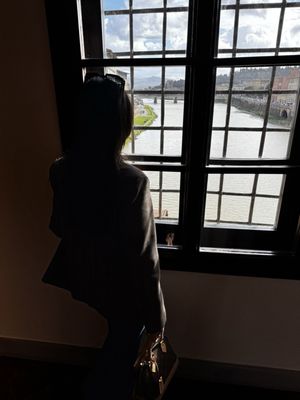
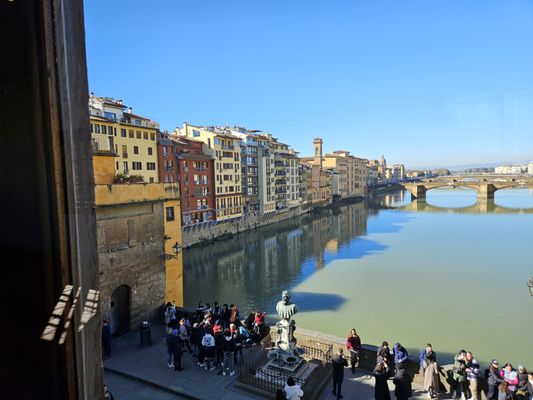
In the middle of the Ponte Vecchio the corridor is characterized by a series of panoramic windows facing the Arno, in direction of the Ponte Santa Trinita. These replaced the smaller windows of the original construction in 1939, by order of Benito Mussolini.
After the Ponte Vecchio the Corridor passes over the loggiato of the church of Santa Felicita; at that point it had a balcony, protected by a thick railing, looking into the interior of the church, in order to allow the Grand Duke's family to follow services without mixing with the populace.
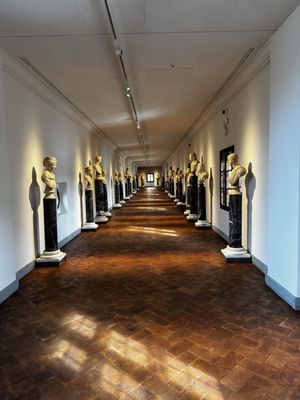
In its Uffizi section the Vasari Corridor is used to exhibit the museum's famous collection of self-portraits." (See 2. below).
Thank you, Wikipedia.
This was an experience that will not be forgotten.
1. All of it is in fact closed to the public, except by prior arrangement. It then takes negotiation with the authorities/companies who conduct tours. They can arrange e.g. a guided tour of the Uffizi (walking immediately into a side entrance) and eventually proceeding into the Vasari Corridor.
It takes a few hours to do full justice to passing through the corridor, but they are not hours that you will forget, believe me.
We had the privilege of such a tour with a charming lady. It really does make a difference to have a skilled personal guide in the Uffizi who can explain the style progressions of the Renaissance and so much more background information that would require considerable research. For example:
Can you see how Leonardo screwed up here? The length of that arm was wrong, so he concealed that by changing the appearance of the wall (trompe d'oeil)." Or "Look at the face in Botticelli's 'Birth of Venus'. Then look at the faces in Botticelli's other works. ;-)"
Having finished this amazing tour, you proceed towards a door where you join the security guard and follow up a flight of stairs into the Vasari (just 4 of you).
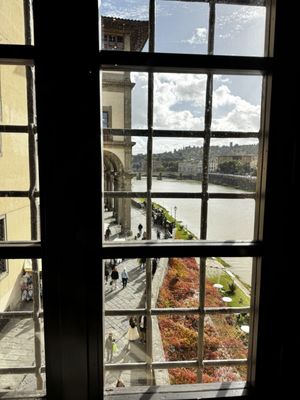
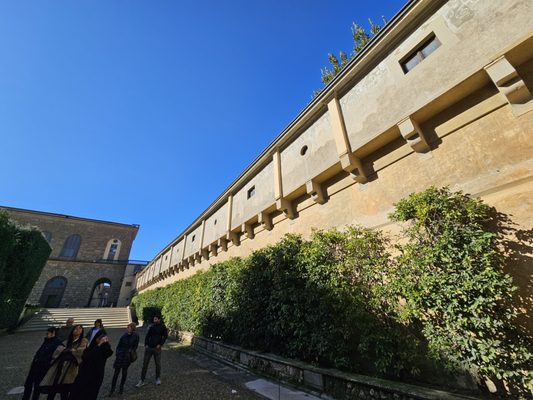
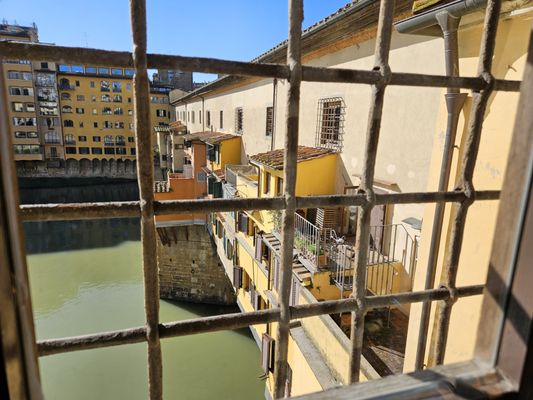
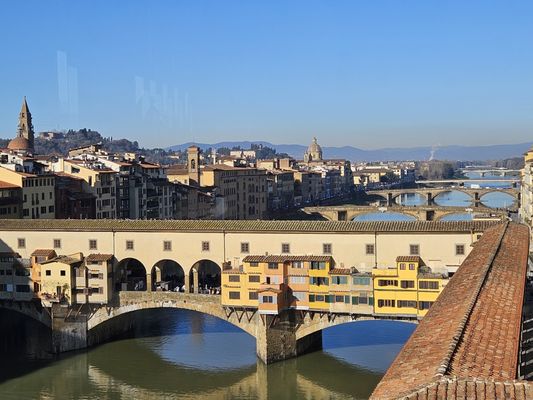
Then you continue alongside the river (beneath the long red roof in the photo)
Photo link: http://i221.photobucket.com/albums/dd76/Textklick/Qype%20pix/4c247b02.jpg
until you reach the roof level of the Ponte Vecchio, where the corridor turns 90 degrees to the left (or to port, or to whatever Galileo would have said).
Photo link: http://i221.photobucket.com/albums/dd76/Textklick/Italy%20Xmas%202009/2009_1227Garden0037.jpg
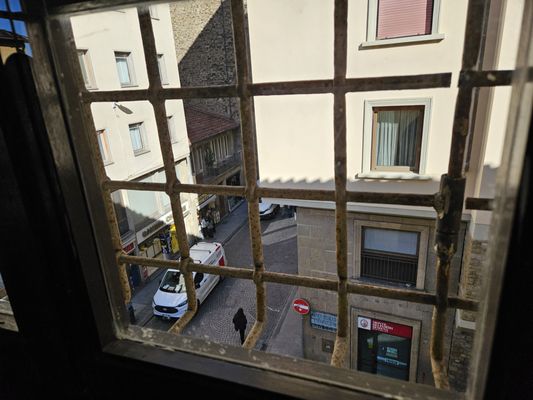
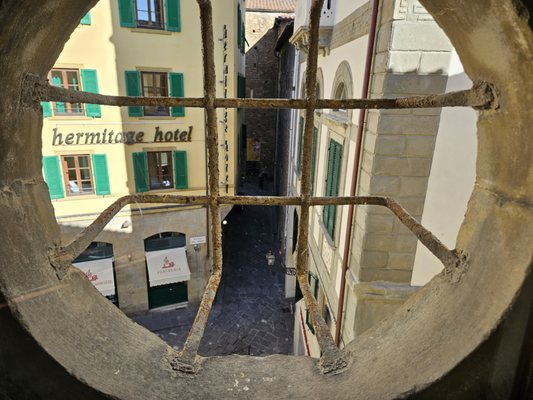
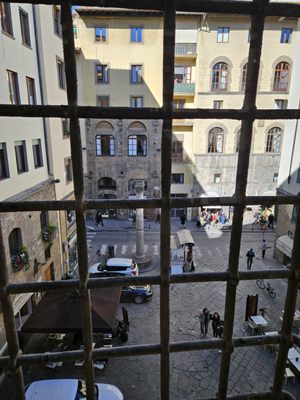
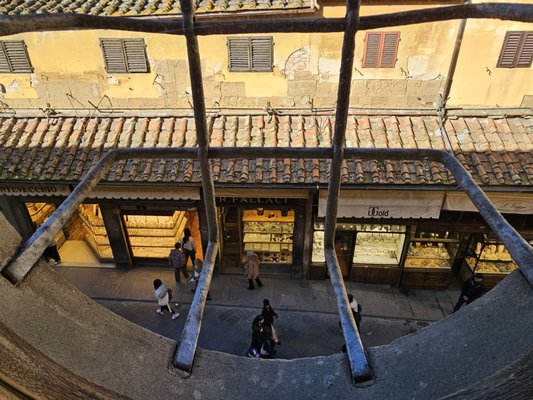
You then slowly cross the bridge in the steps of the Medici from where you can look down upon the seething masses.
Photo link: http://i221.photobucket.com/albums/dd76/Textklick/Qype%20pix/51cfc76e.jpg
You feel as if you should have dressed for the occasion (white silk stockings, floppy hat, red cloak etc. [plus whatever the Medici used as pocket calculators] ;-).
2. Here it is that you will then find a vast amount of portraits, including self-portraits by many, many famous artists from all over the world.
Photo link: http://i221.photobucket.com/albums/dd76/Textklick/Qype%20pix/335f58b5.jpg
It is virtually too much to take in and as our charming guide said you always notice something new each time. Past (or rather through) the church where the Medici used to worship in private above the peasantry, past various houses and eventually down to where it 'empties' into the gardens of the Palazzo