Enjoy L.
Google
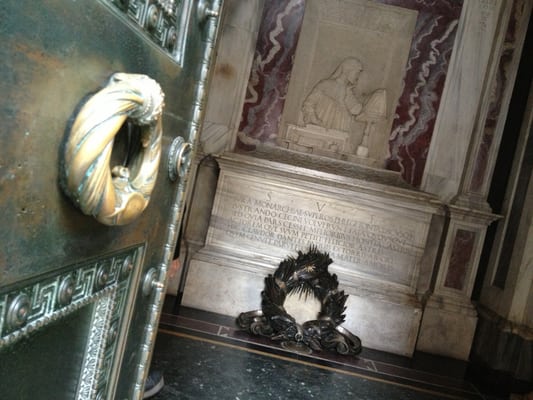
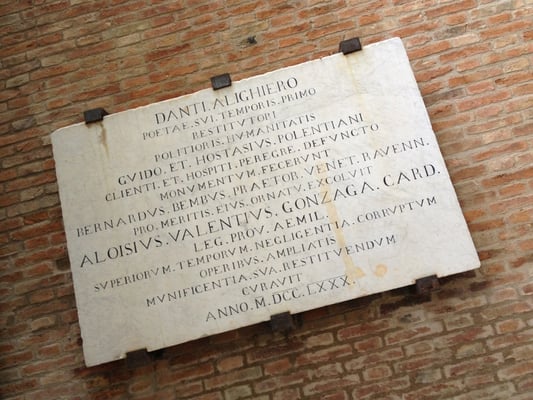
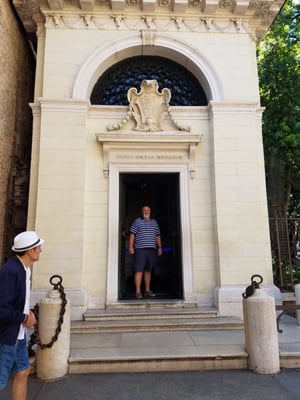
Mourning place where the greatest Italian poet arrived in Ravenna in 1317 and died here in 1321. The neoclassical shrine built in 1780 houses his former tomb, surmounted by a bas-relief sculpted by Pietro Lombardo in 1483, depicting the poet absorbed in his reading.
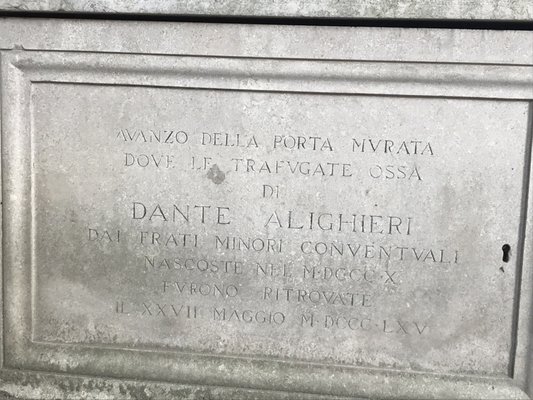
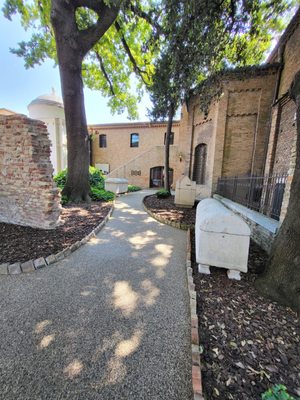
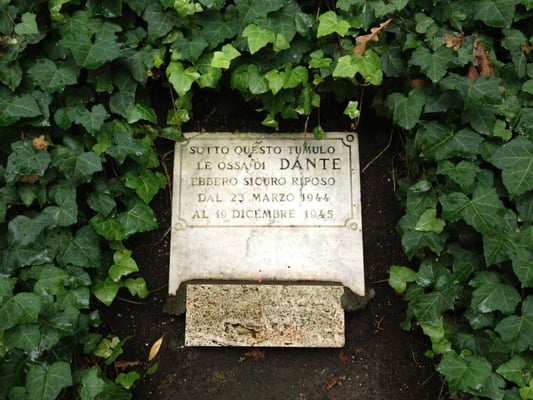
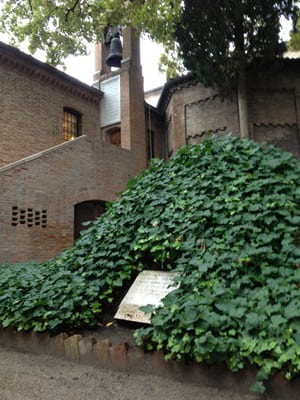
In the garden to the right, a small mound marks the spot where Dante's remains were hidden during World War II to protect them from destruction and theft. And each September, the anniversary of Dante Alighieri's death is commemorated with a offering of Tuscan olive oil on his tomb ...
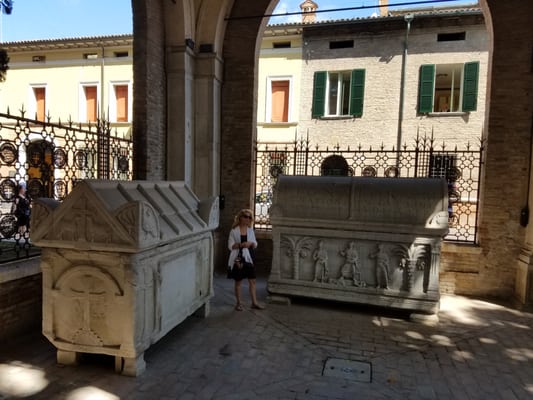
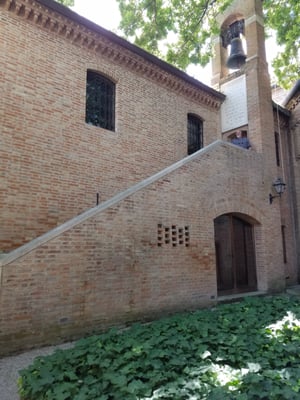
Nevertheless, the entire Dante area took on its current romantic appearance between 1921 and 1932, with the restoration of the Basilica of San Francesco, the Braccioforte Chapel, and Dante's Tomb.
To comprehend the whole story regarding the tomb, it is essential to mention the first cloister named after Dante and remained in the hands of the Conventual friars until 1810. On the ground floor, it unfolds into a magnificent loggia bordered by white marble columns with Doric capitals. In the center is a well adorned with sculptures. The second, called "della Cassa", has an irregular shape determined by the different number of arches in the loggia on the ground floor. The columns are made of Istrian stone, red Veronese marble, and Greek marble. A plaque commemorates the spot where in 1519 the friars drilled a hole to reach the ancient sarcophagus in which Dante's mortal remains remained, in order to steal them and prevent them from being taken by the Florentines. Pope Leo X, son of Lorenzo the Magnificent, had in fact "returned" them to Florence, after several requests for their restitution had been rejected. The bones were only rediscovered in 1865, not far from the Braccioforte Chapel. These oases of peace have hosted precious recitals and readings dedicated to Dante Alighieri.