Double Negative
Cultural landmark · Clark County ·

Double Negative

Cultural landmark · Clark County ·

Massive 1969 earthwork sculpture by Michael Heizer in Nevada

site specific installation
michael heizer
rough road
sturdy vehicle
high ground clearance
heavy tires
desert
mesa
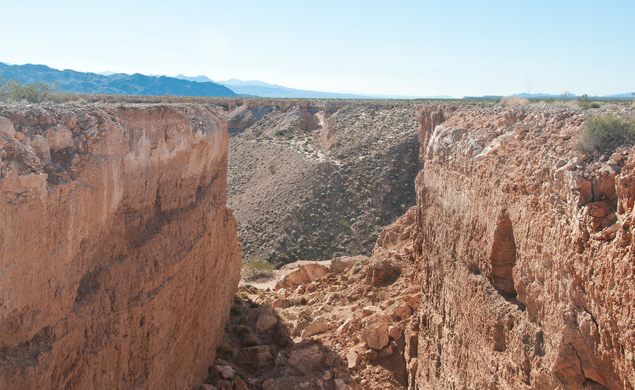
Double Negative by null
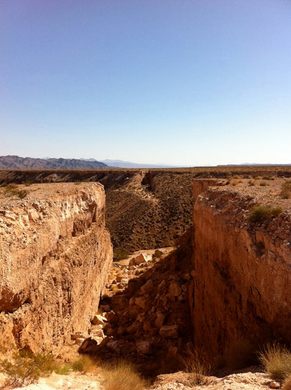
Double Negative by zackofalltrades (Used with Permission )
Double Negative by Retis on Flickr (Creative Commons)
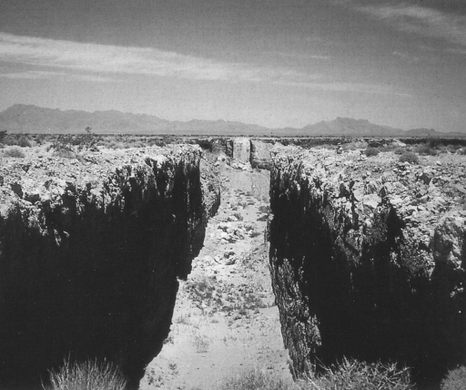
Double Negative by Thure Johnson on Flickr (Creative Commons)
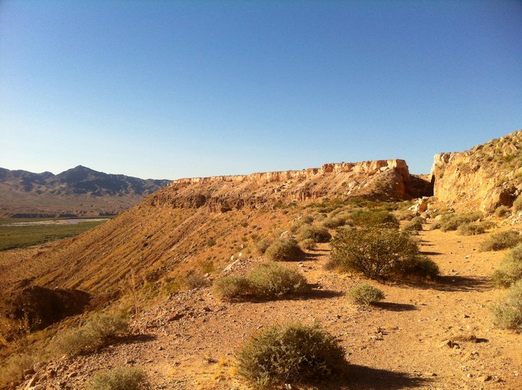
Double Negative by Retis on Flickr (Creative Commons)
Double Negative by null

Information

Carp Elgin Rd, Nevada Get directions

Information

Static Map

Carp Elgin Rd, Nevada Get directions

moca.org
@moca

Features

Last updated

Jan 14, 2026

Powered By

You might also like

Terms of Use • Privacy Policy • Cookie Policy
 © 2026 Postcard Technologies, Inc.
@atlasobscura
4,908 Postcards · 2,018 Cities

A Tour of Spectacular 1970s Art Made From the Landscape Itself

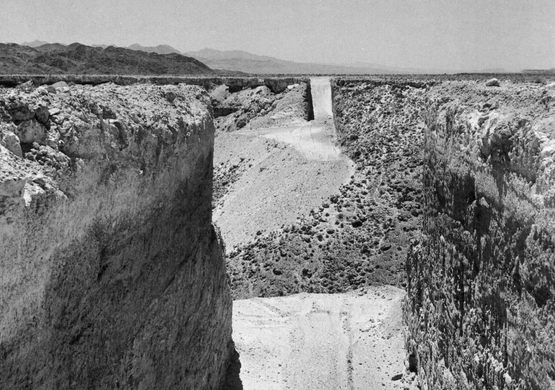
"“There is nothing there, yet it is still a sculpture.” -Michael Heizer By displacing an estimated 244,000 tons of rhyolite and sandstone rocks using a two-man crew handy with bulldozers and dynamite, artist Michael Heizer hunkered down in the middle of Nevada’s Moapa Valley to create what still ranks among the largest sculptures in the world. Funding for this insanely large project was provided by art dealer Virginia Dwan, who would go on to donate the deed to the property on which Double Negative is located to Los Angeles’ Museum of Contemporary Art in 1969, just before the piece was officially completed.  Raised by an archaeologist father, throughout his career, Heizer has long taken interest in working in the dirt. He consistently ranks among the upper echelon of the “Land Art” artists, with peers including Robert Smithson. Yet, unlike some of the more famous earthworks of his contemporaries, Double Negative is the kind of piece that is so understated, and so esoteric despite its size, that while tourists from all over the world will flock to see it in-person, most locals don’t even know it’s there.  It consists of two massive trenches dug at right-angles into the landscape. Today these angles are a little less crisp than they used to be, thanks to time and erosion, but Heizer wishes that no repairs be made on the piece, instead favoring the Earth’s eventual reclamation of it. These trenches span a natural chasm, but when viewed head-on, they line up directly, to the effect of extending the sky downward into the earth itself. It is a visual that is at once wonderful in concept and hard to identify at a passing glance, all while being perfectly apt for the American West, whose magic and lore have long centered on big skies reigning supreme over an unforgiving terrain." - ATLAS_OBSCURA

https://www.atlasobscura.com/lists/land-art-roadtrip
Thure Johnson on Flickr (Creative Commons)
Double Negative - Michael Heizer

Monty G.

Google
It is a very rough ride to go. Look at this art. I don't believe it is worth the drive. There are other things along the way that made it more pleasing than just looking at 2 trenched out holes in the side of a hill

Jeff W.

Google
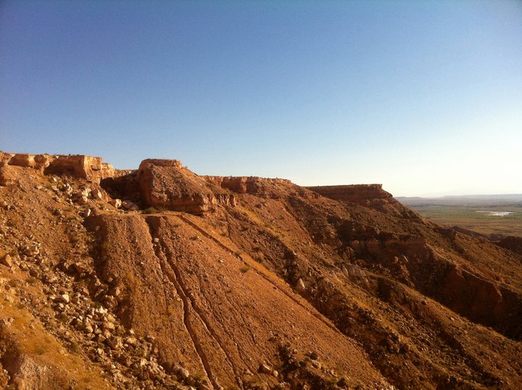
Not your typical art installation…. Long drive down dirt road, great views from the top of the mesa. Just two giant trenches dug into the side of the cliff. Makes you wonder what “art” actually is, but that’s the point, right? Pair this site with the painting at the Denver Museum of Art for a complete, full-circle experience.

Michael H.

Google
Double Negative is a must-see site specific installation for any land art aficionado. Fantastic up close and in person, photos just cannot do it justice. Well worth the trip. Wear good shoes and leave no trace.

Earl J.

Google
Very rough road through the brush to get there. Drove our 25ft RV there, though, without issue, just very slowly. Visually, maybe this was more spectacular back when it was first built. Still, it's a statement. I get it.

Alex G.

Google
Collapsing more and more each year but still a very special spot. Helpful to use satellite overlay on Google maps to make sure you’re taking the right approach. Car with high ground clearance recommended! If you’re coming from Vegas, be sure to drive through Valley of Fire state park on your way.

Max B.

Google
Google Maps directions will get you here. You do not need a high clearance or four wheel drive vehicle but the last mile is very bumpy and requires slow, attentive driving. Absolute must see and worth going far out of your way.

wayne L.

Google
Double Negative is a large esoteric Earthwork, created in 1969 by artist Michael Heizer. A stones throw from the surreal "Valley of Fire", Double Negative lives on a nondescript mesa just outside of Overton Nevada. A sturdy vehicle will help take you down the road from the Overton Recreation Center out of town to the Mormon Mesa where Heizer's artwork is located.Two large furrows, carved deep into the mesa and face one another from a a distance of about 200 yards. Visible from the sky, these two negative marks can be invisible while on the network of dirt tracks which crisscross the mesa. It is often very quiet on the Mesa, and one can enjoy a rare, intimate moment with this unique Artwork, deep in the Southwestern Desert.

Mark B.

Google
Amazing, beautiful site. I’ve seen it three times over 20 years and it has definitely changed over that time—many more boulders have fallen into excavations now.