Dun Carloway Broch
Historical landmark · Na h-Eileanan an Iar ·

Dun Carloway Broch

Historical landmark · Na h-Eileanan an Iar ·

Ancient Iron Age broch, remarkably well preserved, offers history

Dun Carloway Broch by null

Information

16 Doune, Carloway, Isle of Lewis HS2 9AZ, United Kingdom Get directions

Information

Static Map

16 Doune, Carloway, Isle of Lewis HS2 9AZ, United Kingdom Get directions

+44 1851 643338
historicenvironment.scot
@histenvscot

Features

wheelchair accessible parking lot
wheelchair accessible entrance

Last updated

Dec 12, 2025

Powered By

You might also like

Terms of Use • Privacy Policy • Cookie Policy
 © 2025 Postcard Technologies, Inc.

CV G (.

Google
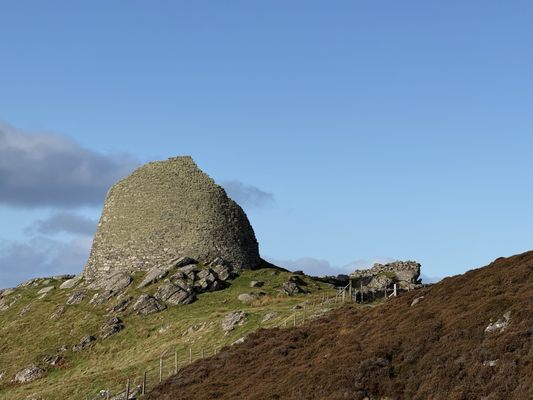
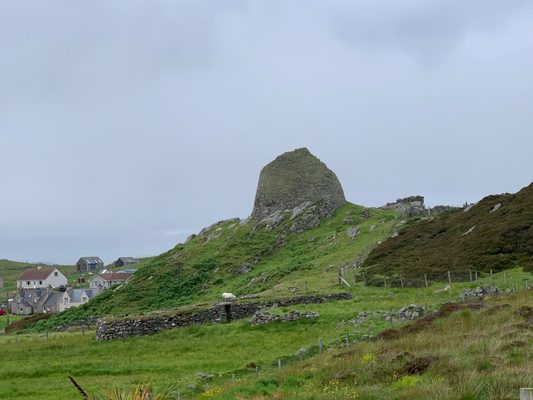
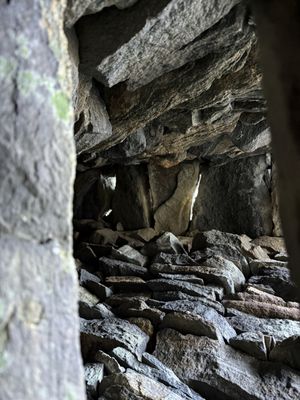
A visit to the Broch is a step backwards into history. With a little imagination you can picture how it looked in the past. An easy walk up a short hill on a well tended path will allow you to even step into its structure. Beautiful views from where it rest on the top of the knoll.

Stephen S.

Google
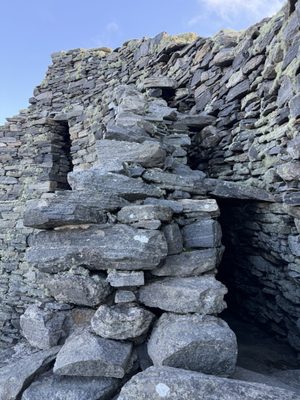
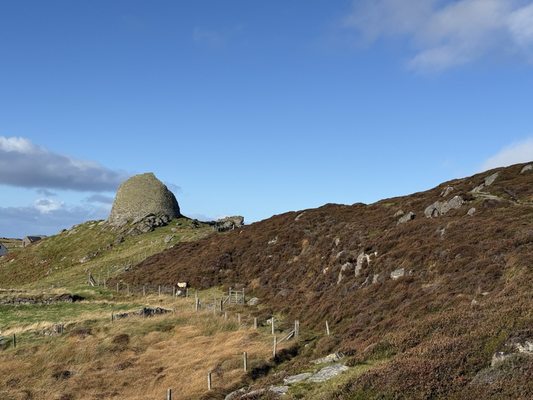
Dun Carloway Broch is an easy stop on any drive around the western loop of Harris. No entry fee but donations can be made inside the small information centre which also has decent toilets. Walk around, walk inside and up the stairs, but watch your head in the very low entry points. But for the best pictures walk up the hill opposite and look down.

Gergo F.

Google
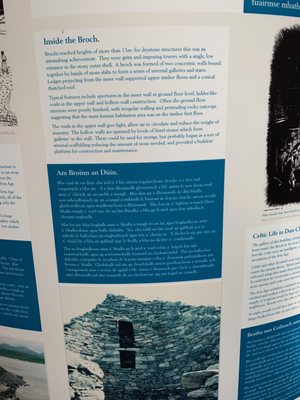
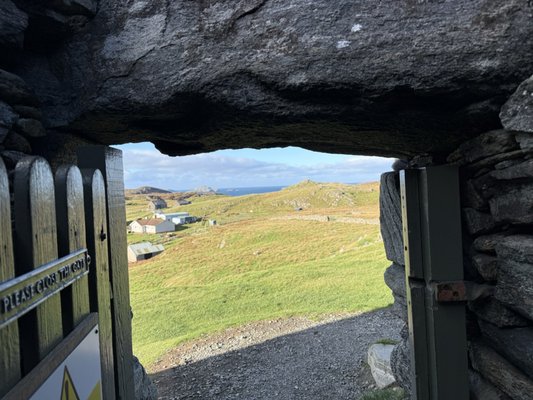
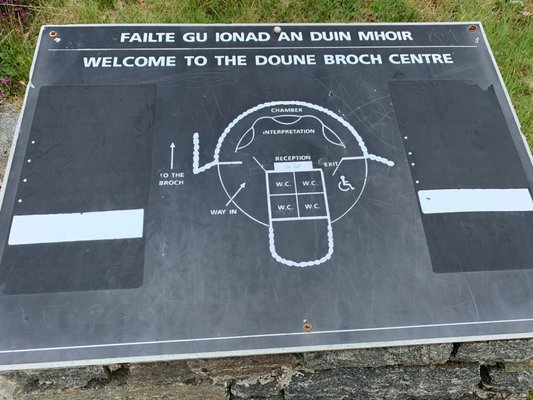
2000 year old fortress from the iron age. Beautiful and inspiring ruin. You really feel the history and it starts to move your fantasy. Impressive how well it stood the test of time. You can enter it if you can bend down far enough to fit through the small gate. The site has nice info that shows a reconstructed variant and some history.

Les M.

Google
Very interesting place. Up a hill so may be challenging if you have mobility issues but we'll worth the effort. Lovely views. Gift shop was also very good

Bernard S.

Google
This impressive ruins of an iron age Broch is one of the best preserved in the Western Isles. Brochs and wheelhouse are unique ro Iron Age Scotland and this one allows a glimpse into how they were constructed with a stairway between the outer and inner walls. Access is free and there is a small information xentre maintained by the local Urras or trust (you have to pay yo use the toilets though). Parking is sufficient and free and there are a couple of tourist shops on the other side of the road.

Kamila W.

Google
Beautiful place with lovely views around. Parking nearby, with informative signs about the history od the Broch. Short walkie to the actual tower ruin. Apparently it is one of the best preserved brochs in Scotland. Worth visiting!

Jag G.

Google
Unassuming but quite fantastic piece of history. Amazing such a structure is still standing. The visitor centre is a must visit to explain the origins of the Broch. Well worth the time to visit.

James M.

Google
We nearly skipped this but it was actually incredibly interesting and warm preserved. You can go inside and climb the stairs. Go for it.
google avatar

Tanis L.

Yelp
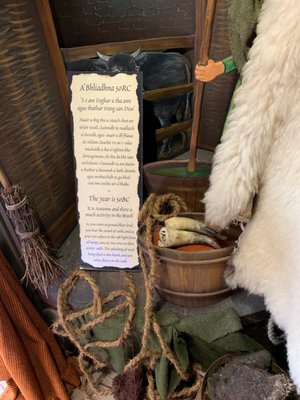
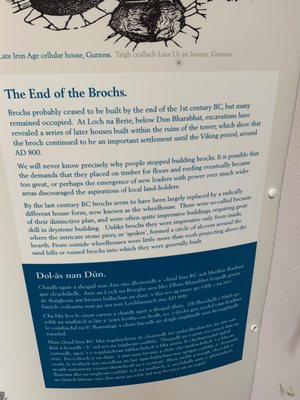
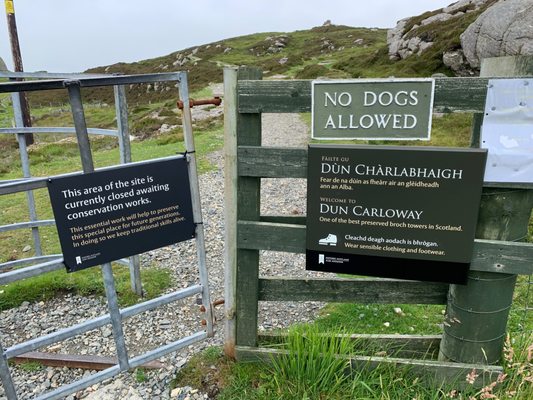
When I visited the Dun Carloway Broch (Scottish Gaelic: Dùn Chàrlabhaigh) area on Thursday 11 July 2019, the parking lot and main visitor centre were open, however the broch itself was undergoing restoration and hence temporarily closed to visitors. I opted to observe the broch from outside and check out the visitor centre. One aspect I enjoyed, here at the broch and in northern Scotland in general, is the signage being both in English and the native Scottish Gaelic. Inside the visitor centre were a few displays covering different parts of the interior of the broch and the different time periods of importance for their usage. Brochs were a form of residence in Scotland in BC times up to about 800 AD. They were used up until about 800 AD, however their routine construction ended in roughly the first century BC. I thought this was a cool, that ancient (pre-AD times) architecture was at least semi-intact in Scotland. A true testament to human curation and restoration efforts. A variety of items were available for purchase. I went with a guidebook in both the native Scottish Gaelic and foreign English. The interior of the visitor center was well designed for visitor circulation. Worker(s) were kind.
google avatar

David J.

Yelp
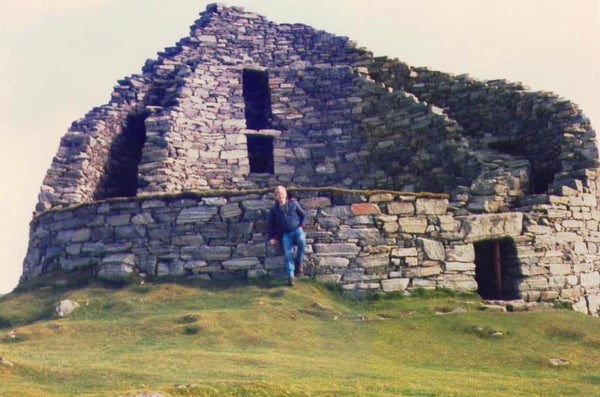
Dun Carloway Broch is an iron-age prehistoric site, about 5 miles north of Callanish on the Isle of Lewis. Brochs are unique to Scotland, and their exact function is still not precisely known. Essentially, a broch is a tower, originally about 10m high, with a double wall with passages in it, and a central area presumed to have been open to the air. The towers taper slightly to the towards the top, giving them a shape akin to power station cooling towers. There was usually a single, low entrance to the tower from the outside, and no windows to the outside, but small openings to the interior. Some of them are isolated, but others form part of iron-age villages, but are nearly always by the sea. The most commonly accepted theory is that they were defensive structures, which could be easily sealed off from attackers: livestock would shelter in the central area, and the inhabitants in the spaces within the walls. As well as protection, their height may have provided a look-out function as well. Locations close to the sea were always vulnerable to pirates and other sea-faring enemies, so the locals would need somewhere to escape to quickly. They generally date from around the first century AD. The one at Dun Carolway is one of the best preserved of all, with one side standing some 5m high. The remains give an excellent insight into the overall structure. As well as the archaeology, the tower has a spectacular position overlooking the sea on Carloway Loch, giving amazing views and as well as a feeling of remoteness.