Mike N.
Yelp
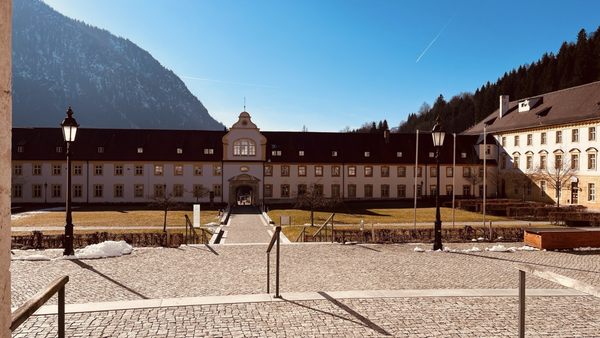
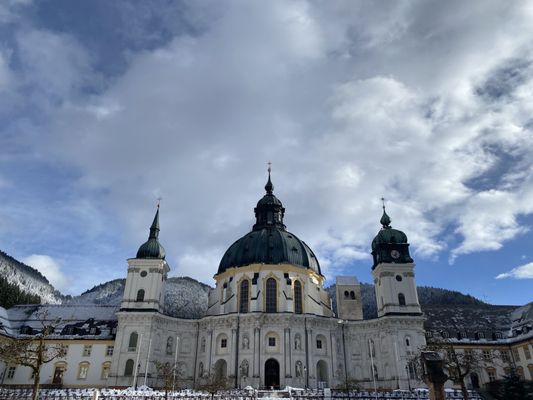
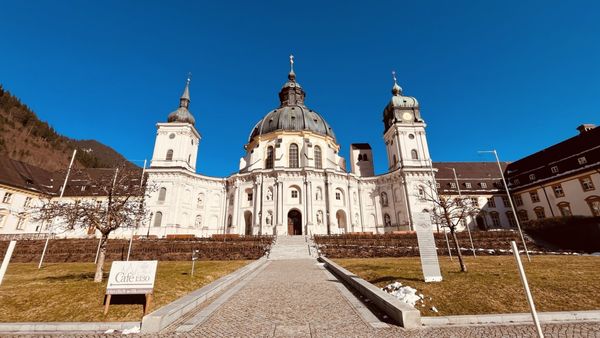
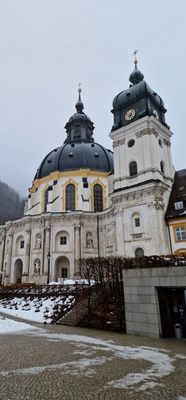
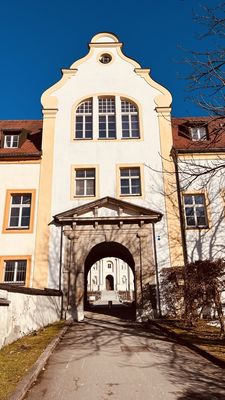
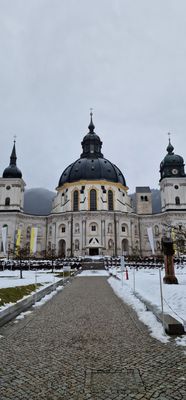
Kloster Ettal (Ettal Abbey) is a Benedictine monastery in the village of Ettal close to Oberammergau and Garmisch-Partenkirchen in Bavaria, Germany. With a community of more than 50 monks, with another five at Wechselburg, the Abbey is one of the largest Benedictine houses.
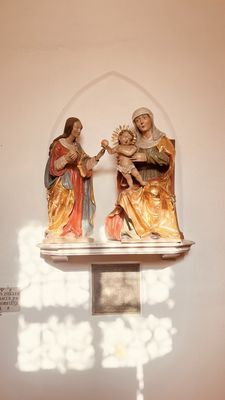
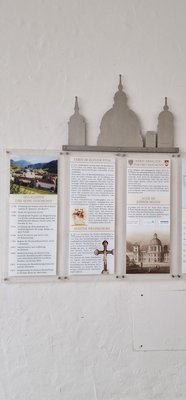
Ettal Abbey was founded on 28 April 1330, Saint Vitalis of Milan's day, by Emperor Ludwig the Bavarian in the Graswang valley, in fulfilment of an vow, on his return from his coronation in Rome, on a site of strategic importance on the primary trade route between Italy and Augsburg. The foundation legend is that Ludwig's horse genuflected three times on the site of the original church building, where a marble statuette of the Madonna and Child ("Frau Stifterin" or the "Ettal Madonna") now stands. The statuette was brought by Ludwig from Pisa as a gift for his new foundation. It soon became an object of pilgrimage. The church is dedicated to the Assumption of the Blessed Virgin.
The foundation originally consisted of a Benedictine double monastery -- a community for men and another for women -- and also a house of the Teutonic Knights. The original Gothic abbey church, built between 1330 and 1370, was a modest structure in comparison to the great churches of medieval Bavaria. The abbey suffered great damage during the Reformation at the hands of the troops of Maurice of Saxony, but survived the troubles of the Thirty Years' War (1618-1648).
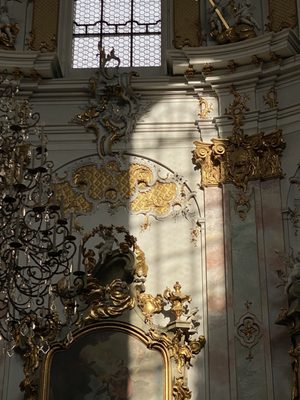
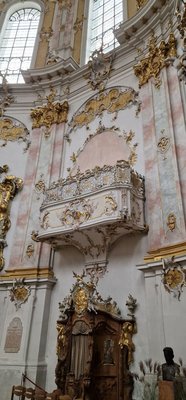
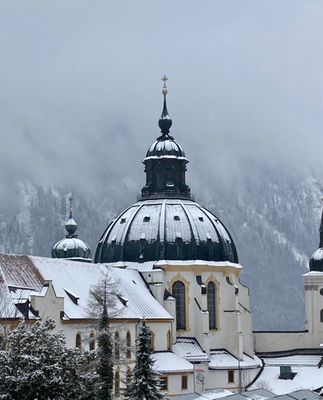
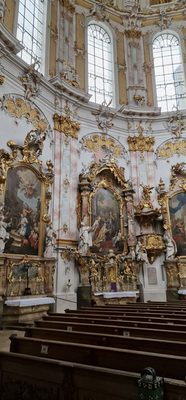
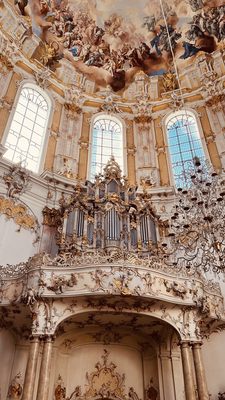
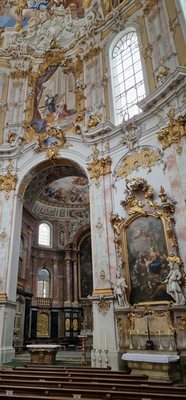
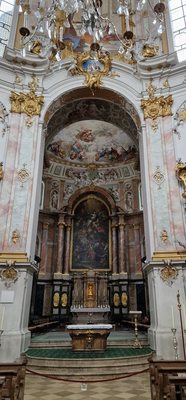
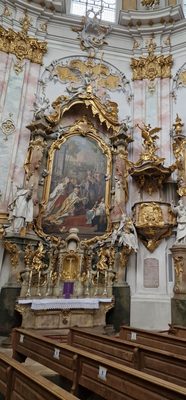
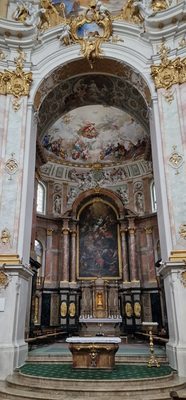
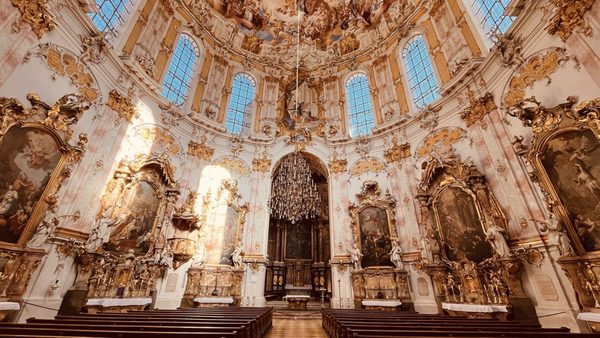
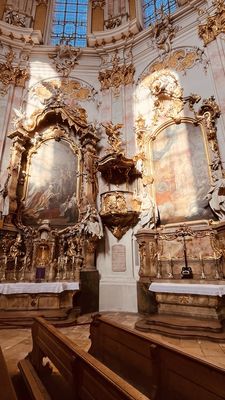
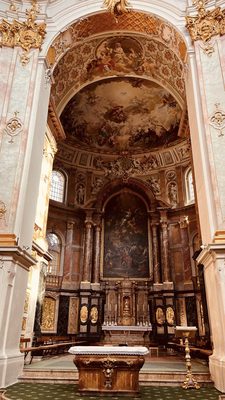
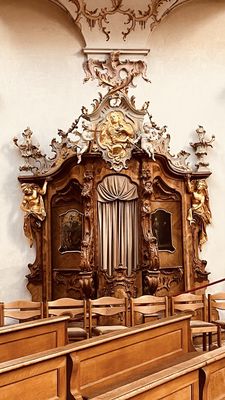
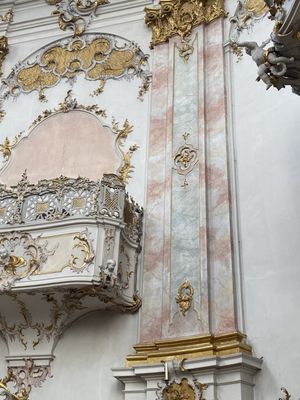
In 1709, under Abbot Placidus II Seiz, the golden age of Ettal began with the establishment of the "Knights' Academy" ("Ritterakademie"), which developed into a highly successful school and began the educational tradition of the abbey. In 1744, the abbey and the abbey church were largely destroyed in a fire. The subsequent spectacular re-building in the Baroque style, with a double-shelled dome, was to the plans of Enrico Zuccalli, a Swiss-Italian architect working in Munich, who had studied with Bernini. The decoration was primarily carried out by Josef Schmutzer of the Wessobrunn School of stuccoists and Johann Baptist Straub, who was responsible for the altars and the chancel. Ettal's importance as a place of pilgrimage grew with the new buildings and it became one of the most important monasteries in the Alpine region.
For my personal interest: during the winter of 1940-1941, the German pastor and theologian Dietrich Bonhoeffer (1906-1945) spent some months at the monastery as the friend and guest of the Abbot. Like Bonhoeffer, a number of those in the Ettal community were involved in the conspiracy against Hitler. While at Ettal, Bonhoeffer also worked on his book Ethics. Catholic priest Rupert Mayer was kept at the Abbey under house arrest from 1939 to 1945 by the Nazis to prevent him from further anti-Nazi preaching.
In 1993, Ettal re-founded the former Wechselburg Abbey in Saxony, an old monastery of the Augustinian Canons, as a Benedictine priory. Ettal maintains a Byzantine Institute.
This Benedictine monastic building complex is magnificent. It's worth your visit when you are in the area for sure.