Qype User (.
Yelp
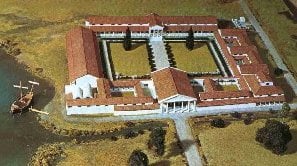
The story of Fishbourne Palace begins either 2000 years ago or in 1960. The early history is Roman: first as a military site and then, most significantly, as an enormous palace. However, after a fire the place was abandoned, and only rediscovered during the digging of a trench for a water pipe in 1960.
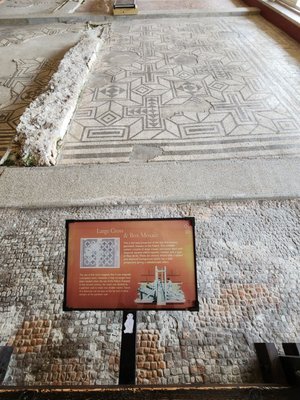
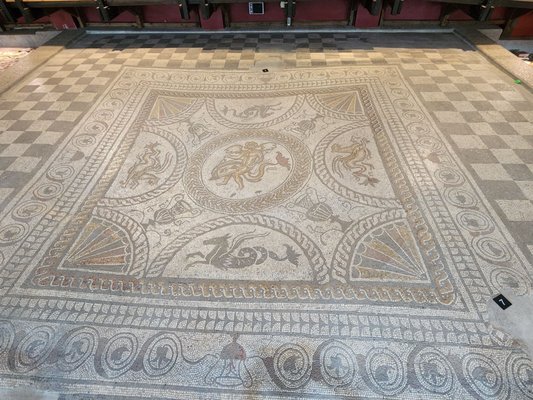
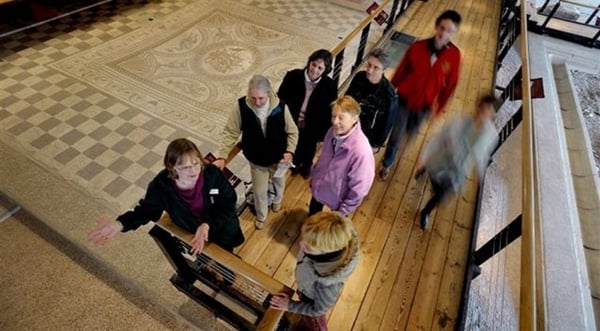
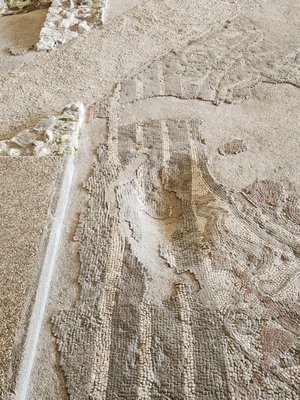
What makes Fishbourne unique is that it is much more than a series of walls and dips indicating where rooms used to be. Instead, there are a number of surviving mosaics - most famously, the boy riding a dolphin which once graced the dining room floor. You can explore the development of mosaic art from earlier monochrome, geometric efforts through to the multicoloured representations of flora and fauna.
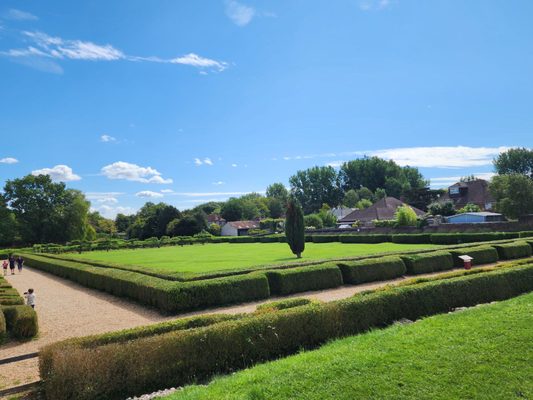
Outside, traces of the original planting have allowed parts of the formal gardens to be reconstructed. Box hedges form curvy lines, while flowerbeds have been stocked with popular Roman plants. Given that half of the palace and its formal gardens are now under a road and houses, walking through the reconstruction really helps to give a sense of the incredible scale of the building (it had over a hundred rooms in its heyday).
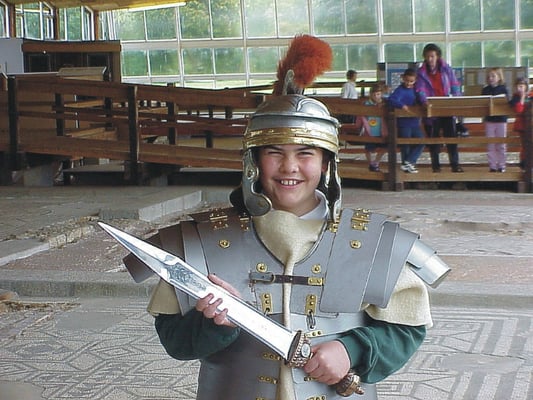
An introductory video and museum set the palace in context. With Roman weapons, jewellery and household objects as well as models of the palace itself, the museum is fascinating in its own right and an excellent introduction to the remains. Perhaps most astonishing of all is the fact that we don't know who lived here - although the likeliest candidate is a British client king. Even his name is uncertain:it could have been Cogidubnus but was perhaps Togidubnus.
Finally, there is a collections centre opposite the main building, where you can see the storage arrangements for the thousands of artefacts found during excavations.
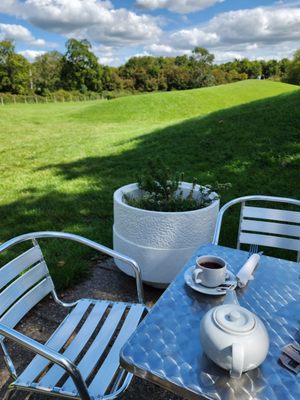
There is a shop and cafe. Parking is available, but the Palace is only a short walk from the bus stop; buses run frequently from Chichester town centre.