David A.
Yelp
It's hard not to compare Ft. Frederica National Monument to Ft. King George Historic Site in nearby Darien, Ga. But it's not fair to either, and in the end, both win. They are two wholly different experiences.
For starters, most of what you are actually visiting here is the remains of Frederica Town. The fort that defended it (and gave the site its national-monument name) happens to provide the most notable ruins, but the bulk of the site is a park-lite former archaeological dig. No reconstructions here.
Enter through the Visitor's Center. Staff takes lunch from noon to 2:15 (huh??), so if you enter then, it's free. When the gf and I visited, they had not returned by 2:30. We decided to explore on our own.
Just as well. Bear right from the Visitor's Center to find the town's former burial ground; you'll see one ancient crypt and the remains of a couple of others. Here the gf swore she could see other remnants beyond in the woods, but all I saw was a wagon wheel. Whatever. Adjacent is the beginning of the "road" that in 1738 connected Frederica with Ft. St. Simons, six and a half miles away.
Reverse course and check out the "Ladies Garden" directly behind the Visitor's Center. Of note are the bulb-shaped glass herb growers, which acted as tiny portable greenhouses, a clever idea.
Before crossing the bridge over the town's moat, turn left and go a ways to the anachronistic Abbott monument, a 17-foot obelisk dedicated by Robert Abbott to his father and the two aunts who raised him. It has naught to do with the rest of the site, but it's cool.
Return to the bridge. Appetizers over, you're ready for the entree. Don't get disappointed: there's now less to see. But the meat of the meal awaits.
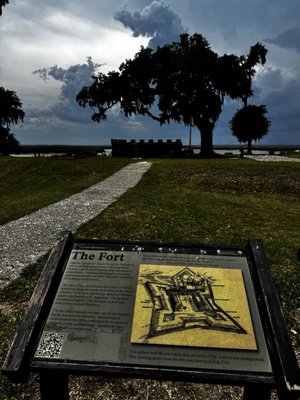
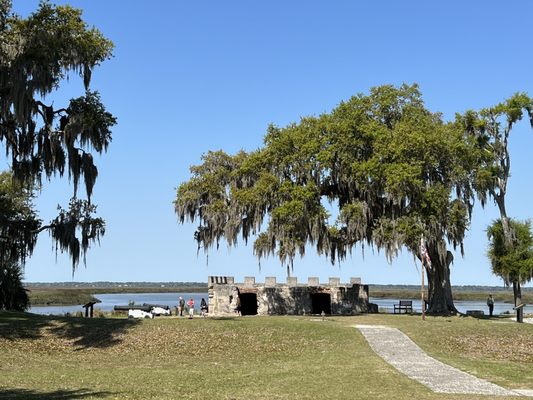
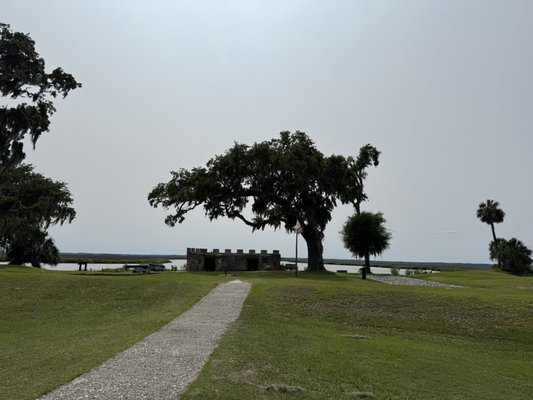
You're visiting an archaeological site. Almost nothing is left of Frederica Town save the foundations of various houses. When you reach the titular Fort at the far end, you'll find barely a fragment. Elsewhere, the most prominent (and nearly only) ruin is the 2-story barracks gatehouse.
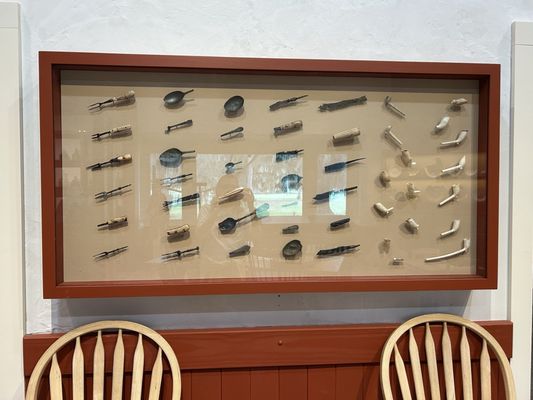
Despite that, it's fascinating. Vast research has provided a guide to an early 18th century colony. You'll find info placards at various lots, detailing not only who settled in that specific lot, but often where they came from, how they fared as a pioneer, and what happened to them (most quit and went home). Butcher, baker, candlestick maker, all here, and more. And you'll read of their personal trials and travails, too:the tavern-keeper's second husband was "an idle fellow, and her business is almost lost;" this settler physician refused to treat anyone unless they paid in advance; that couple, although prosperous, gave up and returned to England rather than deal with their "quarrelsome neighbors." Many of these info placards are accompanied by displays of artifacts found at that particular lot.
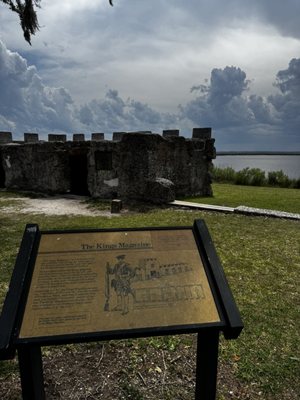
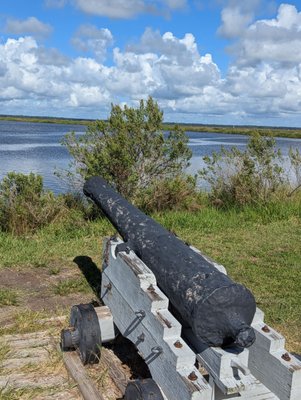
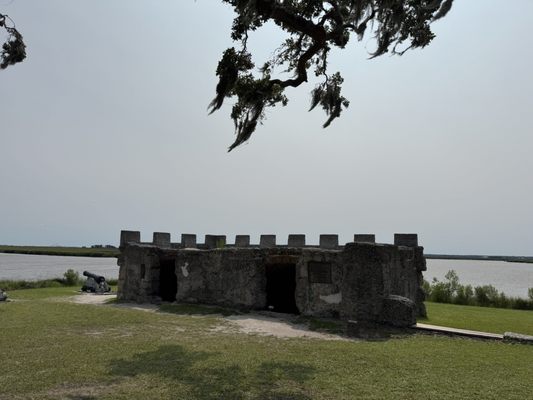
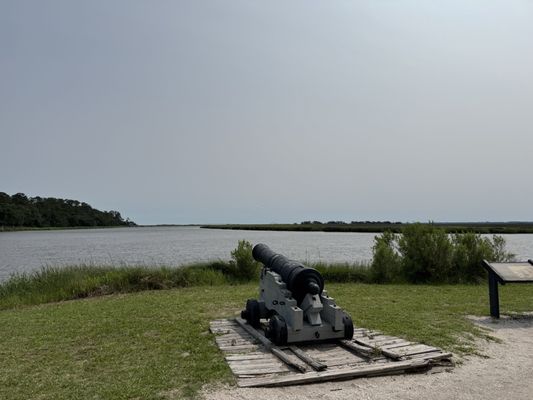
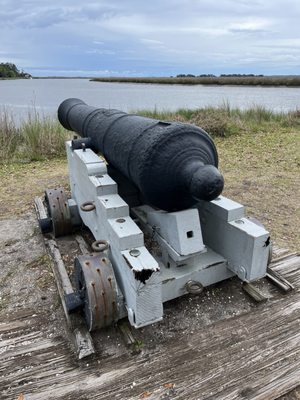
Then there's the fort, a bit of a disappointment in two ways. One, there's barely anything left of it: one landside rampart, with two vaulted chambers below. Two, here's the only bit of fakery: of three cannon on display, only one is thought to be from the original site. The other two are "period replacements."
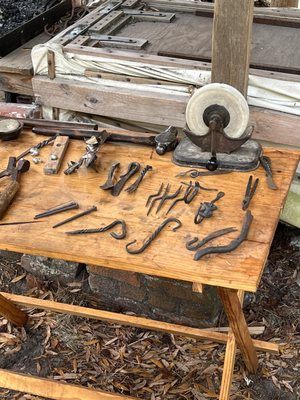
Before turning towards the barracks gatehouse, the only other standing ruin, bear off right and find the remnants of the smith/armourer shop near the shore. After considering the Barracks Gatehouse, detour right to read the info placard about the bakery. Returning from the Gatehouse, stop at the corner of the town to read about the defensive bastion that was once there.
Okay, interesting and informative to grups into history. What about younguns?
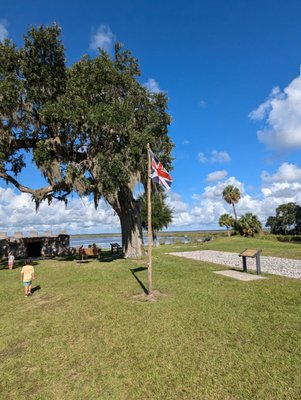
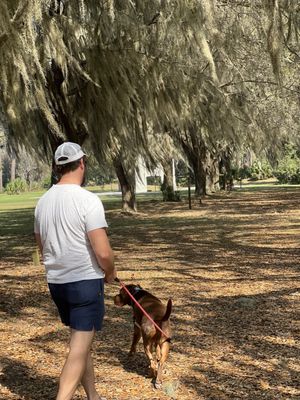
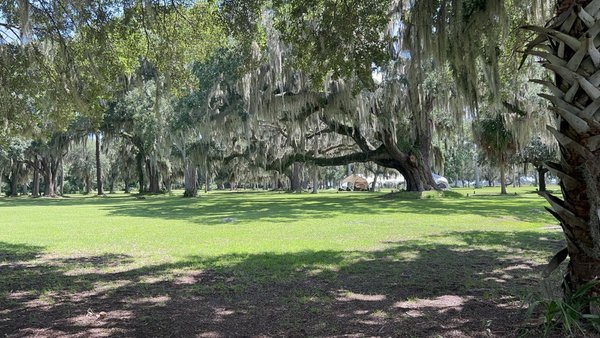
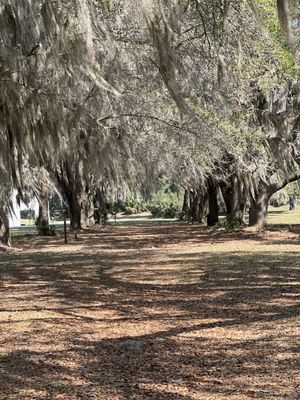
The whole site is shaded with charmingly gnarled old live oak, draped in picturesque Spanish moss. What's left of Frederica Town is now a large lawn with many shade trees. That means, lotsa room for rambunctious kids to run about. (Playing 'on' any of the fragile ruins is forbidden, of course.)
Mid to older teens might be left out, unless they have an interest in history and archaeology.
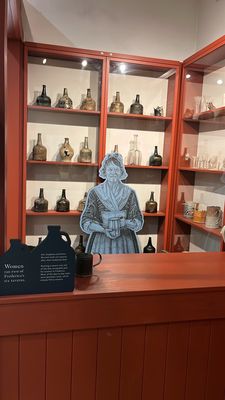
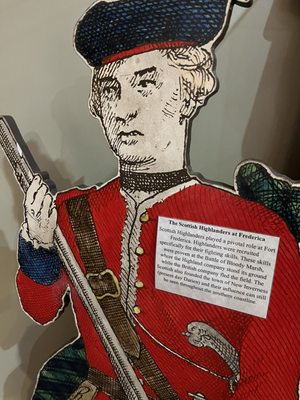
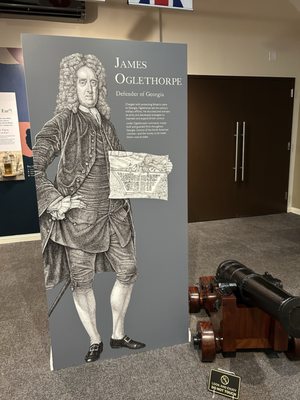
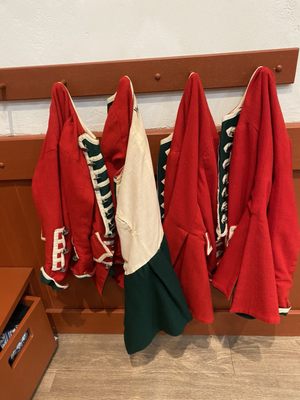
Back to the Visitor's Center, where, if you are lucky, some federal employee will be present to accept your $3 admission fee. That'll gain you admission to the site's tiny museum, too, and here comparisons to Georgia's Ft. King George Site are more than merited. The museum here is so small you can literally see all of it without entering. There's some maps of the town, and a large diorama; the two disagree (look at the curious building at the northwest corner of the diorama). A few cases display a few further artifacts found at the site. One 18th c. painting demonstrates how artless 18th c. painters could be at their worst. Some sham 18th c. outfits are provided for boys and girls in one corner for a photo op. That's it? Yes, that's it.
Audio tours are available from the Visitor's Center for a nominal charge. I doubt they tell you more than the info placards do. The gf and I got the gist of everything without them.