Gregory M.
Yelp
Kinosaki Onsen is an incredibly charming town known for its seven natural onsens (natural hot springs) and the seven sentos (bathhouses) built around them.
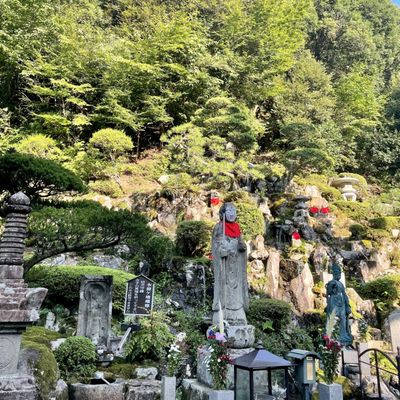
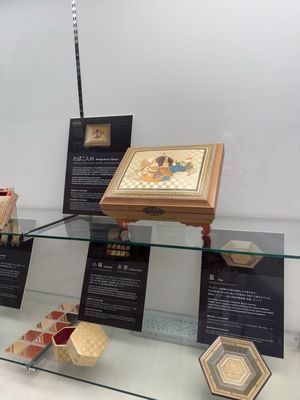
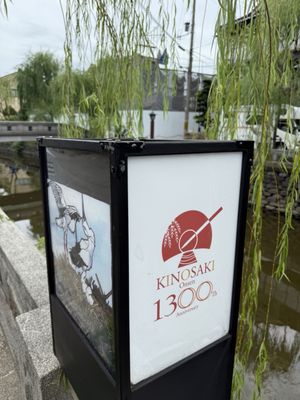
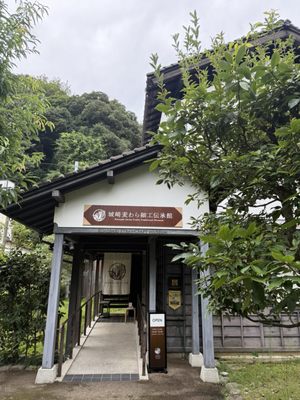
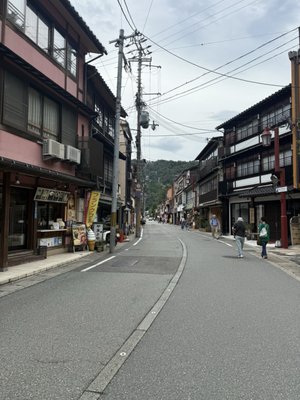
A township of only 3500 people, Kinosaki Onsen is celebrating its 1300 years of history. A two and a half hour train ride from Kyoto, one can easily traverse the entire length of the town in about 30 minutes. However, beyond the bathhouses, there are so many fascinating spots to see. Shrines, temples and shops devoted to local artisans. This is an absolutely gorgeous spot to sight-see and witness a much different perspective and pace of life in Japan than major cities like Kyoto or Tokyo.
As someone who is heavily tattooed I was aware that most bathhouses in Japan were not tattoo friendly. Many of the ones available in the big cities will allow you to enter if you have a small tattoo you can cover with a patch. That would be impossible for someone like me. So I came realizing that I'd have to look carefully if I wanted the Sento/Onsen experience as a person with a lot of tattoos.
The websites advertising Kinosaki Onsen are explicit in the fact that they are very tattoo-friendly and that all seven of the Sentos allow for anyone to come and bathe, regardless of how much pigment has been added to their skin. Considering how prosperous this small town appears (and how many tattooed tourists I saw), I get the impression that this was a wise move from a tourism perspective. Even by Japanese standards, the place was immaculately clean and well-preserved and in the middle of a truly beautiful spot in Japan.
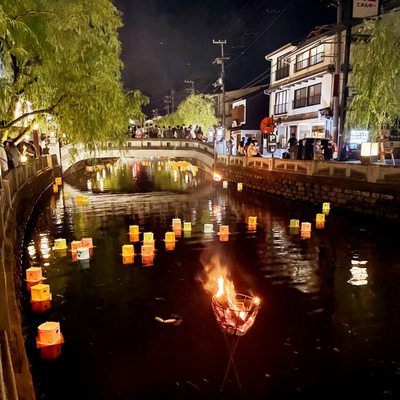
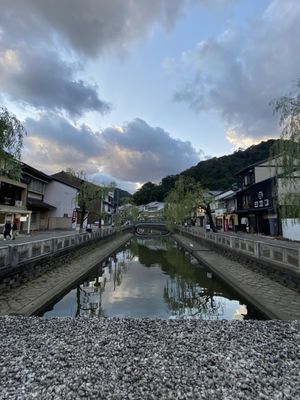
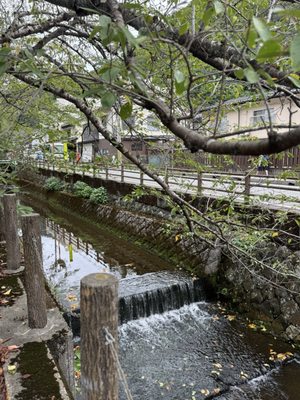
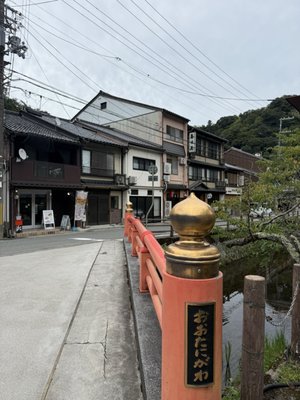
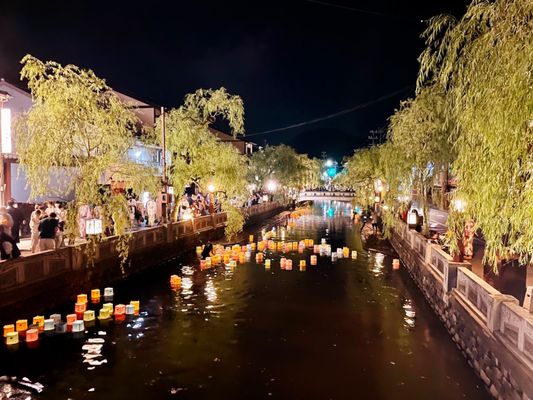
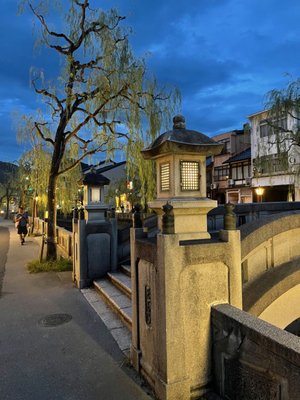
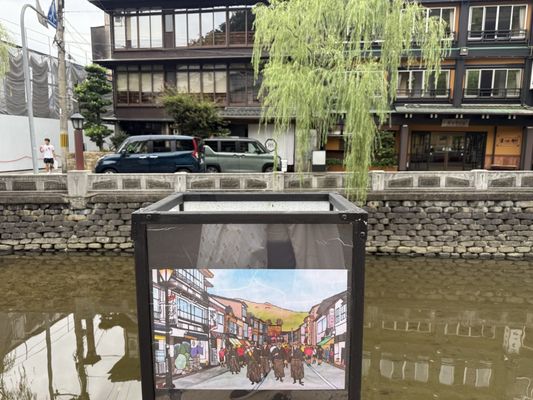
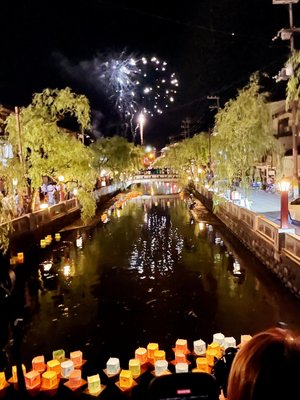
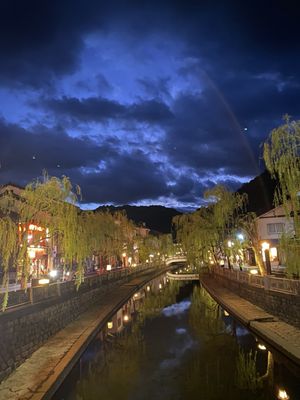
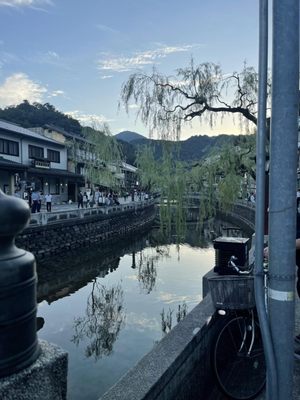
The Otani River runs through the middle of the town, creating an incredibly picturesque view of bridges crossing the river and streets lined with willows and lanterns. Of all the places I visited in Japan (Tokyo, Kyoto...etc.), this place gave me the feeling I first had discovering traditional Japanese paintings and prints.
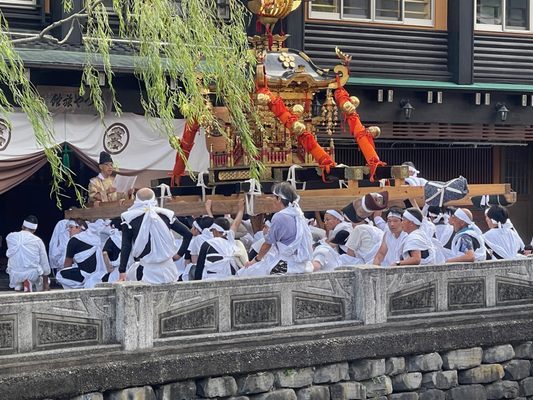
I had the amazing luck to arrive during the Kinosaki Fall Danjiri Festival. During this Shinto festival, men from various shrines in Kinosaki Onsen carry elaborate miniature shrines on their shoulders and engage in mock battles. It was so fascinating and the shrines they carried were absolutely beautiful. I felt so privileged to get this picture of the cultural/religious life of the people of this small town.
I visited four of the seven sacred bath houses. Each is different, but they all are fed by the natural hot waters of this geo-thermally active area. My favorite was Goshono-Yu which is Sento that has a section that is open air and you can see the hot waters flowing down waterfalls into the bath. Truly magnificent.
Most of the hotels in this town offer guests yukatas (un-lined cotton kimonos) and getas (traditional japanese clogs). Besides for being comfortable, they allow for you to easily dress and undress to use the bathhouses (where clothing of any kind is absolutely forbidden). Most of the hotels, including my own, offered a guest pass with a QR code that allows for you to visit all of the Sentos in the town. The second day I was there I visited three in the span of two hours. It was wonderfully relaxing, though I will tell you that it took me some time to get used to just how hot the water is. It's quite a bit hotter than you would find in the average hot tub/Jacuzzi in the West.
Honestly, I could probably go on writing about Kinosaki Onsen indefinitely. My advice, if you're even remotely close (like Kyoto), it is well worth the train ride to visit this town. Between the beautiful views, access to the delightful bathhouses and the cultural festivals, you will take with you a host of wonderful memories.
Highly, HIGHLY recommended.