Grand Canal
Canal · Dorsoduro ·
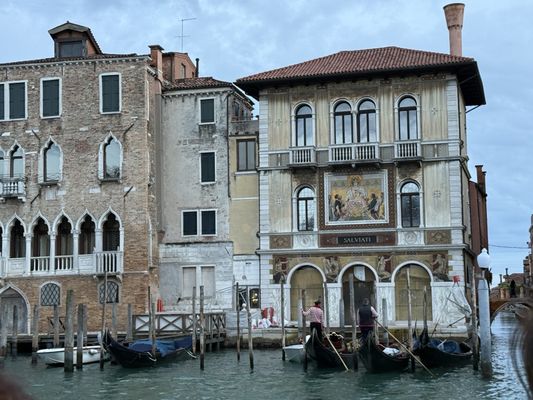
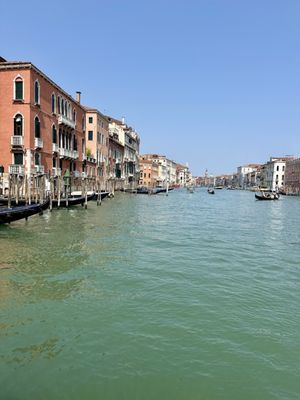
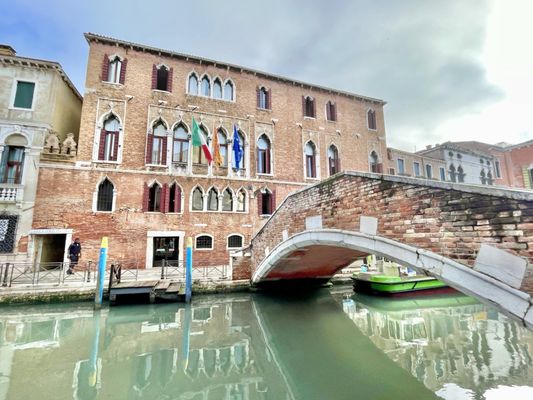
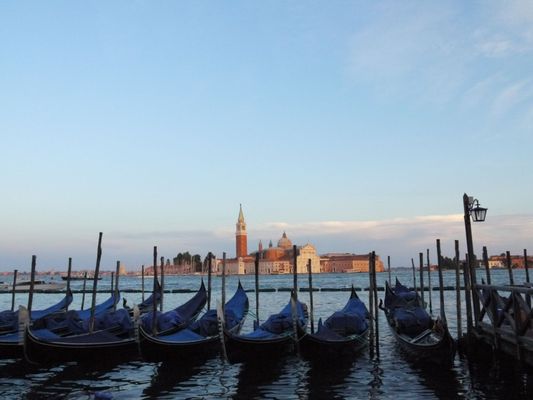
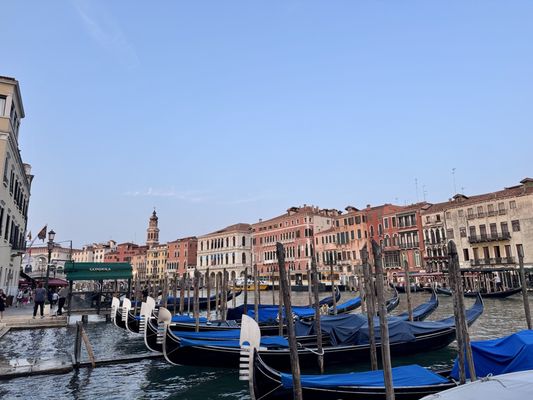
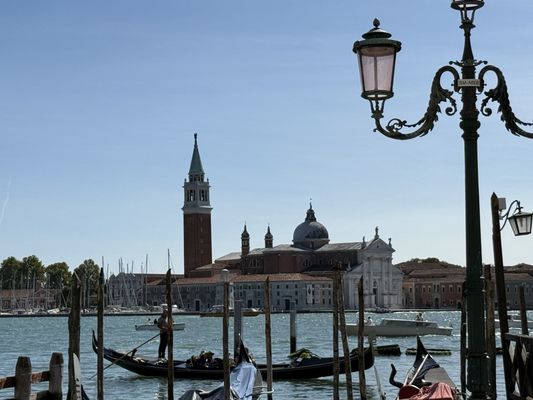
Historic waterway lined with majestic palaces, bustling with boats













Information
30100 Venice, Metropolitan City of Venice, Italy Get directions
Historic waterway lined with majestic palaces, bustling with boats
30100 Venice, Metropolitan City of Venice, Italy Get directions
"Italy is renowned for its historical landmarks, delicious cuisine, and beautiful landscapes."
"We shot on the Grand Canal. We shot in the actual train station [Stazione di Venezia Santa Lucia], which is pretty iconic."
"Grand Canal The Grand Canal is the no-brainer must-do Venice experience, and the best way to explore the city's main thoroughfare is on a vaporetto, or water bus. For a great introduction to the area, ride the vaporetto from the railway station, at the edge of the lagoon on one end of the canal, all the way to its other end at San Marco’s basin. Along the two-mile trip the waterway makes a big reverse S-shape through Venice ’s central districts and gives you a true feel for what makes this romantic, historically rich city tick. The banks of the canal are lined with Venice ’s most expensive real estate. Here, you’ll find some 170 palazzi originally built for nobility between the 13th and 19th centuries. Today they house luxury hotels, private residences, and even art museums."

"Grand Canal The Grand Canal is the no-brainer must-do Venice experience, and the best way to explore the city's main thoroughfare is on a vaporetto, or water bus. For a great introduction to the area, ride the vaporetto from the railway station, at the edge of the lagoon on one end of the canal, all the way to its other end at San Marco’s basin. Along the two-mile trip the waterway makes a big reverse S-shape through Venice ’s central districts and gives you a true feel for what makes this romantic, historically rich city tick. The banks of the canal are lined with Venice ’s most expensive real estate. Here, you’ll find some 170 palazzi originally built for nobility between the 13th and 19th centuries. Today they house luxury hotels, private residences, and even art museums."
"Grand Canal The Grand Canal is the no-brainer must-do Venice experience, and the best way to explore the city's main thoroughfare is on a vaporetto, or water bus. For a great introduction to the area, ride the vaporetto from the railway station, at the edge of the lagoon on one end of the canal, all the way to its other end at San Marco’s basin. Along the two-mile trip the waterway makes a big reverse S-shape through Venice ’s central districts and gives you a true feel for what makes this romantic, historically rich city tick. The banks of the canal are lined with Venice ’s most expensive real estate. Here, you’ll find some 170 palazzi originally built for nobility between the 13th and 19th centuries. Today they house luxury hotels, private residences, and even art museums."
Dr. Vyas S K.
Shane J
umang J.
stephanie C.
Loo Y.
mrsm
Eylül Deniz K.
Param S.

Britney M.

Dawn C.

Maruko X.

Chris J.

Ramesh D.

Tanja N.

Shayla B.

Kelly S.

Michael W.

Latifa S.
Manmir A.

Andrea U.

Marianne W.

Alison M.

Michael S.

Denisa W.

Michelle O.

Michelle L.

Patricia L.

Tigra C.

Alexander H.

Sanjay G.

Ashley S.

Anco M.

Mike F.

Tiffany D.

Jeremy G.

Kristin U.

Benny H.

David S.

John L.

Victoria J.

Scott F.

Kimberly V.

Porsche C.

Anton K.

Michelle M.

Chris S.

Victoria A.

Maggi R.

Sam T.

Cydney M.

Sandy K.

Jay Y.

Sharon H.

Tristan P.

Nadia G.

Josh B.

Ivy L.

