Ken N.
Yelp
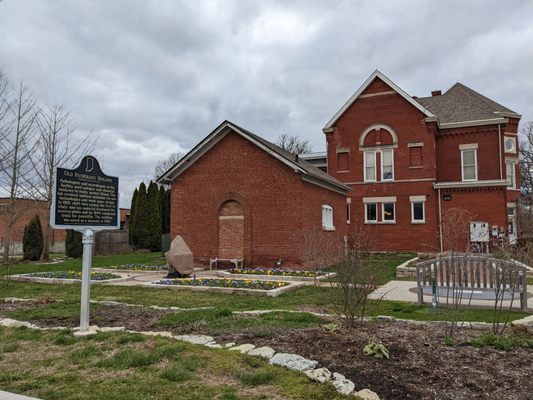
The Indiana Medical History Museum is a worthwhile field trip for anyone interested in history, medicine, psychiatry, and, to some extent, the macabre. On the site of what used to be an 160 acre campus that housed 2000 patients with a variety of "mental illness", very few of the buildings escaped the wrecking ball. Now, the tour concentrates on the Pathology Building which was the center for instruction as well as supporting the testing and autopsy of the patients on campus.
Tours start hourly. Because there is limited volunteer staff available, the doors are locked between tours. So plan on arriving a few minutes before the start of each hour or you will have to wait outside. I am not sure if they can take credit cards, so plan on having $10 per adult on your tour. Know that this isn't something for juveniles since most items are not to be handled. Cameras are welcome, but the tour guide will tell you about places where cameras are not allowed due to privacy of the former patients' records.
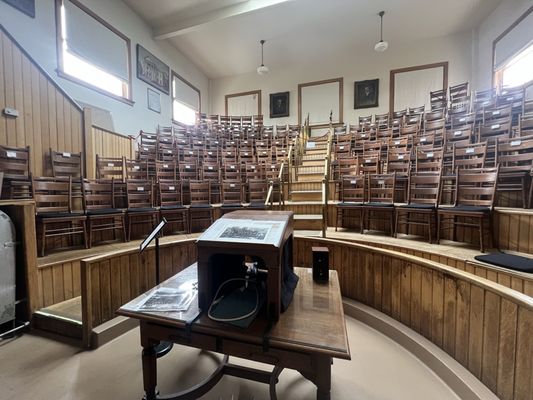
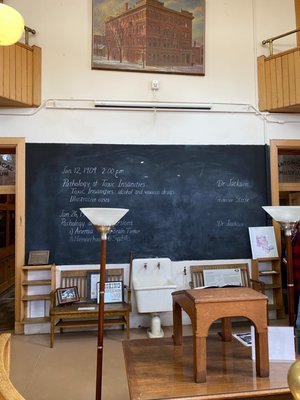
After a brief wait, our group proceeded into the Amphitheater. This large room served as both a lecture hall and taught through the autopsies performed in the spot where the lecturer would stand. Students from the Indiana Medical College and from the Central College of Physicians and Surgeons received instruction. In 1907, these two schools merged with the Ft Wayne College of Medicine and the IU School of Medicine. By 1910, the autopsies were no longer conducted in the large room since the spread of tuberculosis affected nearly all of the physicians doing the autopsies and contaminated those who sat close to the dissection table.
Of interest in the Amphitheater is the original ice fed water fountain so that the lecturers would be able to get a drink. Note that students were not allowed to have a drink from the fountain. A large block of ice was loaded into a cabinet on the back side of the wall and as it melted, made fresh water available in the lecture room.
The next stop on the tour led to the smaller autopsy room. A smaller room at the entrance held a "body cooler" while the surgeon prepared for the autopsy. The larger room was sparse for easier cleanup and contained a metal table, a floor drain, weight scales, and a speaking tube where the surgeon performing the autopsy could speak into and have another surgeon on the floor above transcribe the notes. Each autopsy had four pages of documentation per corpse.
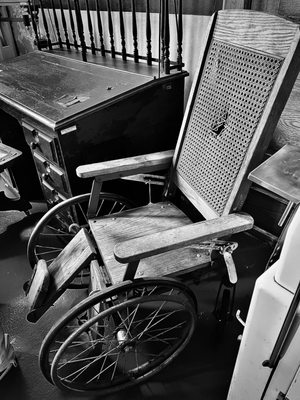
The autopsy room has become a bit of a storage room now. In there now, you will find donated equipment like an iron lung for youths, an old wooden phyician's chair, assorted wheel chairs of many years, and an odd collection of items that children/people had swallowed and had to have surgery to remove. In the drawer we viewed, there were mostly an array of buttons and safety pins. Other drawers had a collection of just about anything small enough to be swallowed.
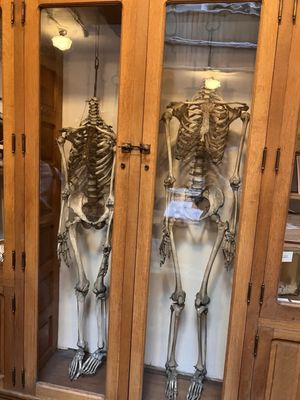
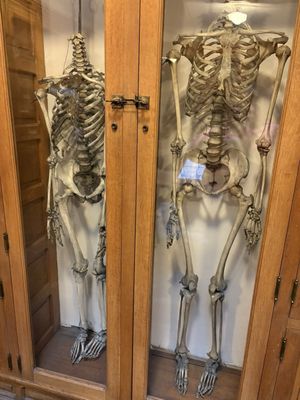
The next room was the Anatomical Museum where a number of glass jars housed sections of brain traumas and abmormalities. We were given time to wander through the exhibits and ask questions. Of note was a "Brain-Slicing Machine". Wow! Another point of interest were a student's project of removing an actual nerve system from the spinal cord down to the fingers. At first, it looked like a sideways tree, but upon closer examination, I could see it was real and had small labels identifying where the nerve sensations would originate.
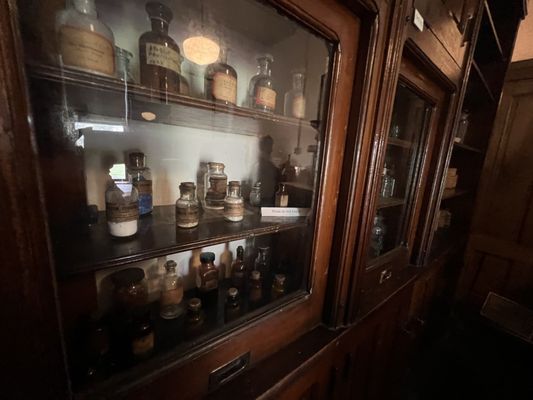
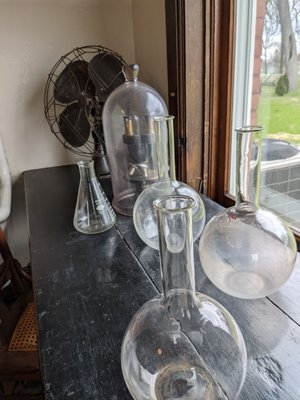
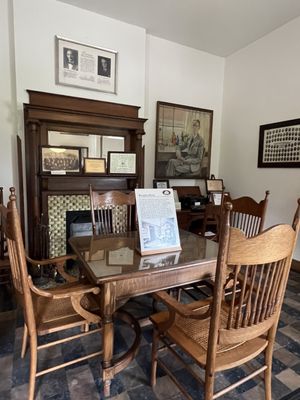
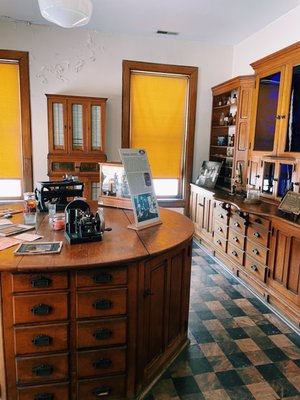
The tour advanced more quickly through the remaining rooms. On the rest of the first floor, there was a Chemical Storage Room, a Bacteriology Laboratory, and a reception area. The story of how syphilis was treated before the discovery of penicillin was discussed. Syphilis' third stage could lead to insanity, so there were many patients on campus who were there due to this disease. Tests were developed there to help physicians identify the disease. Early treatments included giving Mercury to patients. That was replaced by Arsenic! One of the last treatments before the availability of penicillin was to infect the patients with malaria where the extreme fever would kill off the STD in about 30% of the patients.
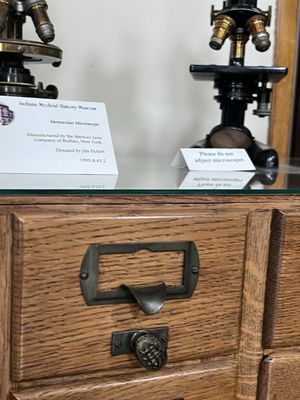
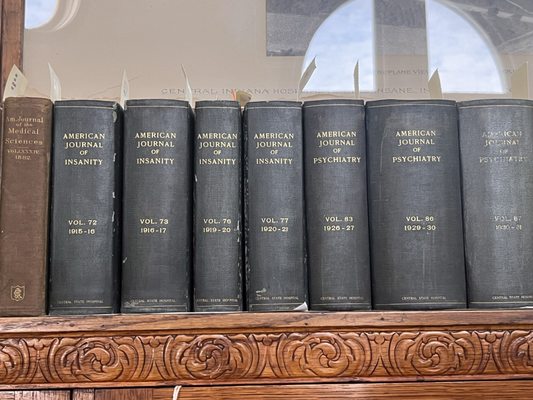
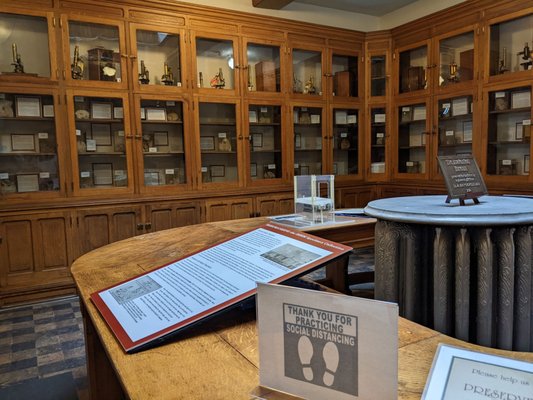
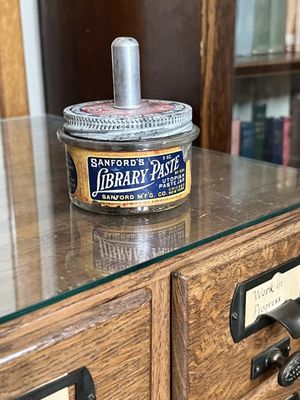
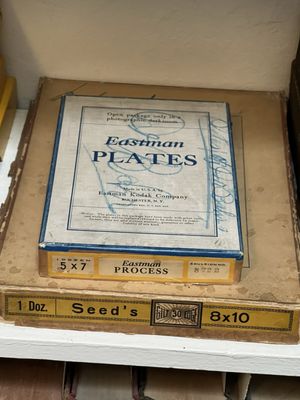
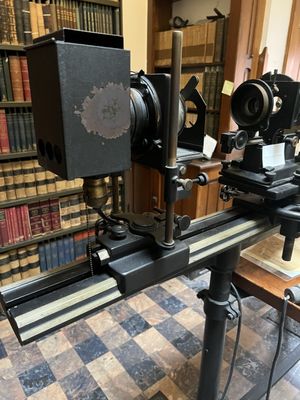
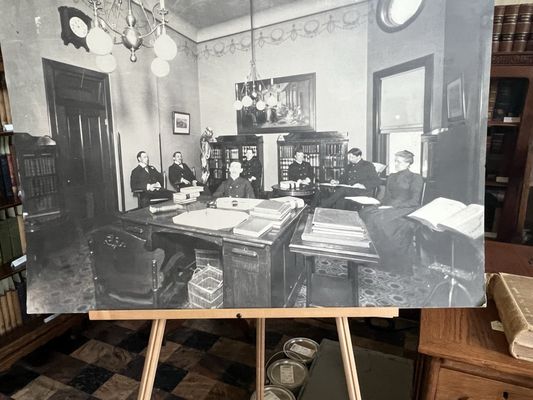
The upstairs (sorry, no elevators available) houses the library, Histology Laboratory (microscopic tissue study), Clinical Chemistry lab, Photography lab, and patient records (where the autopsies were recorded from dictation below.) In these rooms you will hear stories about advances in patient care and perception. Mental patients were often shackled or kept drunk in the early days of treatment in order to manage their behavior. Eventually, knowledge and acceptance that these illnesses could be treated and that patients should not lose their dignity and rights as humans prevailed.
The tour lasted about an hour. In the spring, the tour expands to include the former morgue (repurposed as a 1950's doctor's office) and an herbal garden.
Review #212