Iron Pillar
Monument · Mehrauli ·
Ancient Indian metallurgy marvel, rust-resistant for 1600 years



Information
G5FM+VXW, Mehrauli, New Delhi, Delhi 110030, India Get directions
Ancient Indian metallurgy marvel, rust-resistant for 1600 years
G5FM+VXW, Mehrauli, New Delhi, Delhi 110030, India Get directions
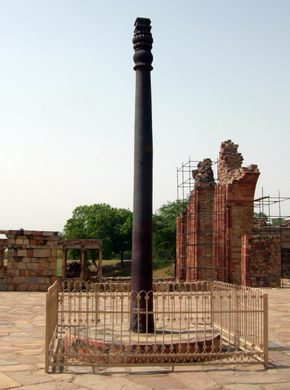
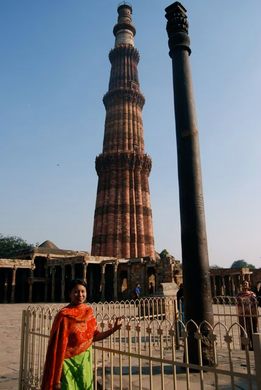
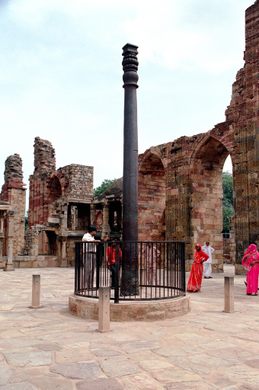
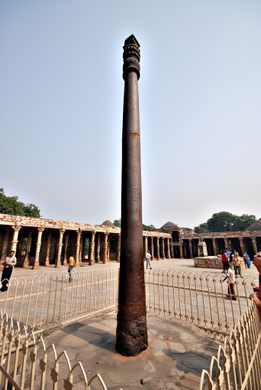
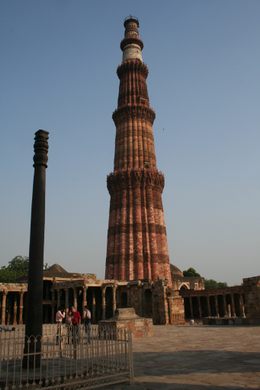
"On first appearance it doesn’t look like much–a 22 foot tall iron pillar, slowly rusting away in the middle of an empty square in Delhi, India. The surprise comes in learning its age, some 1600 years old, much older than one would expect for an iron column which, judging from other exposed iron, should have turned to a pile of dust long ago. It was this “enigma” which lead some people to include the Iron Ashoka pillar in a group of objects known as OOPArt’s or “out of place artifacts.” These objects are said to be in some way unreasonably futuristic for their time, as if they had come from another place and time. Some among these “out of place” artifacts have been shown to be outright hoaxes, such as the “Coso Artifact” a spark plug said to found embedded in a chunk of rock 500,000 years old. In fact it was a 1920s Champion spark plug which had developed a shell of iron oxide concretion rust around it. Some discoveries have turned out to be a case of underestimating the technological capabilities of people past, such as the antikythera mechanism – an ancient mechanical computer from 100 B.C.—which is known to be both real, and previously to its being discovered, would have been seen as an anachronism. Happily, the Iron Ashoka Pillar of Delhi falls in the second category. Despite being classed with items like the Coso Artifact, and though much was made of its 99.9999% iron purity so pure no one knew how they cast it, (in actually it is only 98% pure), of “ancient and lost” techniques in metallurgy, and of suggestions that it was made of some sort of futuristic or non-earthly metal abounded, in fact the column is much closer to the antikythera mechanism. It is a simple example of the exquisite craft and knowledge of ancient peoples. Ninety eight percent pure wrought iron, the column is a absolute testament to the high level of skill achieved by ancient Indian ironsmiths. It would have had to been made using a coal heated furnace to even create a heat hot enough to achieve forge welding, where two or more pieces of metal were hammered together. However, it has avoided corrosion from the rains, winds and temperature fluctuations over the last 1600 years, not through a conscience effort or magical metallurgy technique on the parts of the pillar’s creators, but through the accidental formation of a “passive protective film.” This film was created by accident through a complicated combination of the lack of lime in the furnaces used to make the iron pillar, the presence of raw slag and unreduced iron in the pillar, and the wetting and drying cycles of the weather. All of which helped to create a 1/20th of a millimeter thick layer of “misawite,”on the pillar. Misawite is a compound of iron, oxygen and hydrogen which does not rust. It seems rather than chalk up the pillar to ancient astronauts, or alien metallurgy, it is enough to recognize the skill involved in creating a six ton, 22 foot high iron pillar, some 1600 years ago." - ATLAS_OBSCURA
"On first appearance it doesn’t look like much–a 22 foot tall iron pillar, slowly rusting away in the middle of an empty square in Delhi, India. The surprise comes in learning its age, some 1600 years old, much older than one would expect for an iron column which, judging from other exposed iron, should have turned to a pile of dust long ago. It was this “enigma” which lead some people to include the Iron Ashoka pillar in a group of objects known as OOPArt’s or “out of place artifacts.” These objects are said to be in some way unreasonably futuristic for their time, as if they had come from another place and time. Some among these “out of place” artifacts have been shown to be outright hoaxes, such as the “Coso Artifact” a spark plug said to found embedded in a chunk of rock 500,000 years old. In fact it was a 1920s Champion spark plug which had developed a shell of iron oxide concretion rust around it. Some discoveries have turned out to be a case of underestimating the technological capabilities of people past, such as the antikythera mechanism – an ancient mechanical computer from 100 B.C.—which is known to be both real, and previously to its being discovered, would have been seen as an anachronism. Happily, the Iron Ashoka Pillar of Delhi falls in the second category. Despite being classed with items like the Coso Artifact, and though much was made of its 99.9999% iron purity so pure no one knew how they cast it, (in actually it is only 98% pure), of “ancient and lost” techniques in metallurgy, and of suggestions that it was made of some sort of futuristic or non-earthly metal abounded, in fact the column is much closer to the antikythera mechanism. It is a simple example of the exquisite craft and knowledge of ancient peoples. Ninety eight percent pure wrought iron, the column is a absolute testament to the high level of skill achieved by ancient Indian ironsmiths. It would have had to been made using a coal heated furnace to even create a heat hot enough to achieve forge welding, where two or more pieces of metal were hammered together. However, it has avoided corrosion from the rains, winds and temperature fluctuations over the last 1600 years, not through a conscience effort or magical metallurgy technique on the parts of the pillar’s creators, but through the accidental formation of a “passive protective film.” This film was created by accident through a complicated combination of the lack of lime in the furnaces used to make the iron pillar, the presence of raw slag and unreduced iron in the pillar, and the wetting and drying cycles of the weather. All of which helped to create a 1/20th of a millimeter thick layer of “misawite,”on the pillar. Misawite is a compound of iron, oxygen and hydrogen which does not rust. It seems rather than chalk up the pillar to ancient astronauts, or alien metallurgy, it is enough to recognize the skill involved in creating a six ton, 22 foot high iron pillar, some 1600 years ago." - ATLAS_OBSCURA
Satyam
Digvijay T.
ROHITH M.
Ashish K.
Satnam S.
rakesh S.
Shashi Bhushan R.
Dr P J G.
