Qype User (.
Yelp
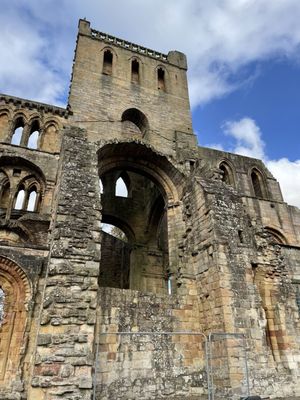
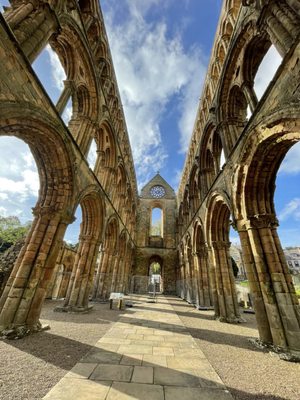
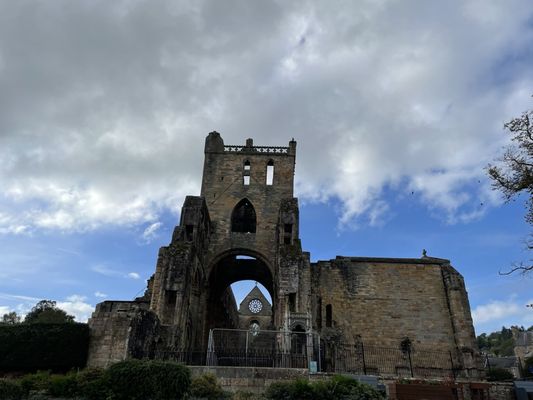
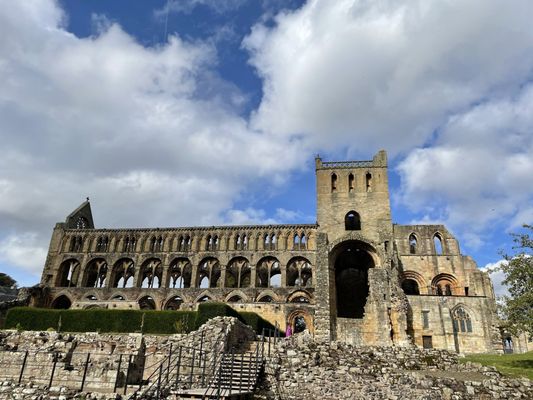
One of the four great Border abbeys it is well worth the £5.20 entrance fee. It feels haunting and impressive and I, visiting alone, felt dwarfed, dominated, and in awe of what it must have looked like when complete.
It was a Priory ordered by King David in 1138. Made from local stone, it took over 100 years to complete the abbey.
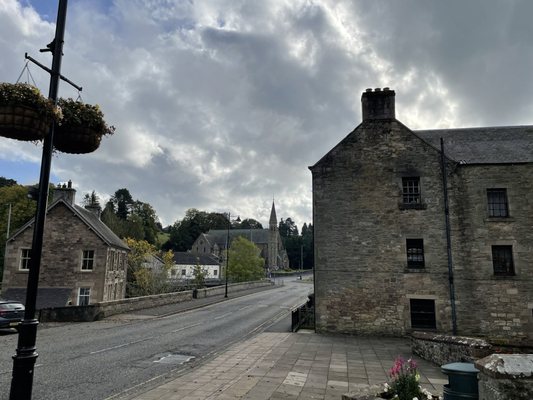
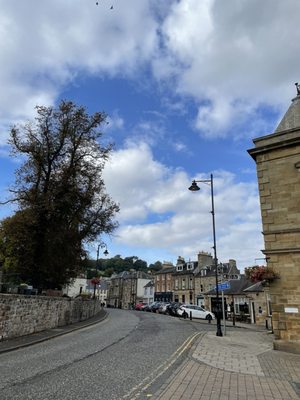
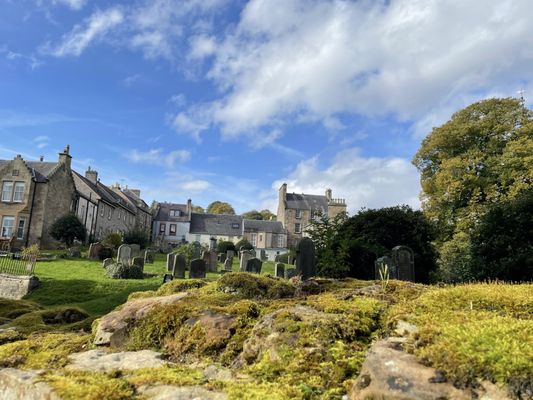
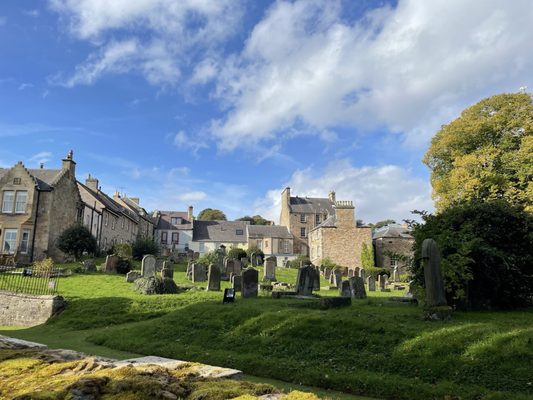
On the South facing slopes of River Jed it is town centreish.
There has been a church on this site since the 9th century. The Augustinian order took it over in the 11th century and the old church was replaced by the present wonderful building in the early 1200s. David built it to demonstrate to his own subjects - and to those in England - that he could create a magnificent building in the southernmost part of his kingdom.
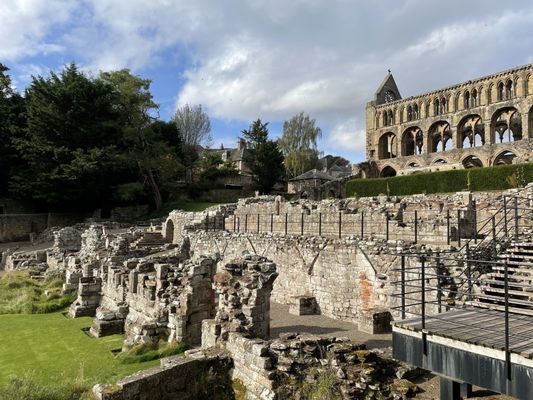
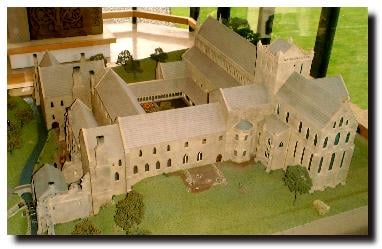
He allowed the monks to create the huge cross-shaped plan of nave, presbytery and transepts in a prominent position while the cloister, chapter house, cellars and other accommodation could be built on lower levels I think they were underground but nothing remains).. leaving the flowing arches of the nave to dominate the site.
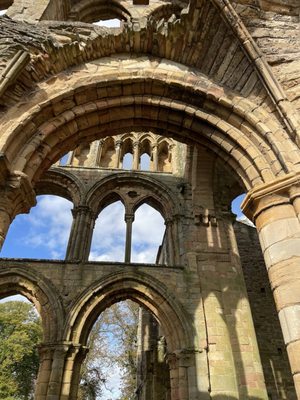
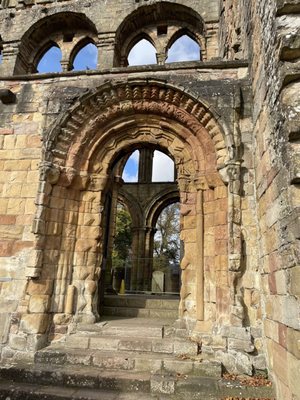
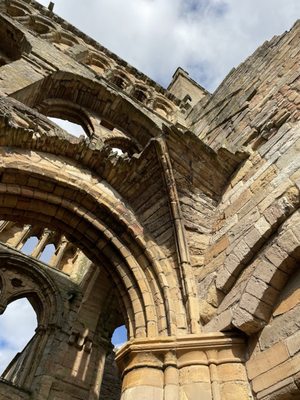
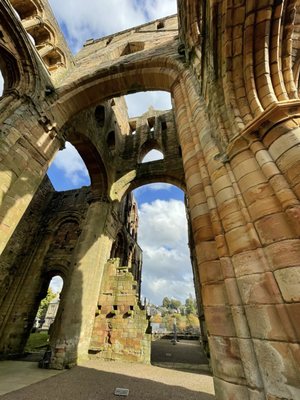
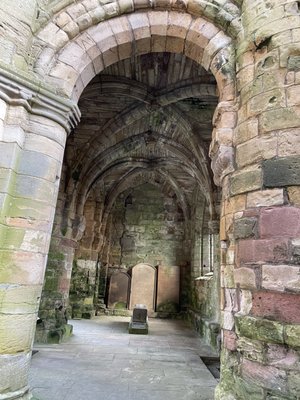
Standing to full height, and missing only its roof, the nave comprises a spectacle of richly moulded arches, elegant clustered columns topped with waterleaf capitals, and a continuous row of slender lancet windows forming the clerestory.
A truly delightful aspect of Jedburgh Abbey is the reconstructed cloister garden, which has been designed and planted to give an impression of a typical monastery garden of the 1500s.
During the border wars for Independance it was badly damaged and rebuilt many times.
These Wars with the English drove the monks out by the end of the 13th century. The Abbey was reconstructed and again part destroyed several more times during the 14th, 15th and 16th centuries.
Immediately after the damage inflicted by the English army at that time, Scotland went through a period of religious reformation which saw an end of the dominance of the Roman Catholic church - and all its symbols, including abbeys and monasteries. So Jedburgh and many other similar buildings were never rebuilt. However, it was used as a parish church.
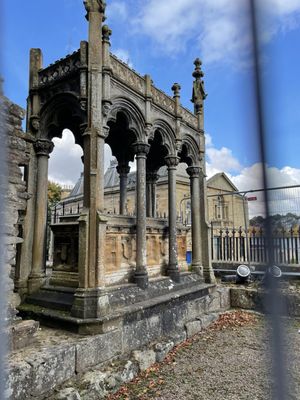
In the late 19th century, when a new parish church was built on the other side of the Jed Water, the Marquis of Lothian paid for major repairs to be carried out and when the great abbey was taken into State care in 1913, it was in better shape than many of its sister abbeys in the Borders.
Despite these trials it is one of the best preserved of the Border abbeys.
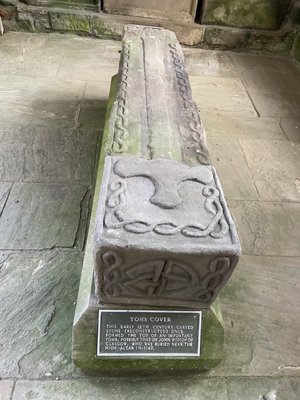
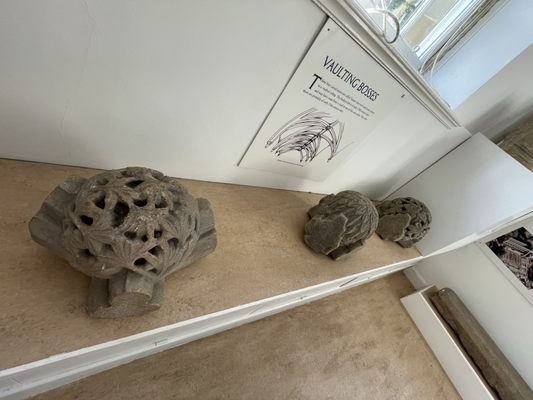
visitor centre has the priceless comb and other artifacts found.
One thing I would say is this part of Scotland seems very cold. I went in October and was freezing. Wrap up warm.