The Citadelle of Québec
Fortress · Old Québec ·
Historic fortress & active military base with museum


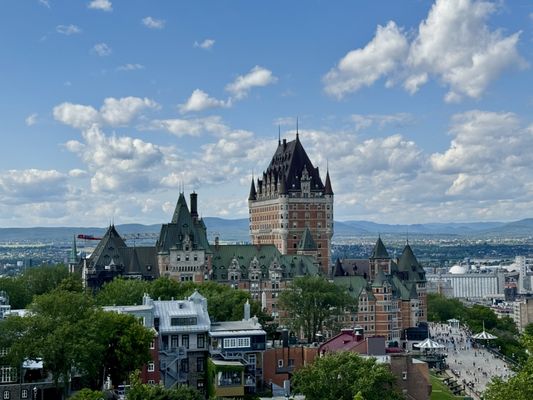


Historic fortress & active military base with museum
"Sitting at one of the city’s highest points, the Citadelle of Québec is the largest British fortress in North America and an active military base whose 19th-century buildings can be explored only on tour; I checked ahead for seasonal events like musical performances and the changing of the guard." - Julia Eskins Julia Eskins Julia Eskins is a writer and editor covering travel, design, and culture. Her work has appeared in Travel + Leisure, Condé Nast Traveler, Vogue, National Geographic, and more. She’s traveled to more than 50 countries, lived in five, and currently calls Toronto home. Travel + Leisure Editorial Guidelines
"I appreciated historic sites like the Citadelle of Québec, which help give the area a quintessentially European vibe alongside romantic cafés, bistros, and snippets of French conversation around cobblestoned streets." - Elizabeth Cantrell Elizabeth Cantrell Elizabeth Cantrell is a senior editor at Travel + Leisure. She edits stories with a focus on outdoor and adventure travel, as well as Canada, Northern Europe, and the Southeastern U.S. Travel + Leisure Editorial Guidelines
"Atop Cap Diamant (Cape Diamond), at the city's highest point, the Citadelle overlooks Old Québec, the St. Lawrence River, and the Plains of Abraham. There have been defensive structures here as early as the French period—in fact, the location of Québec City was chosen because Samuel de Champlain saw the strategic advantages that Cap Diamant offered. The fortifications you see today, however, date to the 19th century: They were built after a failed attempt by Americans to conquer Québec City during the War of 1812. Students of World War II history may be familiar with the Citadelle as the site of the Québec Conferences, when Winston Churchill, Franklin Delano Roosevelt, and Canada 's prime minister, William Lyon Mackenzie King, met to plan their countries' strategies during the war. The Citadelle is still an active military base; the museum inside is devoted to the 22nd Regiment, which makes its headquarters here."

"The Gibraltar of America" Drive half a day north from Boston , and you arrive in French-speaking Québec City, established in 1608 on a strategic bluff above the St. Lawrence River, still surrounded by its wall. Charles Dickens' 19th-century description of the place still holds true: "The impression made upon the visitor by this Gibraltar of America, its giddy heights, its citadel suspended, as it were, in the air; its picturesque steep streets and frowning gateways; and the splendid views which burst upon the eye at every turn, is at once unique and lasting.” Thoreau wrote: “I still remember the harbour far beneath me, sparkling like silver in the sun, the answering headlands of Point Levis on the south-east, the frowning Cap Tourmente abruptly bounding the seaward view in the north-east…You look out from the ramparts of the citadel beyond the frontiers of civilization. Yonder small group of hills [form] the portals of the wilds which are trodden only by the feet of the Indian hunters as far as Hudson's Bay." Mid-summer in Québec city is one giant festival. Come in July for a plethora of outdoor performances in the late-lingering twilight: http://www.infofestival.com/"

"One of the continent’s remaining fortified military sites, this active base and historic fortress offers guided tours exploring nearly 300 years of Canadian military history and houses the on-site Musée Royal 22e Régiment." - Maya Kachroo-Levine Maya Kachroo-Levine Maya Kachroo-Levine is the digital senior editor at Travel + Leisure. She covers hotels, destinations (focusing on Europe, Asia, California, and Mexico), food and drink, cruises, and luxury aviation. Travel + Leisure Editorial Guidelines

