Rod W.
Google
Back from the Edge of the World
After our 8-day trip with Maple Leaf Adventures, we felt like we’d visited the edge of the world, both physically and culturally. Located north of Vancouver Island and south of the Alaska panhandle, Haida Gwaii is a temperate rainforest archipelago at the edge of North America. The indigenous people have made their heritage and culture accessible to visitors.
A walk through this misty temperate rainforest is a mystical and spiritual experience. The forest floor is soft, and the towering spruce, cedar, and pine trees resemble a natural cathedral.
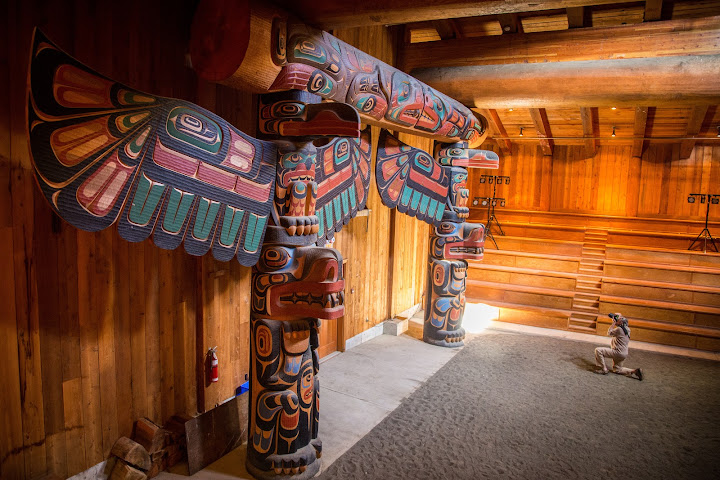
The Haida culture is intriguing, known for its large totems at traditional long house entrances. We learned about matrilineal clan leadership, inter-clan marriage, and pot laches during our trip.
MLA’s journey can be better understood with knowledge of HG’s geography. The northern third has significant population centres with roads and infrastructure. The southern two-thirds is sparsely populated, accessible only by water, and contains the Gwaii Haanas nature reserve.
Our first day arrived at Masset Airport on the northernmost part of Haida Gwaii. Two local guides and drivers met us with vans for our 20 fellow travelers. We visited an indigenous craftsman’s workshop, learning about totem carving and the Haida culture. We had lunch at a local eatery and then went on a forest walk, learning about tree identification by looking at the bark since the foliage is hidden in the canopy. We shopped at local artisan shops and had dinner at Haida House.
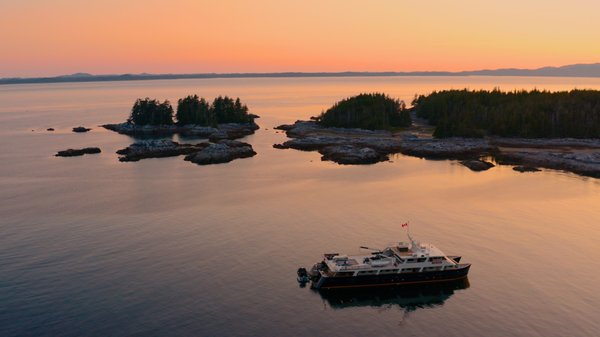
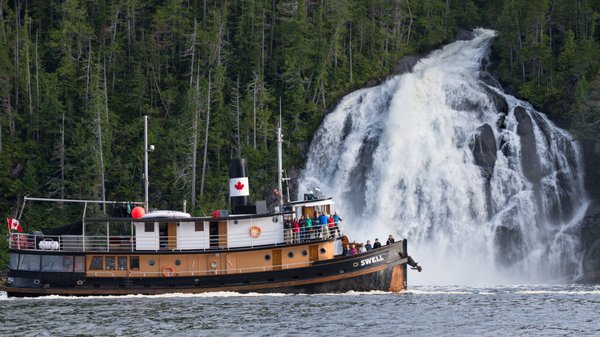
On the second day, we drove south to Skidegate and visited the Haida Museum and Heritage Centre, learning about Haida history and culture. We boarded our home for the next week, the Cascadia, and anchored in isolated quiet coves and inlets every night, transiting by day.
During our week-long trip, we visited four abandoned Haida villages, decimated by smallpox and tuberculosis over a century and a half ago. Today, they are historical sites staffed by welcoming Haida Watchmen who intentionally do not preserve them.
An approachable Haida elder onboard shared a song, a craft experience, and friendly conversations during meals and drinks, deepening our understanding of the Haida. The onboard experience was noteworthy. Meals were well-done, heavy on seafood and white meats, and offered thoughtful choices of B.C. wines.
Small ship cruising is intimate, and the people onboard, crew, and passengers make or break the experience. We got to know all eleven crew members personally and received excellent service in a relaxed, friendly, and comfortable manner. Our expedition leader kept us informed and involved as our schedule evolved, and he and our onboard naturalist led informative and engaging off-ship shore trips.
We were fortunate to share the ship with twenty like-minded fellow travellers on our MLA journey. Despite MLA not screening passengers, we enjoyed enjoyable interactions with the other guests, each with unique backgrounds, sharing experiences, and great conversational skills. While we’ve enjoyed other small ship cruises and expedition cruises with around 100 guests, MLA stands out for its spectacular scenery, in-depth cultural exposure, excellent crew, and wonderful group of kindred travellers.