F. F.
Yelp
I finally got around to visiting this quirky place and I'm so glad I did. I don't know what I was expecting, but it wasn't what I found. I didn't plan enough time, and had to be hustled out at closing. Half a day is a good strategy, but you could take even longer to just linger in a very cool place.
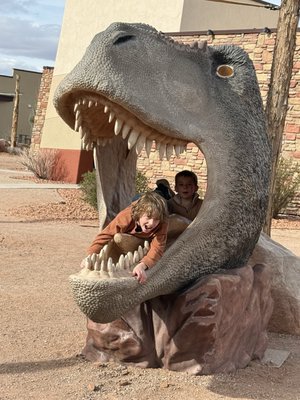
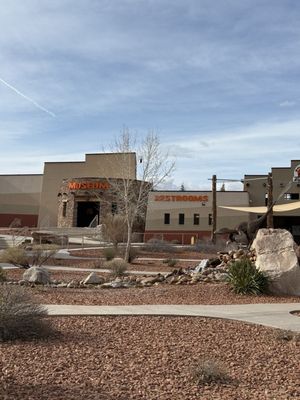
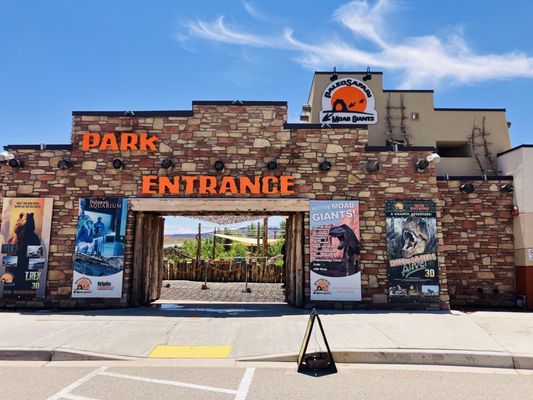
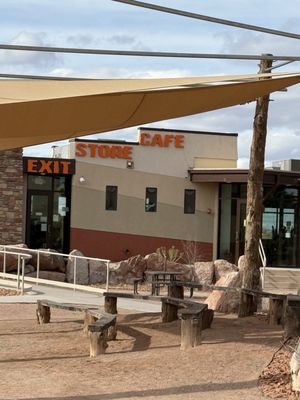
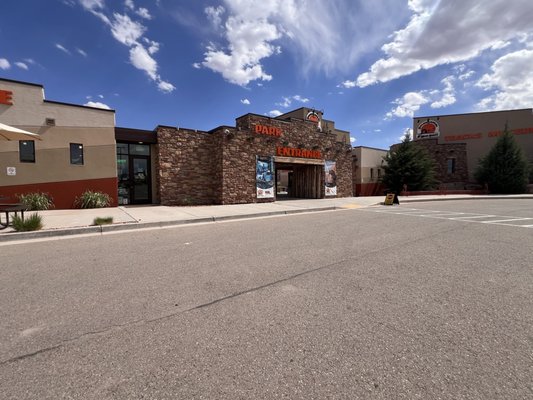
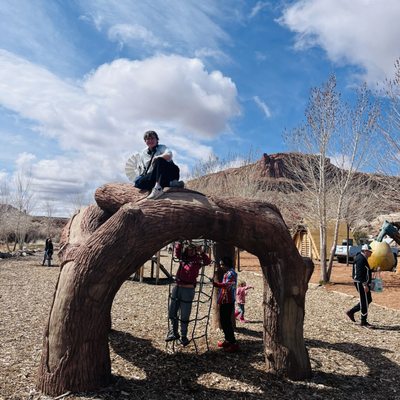
Probably best to think of this as a dinosaur themed "mall" or amusement park. You park outside, then (with the correct pass) wander around visiting or just hanging out at the restaurant, museum, observation tower, playground, theatre, 3D aquarium, walking trail, and other attractions.
The theatre is a good place to start for an excellent film introduction to the place...and the universe. Check the show times and coordinate with the times for the 3D aquarium--everything else can be done on your schedule.
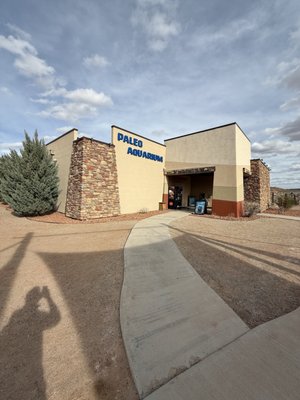
The "aquarium" is also surprisingly cool, with backgrounds that include era-appropriate corals and smaller animals as well as the charismatic large sharks and ichthyosaurs.
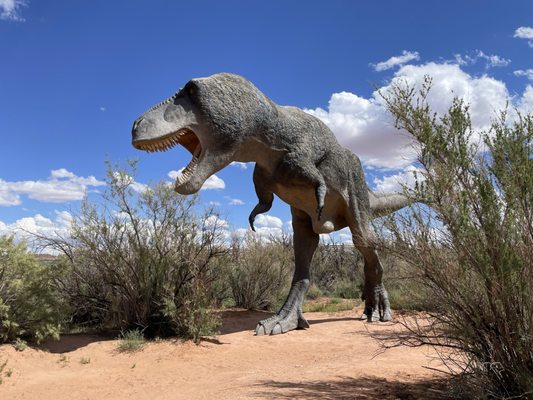
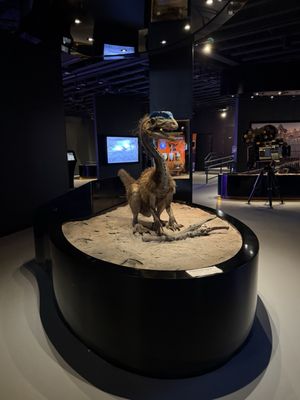
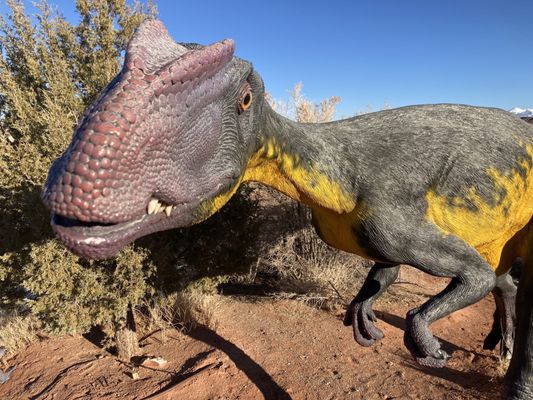
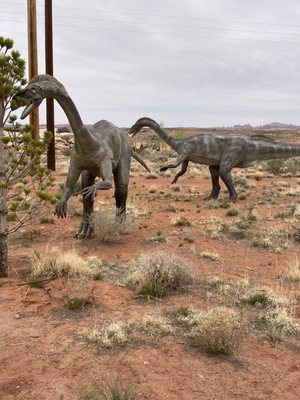
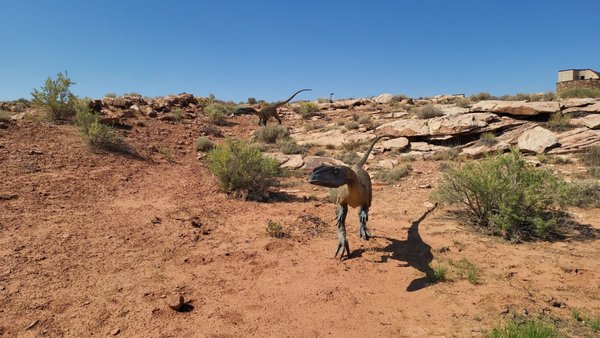
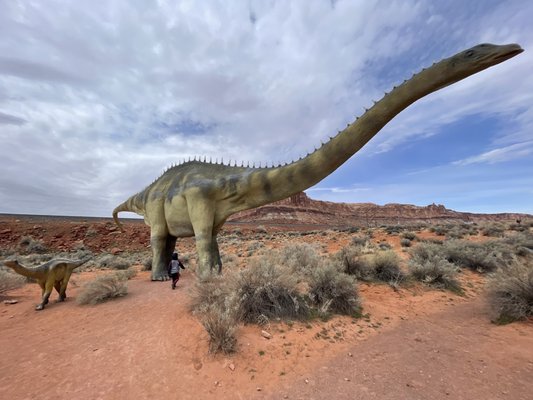
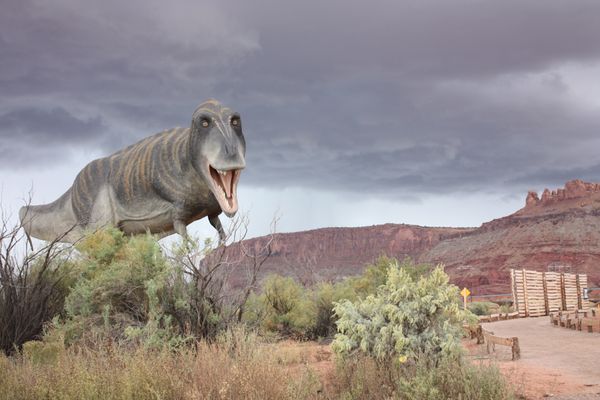
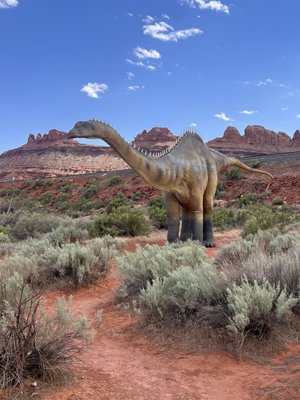
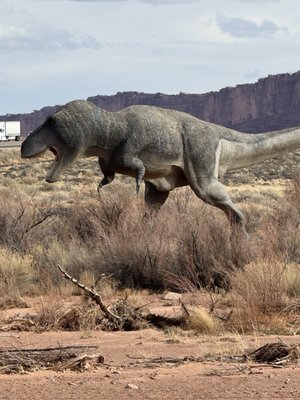
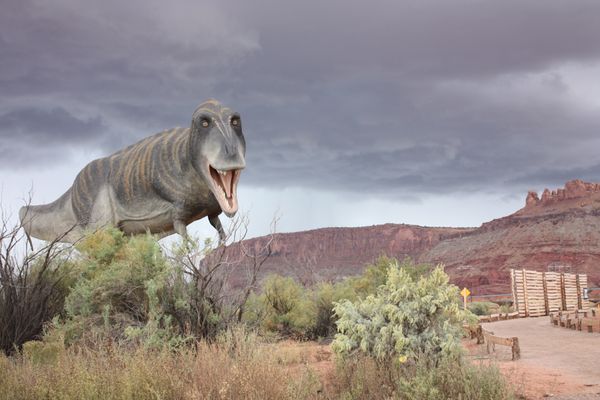
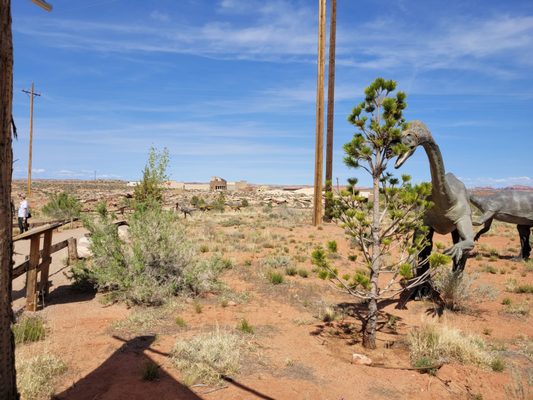
But the stars of the whole show are the gorgeous dinosaur reproductions, made startlingly lifelike by skilled Polish artisans from scientific models. Though most of the animals represented lived in more tropical habitats, the introductory film tells us that dinosaurs occurred in all environments, including arid deserts like Moab. This helps you suspend disbelief as you suddenly encounter a seemingly startled bright-eyed Dino behind a bush as you walk the trail through time.
These models are truly stunning. There's an interesting tradition in Europe of studying the past by doing, as well as just observing. For instance, archaeologists have created Gladiator schools, and fashion factories to learn by trying to replicate the past.
It feels like Moab Giants is designed in the same vein, with working paleontologists in the back, and the models helping you understand the diversity of dinosaur evolution as you observe morphological variations, especially of the often crazy feet that left us fossilized tracks.
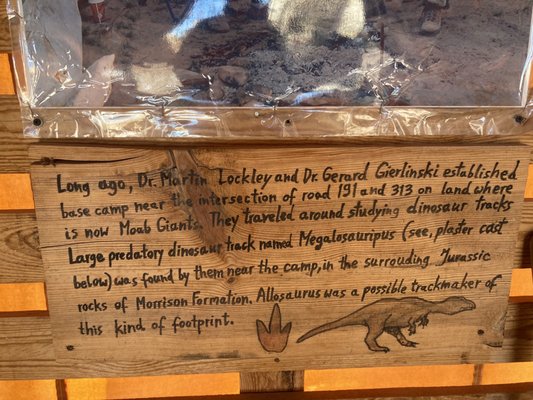
The park does seem to be very personal, largely focusing on the work of the founders, Drs. Gerard Gerlinski and Martin Lockwood who actually did paleontological field work while camped at this site back in the day (there's a mock-up of their Indiana Jones-style camp in the playground). The two also feature prominently in the museum's multimedia.
Gerlinski and Lockwood specialize in ichnology: the study of dinosaur tracks. The park heavily emphasizes this focus, even suggesting sites in the Moab area where you can visit real tracks.
Perhaps it's a little too personal? For instance, maybe I missed it in my hurried visit, but there's no mention of one of the most astounding bits of knowledge gleaned from dinosaur trackways, though not by these scientists: that the animals were warm-blooded (learned through analysis of predator : prey ratios and stride-length). It also appears that the non-native English speaking scientists wrote all the text and voice-over. Let's just say that they probably should have hired a proof reader to correct the grammar errors.
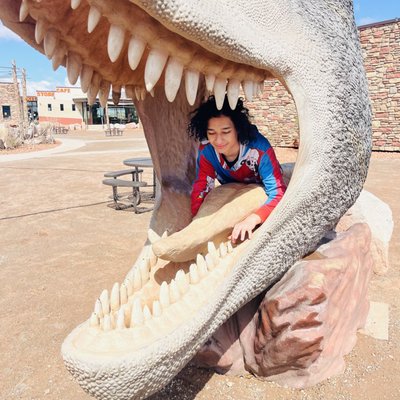
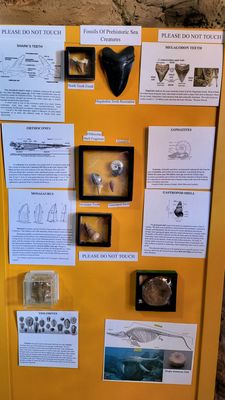
Another semi-criticism is that it's not always clear when you are looking at a real fossil vs. a reproduction here. Maybe it doesn't matter? But there appear to be real tracks in the playground, with kids scrambling all over them.
But these are just quibbles. It's a thought-provoking place for curious adults, not just Dino-crazed kids. And it's an excellent pivot on the "Dinosaur Diamond" to contrast with the Natural History Museum in Vernal.