Isao S.
Yelp
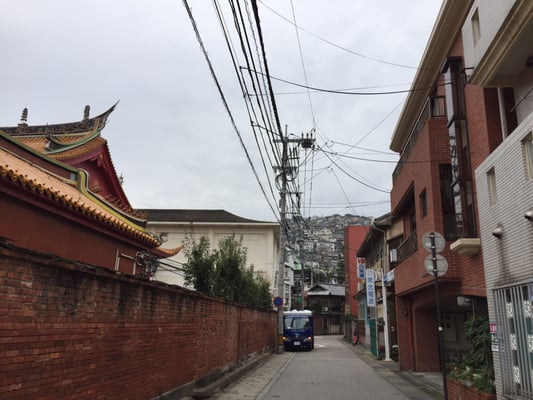
Nagasaki Confucian Shrine and Historical Museum of China.
(1)The history
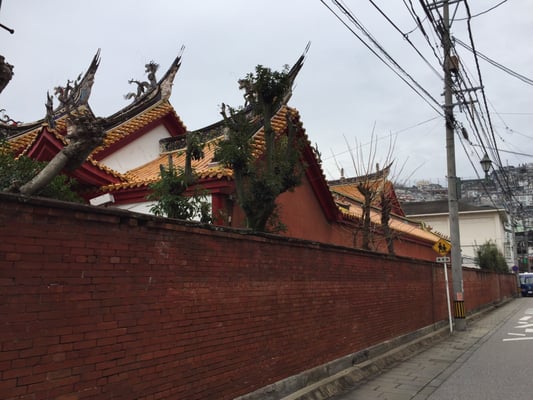
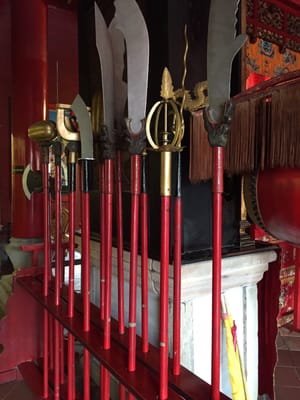
The Nagasaki Confucian Shrine was built in 1893 by the Qing government and people of Chinese heritage in Japan. It is Japan's only full-scale Chinese-style Confucius's mausoleum. The cream of China's history, culture and traditional arts like the Gimon Grate and Taisei Hall are scattered around the grounds, just like the head temple in Qufu of Shandong Province, China.
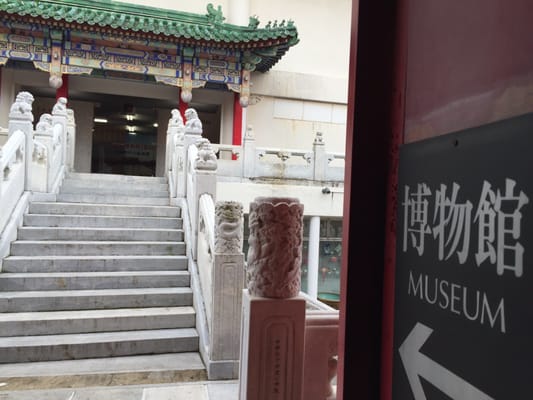
The museum at the back of Taisei Hall was newly opened in 1983 for the purpose of promoting mutual understanding and cultural exchange between Japan and China. Here, China's national treasures provided by museums in China are on permanent display.
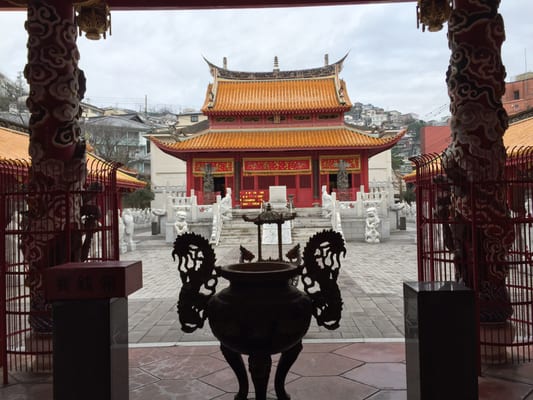
(2)Gimon Gate
The main gate is called the Gimon Gate. It was destroyed by a typhoon in the early Showa period but was rebuilt in 1967. It is the formal inner main gate of this mausoleum. Traditionally, the gates of China's mausoleums are built in odd numbers and the center gate is a sacred gate that only the gods and the Emperor are allowed to pass through, so it is normally closed.
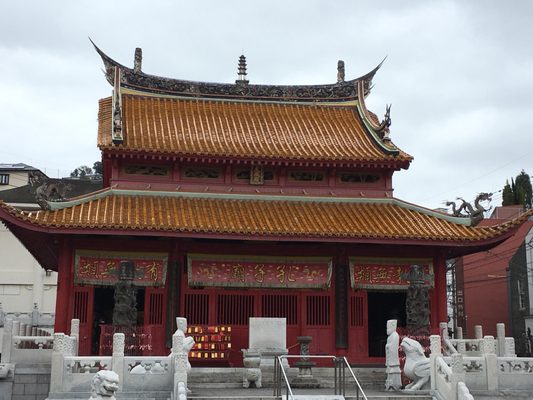
(3)Taisei Hall
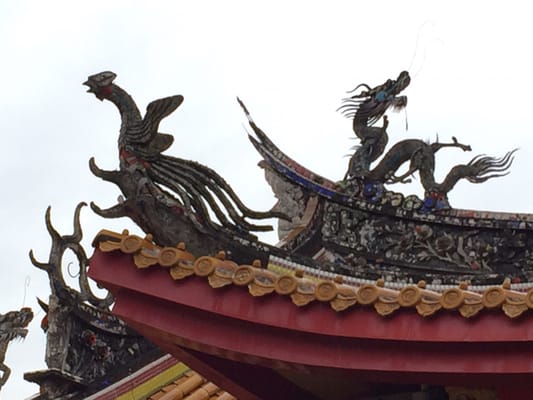
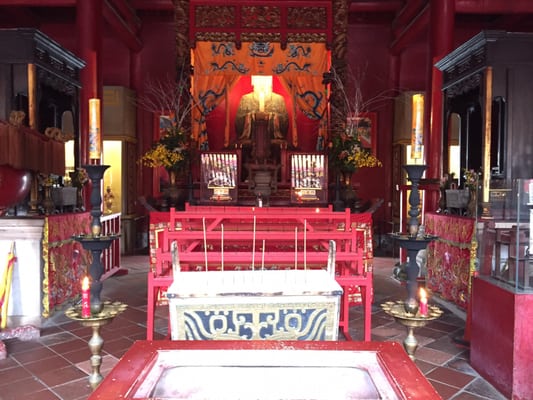
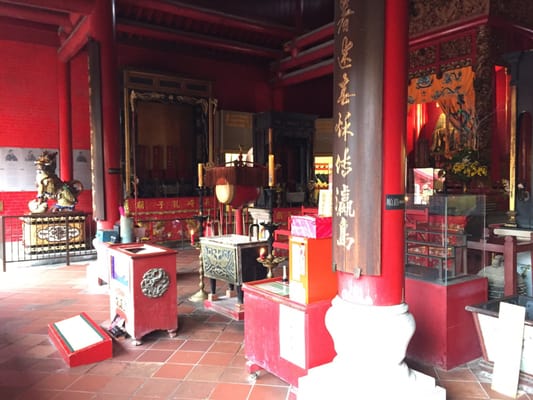
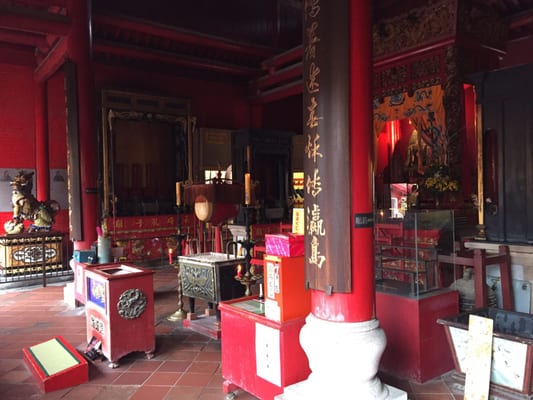
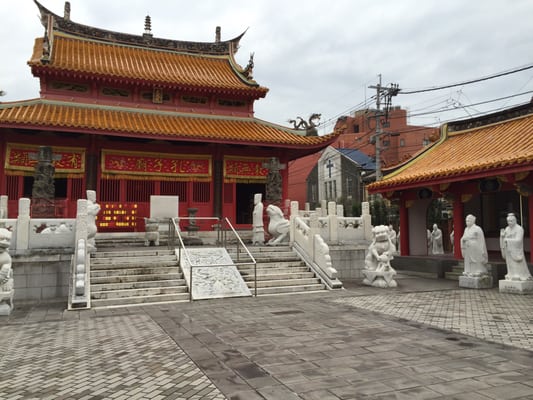
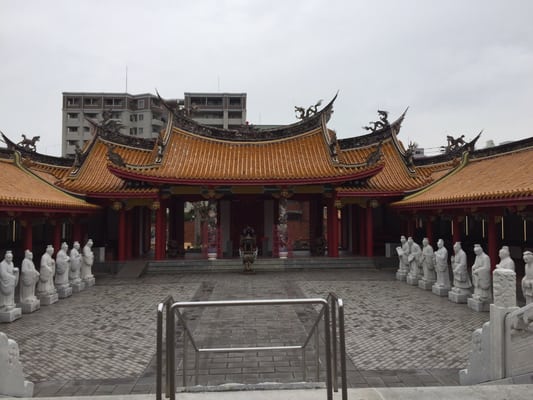
The wooden shrine standing in the front is the main shrine and is called by Taisei Hall. Since it was built in 1893, it has survived over 100 year of wind and snow, and the impact of the atomic bomb. Today, it is a prized cultural asset that conveys the ancient style of architecture.
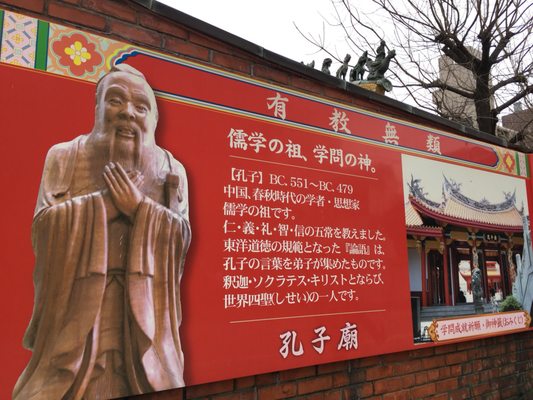
The Chinese characters written on the banner hung under the eave reads "make no social distinctions in teaching ". It means that "Anyone who wishes to learn can enter the school, no matter their status, and people can become anything through education".
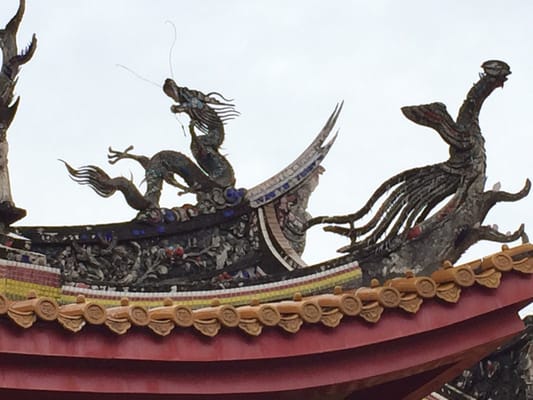
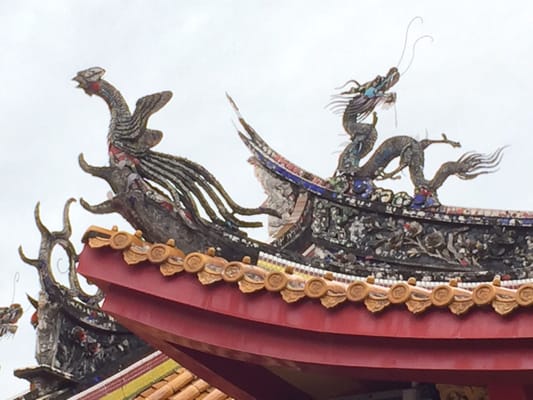
Pigeons placed on the roof of Taisei Hall symbolize peace today. But, during the age of Confucius, pigeons were considered uncontrollable pets, so there pigeons represent the message that even pigeons can learn just like everyone else.
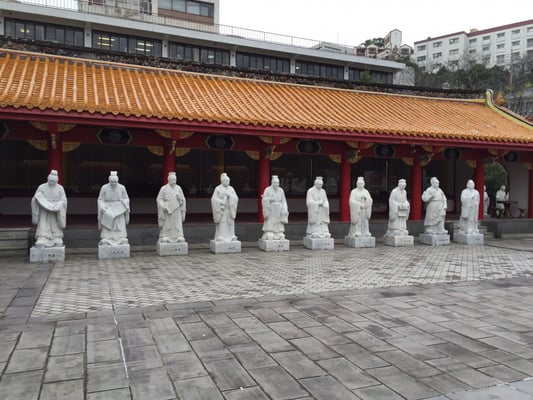
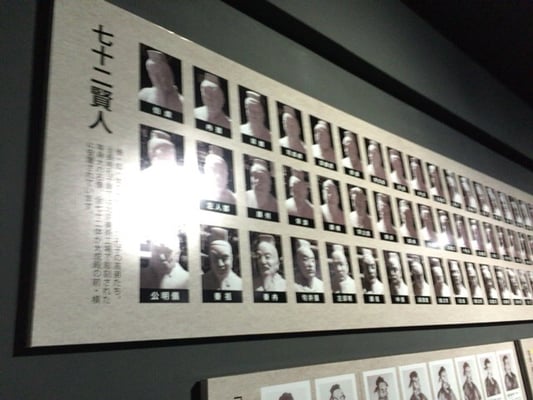
(4)The 72 Sages
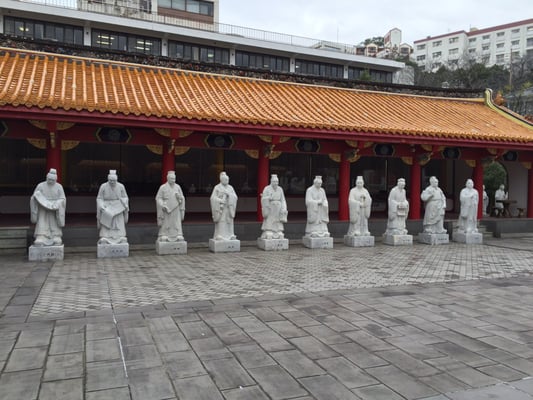
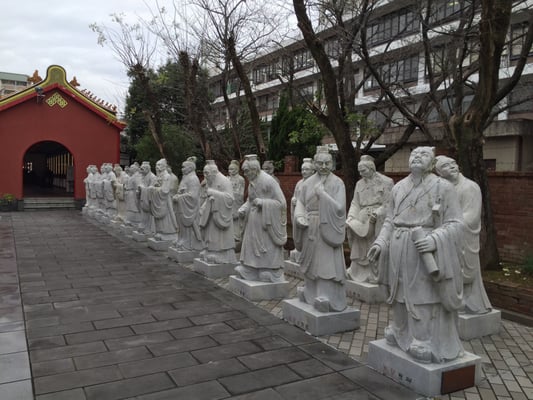
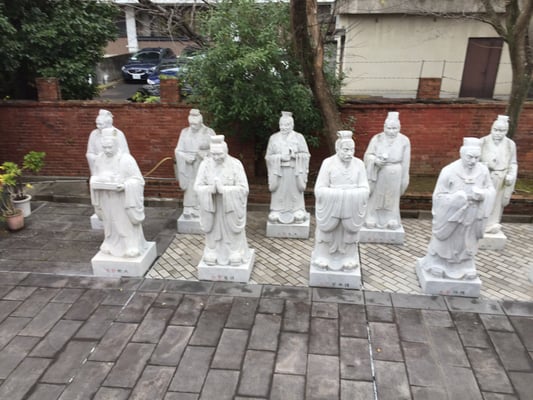
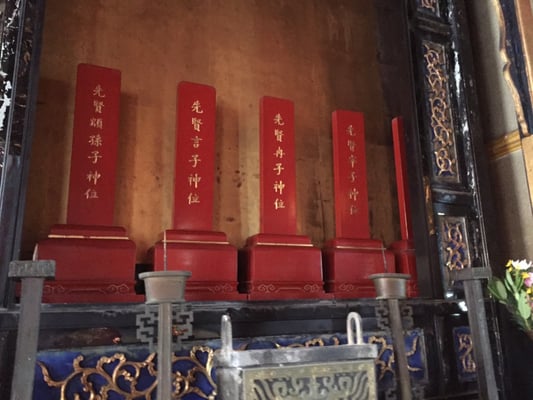
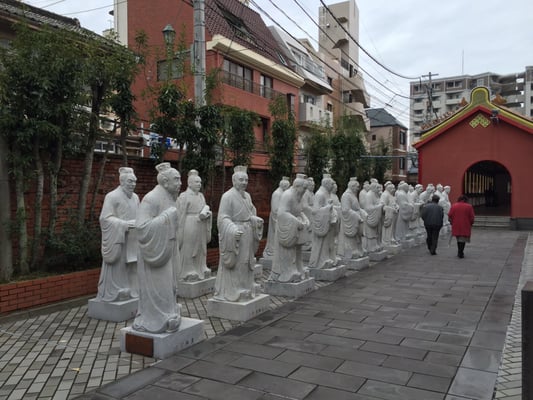
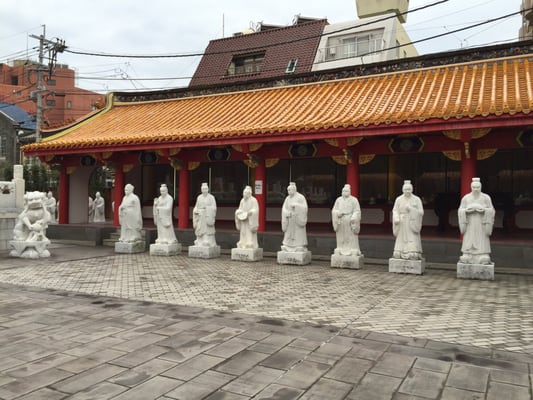
The stone statues in front and at the side of the Ryobu are the 72 Sages who, as Confucius's disciples, were well-trained in the "Six Arts"
The statues are life-size and weigh 1.8 tons each. They were sculptured at an art factory in Beijing based on historical facts. The sage's name is inscribed on the front of the pedestal and the sculptor's name on the back.
The "Six Arts" are six talents for excelling in virtue, intelligence and physical health. Toku(Virtue); Rites and music, Chi(intelligence); Calligraphy and mathematics, Tai(Physical health); Archery nod chariot driving.
I referred Japanese Wikipedia.
Admission Free; Adult is 600 yen.
Open Hours; 8:30 A.M.- 5:30 P.M.(Last entry at 5:00 PM.)