Naty K.
Yelp
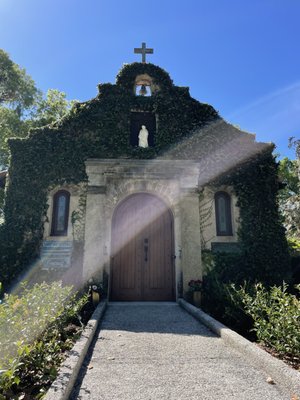
As someone who loves architecture, unique buildings, and history, I came across Mision Nombre de Dios when checking TripAdvisor for things to do in St. Augustine. I fell in love with the 16th century Spanish style ivy-covered building and wanted to see it in person and photograph it. Although the motel where I stayed was pretty unimpressive, luckily, it just happened to be across from the chapel, so my friend and I were able to walk and cross the street to the lot housing the small chapel.
Mision Nombre de Dios dates back to 1565, when Pedro Menéndez de Avilés landed and proclaimed this site for Spain and the Church. It was here that Father Francisco López de Mendoza Grajales, the chaplain of the expedition, held the first parish Mass and created the first mission in America. They decided to dedicate it to Our Lady of La Leche.
You may be wondering where the "La Leche" comes from. After all, if you know a drop of Spanish, you'd know that leche means "milk", so "our lady of the milk"? What does that mean, you are probably thinking. Actually, the full name is Nuestra Señora de la Leche y Buen Parto, which translates to Our Lady of the Milk and Happy Delivery. I will explain further on in my review the reason for this name, but this is the site where western culture and Christian faith took root in our country.
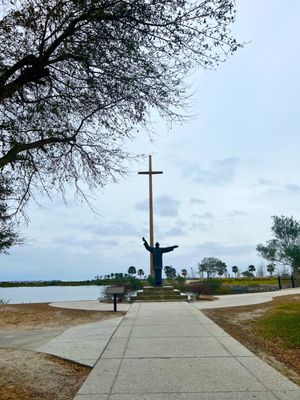
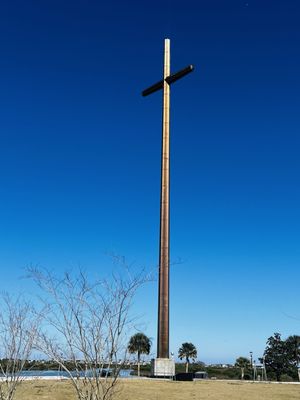
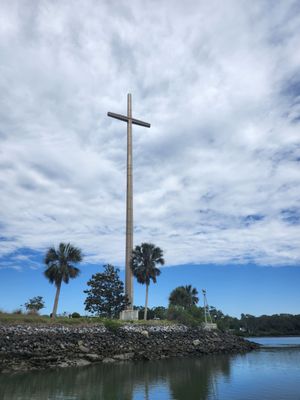
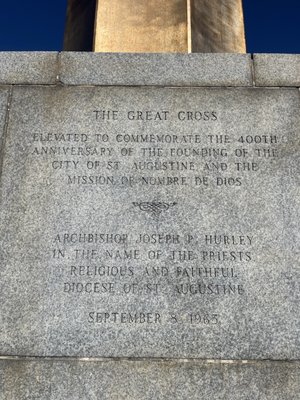
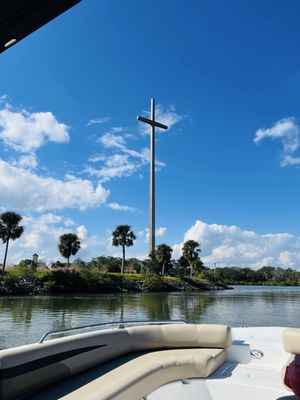
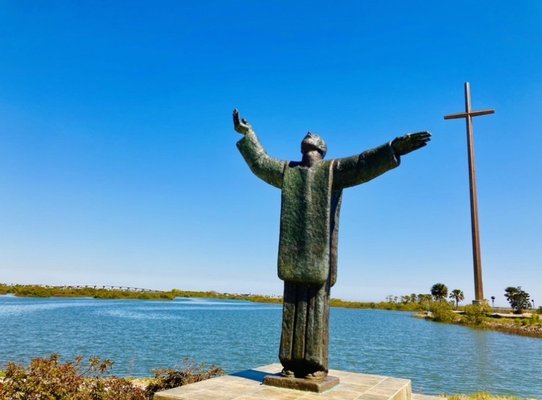
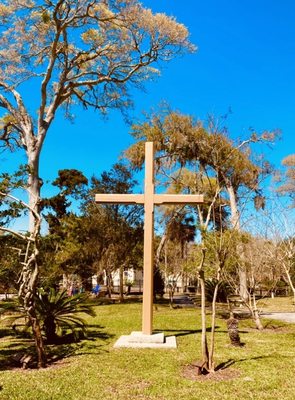
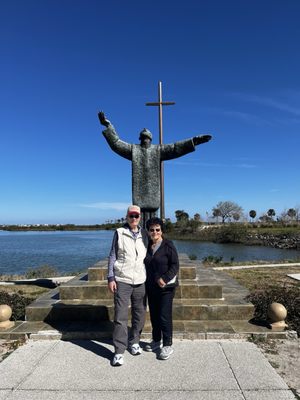
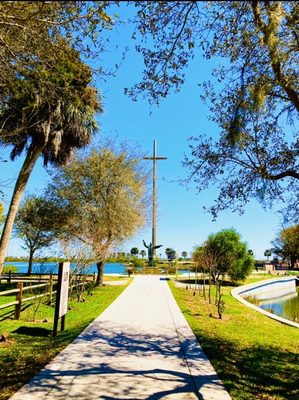
The first thing that you may see from the street is a huge cross erected on the ground. This cross is known as the Great Cross. Made of stainless steel and rising two hundred and eight feet above the marshes of the Matanzas River, it stands as a sentinel. The cross was completed in 1966 and its inspiration came from the fact that four hundred years earlier, in 1565, Pedro Menéndez de Avilés placed a small wooden cross in Florida's soil.
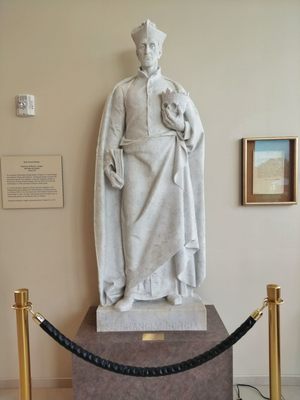
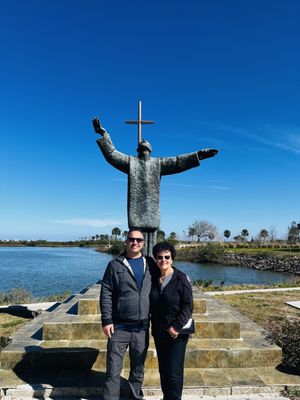
Not too far from the cross, you will see an impressive bronze statue of Father Francisco López de Mendoza Grajales, chaplain of Menéndez's fleet; celebrant of the First Mass here; and first missionary. It is eleven feet tall and sculpted by Dr. Ivan Mestrovic, a native of Croatia.
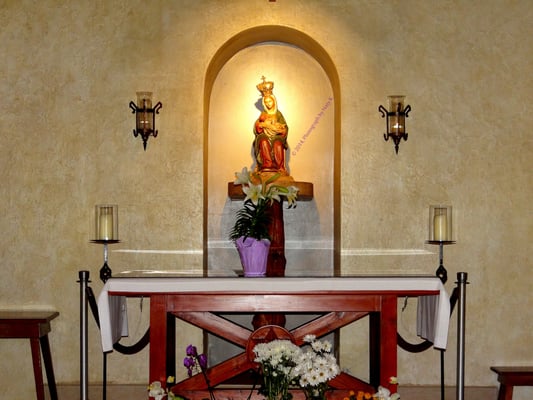
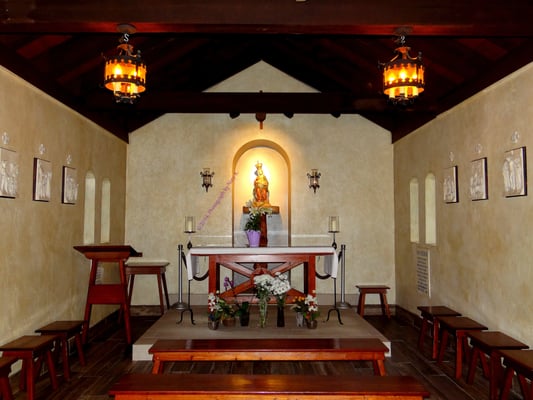
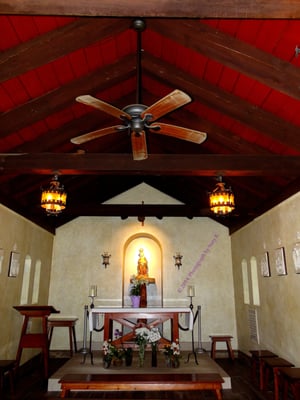
From the Great Cross area, if you follow the path, you will arrive to the Chapel of Nuestra Señora de La Leche y Buen Parto (Our Lady of the Milk and Happy Delivery) under a canopy of oak and cedar trees. It is known as "America's Most Sacred Acre." Due to hurricanes, the building itself has gone various restorations, the last of which was in 1915. We can assume the earliest incarnations were made of wood, which made it prone to hurricane and fire damage. It can now hold approximately thirty persons and is very small and simple. A statue of St. Peter, holding the keys of the kingdom, stands above the outside entrance and below a small mission bell.
During the reign of Phillip III in Spain, word spread of a woman and her baby, both expected to die during the birth of the child, who were spared as a result of the intercession of Nuestra Señora de La Leche y Buen Parto (Our Lady of the Milk and Happy Delivery). The statue, placed in a Cathedral by Phillip III, soon found a place in the hearts of many throughout Spain. Because of this, many visitors and pilgrims come here asking for the blessings of motherhood and for the granting of a safe and happy delivery with a happy child. This explains the origins of the mission's name.
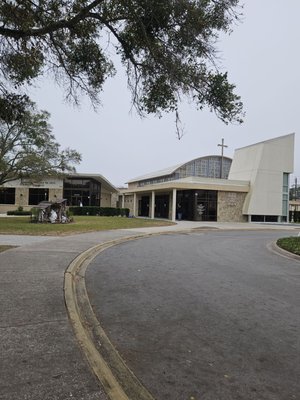
On the grounds of the chapel, there are gravestones on the garden surrounding the little church, many of which are quite old, from the 1800s, and include some of the founding sisters. There is also a bell, announcing the morning mass. However, if you're looking for Pedro's casket as well as other historically significant artifacts and art, you'd need to enter the museum, further along the grounds. Unfortunately, the museum was closed at the time we came, and since the weather was uncooperative, we did not get to see all the grounds. Whether you're religious or just appreciate architecture, I recommend paying this chapel a visit.