Lana G.
Yelp
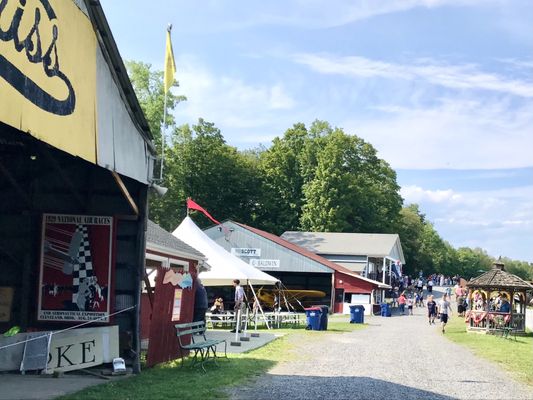
This is an exciting place to visit, but we hope that your visit won't be quite as exciting as ours was, because we saw one airplane crash. The Rhinebeck Aerodrome is not a museum of static displays; it's a "working" museum.
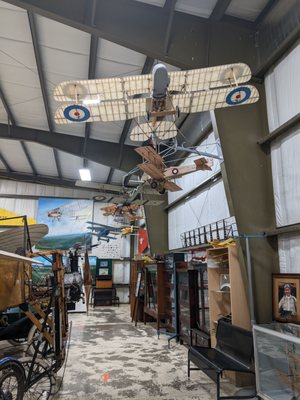
It has a wealth of old aircraft, many of them pre- and post-World War I, but most of them fighter aircraft from World War I itself. Most are replicas and many look a bit rough. Rhinebeck is not the Smithsonian. Relatively speaking, it's a shoestring operation.
Nevertheless: It's a LOT more exciting to see replicas of these old aircraft fly than it is to see the originals parked or hanging from a wire in a building.
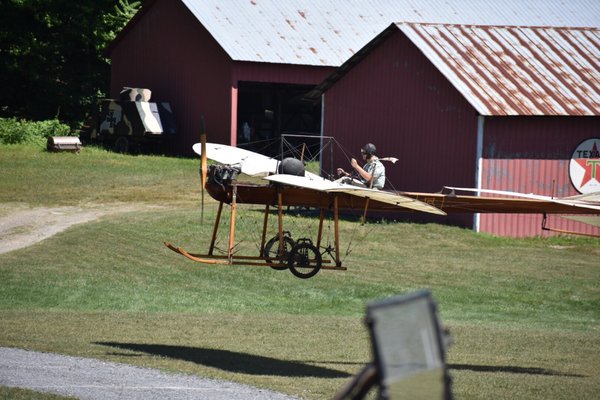
Not all the aircraft are replicas. Some are originals and at least one, the Bleriot XI (the model wherein Louis Bleriot, in 1909, was first to fly across the English Channel), once was an original. Rhinebeck refers to it as a replica because, over the years, for one reason or another, most of it has been replaced. (It wasn't the same Bleriot XI that crossed the Channel: after he became famous, Louis Bleriot was able to sell some 200 copies.)
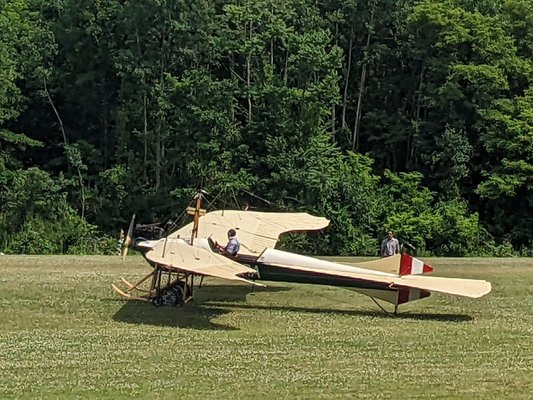
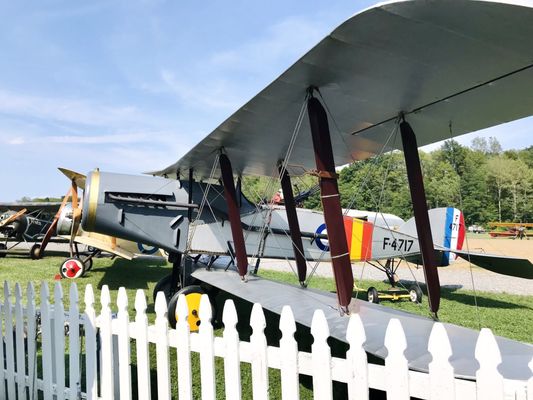
From France, in addition to the Bleriot, there's also a Henriot, a Caudron, a Morane (with one wing falling off), a Demoiselle and an early Nieuport -- all very early aircraft -- and, to round out the French contingent with much more "modern" and powerful WWI models, a SPAD and a late model Nieuport.
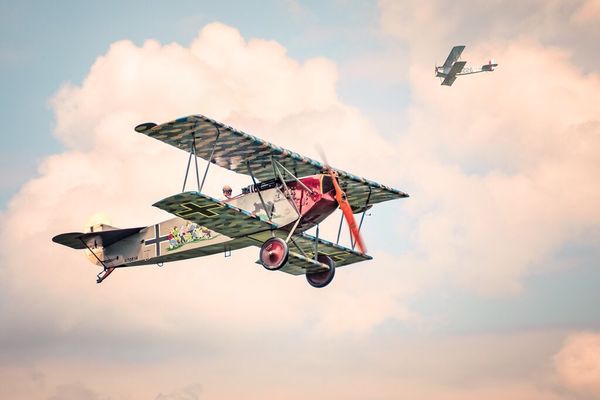
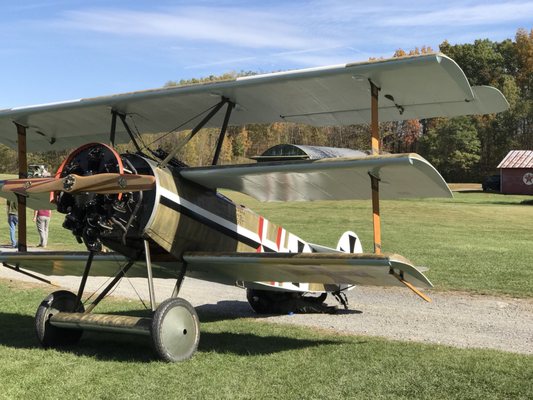
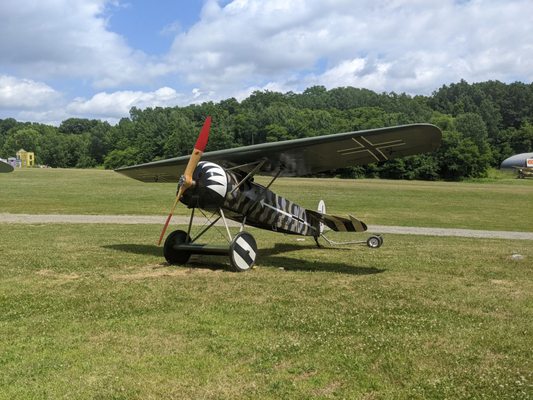
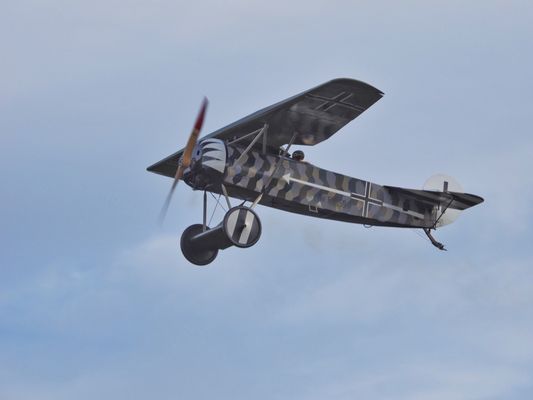
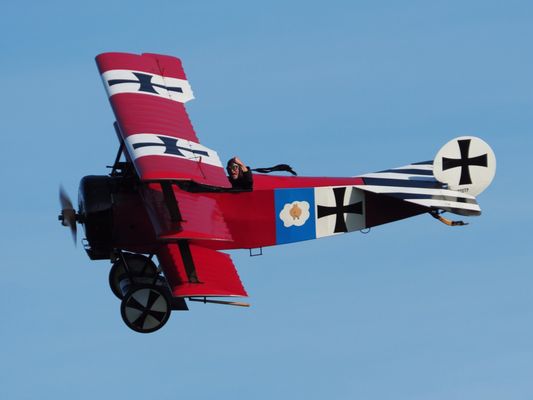
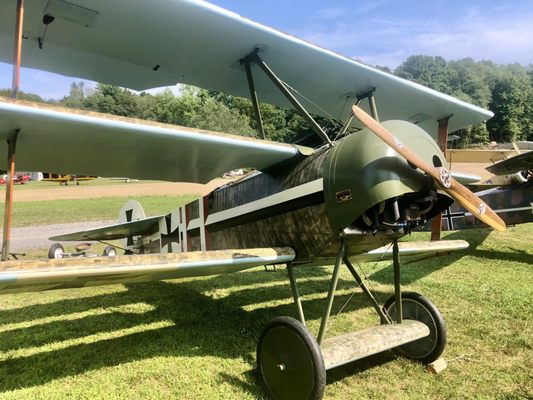
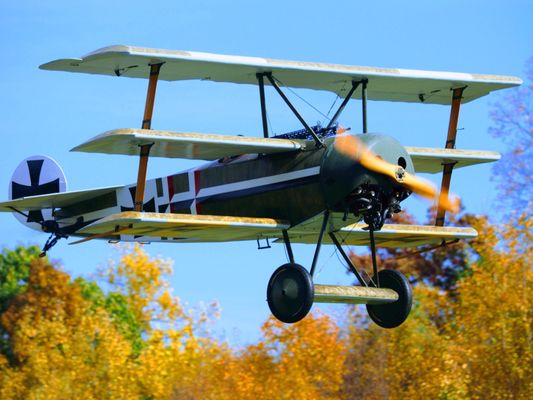
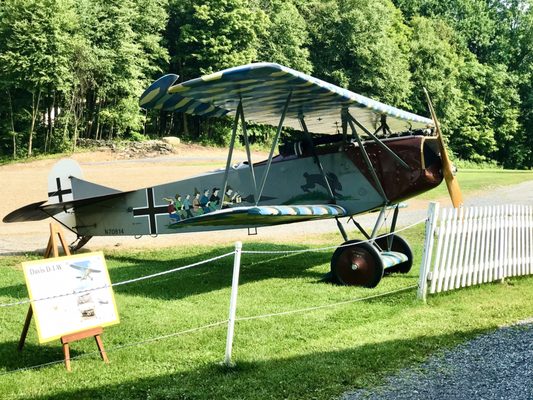
From Germany, from WWI, a Fokker DR-1 Triplane, a Fokker D-VII and an Albatross.
From England, again from WWI, an AVRO 504k and a Sopwith Camel.
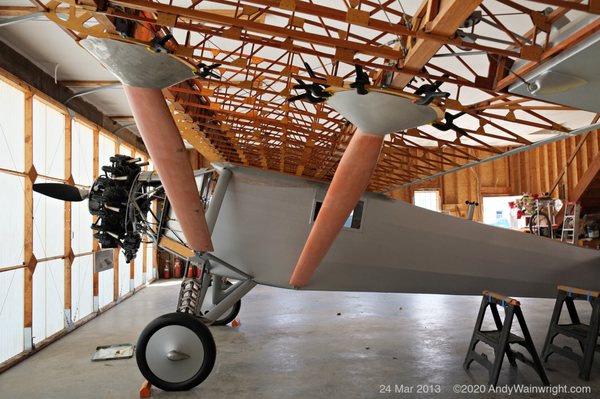
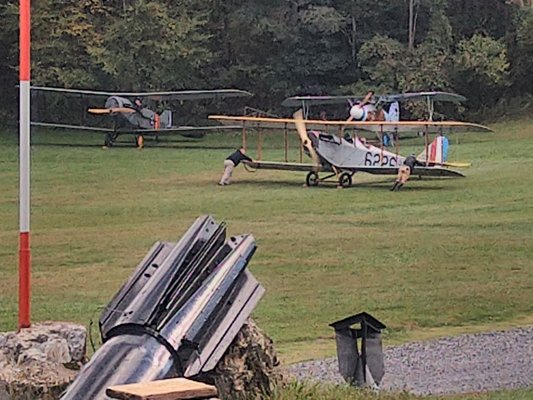
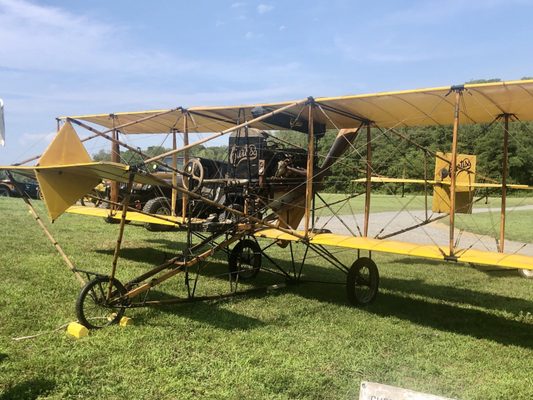
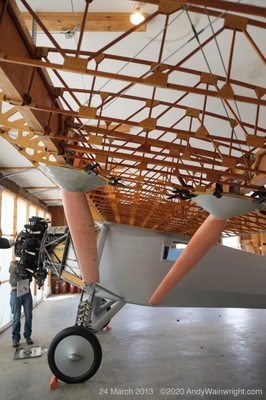
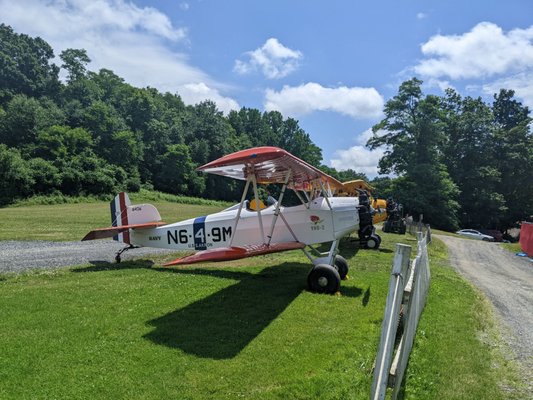
From the United States, pre-WWI, a Curtiss model 5; from WWI, a JN-4 Jenny (built by the Curtiss Aeroplane Company of Hammondsport, New York); and post WWI, a Great Lakes Speedster. In addition, in a hanger, someone was building a Ryan Monoplane, a replica of the plane flown by Charles Lindbergh, from NY to Paris, in 1927.
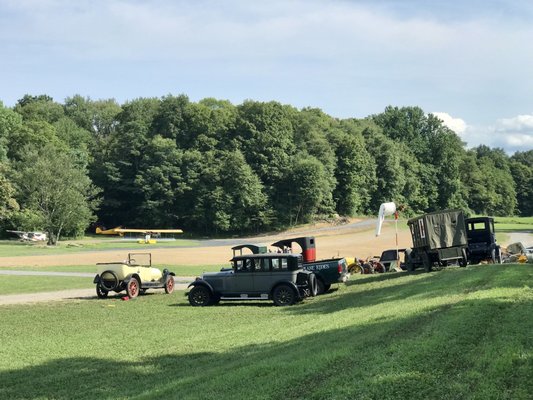
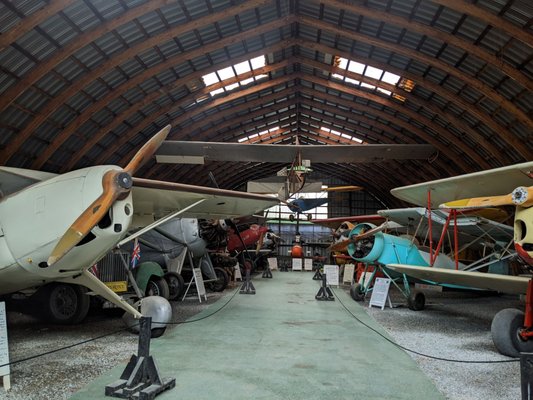
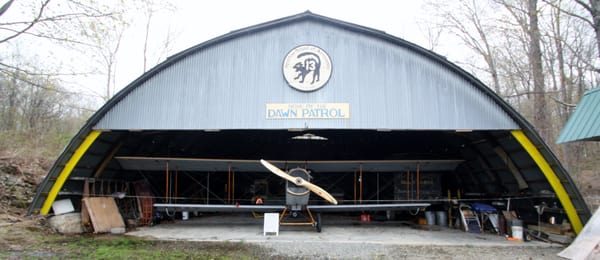
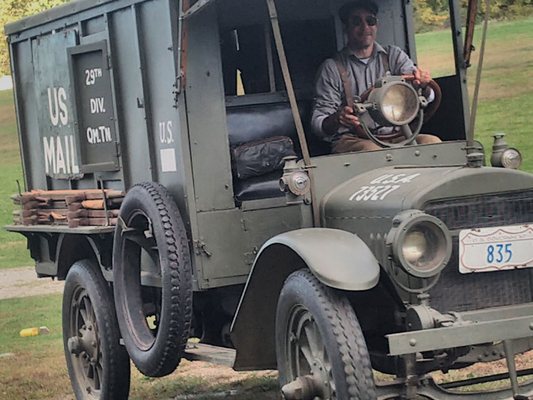
For those of you who are not familiar with the early history of aviation, these are famous planes. Still more aircraft, many of them less famous, were stored in dark hangers. In addition, there were French and American cars from the period and even a Renault light tank.
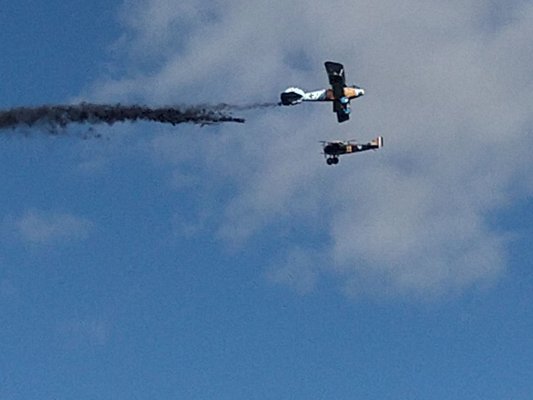
As for the airshow, it is held at the Aerodrome every Saturday and Sunday, weather permitting, from mid-June through mid-October. When we visited, the planned show was to begin with stunt flying, followed by flights with some very early aircraft, then a simulated WWI dogfight and, finally, more stunt flying.
First up was the Great Lakes Speedster for just a bit of stunting, to cut up some TP tossed from the cockpit. Next, the Bleriot, the Henriot and the Curtiss flew just a few feet off the ground before setting down again. Wing-warping, as on the Wright Flyer, banks and turns the Bleriot and the Henriot, and although the Curtiss had ailerons (Glenn Curtiss invented them), the wind was kicking up and the pilots weren't about to try a go-around of the grass field with those old designs and their 35 hp engines, etc.
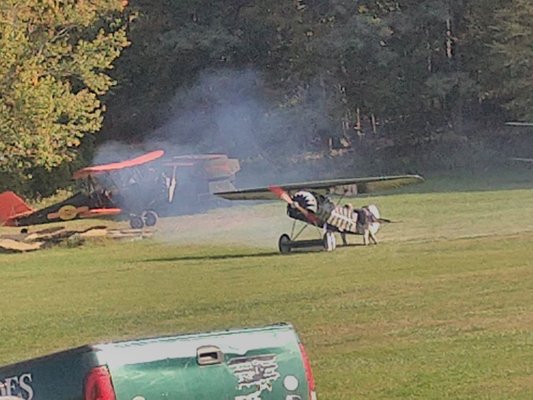
Then the AVRO 504k, an English trainer from WWI, went up. The pilot started a go around but the engine began to cough. At first, I thought it was just part of the show; but then the pilot pulled out of the pattern and moved to land any way he could, with the wind or even crossways to the field, so I knew he was in trouble. Cough, sputter; the plane slowed. Then: silence. "Get the nose down!" I thought, too late. The plane stalled, dropped and disappeared into the trees on the far side of the field. We heard the ugly crunch of its crash. Everyone waited anxiously for the news. It was good: the pilot was reported walking and talking.
That was the end of the airshow and, for a time at least, of the AVRO. However, even this near-tragedy was a lesson in the early history of aviation. It recalled the spring of 1917, when the average lifespan of a fighter pilot on the Western Front was two weeks. Most did not succumb to enemy fire but to crashes rather like this one. They were quite mad; wonderfully, heroically mad.
Rhinebeck also provides rides in a biplane, for hire: in a powerful and rather more reliable post WWI model.
See also our review of the Hudson River Valley National Heritage Area.