Parroquia de San Miguel Arcángel
Catholic church · San Miguel de Allende ·
Iconic pink neo-Gothic church, focal point of vibrant city life


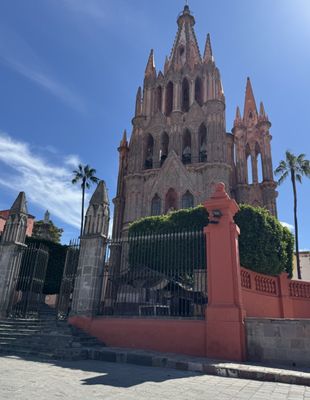


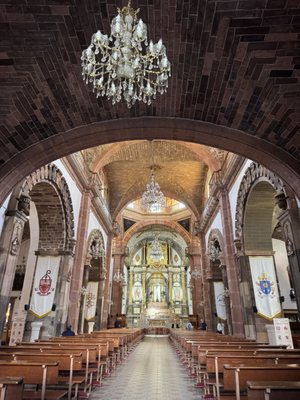


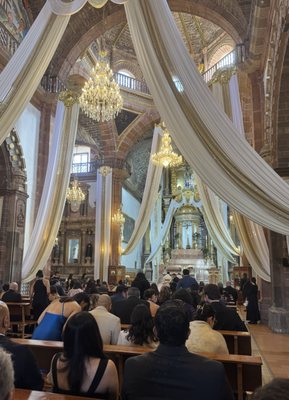


Iconic pink neo-Gothic church, focal point of vibrant city life
"The parish church is striking in daylight and when lit up at night, noted for its baroque and neo-Gothic architectural styles and its central role in city life. Visitors gather to admire the façade and to experience the energy around the church — from regular public gatherings to music and festivities — making it a cornerstone of the historic center." - Travel + Leisure Editors
"The city’s iconic pink parish and cathedral dominates the main square and serves as a top pedestrian destination; its steps are a focal point for local life and music, with mariachi performances at sunset that add a vivid, atmospheric soundtrack to wandering visitors." - Zachary Rabinor
"A neo-Gothic cathedral that is a central landmark in San Miguel de Allende, surrounded by a vibrant community of mariachis and balloon vendors." - Travel + Leisure Editors Travel + Leisure Editors Since 1971, Travel + Leisure editors have followed one mission: to inform, inspire, and guide travelers to have deeper, more meaningful experiences. T+L's editors have traveled to countries all over t
"The striking pink, gothic-style church that dominates the city’s skyline and provides a dramatic focal point visible from the hotel’s rooftop pool and viewpoints."
Yanet
Kevin O.
Linda G.
Ray K.
Linda M.
Michelle H.
Laine A.
Cynthia C.

Christa M.

Jo S.

Kelly S.

Enrique V.

Joan M.

Scott L.

Sylvester C.

Kat G.

