Piazza Colonna
Historical landmark · Colonna ·

Piazza Colonna

Historical landmark · Colonna ·

Elegant square with marble Column of Marcus Aurelius

historical landmark
roman history
palazzo chigi
palazzo wedekind
galleria alberto sordi
fountain
public plaza
wheelchair accessible entrance
Piazza Colonna by null

Information

P.za Colonna, 00187 Roma RM, Italy Get directions

Wheelchair accessible entrance

Information

Static Map

P.za Colonna, 00187 Roma RM, Italy Get directions

Features

•Wheelchair accessible entrance

Last updated

Jan 22, 2026

Powered By

You might also like

Terms of Use • Privacy Policy • Cookie Policy
 © 2026 Postcard Technologies, Inc.

Loo Y.

Google
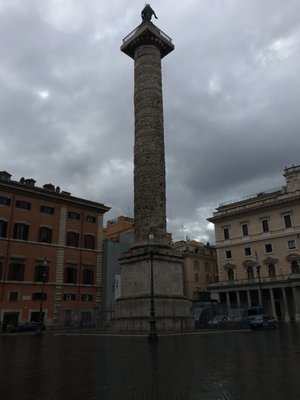
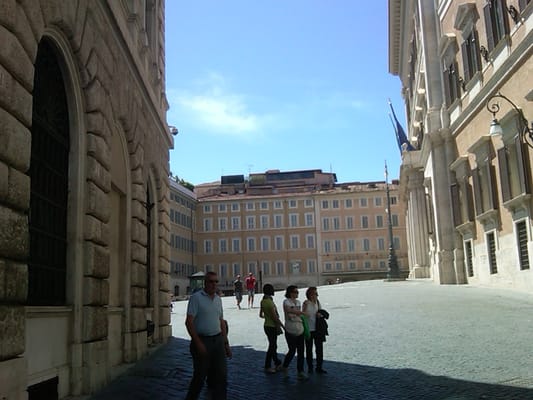
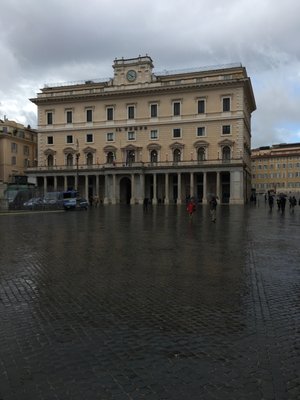
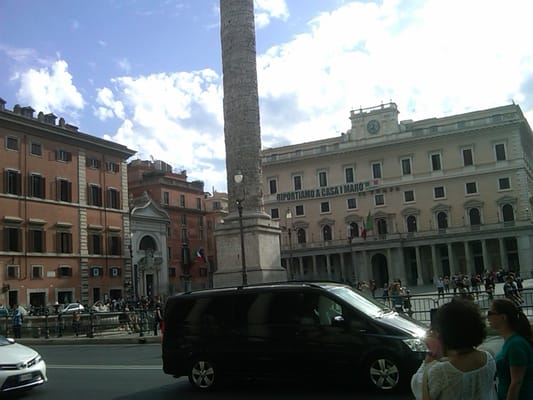
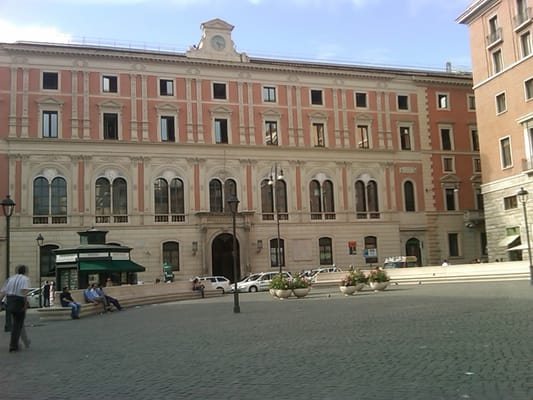
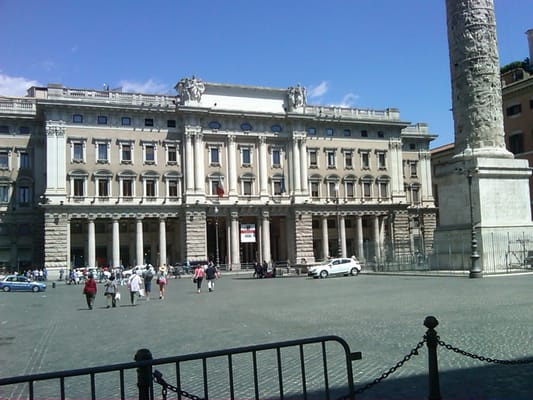
Piazza Colonna feels like a working diagram of Roman power. In the middle, Marcus Aurelius’ column still tells its stone story of frontier wars, but the emperor has been replaced by Saint Paul, raised there in the 1500s. Around it the palaces close in. Palazzo Chigi on the north side holds the offices of the Prime Minister and Council of Ministers, so motorcades, barriers and cameras are part of the daily scenery. Opposite, Palazzo Wedekind fronts the square with a portico of recycled ancient columns, while to the south the entrance to Galleria Alberto Sordi pulls shoppers off Via del Corso. Government briefings, small protests and office workers on break all share the same space under the spiralling reliefs of a Roman campaign.

A J B.

Google
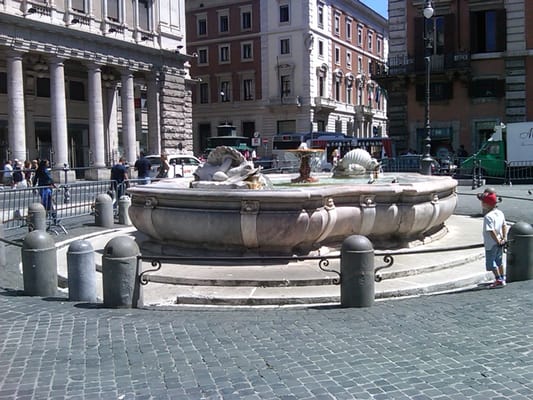
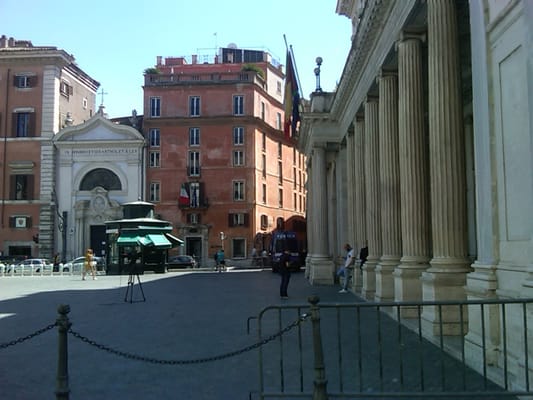
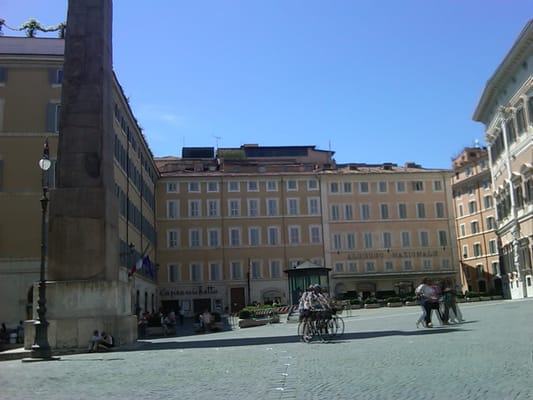
Piazza Colonna stands as a vibrant and multifaceted square in the core of Rome, reflecting the city’s seamless fusion of ancient grandeur and modern vitality. Its name is drawn from the monumental Column of Marcus Aurelius, an architectural and artistic marvel completed in AD 193, with detailed reliefs chronicling the military exploits of the emperor. This column rises as both a powerful symbol of imperial propaganda and a testament to Roman artistry. The bronze statue of Saint Paul that now crowns it was added in 1589 by papal decree, further linking the ancient and papal epochs of Roman history. The piazza is strategically situated on Via del Corso, an historic thoroughfare lined with shops and bustling with both locals and visitors. While its rectangular layout is the result of a 16th-century redesign, traces of antiquity are evident everywhere, as the surrounding terrain was once part of the ancient Campus Martius, used for public gatherings and ceremonies in Roman times. Architecturally, Piazza Colonna is framed by stately palaces, each representing a different era of the city’s layered history. Palazzo Chigi, now serving as the official residence of Italy’s Prime Minister, dominates the north side. On the west, Palazzo Wedekind features a striking colonnade with columns brought from the ancient city of Veii. To the east sits the Galleria Alberto Sordi, a grand 19th-century arcade that pulses with contemporary commercial energy. The south side is marked by the elegant Palazzo Ferrajoli and the small baroque church of Santi Bartolomeo ed Alessandro dei Bergamaschi. Cultural atmosphere is high here, the Piazza serves as a popular rendezvous point and remains animated throughout the day, especially in the evening when the buildings and the column are beautifully illuminated. Its proximity to key sites, such as the Trevi Fountain and Pantheon, makes it a convenient and popular stop for those exploring central Rome. However, due to its proximity to major government offices, security is tight and parts of the square may be fenced off, resulting in a less leisurely, more official atmosphere than some other Roman squares. There is a small but historic fountain originally installed in the late Renaissance period, and the enclave of cafes and shops offers moments for casual people-watching and respite. For those seeking to engage with Rome’s history, architecture, and society, Piazza Colonna offers a unique intersection of past and present, solemnity and vibrancy, all under the silent watch of Marcus Aurelius’s enduring column.

Dr P J G.

Google
Famous for the column of Marcus Aurelius. It is a Roman victory column located in Piazza Colonna, in Rome. It is world famous Doric column with spiral relief in spiral pattern as on Trajan Column in Trajan Forum. This column was built in honour of Emperor Marcus Aurelius, Roman emperor from 161 to 180 AD. The relief depicts his military exploits during the Barbarian Wars. The column is very impressive, and stands there so tall and majestic.

Misiu M.

Google
This fountain was designed by Giacomo Della Porta and built by the sculptor Rocco Rossi from Fiesole in 1575 and completed in 1577. It presents an octagonal pond with the sides alternatively concave and convex in portasanta marble and decorated by fillets with sixteen white marble lion heads. In 1585 it was fed by the Acqua Vergine. Dalla Porta’s initial project with the fountain leaning against the base of the Colonna Antonina and a background of rocks was never carried out. The project also included the colossal statue of Marforius that today is situated in the courtyard that has its same name in the Capitoline Museums. In 1656 the fountain was subject to a restoration, certainly of minor importance, by Bernini. In 1702 pope Clement the Eleventh Albani (1700-1721) put his coat of arms, the eight-pointed star, on the central basin. In 1830 the star was removed together with the basin and replaced with a work by Alessandro Stocchi that consists of the current white marble basin and two groups of pairs of dauphins with the tails intertwined and a shell.

Missy H.

Google
Can not see the column at all. Does anyone know how long it will look like this?

Tolga

Google
. It is named for the marble Column of Marcus Aurelius, which has stood there since AD 193

Bruce I.

Google
The centerpiece of the plaza is the 97 foot tall Colonna di Marco Aurelio that dates back to at least 193 AD and was built to honor Roman emperor Marcus Aurelius. It tells the story of the Marcomannic wars from 172 to 175.

Eduardo R.

Google
Walking around the piazza Collona gives you a glimpse of the Roman life. Beautiful