Tarpeian Rock
Tourist attraction · Campitelli ·

Tarpeian Rock

Tourist attraction · Campitelli ·

Steep cliff site of ancient Roman executions and legend

Tarpeian Rock by null
Tarpeian Rock by Lalupa (Creative Commons)
Tarpeian Rock by Collector of Experiences (Atlas Obscura User)
Tarpeian Rock by Rabax63 (Creative Commons)
Tarpeian Rock by Lalupa (Creative Commons)
Tarpeian Rock by null

Information

P.zza della Consolazione, 00186 Roma RM, Italy Get directions

Information

Static Map

P.zza della Consolazione, 00186 Roma RM, Italy Get directions

+39 06 0608
turismoroma.it
@ig_rome

Features

Last updated

Jan 7, 2026

Powered By

You might also like

Terms of Use • Privacy Policy • Cookie Policy
 © 2026 Postcard Technologies, Inc.
@atlasobscura
4,908 Postcards · 2,018 Cities

10 Italian Sites Shrouded in Mystery and Legend

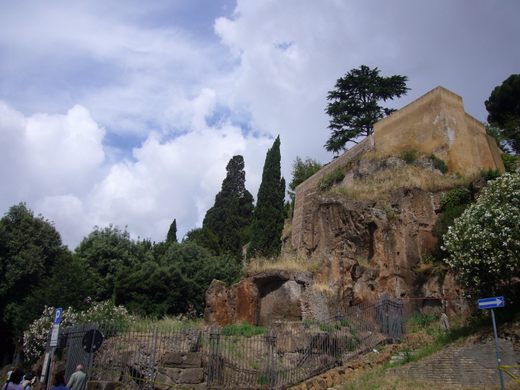
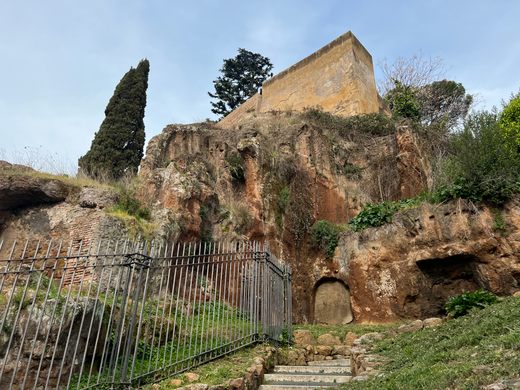
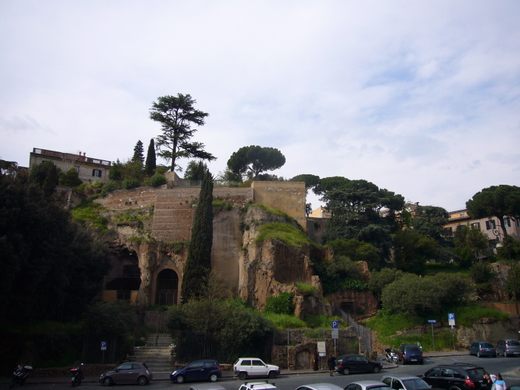
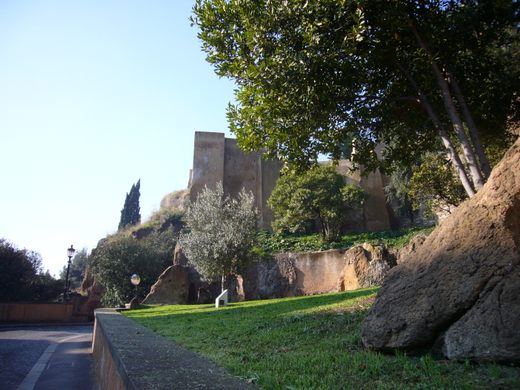
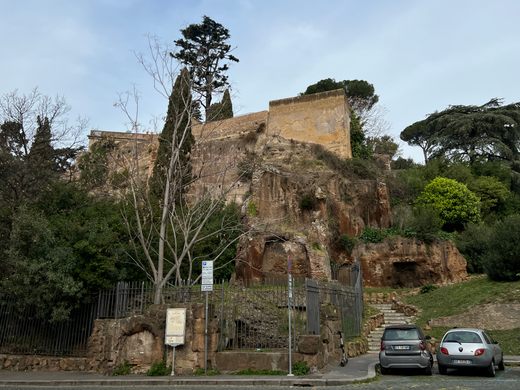
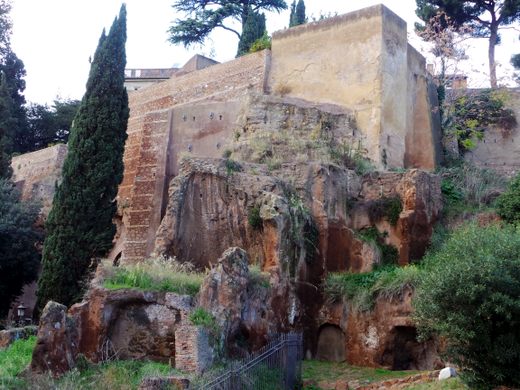
"Tarpeian Rock (Rupe Tarpea) is a steep cliff located on the southern side of the Capitoline Hill, just above the Roman Forum. For centuries, the location was used an an execution sites. People who had been convicted of crimes were thrown from the 80 foot (25-meter) cliff ledge down to the Forum below. This method of execution carried a stigma of shame and was considered a fate worse than death. It was reserved as punishment for crimes that were considered especially heinous: treason, murder, and perjury. According to legend, Tarpeia, the daughter of Roman commander Spurius Tarpeius, betrayed Rome and opened the doors of the city to the Sabine king Titus Tatius. Tatius was attacking Rome in the aftermath of the Rapes of the Sabines during the 8th century B.C. Tarpeia was corrupted by the enemy king and lusted for gold and jewels. Although she helped the Sabines, they crushed her with their shields and buried her on what became known as the Tarpeian Rock. Not long after, the cliff became an execution site for traitors. The shrines built by the Sabines on Tarpeian Rock were demolished around 500 B.C. by the seventh and last King of Rome, Tarquinius Superbus, who leveled the area to construct the Temple of Jupiter Capitolinus. At the time, it was the most important temple in Rome. The cliff was used for executions until the late first century." - ATLAS_OBSCURA

https://www.atlasobscura.com/lists/italian-mysteries
Rabax63 (Creative Commons)
Rupe Tarpea

Arianne P.

Google
The perfect spot to sightsee. You can view a lot of major historical sights from here and there are many more within walking distance of the area.

Sean P.

Google
Great breath taking views from up here but not great if you are disabled or hard of walking as very steep hills either side to get to

Glenn M.

Google
A little disappointed I wasn’t able to get closer. Not sure if the construction nearby was the cause but I have checked this site off my bucket list and am happy.

Michael L.

Google
Modern archaeology and history reject this as the location of the Tarpeian Rock on a number of grounds both topographical and historical. Coarelli and the vast majority of experts put it on the Arx overlooking the lower Forum, probably somewhere in the area above the Carcer. Alas, whether it was there, or here, or somewhere else, landslides and general wear and tear and decay have long since completely erased the actual location: in our terms, the 'actual' location of the Tarpeian Rock is now hanging somewhere in the air.

Chris N.

Google
Realize this is just one of several locations for the historic Tarpeian Rock that archeologists have proposed. It was where traitors were thrown to their deaths in ancient Rome; it was named after Tarpeia, a traitor who helped the Sabines in exchange for gold bracelets. Little did she know the treacherous Sabines were referring to the bracelets on their shields, and they crushed her to death with those same shields after she aided them against the Romans. And yes, there is not much to see and it is unmarked.

Philippe C.

Google
Such an amazing historic highlight, in so many ancient texts. Such a pitty Rome does not value it at all.

Tim T.

Google
Not much to see beyond a wall and a cliff face but the sheer amount of history associated with the site is simply stunning. Imagine the thousands of criminals and martyrs that were flung from those heights... sobering.

Michael P.

Google
Back in 485 B.C I saw a live execution. His name was Spurius Cassius Vecellinus. The show was great.