Memorial to the Murdered Jews of Europe
Memorial · Mitte ·
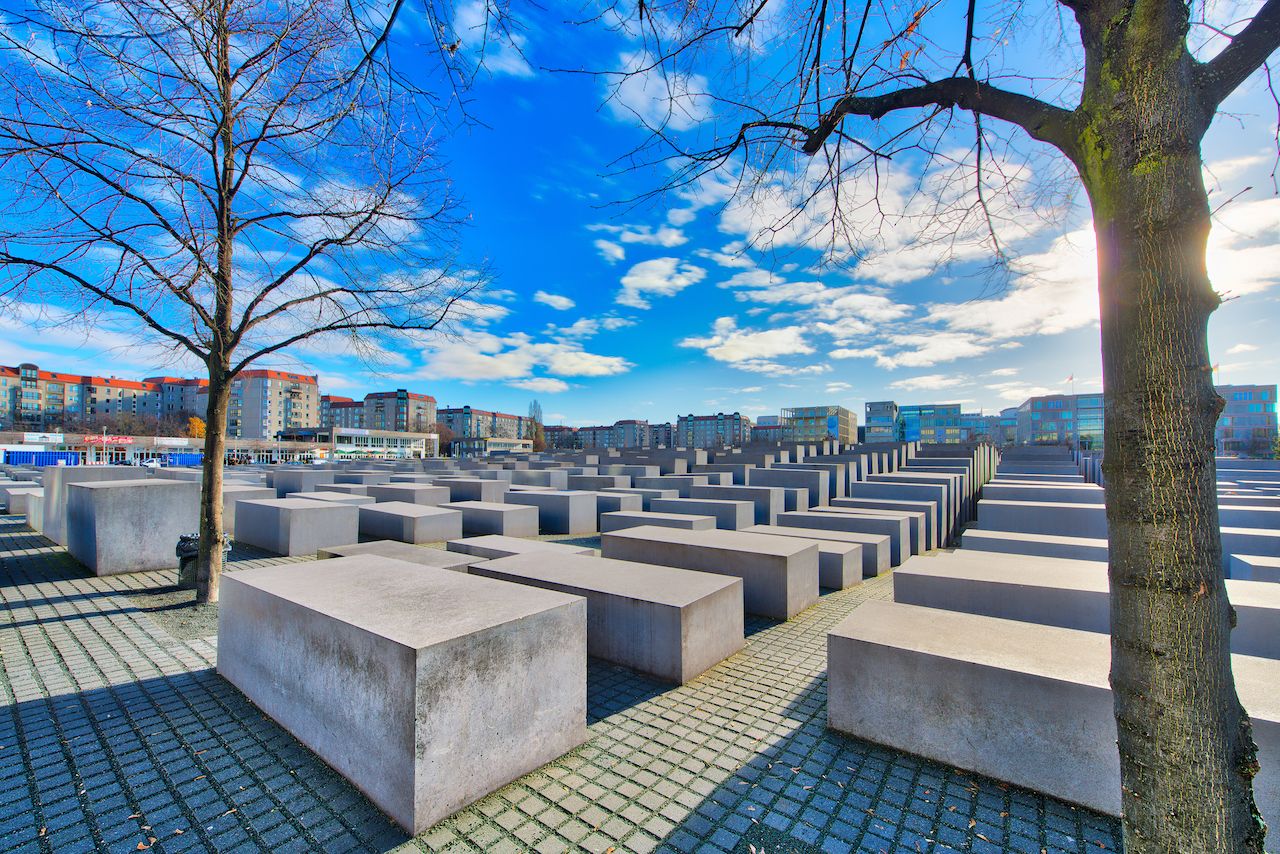
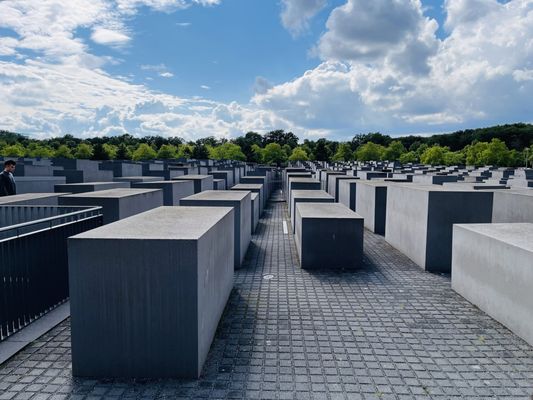
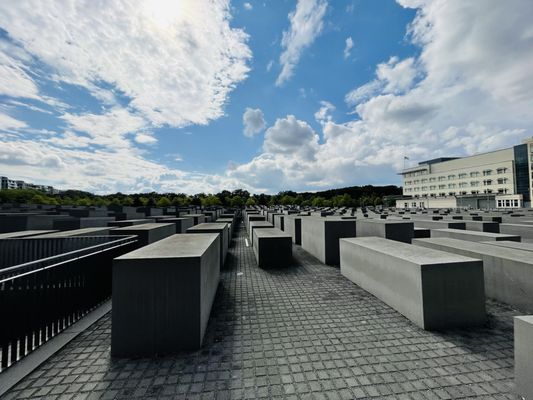
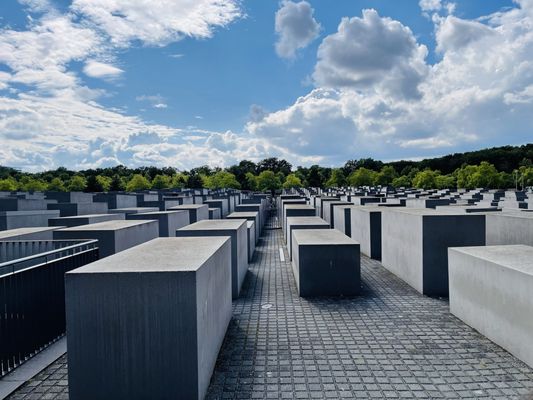
Field of 2,711 concrete slabs creates a disorienting maze










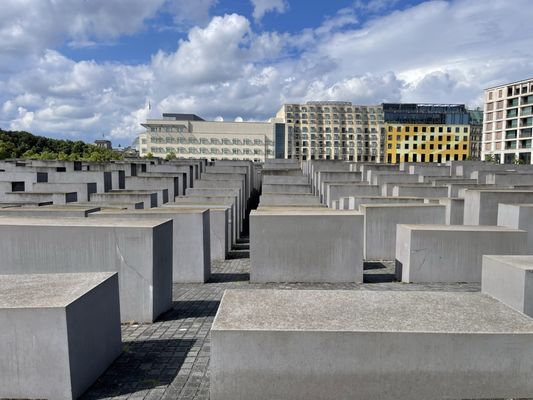
Field of 2,711 concrete slabs creates a disorienting maze
"Occupying a full city block a short walk from the Brandenburg Gate, this abstract field of 2,711 concrete slabs by Peter Eisenman is designed to disorient—narrow, tomb-like passages intended to unsettle visitors—and I recommend spending at least 20 minutes to feel the intended effect before visiting the underground information center for context about the six million Jewish victims of the Holocaust." - Liz Humphreys, Krystin Arneson

"A solemn memorial site recommended for learning and reflection about the Holocaust as part of understanding the city's 20th-century history." - Evie Carrick Evie Carrick Evie Carrick is a writer and editor who’s lived in five countries and visited well over 50. She now splits her time between Colorado and Paris, ensuring she doesn't have to live without skiing or L'As du Fallafel. Travel + Leisure Editorial Guidelines
"An iconic Berlin monument commemorating victims of the Holocaust is mentioned as an example of the city's 'visible history,' cited alongside other historical remnants to illustrate how the city's past is palpably present amid its artistic vibe and hip coffee shops." - Evie Carrick Evie Carrick Evie Carrick is a writer and editor who’s lived in five countries and visited well over 50. She now splits her time between Colorado and Paris, ensuring she doesn't have to live without skiing or L'As du Fallafel. Travel + Leisure Editorial Guidelines
"Set right in the middle of the city, between the Brandenburg Gate and Potsdamer Platz, the sprawling Memorial to the Murdered Jews of Europe (more generally known as the Holocaust Memorial) was opened in 2006. Designed by New York architect Peter Eisenman, it features almost 3,000 grey pillars (stele) of differing heights; walking between is intended to give a sense of confusion and solitude, though it’s not unusual to see kids playing hide and seek and teens eating their Burger King on top of them. The underground information center is more poignant, presenting images, personal belongings, and stories from some of the Jewish victims of the Holocaust. Nearby you can also find the small Memorial to Homosexuals Persecuted Under Nazism and the larger Memorial to the Sinti and Roma Victims of National Socialism." - MATADOR_NETWORK
"Denkmal für die Ermordeten Juden Europas | Memorial to the Murdered Jews of Europe Occupying a prominent space between Brandenburg Gate and Potsdamer Platz, this memorial (also known as the Holocaust-Mahnmal, or Holocaust Memorial) has almost 3,000 gray oblong pillars (stelae), arranged at varying heights, that form a kind of labyrinth intended to reference the disorientation felt by Europe’s hunted Jewish population. Designed by New York architect Peter Eisenman, it opened in 2005. The effectiveness of the labyrinth is arguable; you may see groups of teenagers playing tag and picnicking on and among the blocks. However, there’s no denying the power of the site’s underground information center, which relates some of the life stories of Holocaust victims. Several other smaller but related memorials are nearby, dedicated to homosexuals, gypsies, and victims of National Socialist euthanasia killings."


