Jantar Mantar
Observatory · Ward 138 ·

Jantar Mantar

Observatory · Ward 138 ·

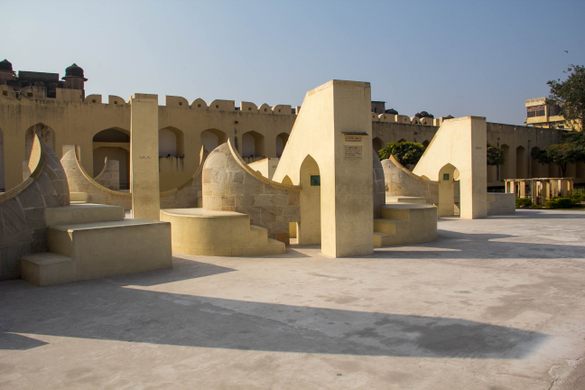
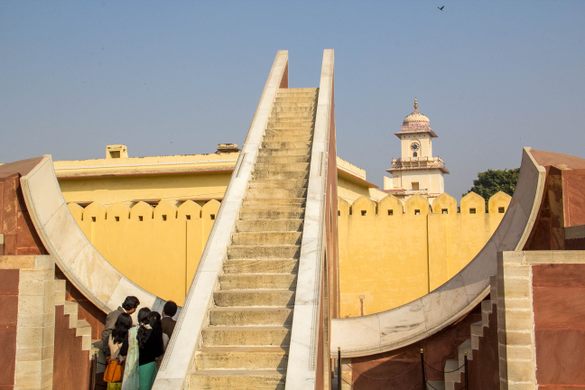
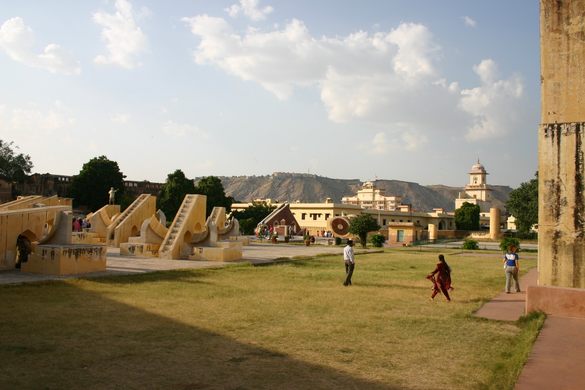
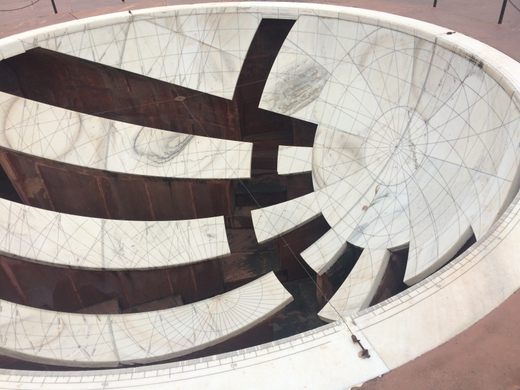
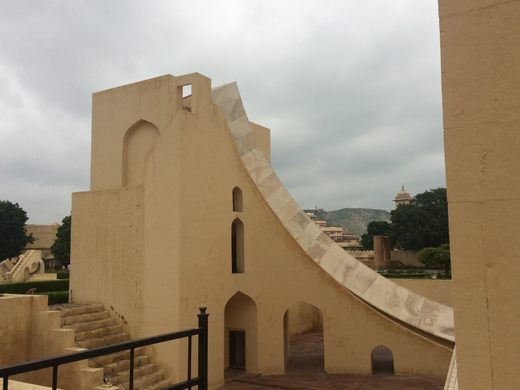
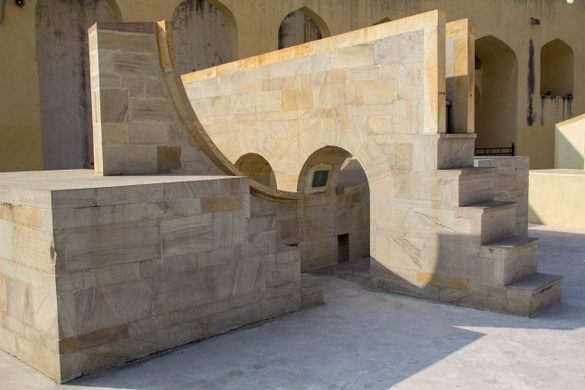
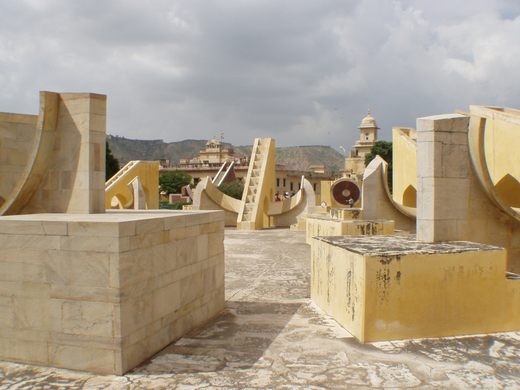
UNESCO site with 19 stone astronomical instruments, world's largest sundial

Jantar Mantar by null
Jantar Mantar by jward628 (Atlas Obscura User)
Jantar Mantar by certifieddoherty (Atlas Obscura User)
Jantar Mantar by null
Jantar Mantar by ATLAS_OBSCURA
Jantar Mantar by nicolab (Atlas Obscura User)
Jantar Mantar by Avinash Bhat / CC BY-SA 2.0
Jantar Mantar by ATLAS_OBSCURA
Jantar Mantar by jward628 (Atlas Obscura User)
Jantar Mantar by nicolab (Atlas Obscura User)
Jantar Mantar by Russ Bowling/CC BY 2.0 (Flickr Creative Commons)
Jantar Mantar by Dan / CC BY 2.0
Jantar Mantar by null
Jantar Mantar by nicolab (Atlas Obscura User)
Jantar Mantar by jward628 (Atlas Obscura User)
Jantar Mantar by null

Information

Malve Nagar, J.D.A. Market, Pink City, Jaipur, Rajasthan 302002, India Get directions

Information

Static Map

Malve Nagar, J.D.A. Market, Pink City, Jaipur, Rajasthan 302002, India Get directions

+91 141 515 5163
tourism.rajasthan.gov.in
@asi.goi
𝕏
@ASIGoI

Features

wheelchair accessible parking lot
wheelchair accessible entrance

Last updated

Dec 13, 2025

Powered By

You might also like

Terms of Use • Privacy Policy • Cookie Policy
 © 2025 Postcard Technologies, Inc.
@atlasobscura
4,908 Postcards · 2,018 Cities

12 Ancient Scientific Instruments You Can Still See Today

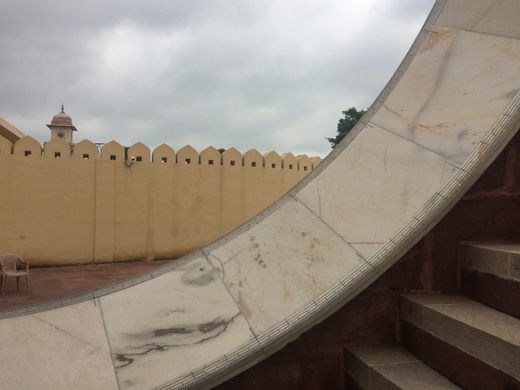
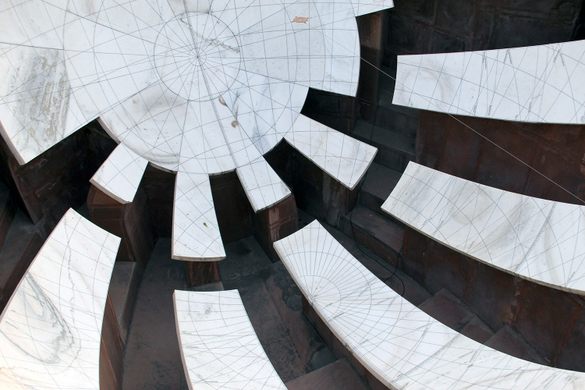
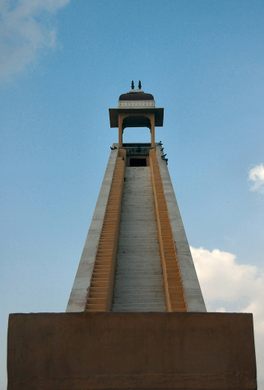
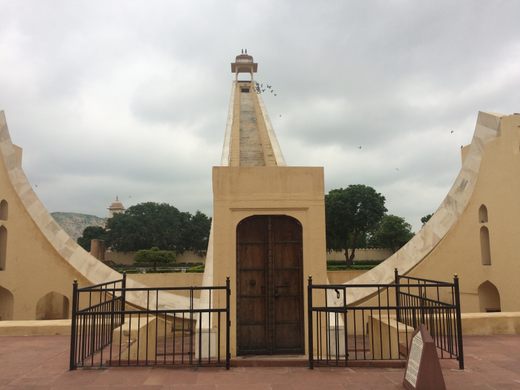
"In 1728, Sawai Jai Singh II, rajah of Jaipur, dispatched his emissaries across the globe to gather the most accurate astronomical data possible. When they returned, Jai Singh ordered the construction of the original Jantar Mantar complex in New Delhi, a monumental astronomical observatory constructed entirely out of stone and based on the astronomical tables of the French mathematician Phillipe de la Hire. In all Sawai Jai Singh built a total of five observatories, with the largest being this later construction of the Jantar Mantar in his hometown of Jaipur. Among the stone instruments Jai Singh constructed was the Samrat Yantra, a 73-foot-tall sundial which remains the largest ever built. Though indistinguishable in design from other sundials of the day, it was far and away the most accurate. Its two-second interval markings are more precise than even de la Hire’s table. The smaller but older (and pink) version of the Jantar Mantar can be seen in New Delhi." - ATLAS_OBSCURA

https://www.atlasobscura.com/lists/ancient-scientific-instruments-astronomy-observatories
Dan / CC BY 2.0
Jantar Mantar - Jaipur
@afar
25,132 Postcards · 3,700 Cities

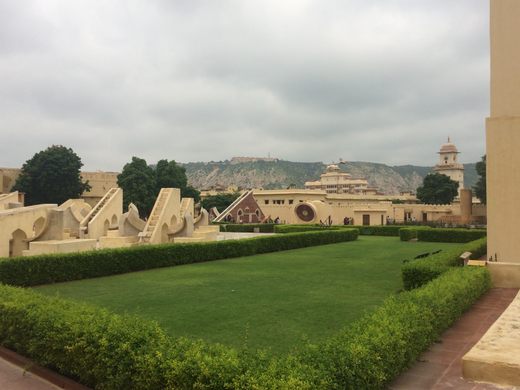
"Janta Mantar, a Jaipur park for the space-and-time-inclined, wasbuilt in the early 1700s by the Maharaja Singh.The UNESCO World Heritage site, located in the old city, contains20 large stone astronomical instrumentsdesigned to assist scientists who wereobserving the heavens with their bare eyes. The huge tools monitorcelestial happenings and are still in used today for agricultural predictions. One can walk between the impressive apparatuses and imagine the 18th-century scientists of the royal court plotting and charting impossible distances and paths."

The Best Things to Do in India's Golden Triangle
Jantar Mantar - Jaipur
@afar
25,132 Postcards · 3,700 Cities

"Janta Mantar, a Jaipur park for the space-and-time-inclined, wasbuilt in the early 1700s by the Maharaja Singh.The UNESCO World Heritage site, located in the old city, contains20 large stone astronomical instrumentsdesigned to assist scientists who wereobserving the heavens with their bare eyes. The huge tools monitorcelestial happenings and are still in used today for agricultural predictions. One can walk between the impressive apparatuses and imagine the 18th-century scientists of the royal court plotting and charting impossible distances and paths."

The Perfect Week in India's Golden Triangle
Jantar Mantar - Jaipur
@silverkris
9,878 Postcards · 2,262 Cities

New Delhi’s greatest monuments and must-see attractions - SilverKris

"I examined Jantar Mantar, the observatory built in 1724 by Maharaja Jai Singh II of Jaipur to keep track of calendars and astronomical tables; the site features various instruments, including a massive sundial used to track the movements of the sun, moon, and planets." - SilverKris

https://silverkris.singaporeair.com/inspiration/arts-culture/design-architecture/new-delhis-greatest-monuments-must-see-attractions/
Jantar Mantar

Mahim P.

Google
Jantar Mantar in Jaipur is one of the most fascinating places I’ve ever visited. It’s not just a historical monument but a real scientific wonder that shows how advanced India’s astronomical knowledge was centuries ago. Built by Maharaja Sawai Jai Singh II in the early 1700s, this UNESCO World Heritage Site features massive instruments made entirely of stone and marble — all used to study the stars, track time, and predict eclipses long before modern technology existed. The highlight is the Samrat Yantra, the world’s largest stone sundial, which can measure time with incredible accuracy — up to just a few seconds! There are several other fascinating instruments, each designed with perfect geometric precision. It’s truly mind-blowing to think that these were built over 300 years ago without any modern equipment. 👉 Make sure to get a local guide — they will explain everything clearly and make the experience ten times better. The instruments can look confusing at first, but once the guide walks you through how each one works, it becomes absolutely captivating. My guide explained how shadows, angles, and sunlight were used to calculate time and planetary positions — it was like stepping into a live science classroom! The complex is clean, well-maintained, and ideal for photography, especially in the morning when the light hits the instruments beautifully. There are shaded spots to relax, and the atmosphere feels peaceful despite being near the busy City Palace area. Overall, Jantar Mantar is a must-visit in Jaipur — a perfect blend of history, science, and art. It’s one of those places that truly makes you admire India’s ancient brilliance. Highly recommended!

Yashonil P.

Google
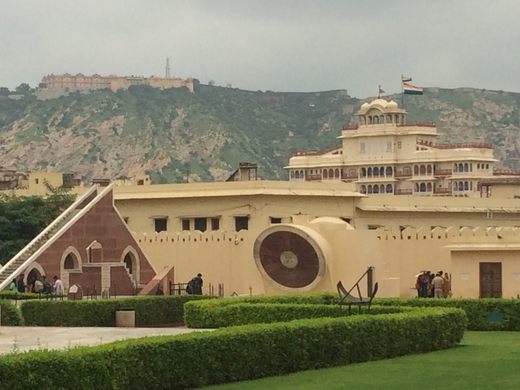
🌞 Jantar Mantar, Jaipur 🌞 Located in the heart of Jaipur city, just beside the City Palace and near the Hawa Mahal, Jantar Mantar is one of the most fascinating heritage sites in Rajasthan. Built by Maharaja Sawai Jai Singh II in the early 18th century, it stands as a perfect blend of science, art, and spirituality. Recognized as a UNESCO World Heritage Site, Jantar Mantar houses nineteen large astronomical instruments made of stone and marble — including the famous Samrat Yantra (giant sundial), which still tells accurate time even today. These structures were used to measure celestial movements, predict eclipses, and study planets long before modern equipment existed. The place is well maintained, clean, and peaceful. Informational boards and guides help visitors understand the science behind each structure. The surrounding area has local shops, cafés, and the vibrant streets of Jaipur that add charm to the visit. It’s truly a place where history, science, and culture meet beautifully — a must-visit for anyone exploring Jaipur.

Pr4khxr

Google
Visiting Jantar Mantar in Jaipur with my classmates was honestly one of the most memorable experiences of our trip. The moment we entered, we were completely amazed by the massive stone instruments and how the increase it's geometry looked, it’s quite hard to believe that these structures were built centuries ago with such precision and accuracy that was reviewed recently. Our teachers explained how each instrument, especially the huge sundial, could measure time and track celestial movements so accurately. Although they couldn't really explain to such a vast amount of students verbally so they had us sit in a separate room and watch the slide show presentation of it all. It blew our minds to think that ancient astronomers could achieve all this without any modern technology. As we walked around, my friends and I couldn’t stop taking pictures. We kept guessing what each structure was used for before the guide told us the real answer which made it even more fun. The whole place had this fascinating energy, like stepping back in time and exploring a scientific wonder from another era. The site itself was very well maintained, with clear signs even on a side mandir which told us to remove footwears if had any 😊.Beyond the science, the architecture was equally captivating, it truly felt like an open air museum. After exploring, we grabbed some snacks at a nearby cafe and chatted about how brilliant Maharaja Jai Singh and ancient Indians must have been. Overall, visiting the Jantar Mantar was the perfect mix of learning, history, and fun with friends.

J.s repairing P.

Google
Janter Manter Jaipur Introduction to Janter Manter Janter Manter, located in Jaipur, Rajasthan, is an astronomical observatory built in the 18th century. The name "Janter Manter" means "instruments for measuring the harmony of the heavens." It was constructed by Maharaja Jai Singh II, who had a keen interest in astronomy and mathematics. Historical Significance Construction : Janter Manter was built between 1724 and 1734. Purpose : The observatory was designed to observe astronomical positions and to calculate time accurately, among other scientific purposes. Architecture : The structure features large instruments made of stone and marble, showcasing impressive architecture that blends functionality with aesthetics. Key Instruments Samrat Yantra : This is the largest sundial in the world. It is used to tell time based on the position of the sun. Jayaprakash Yantra : This instrument helps in locating celestial bodies like stars and planets. Rama Yantra : It is designed for measuring the altitudes of stars and assists in astronomical calculations. Visitor Experience Guided Tours : Visitors can join guided tours to learn about the different instruments and their functions. Photography : The unique architecture and layout make Janter Manter a great spot for photography. Learning : The observatory offers insights into ancient Indian astronomy and its relevance to modern science. Conclusion Janter Manter is not just a historical site but also a place of learning and appreciation for astronomy. Visitors to Jaipur should definitely include this unique observatory in their itinerary to experience the marvels of ancient scientific achievements.

Shaunky

Google
Visited Jantar Mantar in Jaipur, and it was truly fascinating! The ancient instruments and architectural brilliance show how advanced our ancestors were in astronomy and science. Every structure has a purpose and meaning behind it. A must-visit place for anyone who loves history and wonders of science!

Daya A.

Google
Wonderful place to understand study of astronomy in Jaipur during British India. Instruments made by the king of Jaipur, to measure various astronomy related items, is very interesting see. A chai spot available inside. Entrance near to one of the gates of the City palace.

Hemant Singh T.

Google
I recently visited Jantar Mantar in Jaipur, and it was an amazing experience. The place is full of fascinating stone instruments used for astronomical studies centuries ago. I was really impressed by how accurately they could measure time and track celestial movements without any modern technology. The architecture is unique and well-preserved, and the guide explained the purpose of each structure in detail. It felt like stepping back in time to see how advanced ancient Indian science was. Overall, it was a very educational and memorable visit.

Binalkumar G.

Google
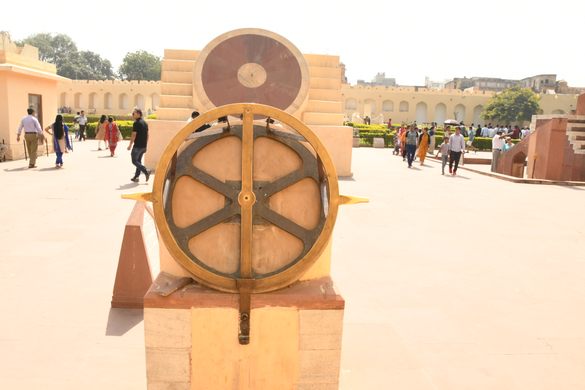
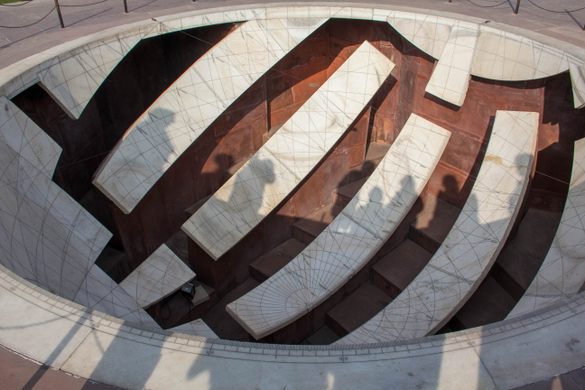
🌞 Overview The Jantar Mantar in Jaipur is a UNESCO World Heritage Site and one of the most fascinating places to visit in the city. Built by Maharaja Sawai Jai Singh II in the early 18th century, it’s an ancient astronomical observatory that showcases India’s scientific brilliance long before modern technology existed. At first glance, the large geometric structures might seem confusing or even abstract — but once you understand their purpose, the entire place turns into a marvel of ancient science and precision. 🔭 Architecture & Significance The Jantar Mantar consists of 19 giant astronomical instruments designed to observe celestial positions with the naked eye. Each structure serves a specific function — measuring time, predicting eclipses, tracking stars, or determining planetary movements. Some key instruments include: Samrat Yantra: The world’s largest stone sundial, accurate to within 2 seconds. Jaiprakash Yantra: Used to find the exact position of stars and planets. Rama Yantra: Measures the altitude and azimuth of celestial objects. Narivalaya Yantra: Two circular dials representing the hemispheres, used to measure time during the day. Each of these structures is not just scientifically advanced but also artistically crafted with incredible precision. 🗣️ Experience Your visit to Jantar Mantar can be either fascinating or confusing — depending on whether you take a guide. Without explanation, the site looks like a set of giant sculptures made of stone and marble. But once a knowledgeable guide begins explaining how each instrument works, you realize the depth of ancient Indian astronomy and how accurately these devices could measure time and celestial events centuries ago. The guide makes the experience come alive — demonstrating how shadows move, explaining calculations, and even showing how time is read on the sundial. Hence, a guide is a must to truly appreciate Jantar Mantar. 🏛️ Atmosphere & Accessibility The complex is open, clean, and well-maintained, located right across from the City Palace. Signboards provide basic explanations, but they’re not enough for full understanding. The instruments are impressive in scale and design — great for photography and learning. ⚠️ Things to Note Guide fee: Around ₹200–₹400 for a personal tour, and absolutely worth it. Entry Fee: ₹50 for Indians, ₹200 for foreigners (approx). Duration: 45 minutes to 1 hour with a guide. Avoid visiting during peak noon hours — there’s little shade, and it can get quite hot. 💡 Tips for Visitors 1. Hire a certified guide at the entrance — they make the visit 10× more meaningful. 2. Visit in the morning for pleasant weather and better shadow visibility. 3. Carry a hat or umbrella if visiting midday. 4. Combine this visit with City Palace and Hawa Mahal, which are nearby. 5. Take your time — it’s a unique site where science meets architecture. 💬 Final Verdict The Jantar Mantar of Jaipur is not just a tourist attraction but a masterpiece of scientific thought and innovation from India’s golden age. While the instruments might look puzzling at first, a guide’s explanation transforms the experience into a journey of wonder and learning. It’s a place where you truly realize how advanced and precise ancient Indian astronomers were. A must-visit in Jaipur — but only if you go with a guide! 🌞✨