Mozart's Birthplace
Museum · Fortress Hohensalzburg ·
Historic house museum showcasing Mozart's childhood artifacts














Historic house museum showcasing Mozart's childhood artifacts
"A small historic house-turned-museum marking the composer’s birthplace that connects visitors to the city’s musical legacy; travelers recommend visiting it along with the city’s historic architecture, mountain vistas, and—if visiting seasonally—the charming Christmas markets." - Peter Terzian Peter Terzian Peter Terzian is the features editor of Travel + Leisure, where he has been on staff since 2017. He has been an editor at Elle Decor, Culture and Travel, and Out magazines, as well as Newsday, the Long Island newspaper. Travel + Leisure Editorial Guidelines
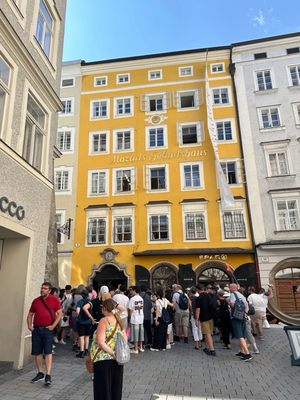
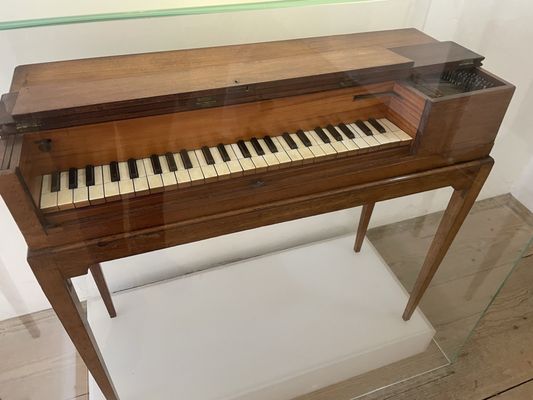
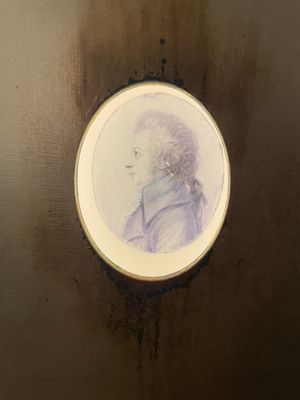
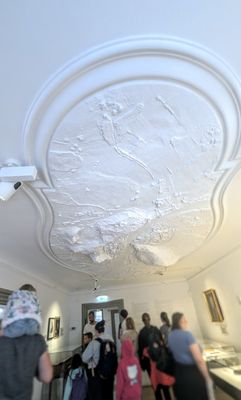
"Wolfgang Amadeus Mozart was born in Salzburg in a burgher’s house at Getreidegasse 9 on January 27, 1756. He lived here in the heart of the city for several years before his family moved into a more spacious residence, now called the Mozart-Wohnhaus, across the river. Mozart’s birthplace (or Geburtshaus ) features several floors showcasing historic furniture, letters, memorabilia, and many of the family portraits painted during his lifetime (although Mozart's musical genius was not appreciated in the city during his life). It also displays his early instruments, including violins, his clavichord, and a harpsichord, as well as locks of the composer's hair."

"Wolfgang Amadeus Mozart was born in Salzburg in a burgher’s house at Getreidegasse 9 on January 27, 1756. He lived here in the heart of the city for several years before his family moved into a more spacious residence, now called the Mozart-Wohnhaus, across the river. Mozart’s birthplace (or Geburtshaus ) features several floors showcasing historic furniture, letters, memorabilia, and many of the family portraits painted during his lifetime (although Mozart's musical genius was not appreciated in the city during his life). It also displays his early instruments, including violins, his clavichord, and a harpsichord, as well as locks of the composer's hair."
"I visited the house where Mozart was born in 1756; it features his instruments and other exhibits." - RICKSTEVES
Myriam B.
Minas A.
JJ
R T.
Elnur Q.
Enjoy L.
Katherine B.
J. R. del P.

Margaret P.

Sara G.

Vicky B.

Carrie M.

Ryan K.

Matthew H.
L L.

Ruben G.

Fadda M.

Yuko H.

Laura G.

GT W.

Marian M.

Riley C.
Alejandra E.

Chun P.

Brian L.

Ruthie V.

Rodney A.

Courtney B.

Ingrid G.

Stephen H.

Clarice W.

Sara C.

Viva C.

Qype User (.

Wen Yi L.

Jason N.

Qype User (.


