Sacrario Militare di Cima Grappa
Historical landmark · Treviso ·
WWI ossuary with panoramic views and Heroic Way

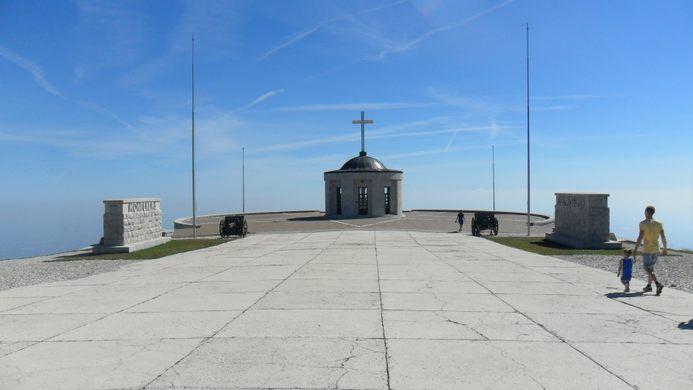


WWI ossuary with panoramic views and Heroic Way
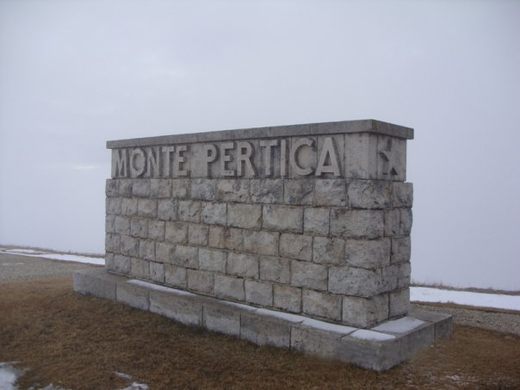
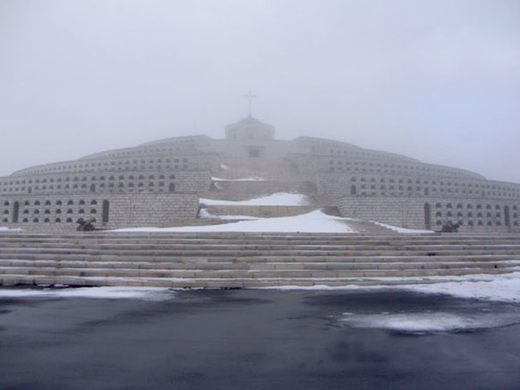
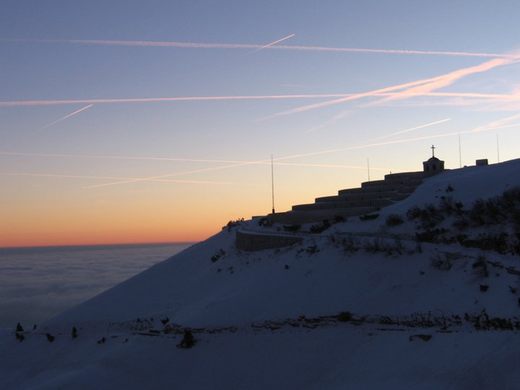
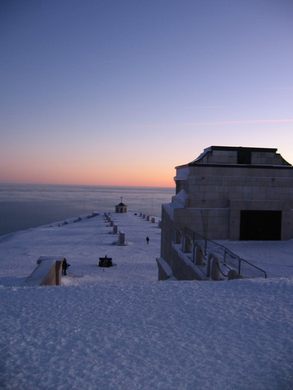
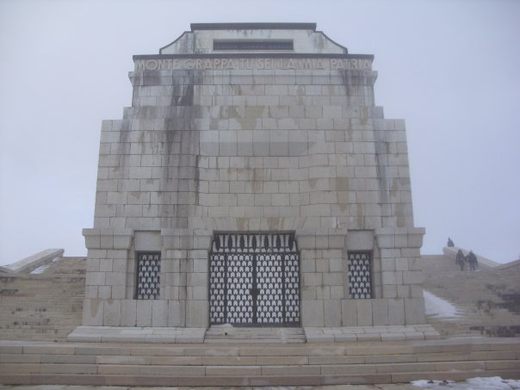
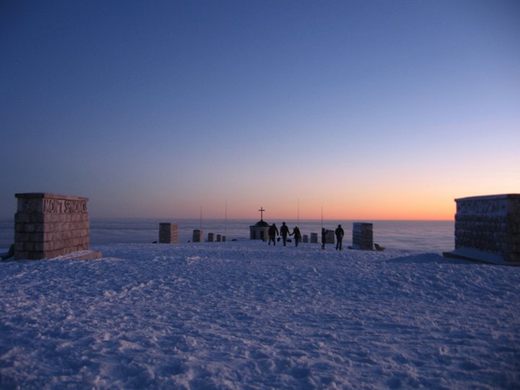
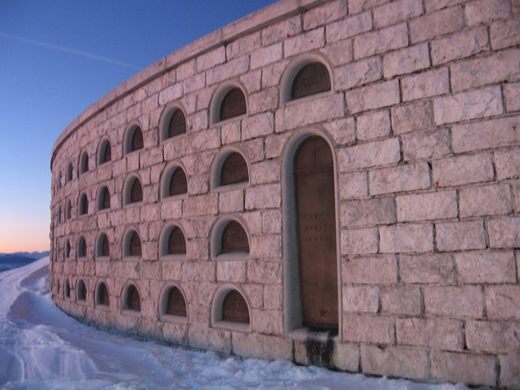
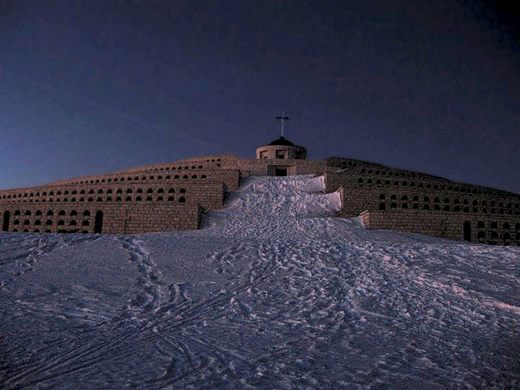
"Built into an Italian hillside, near the summit of Monte Grappa, the Sacrario Militare del Monte Grappa is a monumental burial site for soldiers killed on both sides of World War I. The second battle of Monte Grappa in 1918 was a turning point in the First World War. The Italian Royal Army managed to repel the Austro-Hungarian Empire’s troops; however the cost in human lives was disastrous on both sides. The shrine at Monte Grappa is a memorial to this battle. The sweeping ossuary is built near the top of Monte Grappa and flows down the natural slope of the mountain in ever-widening stone rings. Designed by rationalist architect Giovanni Greppi and sculptor Giannino Castiglioni in 1932, the tiered structure is made entirely of local white stone in circular levels capped by a temple at the top. The bodies are kept in niches dug into the stone and are covered with bronze plates, identifying the deceased when it was possible. Both Italian and Austro-Hungarian soldiers are buried at the site in separate sections connected by a longitudinal body called Strada Eroica (Heroic Way). All told, the massive mausoleum holds the remains of 22,910 identified and unidentified soldiers who died in the war. One of the more curious graves is that of a young soldier named Peter Pan. This grave is often adorned with flowers, tiny rocks, and toys in front of the young man’s bronze epitaph. Little is known about this 21-year old combatant, but the connection that many visitors make between the Austro-Hungarian soldier and the fictional character is evident: the fallen soldier will remain forever young, his life cut short. Many impressive monuments have been built to honor those killed in the war, but the Sacrario Militare del Monte Grappa may be the most dedicated to creating an atmosphere of peace and rest." - ATLAS_OBSCURA
E Scott P.
MEHEDI HASSAN S.
Jens Thestrup T.
Zeeshan M.
André P.
Emma B
Paul H.
Juan G.
