Patrick D.
Yelp
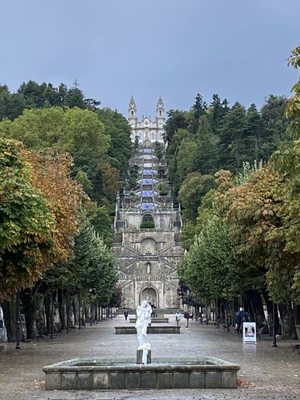
Forget about the gym this visit will provide all the training you need! It wa Built on top of Mount de Santo Estêvão, in the 18th century. The day of the Nativity of the Virgin is the high point of the feasts in honour of Our Lady of Remedies. It usually include fireworks, musical shows and various sports. The Procession of the Triumph, with its richly adorned paraders, is a highpoint.
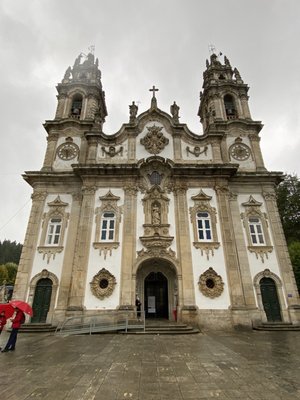
Already during the Middle Ages catholic worship was celebrated there, in an old hermitage dedicated to Santo Estevão that was erected in 1361. At risk of collapsing, it was demolished in the 16th century and the construction of a new hermitage in the same spot was started, by the Bishop of Lamego, where an image of the Virgin and Child was placed. Worship of St. Stephen was thus progressively replaced by Marian Devotion. In 1750, the construction of the present sanctuary began, and was only finished in 1905.
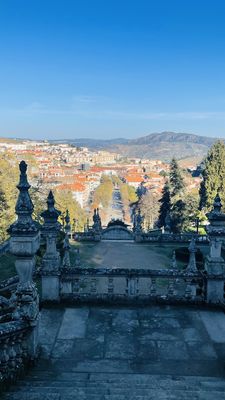
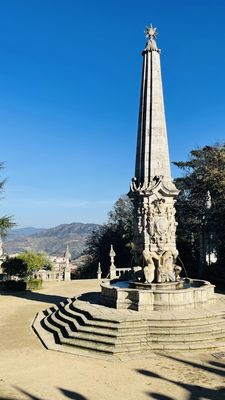
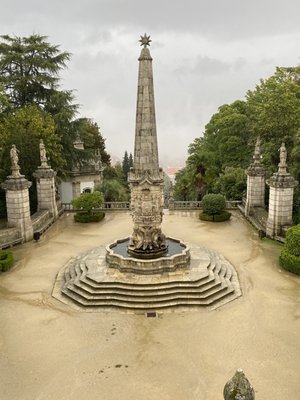
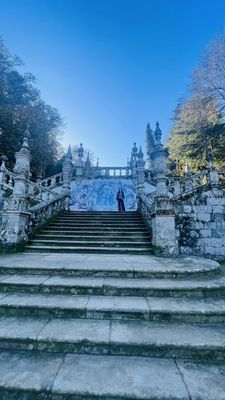
The monumental Baroque staircase with 686 steps, yep you need to climb that to have access to the sanctuary is divided over several levels, punctuated by sculptural elements, such as statues of the kings, the backrests of the eight fountains (among which the Remédios, by Nicolau Nasoni) and various allegorical representations. Half way is the Chapel of Desterro.
Inside the temple is Rocaille in style and entirely dedicated to Marian iconography: on the main altar in gilded carving, in the altarpieces dedicated to the Virgin's parents, in the three stained glass windows with images of Our Lady of the Conception, the Sacred Heart of Jesus and the Annunciation, and in the tiles of the Conimbrigan artist Miguel Costa that represent key moments in Mary's life.
The tomb of the founder of the sanctuary, Canon Jose Teixeira Pinto, is at the entrance of the nave. Definitely worth visiting and gorgeous view of the Valley!