Sinagoga del Tránsito
Museum · Toledo ·

Sinagoga del Tránsito

Museum · Toledo ·

Restored 1300s synagogue with Mudéjar stucco, Sephardic Museum

Sinagoga del Tránsito by null

Information

C. Samuel Levi, s / n, 45002 Toledo, Spain Get directions

Information

Static Map

C. Samuel Levi, s / n, 45002 Toledo, Spain Get directions

+34 925 12 79 61
culturaydeporte.gob.es
@museosefarditoledo
𝕏
@MuseoSefardi

Features

restroom
wheelchair accessible entrance
wheelchair accessible restroom

Last updated

Dec 17, 2025

Powered By

You might also like

Terms of Use • Privacy Policy • Cookie Policy
 © 2025 Postcard Technologies, Inc.
@ricksteves
692 Postcards · 216 Cities

Toledo Travel Guide Resources & Trip Planning Info by Rick Steves

"▲ Museum of Toledo's Jewish past." - Rick Steves' Europe

https://www.ricksteves.com/europe/spain/toledo
Sinagoga del Tránsito

דרל סימס Darrell S.

Google
The restoration and now preservation of the synagogue is very impressive. This synagogue records the Jewish heritage in Toledo. Recommended for its historical and beautiful architecture. The tour includes a beautiful garden to sit a reflect on the Jewish history.

Abigail Dos S.

Google
Accidentally came across this museum during our day trip to Toledo when we were meant to be heading to Santa Maria la Blanca, but what a lucky accident! This was probably my favourite museum of my trip in Spain- the displays were so informative and we learnt loads! The architecture is also gorgeous of course! Definitely a must-see if you’re visiting Toledo.

Jan B.

Google
Very beautiful building and an informative Sephardic museum. The synagogue was converted to a church when Jews were expelled from Spain in 1492, it’s been a museum since 1910. There’s an upstairs women’s gallery that is not accessible for wheelchairs or strollers.

Alanna A.

Google
What a beautiful historical location to learn about the Jewish presence in Madrid. So.e of the antiquities are copies and some are the real thing.

Alexander C.

Google
Very cool medieval synagogue with many beautiful and interesting artifacts and relics. I really enjoyed learning about the Jewish history presented here.

Bülent Ş.

Google
I was expecting a lot more insight than what I saw. It’s a sacred place, and I think this kind of places deserve the best comments.

leydermans

Google
We visited the Santa Maria blanca sinagoga first and it was nice, but this place is beautiful. The walls are adorned with Hebrew writing, it is also a museum with artifacts, and has a number of areas to explore indoors and out.

Steve G.

Google
The history of The Jewish people in Spain is told here with wonderful details and artifacts. This is a must see.
google avatar

Joe P.

Yelp
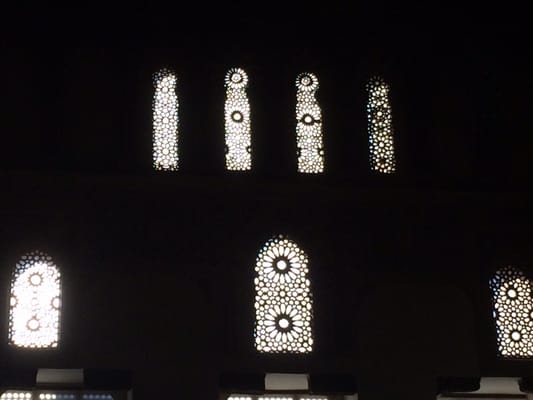
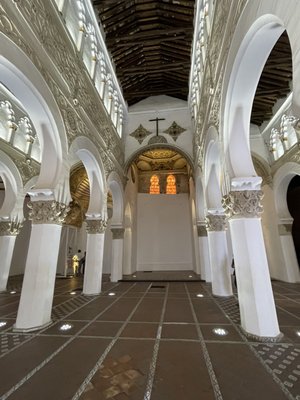
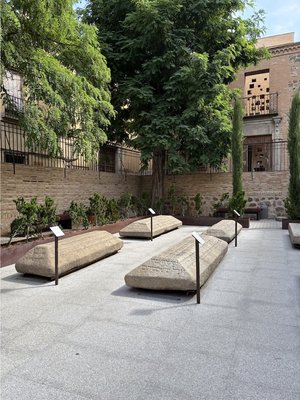
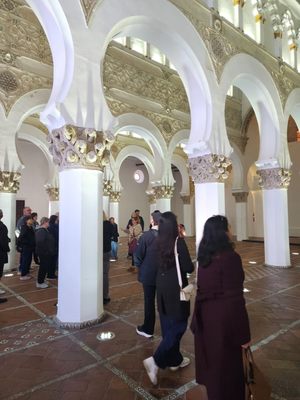
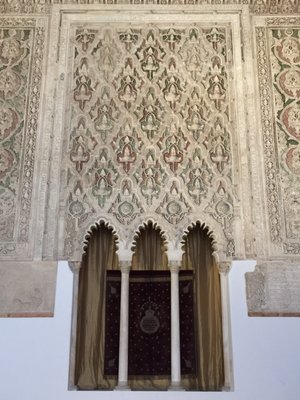
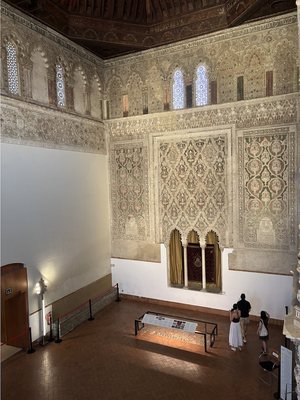
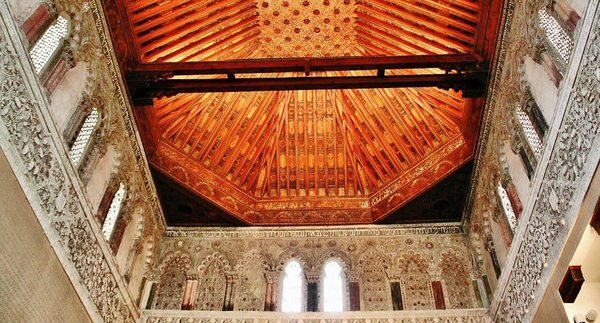
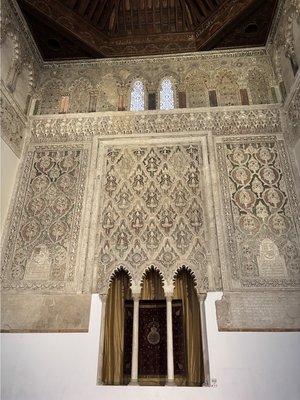
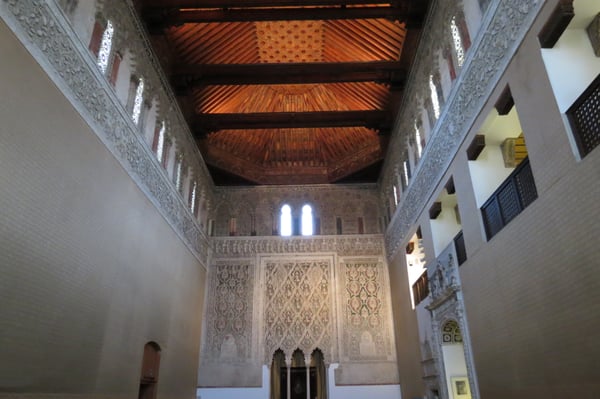
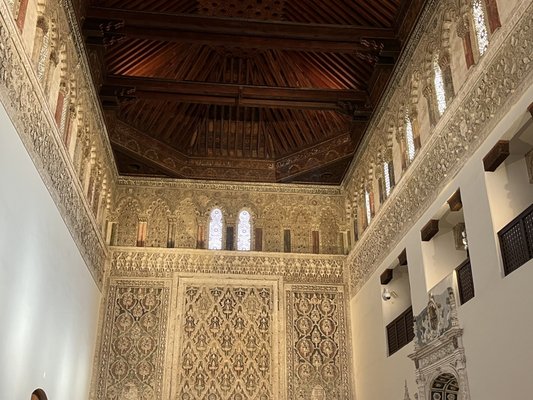
This beautiful synagogue in the heart of historic Toledo is an important memorial to the Spanish Expulsion of the Jewish people under Ferdinand & Isabella in 1492 (it's hard to miss the irony that the synagogue sits on a street named after the Catholic Monarchs who signed the expulsion decree). Also known as the Synagogue of Samuel ha-Levi, the building is now also the city's Sephardic Museum, with a wide-ranging collection of Jewish artifacts that help tell the tragic, yet hopeful, story of Spain's Jews. The synagogue itself dates back to the 1350s, and is in pristine condition following a series of restorations in the 1800s and early 1900s. It's Islamic-inspired architecture is a reminder of the rich tapestry of cultures on which Spain is founded, before a long crusade by the Catholic Church to drive Jews, Muslims and Protestants from the Iberian Peninsula. Visitors to the Synagogue enter through it's stunning Prayer Hall, with its vaulted, wooden Mudéjar ceiling and gorgeous Torah Ark, which dominates the eastern wall. Much of the rest of the building contains the museum exhibits, which includes relics dating back more than 2,000 years. An outdoor courtyard contains gravestones from Toledo's Jewish cemetery, and the tour finishes in a gallery over the Prayer Hall that was originally reserved for women, who were prohibited from worshiping with men during services. A fascinating look into Spain's Jewish history and culture, the Sinagoga del Tránsito is well worth at least an hour of your time if visiting Toledo.
google avatar

Vivek D.

Yelp
One of the beauties of Toledo is the convergence of the Christian, Muslim, and Jewish cultures in the churches, mosques, and synagogues respectively. That is why I decided to make my way to the Spanish Synagogue. There was some construction though, so I wasn't able to see everything as you may notice from the pictures in here. There is a guide via QR code, but it's a bit tough to coordinate reading while looking at the various artifacts. I found it better reading after the fact. Still pretty cool to learn about the history of the Jewish population in Toledo. This one is also 3 EUR to visit, so definitely worth the cost. The courtyward is fairly nice and peaceful as well.
google avatar

Andrea U.

Yelp
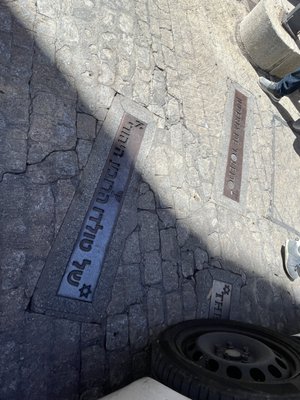
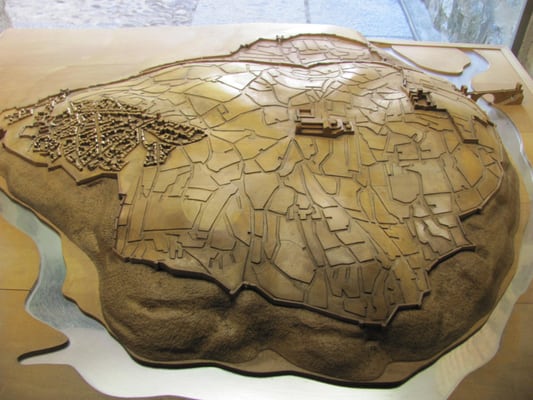
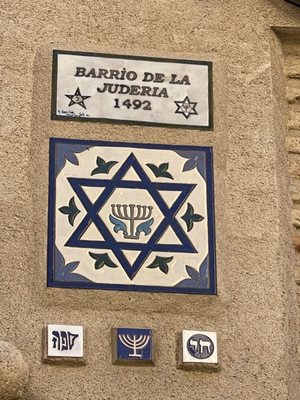
Old original synagogue in Toledo in the Jewish Quarter. It was closed. We walked around the Jewish Quarter admiring the shops & restaurants. There were many Jewish symbols on the street & the corners of blocks on this section of town. I understand the Jewish community has been here since the 12th and 13th centuries, the most populous & richest in Castile. They peacefully coexisted for centuries with Muslims & Christians. Toledo is referred to as city of the three cultures. There is a market, places to pray, public baths, bread ovens, palaces & a wall. Near the Tagus river is the neighborhood Barrio del Degolladero, named because this was the designated place for the ritual slaughter of cattle.
google avatar

Aesha E.

Yelp
The Synagogue is officially known as the Sephardic Museum. It was built as part of a palace complex for the King's treasurer, in the 14th century. It has served as a church (after Jews were expelled from Spain), a military barracks, and now as a museum. I marveled at the architecture of the first room I entered. When I visited in April 2017, the audio guide was pretty poor, and as a result I couldn't fully understand the significance of the various artifacts that were on display. I couldn't figure out how the numbers that were assigned to the items described were corresponding to the place in the guide. Hopefully I was just struggling with this because I'm a dunce, and if not they've made the guide more user friendly in the intervening years. The guide wasn't expensive so not a big deal, but I got a little less from the visit than I may otherwise have.
google avatar

Eric B.

Yelp
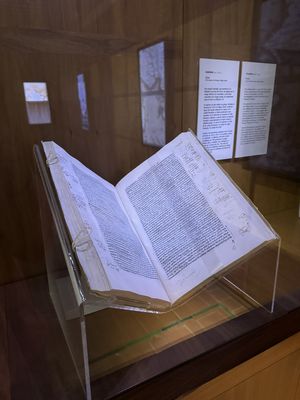
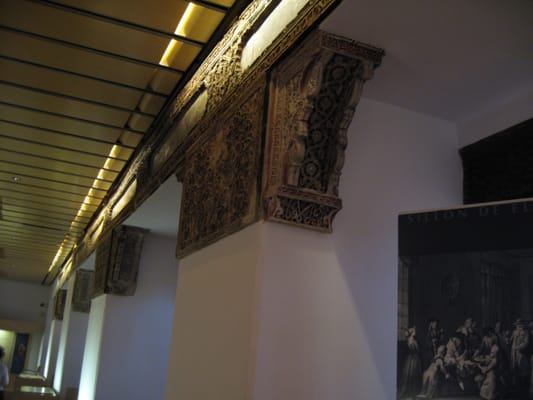
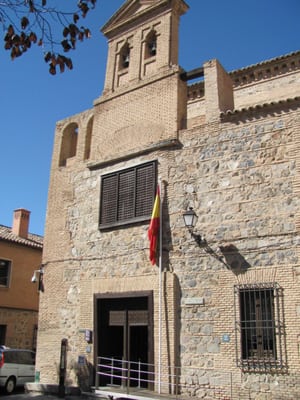
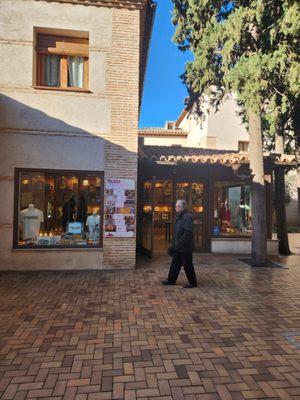
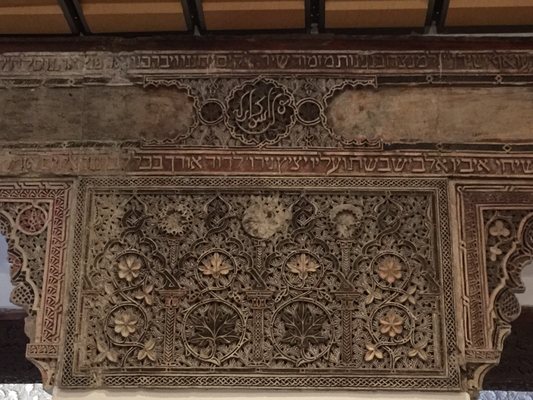
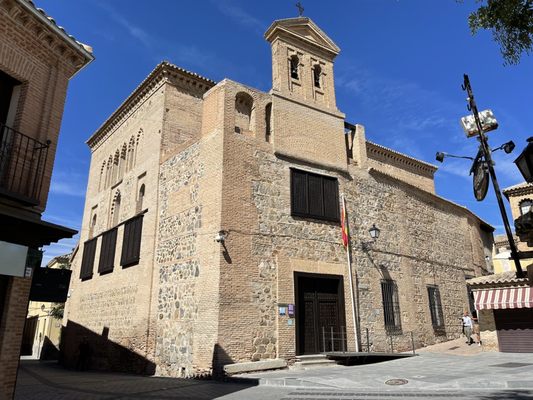
The Sinagoga del Tránsito (or Synagogue of Samuel ha-Levi) was once an important house of worship for Toledo's large Jewish population. A 14th-century building, it is an excellent example of Spanish Jewish art especially noted for its superb stucco Hebrew inscriptions. Founded and financed by Samuel Levi, the Sinagoga del Tránsito was built in 1357. Samuel ha-Leví Abufalia was treasurer and adviser to King Pedro I of Castile, and it is said that Levi imported cedars from Lebanon for the building's construction - à la Solomon when he built the First Temple in Jerusalem. The bell tower was added by the Christian religious order of Alcántara, who took over the building after the Jews were expelled from Spain in 1492. In the 18th century, it was a hermitage dedicated to the Tránsito de Nuestra Señora (Our Lady's Transit, meaning Mary's assumption into heaven), which accounts for its present name. During the war against Napoleon, the synagogue became a military barracks. In 1977, it was declared a national monument and it is now a museum. The exterior of the rectangular synagogue is relatively austere and shares the block with the El Greco's House Complex. Gayle and I also noticed several nearby shops selling a variety of Judaica. Inside, the main prayer hall is covered with intricate Mudéjar decoration and Hebrew inscriptions glorifying God, Peter the Cruel, and Levi himself. The inscriptions include psalms inscribed along the top of the walls and a poetic description of the Temple on the east wall. Gayle and I also found the "Women's Balcony" to be interesting both in terms of its exhibits, but the view of the main hall and the overall architecture. Adjoining the main hall is the Museo Sefardí (Sephardic Museum), a small but excellent museum of Jewish culture in Spain. The museum opened in 1971 and contains a variety of Jewish art, ritual objects and ancient tombstones with Hebrew epitaphs. Gayle and I very much enjoyed our visit and it was certainly an interesting Ying compared to the Yang of our earlier Toledo Cathedral Visit. Also don't miss a visit to the nearby Sinagoga de Santa Maria la Blanca.
google avatar

Jair W.

Yelp
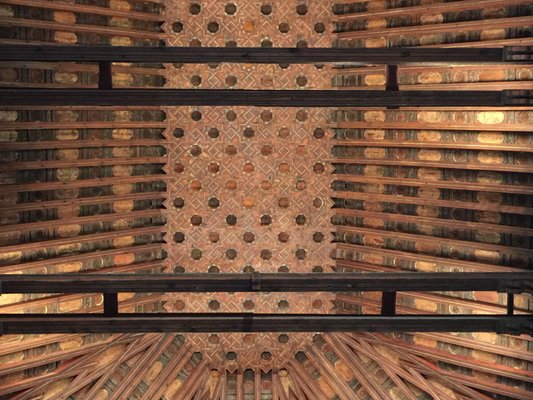
According to historians, the Sinagoga del Transito was built around 1357 in the juderia of Toledo. It was built under the order of Samuel Ben Meir Ha-Levi Abulafia, advisor and treasurer under the King of Castile. The Jewish people paid the Muslims to craft this beautiful synagogue in a wonderful display of convivencia, or the coexistence of Judaism, Islam, and Christianity. One of the first things that you notice upon entering the synagogue is the beautiful architecture. The building is fashioned with the mudejar art style synonymous with Spain and Portugal. In this Muslim technique, decoration is the key. Some of its main components include vegetables and geometric shapes because they believe that depicting other humans in these grand pieces of art is considered worshipping false gods. In contrast, a lot of the Christian churches across Europe are filled with elaborate sculptures of Jesus and other biblical figures. A prime example of this is the Catedral Primada Santa Maria de Toledo. This beautiful church was originally a synagogue until the Christians took it over. Its gothic art style is in full display with its high ceiling, stain glassed windows, arches, and flying buttress. The interior is covered with gold and depictions of the passion. The portrayals of Heaven and Hell were done to scare people into shape and give them a sort of motivation to live holy lives. Although the Sinagoga del Transito had no depictions of Christ, they still showed their praise for him in other ways. Along the walls in the building you can see Arabic writing the appears to say 'Allah is the best'. Some people believe that the Muslims were doing this to play a joke on the Jewish people, but most likely Allah translated to God in most religions. The part that stood out most to me was the craftsmanship of the ceiling. If you just glance at it, it just looks like an ordinary ceiling. The longer I looked at it, the more I was fascinated by its detail. It was carefully crafted with the finest of wood from the larch tree and intertwined with ivory and colorful decorations. A little bit lower than the ceiling, on the second floor, is the women's gallery. During these times religious activities were done primarily by males. Women were still allowed to attend, but the women's gallery created a space for them to observe while being completely out of the way. Sometimes there were not seen at all as some churches had curtains that they had to remain behind. Unfortunately, all of Samuel Ben Meir Ha-Levi Abulafia's work went to waste when the Jewish people were expelled from Spain in 1492. Luckily, it wasn't a complete tragedy is the building was not destroyed but instead converted into a Christian church. This synagogue, The Catedral Primada Santa Maria de Toledo, and The Synagogue of Santa Maria La Blanca all suffered similar fates as Ferdinand and Isabella lead Spain into a new direction. Thanks to many restoration efforts, we are still able to see the blend of these three religions and how they coexisted in Spain.
google avatar

Aaron D.
Yelp
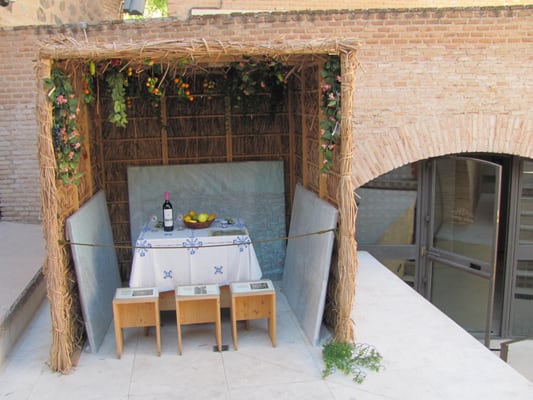
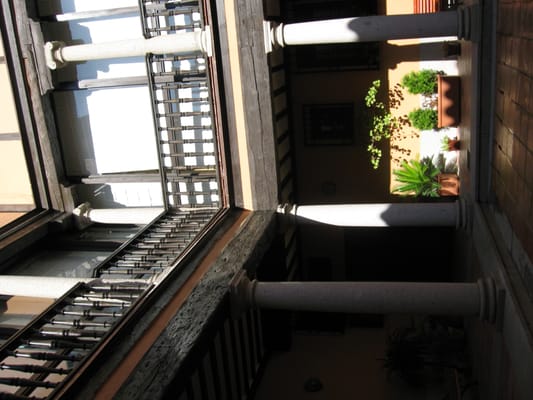
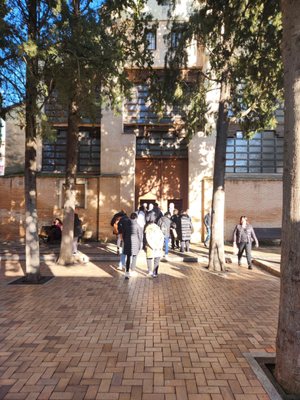
Well, as with the Jewish museum in Cordoba, I found this one kind of depressing as well. Although the building itself is more impressive here - larger, more ornamented, etc. I also enjoyed the peaceful garden cemetery in the courtyard behind the building. The tourist crowds - especially tour groups - generally seemed to stay inside the building, which left the courtyard feeling peaceful and contemplative. I think it's great that people visiting Toledo can get an idea of the Jews who used to live here, but of course the story itself had a sad ending (persecution and expulsion). My favorite exhibit in the museum was the last one before the exit that shows the traditional clothing that Sephardic Jews wore hundreds of years ago. One might say that the outfits were very Moorish in appearance. When you leave the synagogue and museum, head across the street for a scenic viewpoint of a gorge, a river, and some very Spanish-looking countryside.
google avatar

Anthony G.

Yelp
Pretty good place to visit in Toledo. This Spanish synagogue dating back to the 14th century built for Samuel ha-Levi. It's only €3 to get in and it's nicely decorated. It's not that large and shouldn't take more than an hour to see it all.