The Headington Shark
Sculpture · Oxford ·
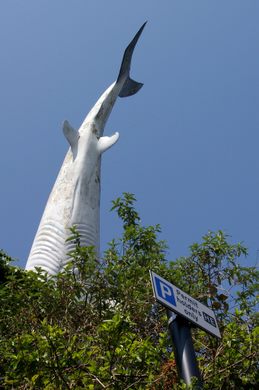
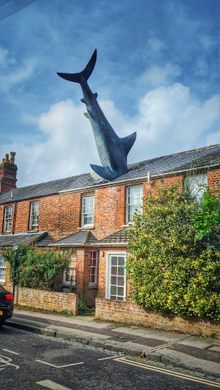
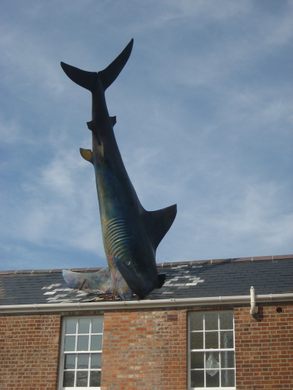
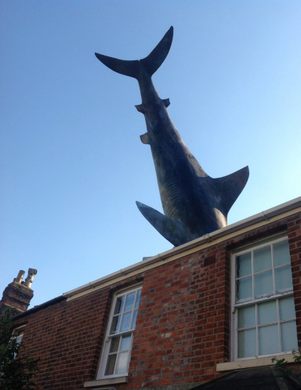
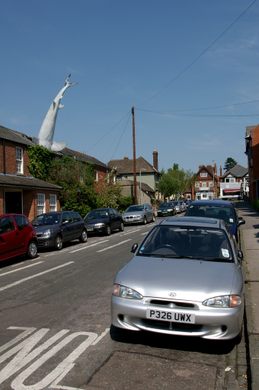
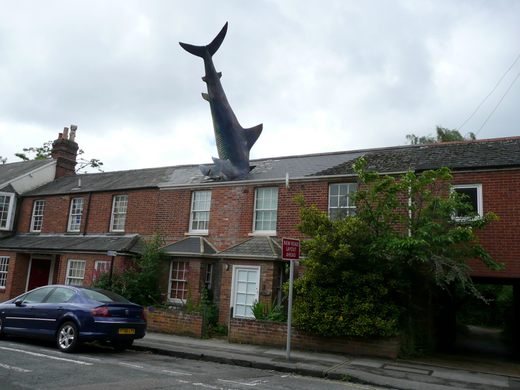
Iconic rooftop shark sculpture, a 1986 protest against nuclear war



Information
2 New High St, Headington, Oxford OX3 7AQ, United Kingdom Get directions
Iconic rooftop shark sculpture, a 1986 protest against nuclear war
2 New High St, Headington, Oxford OX3 7AQ, United Kingdom Get directions
"About four months after the incident at Chernobyl, and not long after American bombs landed in Libya, in 1986, Oxford resident Bill Heine had a 26-foot shark sculpture erected on his roof. Using cranes, Heine and sculptor John Buckley mounted the shark head first onto the roof in the middle of the night. That morning (the 41st anniversary of the dropping of nuclear bomb “Fat Man” on Nagasaki), the headless shark began delighting curious onlookers—but not town officials. Heine said that the shark was assembled and properly placed to speak out against nuclear weapons, Chernobyl, and more. Whether art, protest, or, per rumors, a crafty disguise for an antenna, the City Council tried to get Heine to remove the shark on the grounds that it was unsafe. After a thorough inspection, however, it was found that the shark was indeed properly installed and safe. The dispute continued and was appealed by Heine in a letter to the Secretary of State for the Environment; again, it was found that the shark was causing no harm, and one inspector termed it “unique and brilliant,” according to The New Yorker. Since then, the bizarre shark-sculpture-anti-nuclear-armament-protest has remained in its head first dive into the home, which is now available to rent via Airbnb." - ATLAS_OBSCURA
Ken
Sweat Less T.
Adaku N.
Henry B.
Pete / H.
Saksham K.
Claire B.
Tom F.
