Tom B.
Yelp
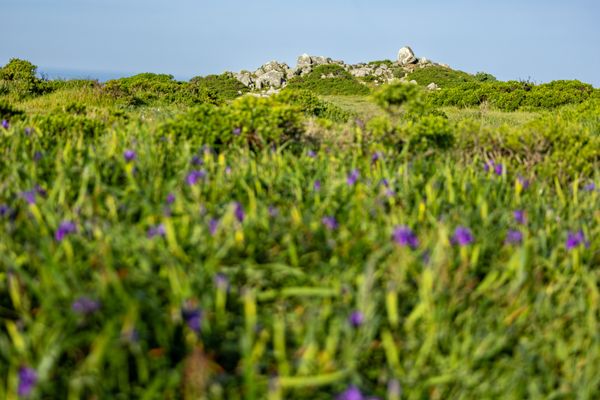
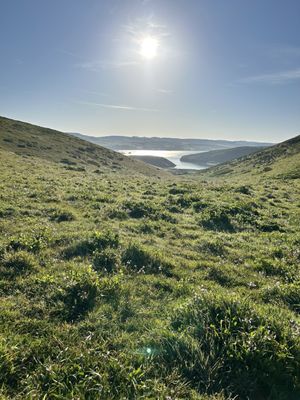
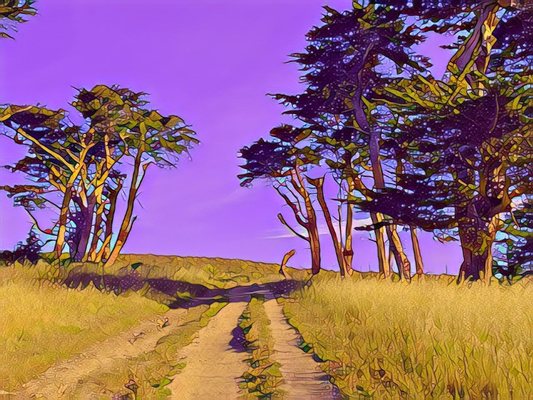
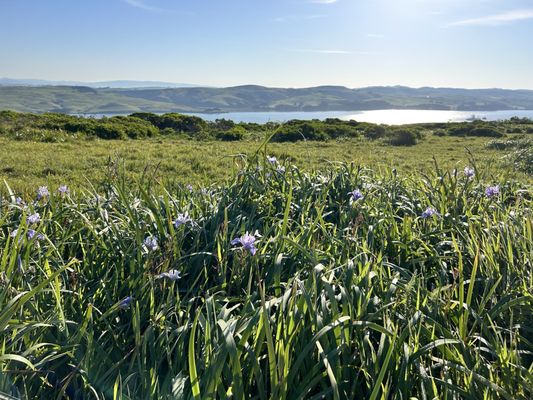
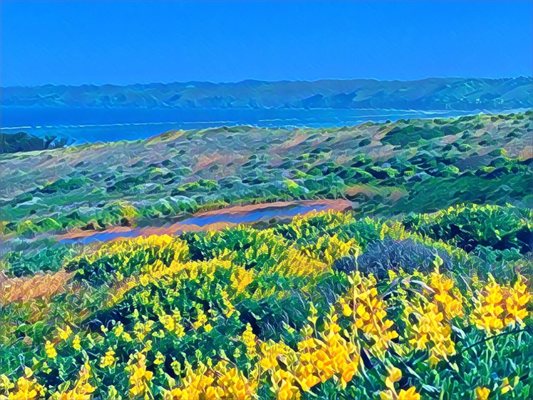
A. THE TRAIL. I twice hiked the entire Tomales Point Trail (9-miles, round trip). Nearly all of the trail is easy to hike. But when you are one mile away from the northern end of the trail, the hard-packed dirt trail is replaced with deep sand. In this sandy part of the trail, the land is covered with low bushes that partially obscure the sandy trail. As a result, hikers need to keep an eye on distant end of Tomales Point while, at the same time, do their best at marching northwards through the open areas between the low bushes.
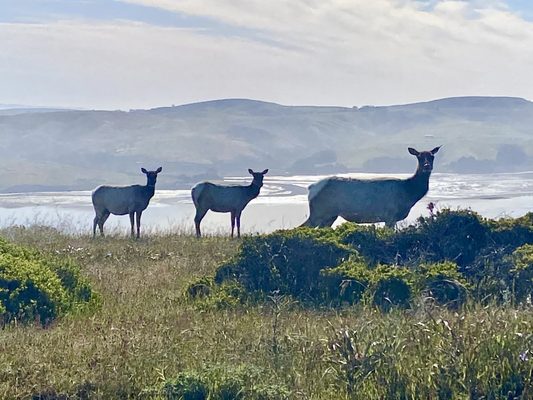
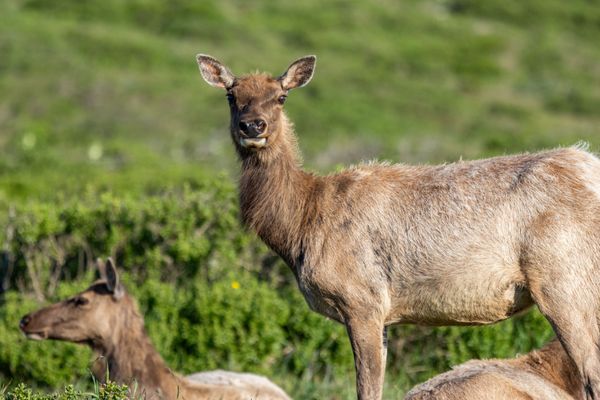
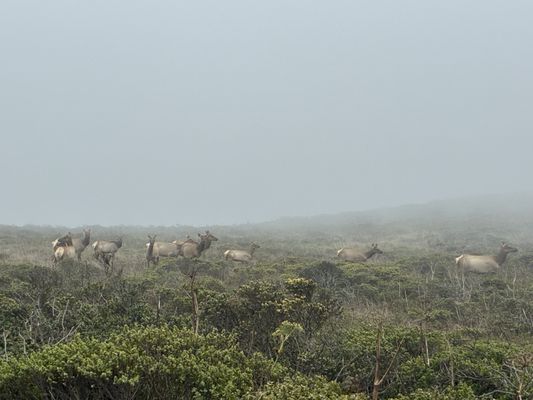
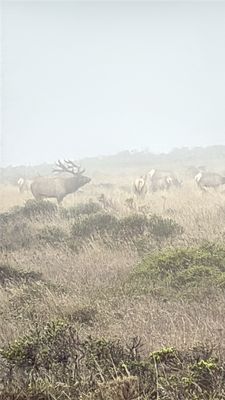
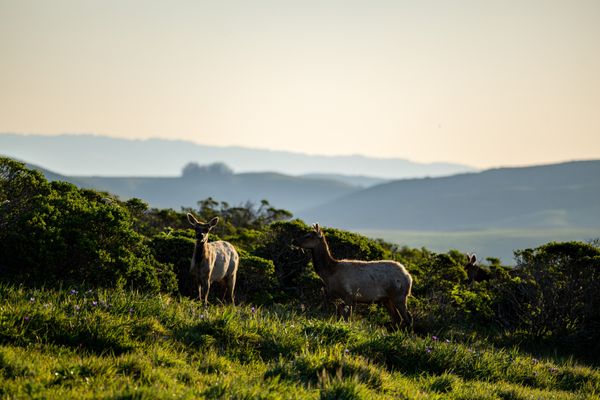
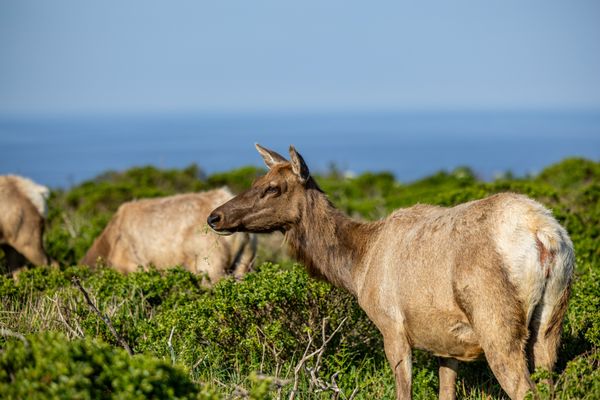
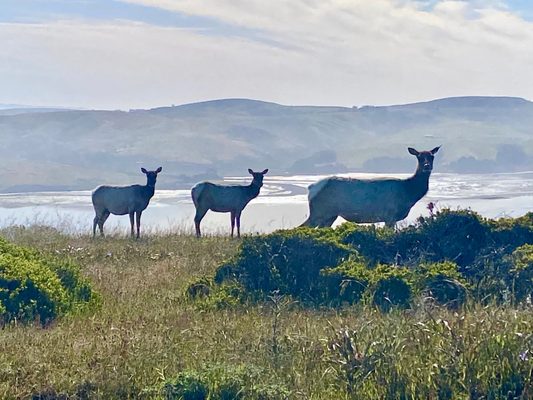
B. ELK PHOTOGRAPHY. I took 70 photos of the tule elk. I encountered two herds of elk, each with about 20 elk. One herd (females) resides a few hundred feet beyond the trailhead at Pierce Point Ranch, and the next herd (males with antlers) stays farther north, next to a pond at the half-way point in the trail. Better photographs can be taken of the elk by the pond, because the trail passing the pond is at a higher elevation than the pond and the nearby meadow. In the morning, the male elk were drinking water from this pond, and ducks floating nearby. Two hours later, during my return hike, most of the male elk were sitting in the meadow, 40 feet downhill of the pond. I use a 300 mm telephoto lens with my camera, a sturdy SLIK tripod, and ASA400 color film. This equipment did a perfect job for me. Because the total weight of my equipment was 25 pounds, I used a wheeled luggage cart for toting the tripod, three lenses, and camera bag. One of the other hikers passing on the trail said, "Now I know why the trail has marks from two wheels."
C. ELK ZOOLOGY. Elk occur as Rocky Mountain elk (C.e. nelsoni), Roosevelt elk (C.e. roosevelti), and tule elk (C.e. nannodes). C.e. means, Cervus elaphus. The elk at Point Reyes are tule elk. Their diet is mostly grasses and forbs (see, page 61 of McCrea Cobb). The forbs at Point Reyes are, perennial cow parsnip (Heracleum maximum) and English plantain (Plantago lanceolata). The grasses at Point Reyes include, annual ryegrass (Lolium multiflorum), perennial ryegrass (Lolium. perenne), and purple needlegrass (Nassella pulchra). Rutting season is August to October and calving season is April to May (see, page 24 of McCrea Cobb). Rutting is when male elk display their strength over other male elk, sometimes with fighting. The male elk attempts to dominate and earn the right to mate with female elk (cows). Elk are divided into five age groups: (1) Cows - adult females, (2) Calves - young of the year of either sex, (3) Spikes - adult males with unbranched antlers, (4) Raghorns - adult males with branched antlers having 2 to 4 tines, and (5) Prime bulls - adult males with branched antlers having 5 or more tines.
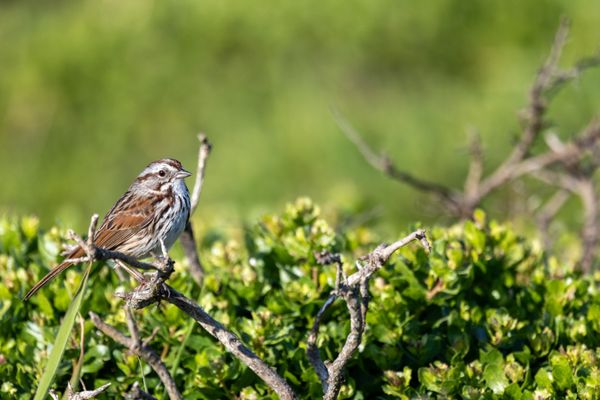
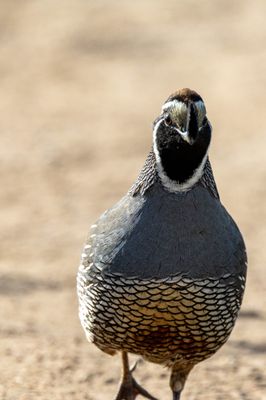
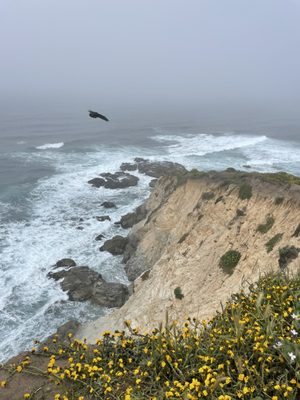
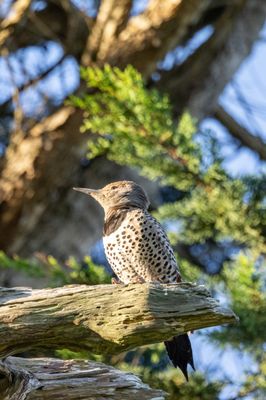
D. BIRD ROCK. About 3,000 feet from the end of the trail, hikers will see an island called, Bird Rock. Hundreds of brownpelicans spend their days roosting on Bird Rock. Bird Rock is also the home for the Ashy Storm-Petrel. Birds near Tomales Bay include blue herons, egrets, marine geese, loons, grebes, cormorants, ducks, Bonaparte's Gulls, terns, and alcids.
E. GEOLOGY. Tomales Point is made of plutonic rocks. A pluton is molten granite that, when cooled, becomes granite rock. The granite plutonic rocks of Tomales Point consists of quartz diorite, granodiorite, and adamellite. Adamellite is a mixture of feldspar and quartz. The relation between plutons and granite is explained by Trent and Hazlett (2002) Joshua Tree Nat'l. Park Geology.
F. REFERENCES
(1) McCrea Cobb (2010) Spatial Ecology and Population Dynamics of Tule elk (Cervus elaphus) at Point Reyes (218 pages).
(2) Laura Watt (2015) The Continuously Managed Wild:Tule Elk at Point Reyes. J. Int. Wildlife Law & Policy. 18:289-308.
(3) Mary Callahan (Oct. 4, 2017) Tule elk put on dramatic displays in Point Reyes National Seashore. The Press Democrat.
(4) John Kelly (1992) Bird Populations on Tomales Bay. Third Biennial State of Tomales Bay Conference. Inverness, CA (pages 30-35 of 56-page conference).
(5) Becker, Carter, Parker (2016) Ashy Storm-Petrels at Point Reyes. Marine Ornithology. 44:63-70.
(6) Calif. Division of Mines and Geology. Bulletin 202. Geology of the Pt. Reyes Peninsula (36 pages).