The World Digested A.
Yelp
- Part II of Shojin Ryori Grand Tour -
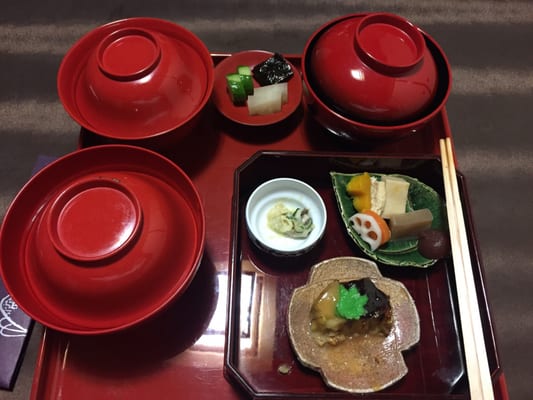
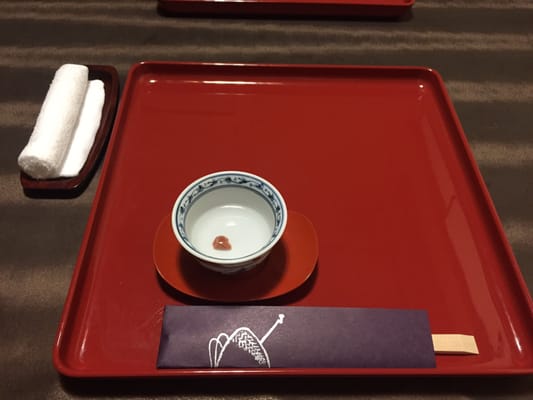
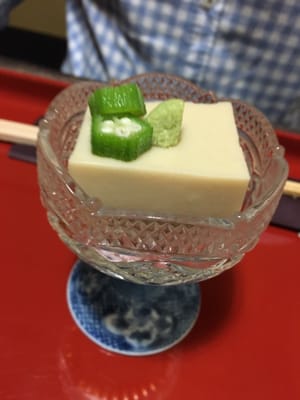
The second pilgrimage was on a deadly blizzard day to a desolate corner of Kyoto, to a largely deserted house, which was the restaurant arm of Ajiro - a Michelin one-star caterer to the largest Zen temple in Japan, Myoshin-ji (and its subaltern temples). As it is still sometimes done in old-fashioned hotels, guests are greeted by their own names displayed prominently by the entrance - a practice obviously leftover from time before privacy was invented. Lacquered placement plates were already set on the table in lieu of the pedestal, awaiting, in a traditional but tired, fluorescent-lit tatami room. The course, also based on honzen ryori, commenced rapidly with a pickled plum water - tepid and tasteless - which failed its role as a non-alcoholic aperitif; and the sesame tofu was too dense to be considered a delicacy.
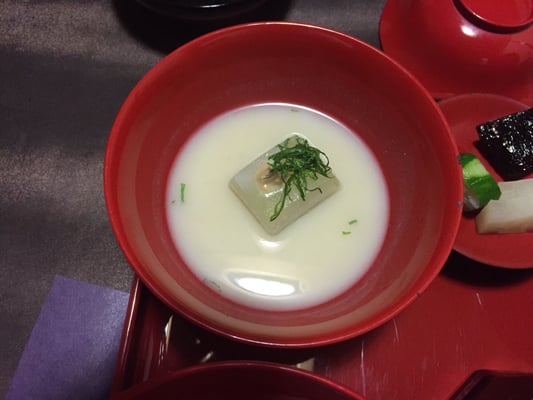
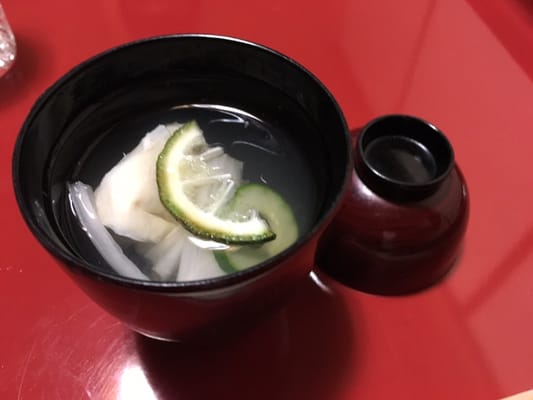
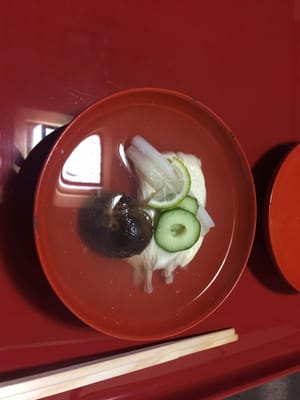
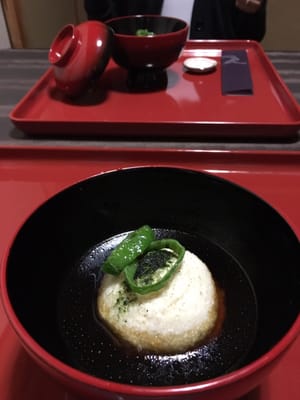
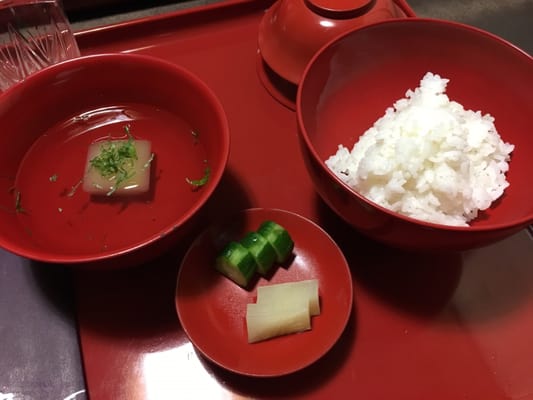
A owan in Japanese cuisine is a clear soup, which tests the chef's skill as the French consommé, regardless of whether it is Japanese kaiseki or shoji ryori. While Ajiro's owan was doubtlessly clear, as it was clear of even dashi, it seriously tried and tested the diner's patience and skill of chopsticks. The tofu skin ball in the clear soup was as slippery and bouncy as a rubber ball, that is, a rubber ball fallen into a bathtub full of bathwater, and just about as tasty.
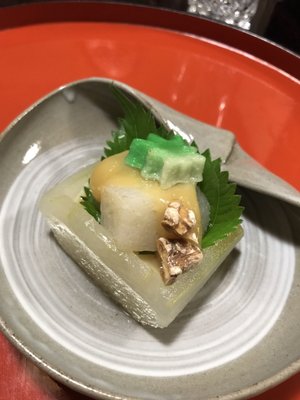
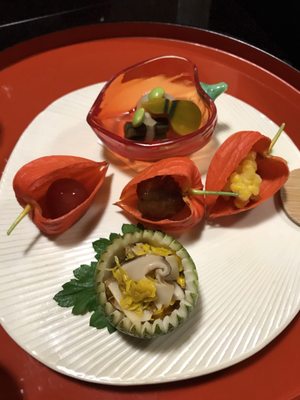
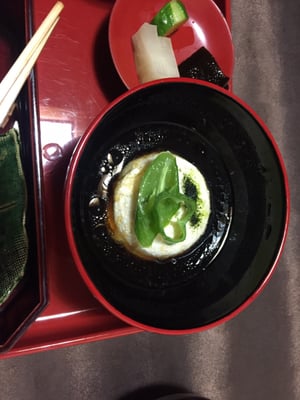
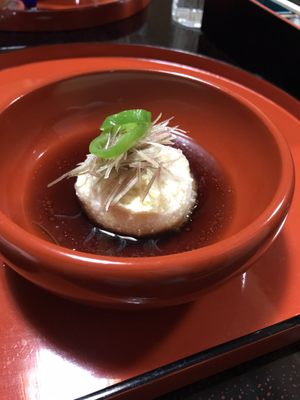
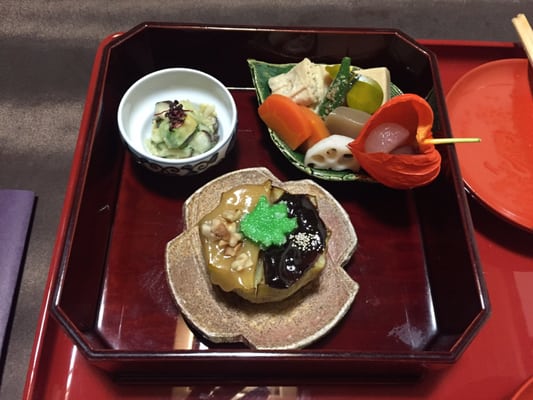
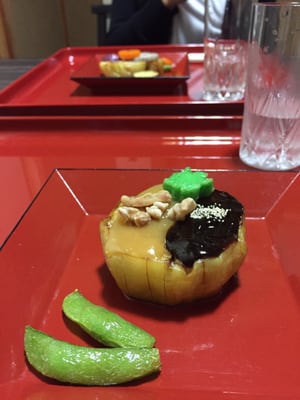
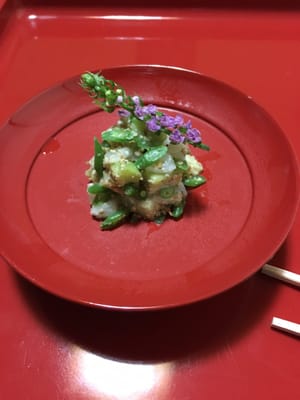
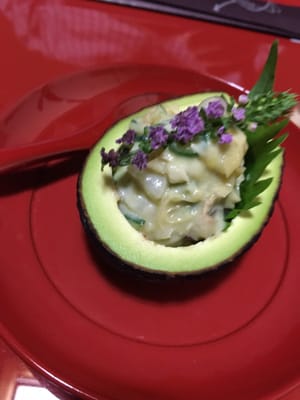
Another Zen vegetarian staple, koya-dofu (a frozen and dried tofu), was chokingly sweet, which obscured the flavor of kombu and shiitake, if there were any. Its overreaching sweetness overwhelmed the hapless neighbors on the same plate - the presumably piquant rapini in mustard and sour radish pickle. The hiryouzu (literally, "the head of a flying dragon") was a fried tofu ball, popular in oden (a Japanese pot-au-feu) due to its spongy texture for soaking up the dashi, yet the muddled head of Ajiro's flying dragon swallowed too much salt water and seemed to have drowned in its own soup. The only interesting touch at Ajiro was the refreshing use of apple in the shiroae - a salad with pureed silken tofu - with Japanese celery and konjac jelly. However, the meal, having begun with the plum water and commenced with the customary two soups, had to end with even more water to fill the empty belly and emptier heart. The waitress ceremoniously presented a grilled rice ball in a tea pot, in lieu of tea leaves, and poured out the watery dreg and drowned any remaining hope.
All in all, there was simply too much water: on top of the two customary soups in honzen ryori, there were additional liquid supplements to befuddle the mind and to blur the distinction between a stew and a soup. Perhaps the ascetics monks used to fill up their growling stomachs with this much liquid, nonetheless, without their dedication or faith, the modern diners will surely find such a liquid diet to stretch their patience way too thin.
For more take on vegan/vegetarian/shojin ryori in Japan, please visit my blog (hint: in the profile section).