Atomic Bomb Dome
War memorial · Hiroshima-shi ·

Atomic Bomb Dome

War memorial · Hiroshima-shi ·

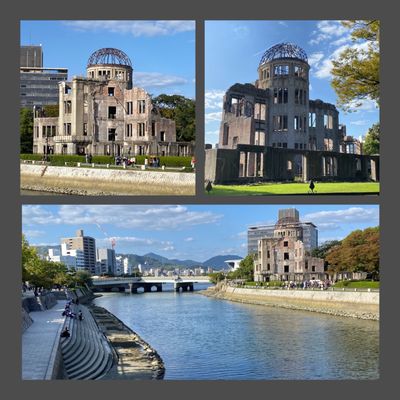
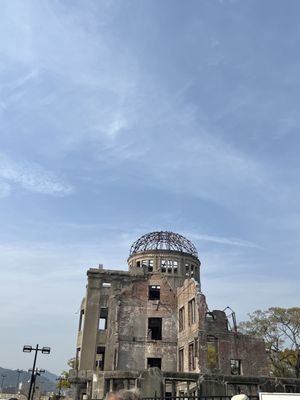
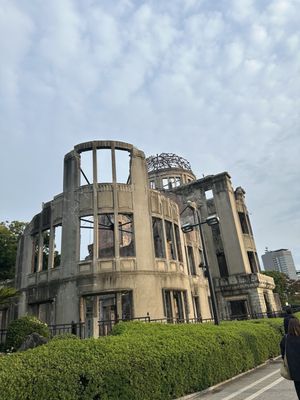
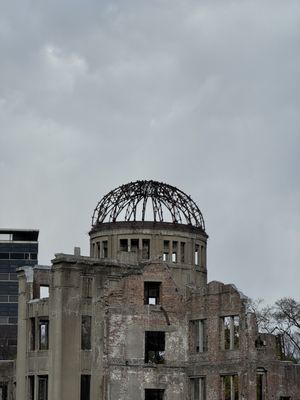
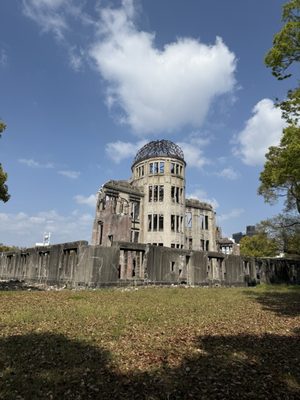
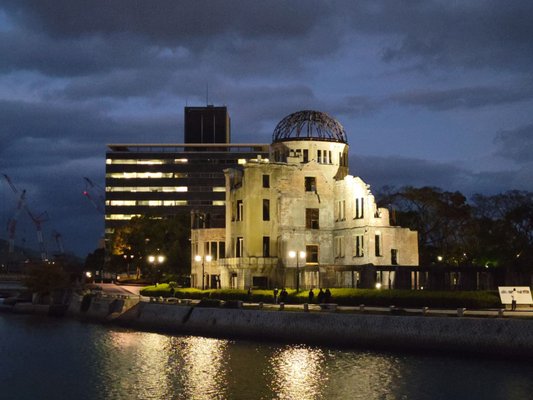
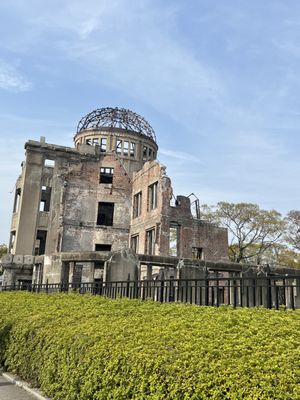
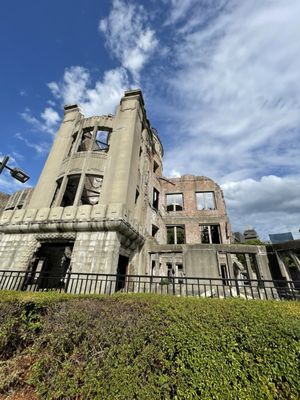
Iconic remains of Industrial Promotion Hall, symbol of peace

Atomic Bomb Dome by null

Information

1-10 Otemachi, Naka Ward, Hiroshima, 730-0051, Japan Get directions

Information

Static Map

1-10 Otemachi, Naka Ward, Hiroshima, 730-0051, Japan Get directions

+81 82 504 2898
city.hiroshima.lg.jp
@hiroshima_city_official

Features

wheelchair accessible entrance

Last updated

Dec 12, 2025

Powered By

You might also like

Terms of Use • Privacy Policy • Cookie Policy
 © 2025 Postcard Technologies, Inc.
@silverkris
9,878 Postcards · 2,262 Cities

The latest gear to keep you running - SilverKris

"The only structure left standing after the atomic bombing on 6 August 1945, preserved as a UNESCO World Heritage Site and positioned at the entrance to the park's poignant statues and installations as a powerful reminder of the event." - cooper

https://silverkris.singaporeair.com/inspiration/fashion-shopping/travel-gear/city-running-products/
Atomic Bomb Dome

Jacob S.

Google
Seeing the Atomic Bomb Dome in person was a surreal and sobering experience. Once the Hiroshima Prefectural Industrial Promotion Hall, it now stands as a preserved ruin - a UNESCO World Heritage Site and one of the few buildings that survived near the bomb’s hypocenter. Walking around the site, there are signs and displays that tell its story, each one deepening the sense of history and loss. Nearby, the remnants of a fountain still filled with rubble serve as another haunting reminder of what happened here. Yet, even amid the ruins, spring blossoms lined the path. It is also easily visible across the river from Peace Memorial Park, a stark reminder of the dark history here.

Zubair W.

Google
A very good place to visit. It is very well maintained and preserved with fantastic surroundings. One does get emotional looking at the tomb, thinking of the time (August 1945) when the humanity discovered the destructive potential of its own powers.

Bob L.

Google
This place is so renowned I believe I don’t have to explain more. A must visit if you’re here in Hiroshima. In fact, it might even be worth it to plan your entire Japan trip around this. I feel that everyone deserves to learn from the past and do not take peace for granted Visited on 27 January 2023, Monday.

さくら大山

Google
🕊️ Hiroshima Atomic Bomb Dome Review Visiting the Hiroshima Atomic Bomb Dome was a deeply moving experience. It stands as a powerful reminder of the tragic events that took place in Hiroshima and serves as undeniable proof of the devastating impact of nuclear weapons. The museum exhibits and photographs vividly portray the horror, suffering, and human cost of the atomic bombing. They leave a lasting impression and convey an important message about peace and the value of life. This site teaches a painful but essential lesson for all of humanity. It is a place everyone should visit at least once — to remember the past and to reflect on the importance of preventing such tragedies in the future

Peter P.

Google
A pilgrimage for many. Peace park is just across the river. Very beautiful park and quite spot to view the Dome.

M. A.

Google
A place that stirs such mixed emotions. A day to reflect , The Hiroshima Peace Memorial (Genbaku Dome) was the only structure left standing in the area where the first atomic bomb exploded on 6 August 1945. Through the efforts of many people, including those of the city of Hiroshima, it has been preserved in the same state as immediately after the bombing. Not only is it a stark and powerful symbol of the most destructive force ever created by humankind; it also expresses the hope for world peace and the ultimate elimination of all nuclear weapons. We can only hope that humanity never allows something like this to happen again.

kat

Google
Must visit location in Hiroshima. It is really fascinating to see this building and how it has been well preserved for the past couple decades. There are a lot of people wandering this area, and a lot of things to see. Definitely check out the two nearby museums while you visit the Atomic Bomb Dome. Highly recommend!

JAKE L.

Google
Historical place, and also a nice park. Located in the central of Hiroshima, so you can visit here by riding a streetcar. The Atomic Bomb Dome itself has a very significant outlook, so you won't miss it. 😉
google avatar

Irene M.

Yelp
A must see... There are many sights to see but the most known is the Peace Park and Atomic Bomb Dome which does have a direct connection for me personally and as I really wanted to visit the sight with the help of family that we're so lucky to have took us here...all I know is that I wanted to walk the entire park and see every memorial and take in the Atomic Bomb Dome as there's nothing at all that can prepare you to see it right before your eyes. The gift shop was a great stop to take in all the information and the history as shopping there gave me more of the bright side peace has given this country with paper cranes and various items all goes back to the non profit organization made it an easy place to shop showcasing local craftsman with various items it shows how they all come to be proud locals and together live a peaceful life. どうもありがとうございます!
google avatar

Carolyn F.

Yelp
A must see landmark when visiting Hiroshima to remind one of the devastation caused by the 1945 bomb. This structure partially survived because of architecture of concrete and iron rods while surrounding wood building and homes were decimated.
google avatar

Cathy C.

Yelp
Yelp Review 2024 #213: Genbaku Dome aka Atomic Bomb Dome is the only surviving part of Hiroshima Prefectural Industrial Promotional Hall that was built in 1914 but left in skeletal remains after the atomic numbing in August 6, 1945. It has been well-preserved and is a UNESCO World Heritage Site. It's a historical and symbolic building. It reminds us of the destructive nature of humans but at the same time it serves as a reminder that history should not repeat itself. It also serves as a symbol of hope - not all is lost. Across the bridge is the Peace Memorial Park where you can see lots of statues, installations and information regarding the atomic bombing. The museum is also here. It was pouring the day we went so we didn't get to enjoy this area as well as we wanted to.
google avatar

Johnny N.

Yelp
The Genbaku Dome is the only structure that still stands from the Atomic Bomb. It's so heavy. Just in the middle of the city as a remembrance to what happened at 8:15am on August 6th, 1945. The bomb dropped almost directly overhead, which is why the building kept its shape. Honestly though, the one positive thing I could take from my trip to Hiroshima is how the city is completely rebuilt. If it weren't for this structure still standing and being preserved, you wouldn't even know the city was completely decimated. Human beings are so resilient. My tour guide had us take pictures by it, and I felt kind of weird doing that, idk. I didn't know if I should smile or not so I just hit a soft smile. Everyone should make the trip to Hiroshima if you have the opportunity. IG @jnov_ Tiktok @jnov__
google avatar

Zay M.

Yelp
My friends and I stopped by here on a Tuesday afternoon while headed to the Hiroshima museum. There were a few tours going on, which was nice to catch some of the information shared. The A-Dome is the "ruins of the former Hiroshima Prefecture Industrial Promotion Hall which was destroyed by the first atomic bomb ever to be used in the history of humankind on August 6, 1945." To add, "The atomic bomb was detonated in the air at an altitude of approximately 600 meters almost right over the hall. The explosion by a single bomb claimed the lives of over 200,000 people and the city area of about 2-m radius was turned into ashes. In order to have this tragic fact known to succeeding generations and to make it a lesson for humankind, the reinforcement work of the ruins has been done by the contributions of many people who desire peace within and out of the country. The ruins shall be preserved forever." There's not much more for me to say. It's a symbol of a tragic that not only immediately claimed the lives of so many people but also people later on in life and/or their children.
google avatar

Maggie D.

Yelp
HIROSHIMA DOME This is probably the most popular thing to see when you visit Hiroshima. It is located in the Memorial Peace Park, which also has several other monuments. This is less of a monument though, and more of a way to keep a real example actual effects from what happened. I am glad that they left it destroyed because it makes you think, and it almost looks like an art piece. I like that it now is a symbol that represents peace for the world.
google avatar

Peter H.

Yelp
This site is significant and should be visited to remember to keep the peace today and forever.
google avatar

Ed U.

Yelp
Atomic Bomb Dome / Hiroshima Peace Memorial / Hiroshima -- It was an exhibition hall that displayed local products before that fateful day, August 6, 1945. I never understood why the skeleton of the dome survived so close to Ground Zero but found out later that the blast somehow worked vertically and left the European-style building standing even though everyone inside perished. Ever since, it has stood as the iconic symbol that has defined the abolition of nuclear weapons. You can't enter the building. Just stare at it and remind yourself why it's still here. RELATED - Exploring Japan? Here's a collection of places I've visited and reviewed: https://bit.ly/2qrUBZo
google avatar

Penny P.

Yelp
What's up: Continuing our trip to visit both of the Memorial Parks of Japan's atomic bombing, we arrived in Hiroshima in the evening. Access: a 19 minute ride from JR Hiroshima Station using the Hiroshima Dentetsu tram 2 or 6; get off at Genbaku Dome-Mae Station. Environment: Just like Nagasaki, there's lots of memorials to see. The most famous of them is the Genbaku Dome (A-Bomb Dome). It's one of the few buildings that survived the bombing. There are also monuments dedicated to the victims and those who assisted in the aftermath. We had visited in the daytime during a previous visit and with our visit in the evening this time around, it felt a lot more solemn and impactful with the gentle lighting of all the memorials. What was ordered: N/A - the park is free to visit Yay/Nay/Meh: Yay. The park is pretty big and there's a lot of memorials to view, each with informational displays that are translated into several languages. It's a very informative and peaceful walk through this huge green space.
google avatar

Kelvin Y.

Yelp
Important place to visit to remind us how fragile our lives are. Hiroshima's sites are within a compact area. I also highly recommend visiting the surrounding sites
google avatar

Jason D.

Yelp
Oh it's beautiful and haunting. It has always been a goal of mine to visit one of the two cities attacked by nuclear bombs. Luckily a friend lived in Hiroshima and showed us around. I think every human should see this once in their life. Beautiful in the most tragic way. Lots of plaques and commemorative signs to teach there as well.
google avatar

James B.

Yelp
Very moving being here. Jogged around a bit and felt very connected. Highly recommend visiting.
google avatar

Chris G.

Yelp
A must see if you are visiting Hiroshima. Also check out the museum to see the results of the blast on people and objects that survived
google avatar

Eric S.

Yelp
A MOMENT OF SILENCE Hiroshima's peace memorial is a somber reminder that war is hell. Commonly referred to as the Genbaku or A-Bomb Dome, this UNESCO World Heritage Site stands exactly as it did following the atomic bomb dropping on 8/6/45. While on the southern leg of our trip to Japan, we spent two nights in Hiroshima and made this landmark a priority on our second day. Frozen in time since the end of WWII, the A-Bomb Dome was one of the only buildings not decimated by "Little Boy". This is because it detonated almost directly above the dome and the building's columns were able to support the vertical force of the blast. Everyone inside perished, although the structure has remained mostly intact. We got the chance to talk to an in-utero survivor; the story of how his family lived through the bombing and subsequent nuclear fallout was incredible. Restoration efforts have focused on maintaining the structure's stability, though in order to best preserve the integrity of the ruins, no cosmetic alterations have been made. Near the A-Bomb Dome is the Peace Memorial Museum. Inside are a series of exhibits showing the widespread destruction caused by the bomb and how it affected generations to come. Admission is only ¥200, but be warned, the subject matter is real and intense (at least one person fainted and several more started weeping). As you would at Ground Zero in NYC, please be respectful and exercise proper decorum. Don't forget this stands as a memorial to countless thousands who lost their lives--it's neither the time nor the place to whip out the selfie stick and cheese it up for a group photo. Pictures are fine, just remember to turn the flash off. * TL;DR * Memorials typically exist to commemorate something tragic that happened. If we can learn to live in harmony as children of this planet, perhaps tragedies like this can remain in the past. When the uranium bomb dropped on Hiroshima 75 years ago, over 140,000 soldiers and civilians died from the initial blast wave, radiation sickness, starvation, or some fatal combination thereof. Time has gradually healed those wounds, but the memories still linger and the massive loss of life can never be forgotten. Seeing the Hiroshima Peace Memorial & A-Bomb Dome is an important part of our cultural awareness. The landscape surrounding the area is beautiful and the Motoyasu River makes for a scenic backdrop. The site is free to visit, and I'd strongly recommend that any tourist (foreign or domestic) plan to make this part of their day.
google avatar

Nadine C.

Yelp
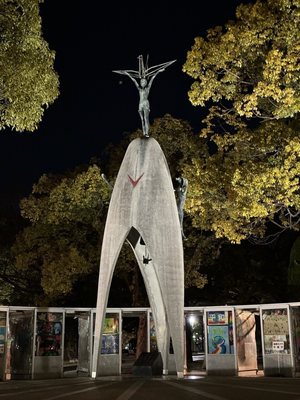
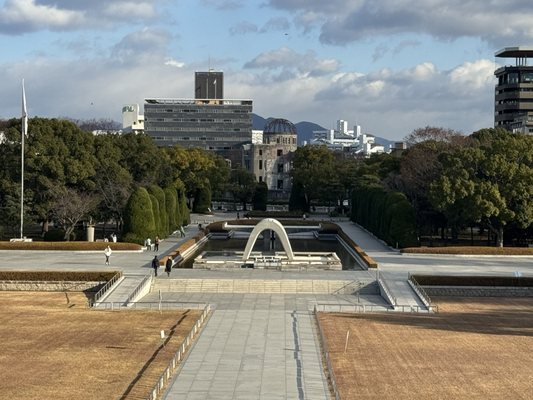
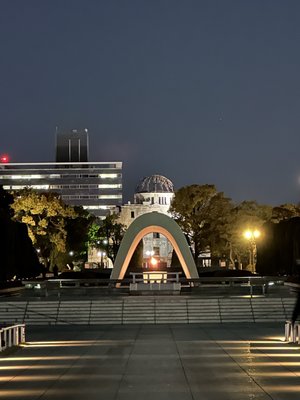
Hiroshima and the Atomic Bomb... Wow... This historic site had a beautiful Children's Peace Monument outside with colorful origami paper cranes, but inside the building, we saw disturbing images and a video that didn't hide the harsh reality of the A-bomb. This stop was at the end of our 13-day tour of Japan and it was the most educational. The grounds included the eerie Atomic Bomb Dome landmark, the Peace Clock (which rings at 8:15am daily), the eternal Peace Flame, the Cenotaph (when you look through it, it's like a frame of the Peace Flame and the A-Bomb Dome in the background), three floors of the museum, and gift shop and cafe on the ground floor. The video that we viewed inside of the museum was uncomfortable at times, especially when survivors were interviewed. I'm glad that Hiroshima was part of our tour.
google avatar

Byron S.

Yelp
Understanding what occurred at this very spot brings an overwhelming feeling of sadness for the civilians of Hiroshima and the aftermath of the event It was one the locations on our list and As we walked up the sidewalk you can see the outline of the building and as you get closer the rubble still remains around the site. As a historical site, I am glad the city officials decided to leave the building as a reminder of what an impact war can have on its population. I would encourage you to visit the location.
google avatar

Patty T.

Yelp
Such a beautiful museum, it really explains the everything well with not only English translations, but Korean as well. There are some items from the bombing and photos from when it happened.
google avatar

Anh P.

Yelp
Quite a humbling experience to visit this atomic bomb memorial. Personally, it is a must-see spot if you're in Hiroshima, Japan. ESPECIALLY as an American. Pay your respects and honor these lost innocent souls. This bombing was absolutely horrific, and just imagine, being hit 2x (albeit in different cities, but still. History in the past couple generations is astounding and I think that the yourh, including Generation Z's and older Millenials, should go out into the dark spots of the world with an appreciative and worldly perspective about what transpired. We may not know about war and endless suffering, but visiting places like this A-bomb center could make anyone feel lucky to not have lived through a time like the mid-20th century. There's a torch that's always ablaze as long as there's the existence of nuclear weaponry in the world. I fear that this torch will never be blown out because of the current Cold War going on with NK. Let's all just hope nothing erupts and no more millions needlessly die. I read a physician's memoir of his experience living in Hiroshima during the bomb, and it's a shocking read. There's vivid, gory details that may make you feel disgusted, but I highly recommend it if you're interested in the various medical pathologic and psychological experiences these victims felt. It is called Hiroshima Diary by Michihiko Hachiya. The site is not all depressing, as there are gorgeous sculptures, fountains, bells, and children's paintings and paper crane art throughout the site. Go pay your respects and read about these victims' experiences, as it's an important way to reflect on the modern state of affairs.
google avatar

Denny B.

Yelp
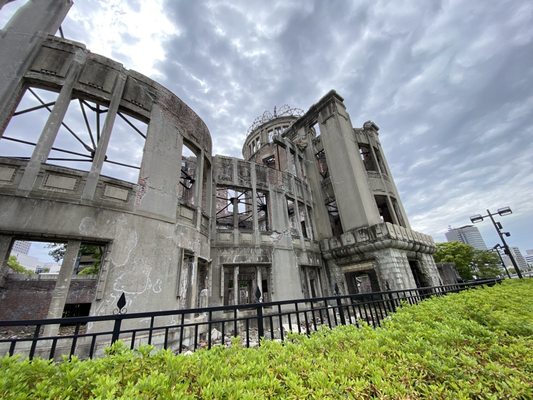
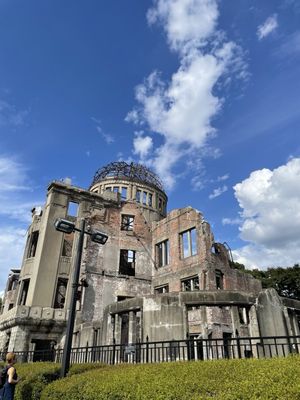
The Genbaku Dome has been preserved as a ruin. It is all that remains of the Hiroshima Prefectural Industrial Promotional Hall 'Hiroshima-ken Sangyo Shoreikan' after the 1945 nuclear bomb blast. It was the only structure left standing near Ground Zero of the bomb which exploded on 6 August 1945, and it remains in the condition right after the explosion. Inside the property, all the structural elements of the building remain in the same state as immediately after the bombing, and are well preserved. The property can be observed from the outside of the periphery fences and its external and internal integrity is well maintained. The buffer zone, including Hiroshima Peace Memorial Park, is defined both as a place for prayer for the atomic bomb victims as well as for world peace. It symbolizes the tremendous destructive power, which humankind can invent on the one hand; on the other hand, it also reminds us of the hope for world permanent peace. For excellent guides for the day, contact Triple Lights tour company for all over Japan. Just run a web search for that name. Request Michiru Azuma or Yuko for your Hiroshima tour guide, whichever is available.
google avatar

Clay Y.

Yelp
Such a humbling place, the thought and memories of what an Atomic bomb can do... The atomic bombings killed between 90,000 and 146,000 people in Hiroshima, and more in Nagasaki. So sad to see how it destroyed lives. Touched by the many stories, walking thru the Peace Memorial it was so quiet you could hear a pin drop. So sad to read about Sadako Sasaki, a Japanese girl who became a victim of the atomic bombing of Hiroshima
google avatar

Dennis A.

Yelp
On August 6, 1945, a US Army Air Forces B-29 Bomber, the Enola Gay, flew over Hiroshima and dropped an atomic bomb. At 8:15 a.m., tens of thousands of people were killed instantly and obliterated the city of Hiroshima. It was estimated that 140,000 people lost their lives by the end of the year from their injuries to radiation poisoning. On August 6, 2019, people across Japan have been remembering the victims of the atomic bombing in Hiroshima and about 50,000 people attended the Hiroshima Peace Memorial Ceremony. But on that fateful day, there was only one building that survived right near the bomb's hypocenter and that was the Genbaku Dome, which is know around the world as the A-Bomb Dome. With the building being the one left standing, decades later there were people who wanted it demolish as it would bring bad memories of what took place but there are those who wanted it to be preserved as a memorial of the bombing and a symbol of peace. While the structure was scheduled to be demolished with the rest of the city's ruins, the skeletal remains of the Genbaku Dome were preserved. I traveled to Hiroshima to pay my respects and remember the victims of the atomic bombing and I have to say that after visiting the museum, it was a feeling of sadness and after reading and looking at photos on the Internet and books, my priority must-see list was the Atomic Bomb Dome (A-Dome and in Japan, known as the Genbaku Dome). The Genbaku Dome was designed by Czech architect Jan Letzel and was completed in April 1915. IT became the Hiroshima Prefectural Commercial Exhibition Hall which became a beloved Hiroshima landmark that had a distinctive green dome. The building was known for its business functions which includes commercial research and consulting services and was also a site where art exhibitions, fairs and cultural events took place. The building would be later renamed to the Hiroshima Prefectural Products Exhibition Hall and then the Hiroshima Prefectural Industrial Promotion Hall. But during World War II, the building soon became to be used by the Chugoku-Shikoku Public Works Office of the Interior Ministry, the Hiroshima District Lumber Control Corporation and other government agencies. According to the information sign near the dome, the atomic bomb exploded approximately 600 meters above and 160 meters southeast of the Hiroshima Prefectural Industrial Promotional Hall, ripping through and igniting the building and instantly killing everyone inside. Because the blast struck from almost directly above, some of the center walls remained standing, leaving enough of the building and iron frame to be recognizable as a dome. As mentioned, for many years after the war, opinions were divided between those who wanted the building destroyed as it was a structure which evoked painful memories, while others wanted to preserve it as a memorial and symbol of peace. By 1966, the Hiroshima City Council passed a resolution to preserve the Genbaku Dome and a public fundraising campaign to finance the construction work would be started. Donations poured in from people wishing for peace from around Japan and became first preservation project in 1967. Since then, several preservation projects has been carried out to ensure the dome will always look as it did immediately after the bombing. Of course, you can't go inside the building and the area around the building is fenced off to prevent from people trying to get in (and for one's safety due to the building's instability and also to prevent anyone from taking any rubble to bring back home. In December 1996, the Genbaku Dome (The A-Bomb Dome) was registered on the World Heritage List as a historical witness conveying the horror of the first use of a nuclear weapon, and as a world peace monument appealing continually for lasting peace and the abolition of nuclear weapons. To protect the dome, the national government designated the area around it as a historic site under the Cultural Properties Protecton Act, with a larger area in and around Peace Memorial Park set aside as a buffer zone. If you happen to be traveling to Hiroshima, the Genbaku Dome is one that should be on your bucket list.
google avatar

Andrea U.

Yelp
Very very moving and sad. Our free shuttle bus let us off in front of the Dome. From here we walked through the piece memorial park which was very very moving. It was an easy walk all of remembrance and the pea's memorial museum.
google avatar

Kerry K.

Yelp
This is a solemn reminder of the horrors and complete devastation of war. So many innocent lives were lost in the blink of an eye and thousands more from the fallout of radiation. The grounds are an easy walk around. Take a tour of the museum to get a better feel of the destruction a small yet so powerful munition can create. Hear the stories of survivors who were first hand eyewitness to the first ever atomic bomb dropped on civilization. Some of the key things to see are: Atomic Bomb Dome - This is the skeletal remains of one of the last standing buildings from the A-bomb destruction. Memorial Cenotaph (saddle shaped monument that covers a cenotaph holding the names of all the people killed by the bomb. Peace Flame - is another monument to the victims of the bomb that destroyed Hiroshima, but it has an additional symbolic purpose. The flame has burned continuously since it was lit in 1964, and will remain lit until all nuclear bombs on the planet are destroyed and the planet is free from the threat of nuclear annihilation. Peace Bell - Stands near the Children's Peace Monument and consists of a large Japanese bell hanging inside a small open-sided structure. Children's Peace Monument - Built for innocent children who suffered through tragedy. Thousands of origami cranes were made. Atomic Bomb Memorial Mound is a large, grass-covered knoll that contains the cremated ashes of 70,000 unidentified victims of the bomb. The Gates of Peace - Added in 2005, this monument contains ten gates covered with the word "peace" in 49 languages from around the world. The gates represent the nine circles of Hell plus one: "the living hell of Hiroshima caused by the atomic bombing." Memorial Tower to the Mobilized Students - The Association for the Mobilized Student Victims of Hiroshima Prefecture built this tower in May 1967 in order to console the souls of over 10,000 students We took the Shinkansen from Kyoto to Hiroshima and it took about 90-100 mins or so. From the Hiroshima train station, take the tram which is about a 15 min ride and simply walk into the Memorial Park. Have we learned from history? Have we?
google avatar

Yuko H.

Yelp
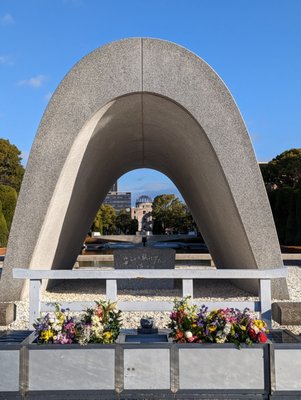
Must visit at least once. Despite of what happened 70 years ago, I felt unexplainable calmness while walking around. I've seen pictures before, but actually visiting here gave me a totally different feeling. Walk to the arch, turn around and look through when you are there. Also bring some cranes origami to donate to the Miss Sadako statue. From JR Hiroshima station, streetcar ride is 160 yen each way, get off at genbaku dome mae, or atomic bomb dome park, they are located right across the river. I also saw hop on hop off bus for 400 yen and one of the stops is a-bomb dome park. Bus departs at the opposite side of the JR station exit from streetcar station side. It is what it is but I still wish for the world peace.
google avatar

Zoe T.

Yelp
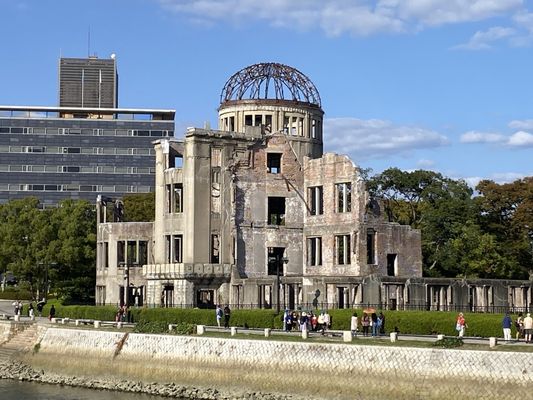
I believe this is the most famous land mark in Hiroshima. Commonly called the Genbaku or Atomic Bomb Dome, this structure is part of the Hiroshima Peace Memorial Park. The building was designed by a Czech architect name Jan Letzel and completed in April 1915. It served many purposes. The latter being Hiroshima Prefectural Industrial Promotion Hall. The bomb exploded just above the Hall, with the blast pushing in a downward movement, killing everyone instantly. The ruins of this structure serves as a memorial to all the thousands of people who were killed on August 6, 1945. It's been years since I've visited the Dome. However, each time I come, it's a very humbling experience. I come to pay my respect and honor those innocent lives that were lost.
google avatar

Mark B.

Yelp
It was a very emotional visit for me. I'm from Hawaii and visit often the Arizona Memorial, where Japan bombed the Pearl Harbor/Start of WWII for the US, and the USS Missouri, which marked the end of the war. Hiroshima was a must visit for me because I wanted to fill in the history in between those dates. I love WWII history and also visited Okinawa and Guam for that reason. I walked around and sadness kicked in. My first stop was the Atomic Bomb Dome. The "after the bomb dropped" displayed picture brought some tears. It was one of the few structures left standing. Talking to some of the locals and tour guides- most of those who died were average day to day people that didn't support the war or had nothing to do with the military. Going to school, work, etc... A heavier heart of emotions kicked in when I walked by the Children's Peace Monument. Watched school kids remembering the many children that died that day and after due to the radiation. This visit changed several opinions I used to have about WWII. I hope and pray that the world will never see this kind of destruction again.
google avatar

Kenson K.

Yelp
This is the main centerpiece of the Hiroshima Peace Park, aside from the museum. It's a very sad reminder of the horrors of war and the consequences of nuclear conflict. There are many Japanese school children who come here on field trips to pay their respects and to learn about the mistakes and horrors of war. Please take the time to reflect on the message that this memorial and the peace park is relaying to the world.
google avatar

Jocelyn C.

Yelp
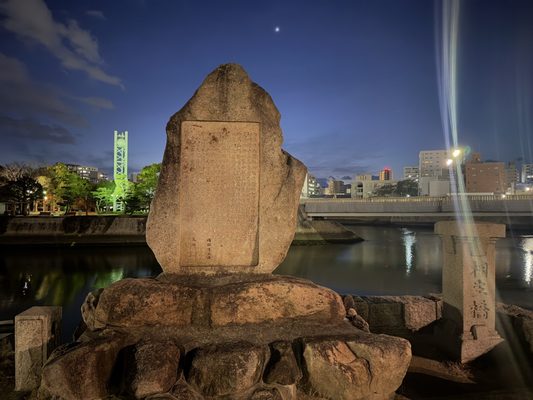
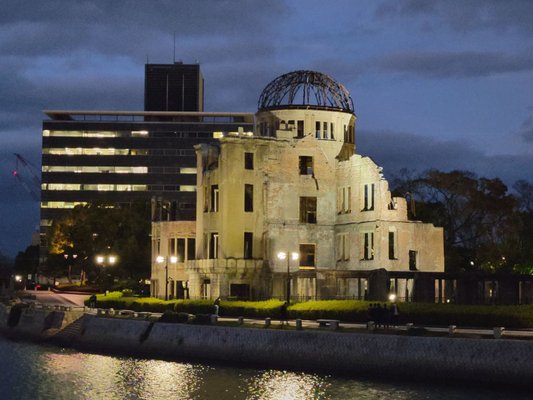
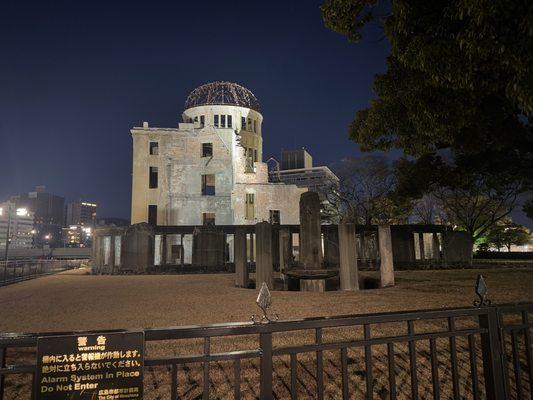
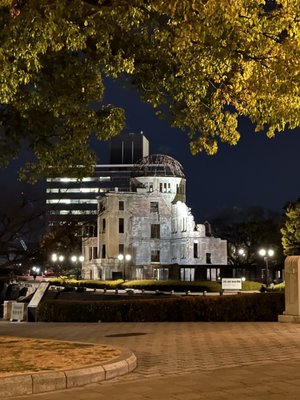
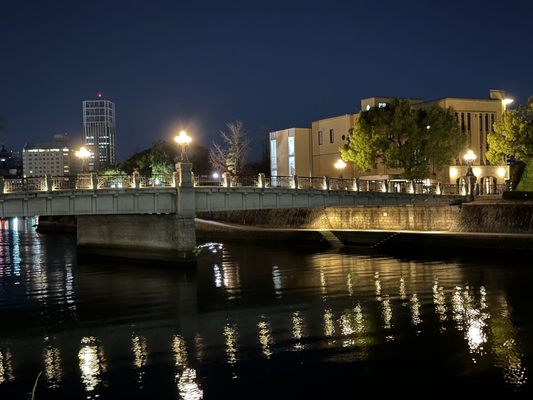
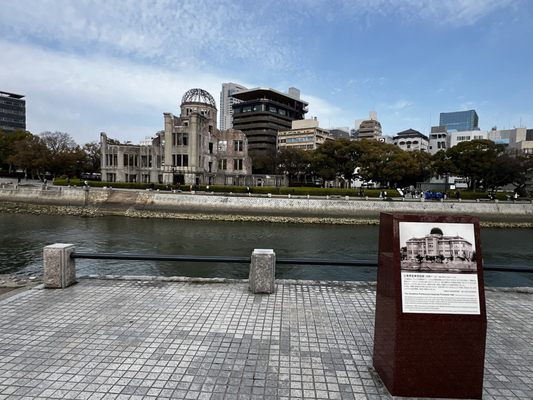
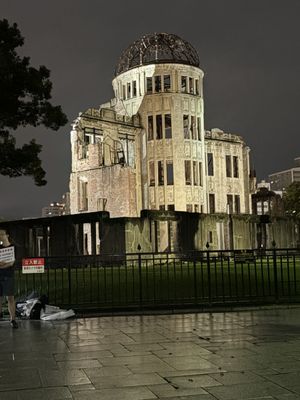
All of the Hiroshima bombing memorials and exhibits are within the same tiny walking area. As others do a better job describing it, I'll just leave a few tips: - If you walk from Hiroshima station, it's about 30 minutes. On hot summer days, I would recommend taking the tram or subway. - Go at night when it is lit up. It's lovely when reflecting on the water, and you can see the stark outline of the building without any disrupters in the background. It's also a lot quieter and slower in the park at night. - Sit on a bench across the river, or take your pictures right off of the "boardwalk" by the water. Make sure to swing by the museum as well to learn how this building has defied science to still be here after the explosion.
google avatar

Dale H.

Yelp
This is a powerful reminder of the devastation mankind embraced when we learned to split the atom. Pictures don't do it justice.
google avatar

Alyssa M.

Yelp
The peace park is a beautiful testimony to Hiroshima's resilience and a sad reminder of history. I highly recommend a visit to any western foreigner visiting Japan! Slash anyone in general, but I think it's particularly poignant for Americans, for example. The park and museum are all about peace and the dangers of nuclear weapons. The museum can be a little emotional, but I'd still highly recommend it. Finally, about a 3 minute walk from the atomic bomb dome, there is a small plaque showing the hypocenter of the bombing. Kind of near the dome, there is a graveyard. The plaque is on the street behind that graveyard. There are no signs or directions to get there, and there's not much to see there, but it's still interesting nonetheless.
google avatar

Patrick L.

Yelp
This is one of those "attractions" that no visitor is ever going to "enjoy," but it is a must-visit regardless. I had several thoughts while walking around this area, none of them particularly comforting. One - has the world learned any lesson at all from this? I don't know that it has. Two - I am a citizen of the only country on the planet to ever have used a nuclear weapon. That is not a point of pride...in fact, I felt great shame. Historians can debate all day as to whether this was necessary to end the war, but my feeling is that it was not. The Allies had 100% air superiority at that point, and Tokyo itself had already been fire-bombed to oblivion, which was already awful enough, some say worse on a human scale than the result of both atomic bombs combined. There couldn't have been any pressing need to add insult with a weapon that continued to maim and kill even the survivors of the initial blast. In my opinion. Three - I came to a sobering realization that if something like World War 2 had erupted just 20 years past 1945, it would have been settled with ICBMs, and *none* of us would be here right now to talk about it. Four - the only sitting U.S. president to officially visit the Hiroshima memorial in person, face up to this reminder of the terror of war and at least attempt to promote a message of peace, was, you guessed it, Barack Obama. In relation to number 1 above, where will that kind of world leadership be found today? Walk around and take it in. There are helpful, informative folders in English located nearby the dome. Learn, and think.
google avatar

Nathan H.

Yelp
Powerful and sobering review of the first Atomic weapon used by mankind. Recommend you reserve a ticket online during peak seasons. During off periods you can walk up. My family of four spent 3 hours inside the museum. Outside you can meet a volunteer guide who can show you the historical site. Recommend you spend a whole.day here unless you have small children.
google avatar

Keiko M.

Yelp
I went there in summer. It was cloudless sky. This building made me feel and think about many things. If you go to the museum first and come here, you might know what I'm writing about. Love and peace!
google avatar

GT W.

Yelp
Certainly the most moving part of Hiroshima Peace Memorial park area, these are the skeletal remains of a massive government building that wasn't completely leveled by the first atomic bomb blast that helped end World War II. The set up is similar to Kaiser Wilhelm Memorial Church in Berlin, which leaves the eerie, splintered ruins of a cathedral right in the middle of a public park as a reminder of war and violence. The building is fenced off and is for looking only from the outside. There are informational placards as well as makeshift, third-party "tour guides" that you can pay for additional information. The area is beautiful to walk around as it has been turned into a river walk and public park. Overall, the foresight to save relics like these is important for history and for our generation (especially as Americans) to visualize the effects of war. This was certainly one of the big highlights to our trip to Japan. This sits squarely along with Omaha Beach and Pearl Harbor in terms of its gravitas.
google avatar

David Y.

Yelp
The devastation that we witness when we toured through this peace park and museum is like none other I have seen. The stories of the survivors, pictures and images of the destruction from the atomic bomb brought out a raw emotion in me that I never knew I had. Although, there wasn't much history told in the museum, their message of peace and lesson learned is strong. The day that we went, there were many groups of school children going through the museum which for me, took away from the peacefulness and solemn atmosphere of museum. It was hard to see and read all the artifacts and articles as there were just too many people inside. But away from the crowds and at the Atomic Bomb Dome, you can definitely take in the quiet surroundings and sense the peaceful calmness of this place 70 years later.
google avatar

I G.

Yelp
I'm not sure if I can gather my thoughts. I'm not sure how one can. When you see this place - you're suddenly unsure about everything. Thoughts run through your head, but they swim around, not knowing if/when to come up for air. This place is a unique piece of history. Words cannot describe it. You have to step into the vicinity of this place to understand its significance. It is the only physical structure that has been preserved since the nuclear bomb attack in August, 1945. I cannot communicate anything more, or less about it. You have to witness it in your lifetime.
google avatar

Mark E.

Yelp
...you simply have to see it... words and pictures can not transport the desaster happeed to Hiroshima August 6th 1945 and following years. Amazing how the people and city recovered. The memorial is a great thing to remind to these bad times during WWII
google avatar

Elijah B.

Yelp
I love history of World War II. This place can be a bit depressing going through the halls of all the belongings of the survivors/dead. There is even a short video on the science aspect on how the bomb goes off and how hot it gets etc. My favorite part of the exhibit was the porch side cut out where a person was sitting down on a step. You can see the shadow of where the person was sitting before they were obliterated by the past. Quite interesting on a lot of other items that are showcased here. Don't forget to stamp your post card that you receive upon paying for your admission in!
google avatar

Mikiko R.

Yelp
There are information of Genbaku that volunteers make it(a lot of language).I wish every people in the world watch it.
google avatar

Erin G.

Yelp
Very somber experience. Be sure to check this out while in Hiroshima. You can take the JR bus around Hiroshima which is included as part of your JR rail pass. There were a number of school aged children when we went. This is something that has been preserved and will continue to be for future generations.
google avatar

Zachary S.

Yelp
A required stop on or after the Peace Museum. The park across the river is a nice place to sit and contemplate.
google avatar

Denise R.

Yelp
Lovely place to visit when you are here. The peace park is also a must see. Very close to really good okotomiyaki restaurants.

Chris Y.

Yelp
Eerie place to visit. I'm glad it wasn't torn down. I recommend visiting even just for a few minutes.