Basilica di Santa Trinita
Basilica · Santo Spirito ·

Basilica di Santa Trinita

Basilica · Santo Spirito ·

Gothic church with Renaissance frescoes by Ghirlandaio, art treasures

ghirlandaio frescoes
sassetti chapel
renaissance art
bartolini salimbeni chapel
gothic architecture
florence history
calm atmosphere
artwork
Basilica di Santa Trinita by null

Information

Piazza di Santa Trinita, 50123 Firenze FI, Italy Get directions

Wheelchair accessible entrance

Information

Static Map

Piazza di Santa Trinita, 50123 Firenze FI, Italy Get directions

+39 055 216912

Features

•Wheelchair accessible entrance

Last updated

Jan 14, 2026

Powered By

You might also like

Terms of Use • Privacy Policy • Cookie Policy
 © 2026 Postcard Technologies, Inc.
@michelinguide
48,380 Postcards · 8,030 Cities

2 Days in Florence: MICHELIN Dining and Hidden Gems

"A worthwhile detour where a coin illuminates Domenico Ghirlandaio’s exquisite frescoes from 1485, turning a brief visit into a luminous encounter with Renaissance art." - Laura Rysman

https://guide.michelin.com/en/article/travel/2-days-in-florence-itinerary
Basilica di Santa Trinita

Loo Y.

Google
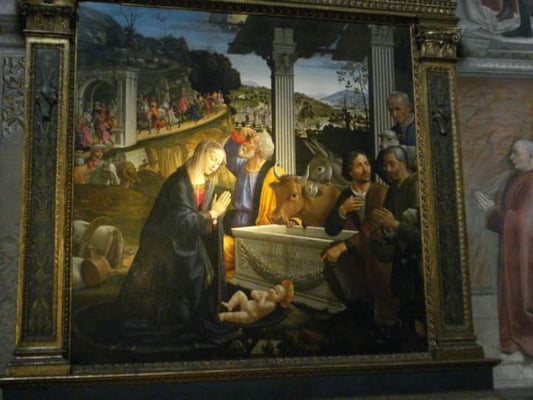
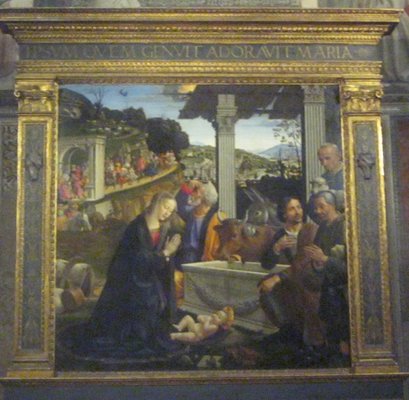
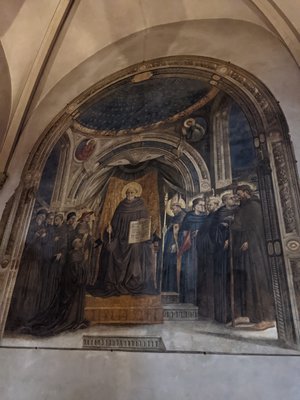
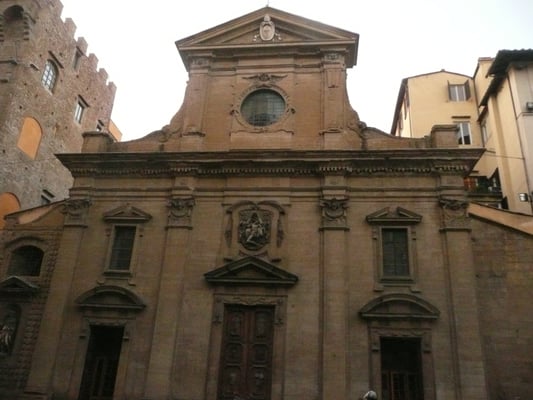
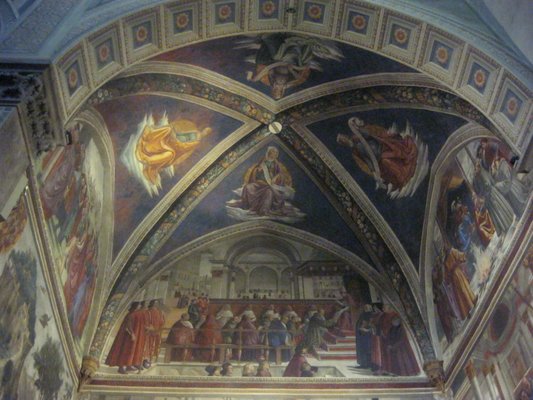
Santa Trinita is Florence in layers: an 11th-century Vallombrosan foundation, rebuilt in Gothic form in the early 1300s, then given its crisp Mannerist face by Buontalenti in 1593–94. Inside, it behaves less like a single artwork and more like a dense archive of patronage. Side chapels stack family memory, burial rights, and visual ambition - banking wealth turned into paint, stone, and perpetual presence. The Sassetti Chapel is the headline: Ghirlandaio’s 1480s Francis cycle stages sainthood in recognisable Florence, anchored by his Adoration of the Shepherds. Another famous commission, Gentile da Fabriano’s 1423 Adoration of the Magi, began here for the Strozzi before leaving for the Uffizi. Look chapel by chapel and the church reads like a map of how the city bought devotion, status, and afterlife.

Witold D.

Google
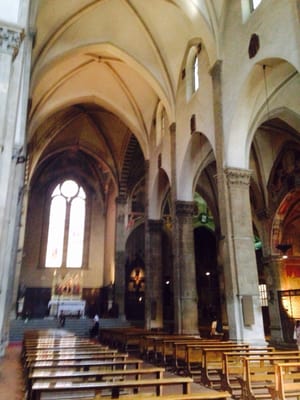
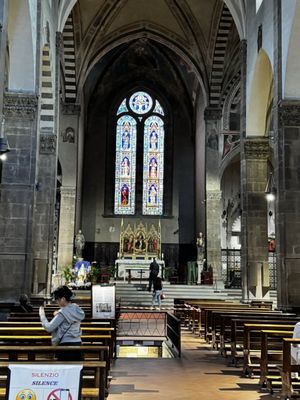
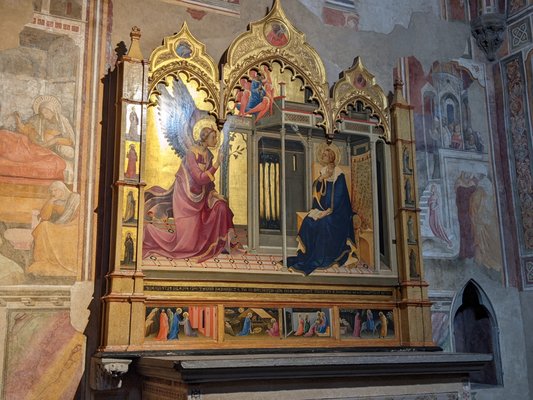
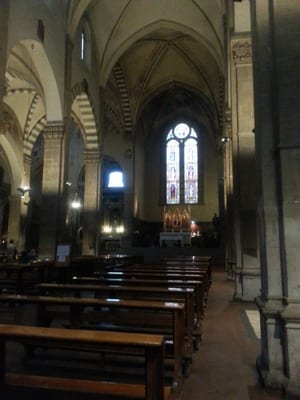
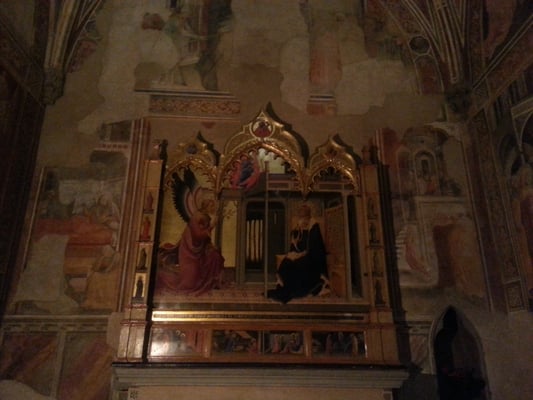
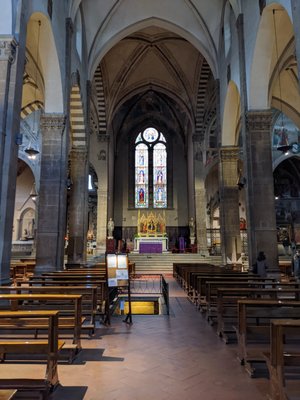
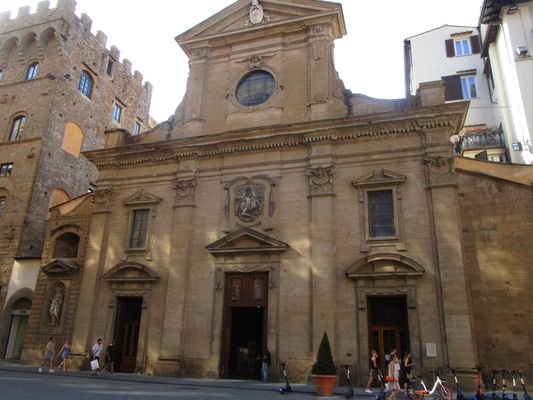
The Basilica of Santa Trinita is more than just a church in the center of Florence; it's a time machine that transports you straight to the Renaissance. From the outside, the building appears austere and restrained (see the exterior photo), but once you enter, you find yourself in a majestic yet tranquil Gothic space. High vaults, slender columns, and alternating bands of stone create a sense of lightness and grandeur. But the basilica's true treasure is hidden in the side chapels. Be sure to discover the Sassetti Chapel! It was here that the genius Domenico Ghirlandaio captured on the walls not only scenes from the life of St. Francis but also vivid portraits of his famous contemporaries, including the Medici. The frescoes are striking in their detail and realism. It's as if you're peering through a window into 15th-century Florence: the rich clothing of the citizens, the expressive faces, the intricate architecture. Pay special attention to the scenes of St. Francis restoring order (the upper central fresco) and other stories from his life. This is not just a religious painting; it is a vibrant account of Renaissance culture and society. Take a look at the frescoes in the Bartolini Salimbeni Chapel. Here you'll see a completely different style—an earlier one, by the master Lorenzo Monaco. His works, depicting the life of the Virgin Mary, are executed in the International Gothic style. The figures are more elongated, the colors are rich, with a predominance of gold and fantastical details. This creates a fairytale, ethereal atmosphere that contrasts sharply with the realism of Ghirlandaio. Take a look at the Annunciation scene above the altar: graceful figures and architecture reminiscent of theatrical sets. A visit to Santa Trinita is a must for anyone who appreciates history and art. You'll leave not only with a sense of touching something great, but also with the feeling that you've unraveled one of Florence's most compelling mysteries!
Lukasz P

Google
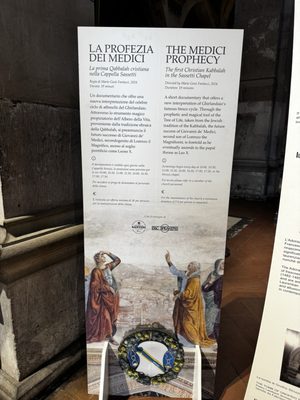
One of those churches where you want to check every wall. There is a short (15 min.) film about frescoes in the chapel history, they charge symbolic few euros for that, best to be there 10 min. before 4 pm.

Hansjakob W.

Google
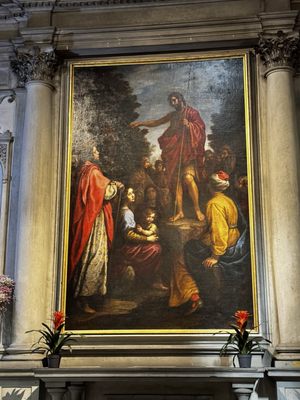
A true marvel, with twenty chapels adorned with masterpieces by various renowned artists. The most famous one is the Sassetti Chapel with Ghirlandaio's sublime altarpiece. Bring some change (one and two Euro coins) so that you can pay for a few minutes of illumination that will afford you a great view of the art).

Tom C

Google
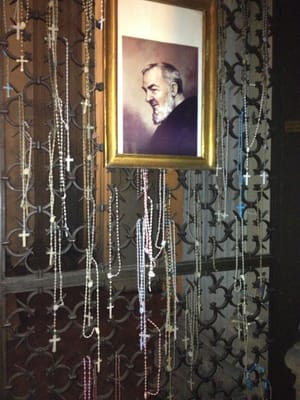
We were invited to write a a prayer and put it on a cross it was a brilliant experience only made better by the lady singing. She had the voice of an angel truly the best I have ever heard and even brought my wife to tears. Thank you for the spiritual experience which will stay with us for a long time.

BradinHK

Google
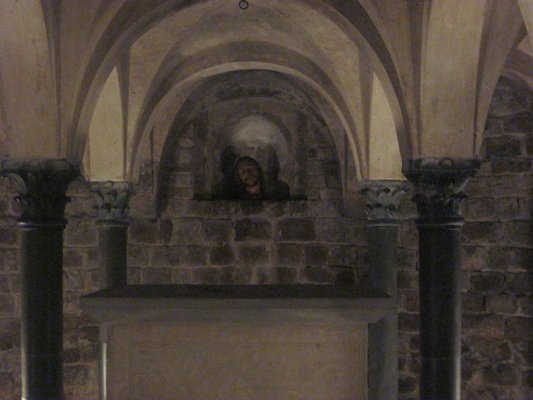
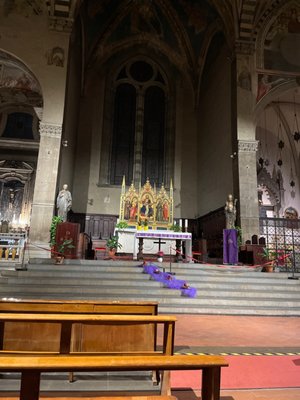
Basilica di Santa Trinita's history dates back to the 11th century. Originally Romanesque in style. Late 13th and early 14th-century church expansion and reconstructions gave the church Gothic characteristics, while the Mannerist facade by Bernardo Buontalenti was added in 1593-94. Within the basilica, you will find a Gothic layout with a central nave, ceiling vaults, side aisles with dimly lit chapels. Several chapels have illumination machines, allowing you to add light for 1 or 2 euros for a few minutes. This affords considerably better viewing of various artworks and frescos, none more impressive than the Sassetti Chapel where you see the Life of St. Francis and prophecies of Christ's Birth frescos (1482-85) and Adoration of the Magi altarpiece (1485) by Florentine Renaissance Master Domenico Ghirlandaio. There are other very nice works within various other chapels but the Sasseti Chapel was the highlight for us. There is a small crypt that you can enter as well, requiring euro coin to provide light for you to see down below. The machine was not operational on the day so entrance possible at that time unfortunately. Note: The attendant near the church entrance has Euro coins if you need to exchange notes so you've some coins to feed the various chapel illumination machines setup within the church.

I. M.

Google
Basilica di Santa Trinita – A Hidden Gem of Florence’s Art and History Nestled along the Arno River in the heart of Florence, the Basilica di Santa Trinita is one of the city’s more understated treasures. While it may not be as well-known as the Duomo or Santa Maria Novella, this beautiful church is home to some incredible art and fascinating history, making it well worth a visit. One of the most captivating aspects of Santa Trinita is its famous frescoes. The church’s transept features a series of exquisite works by Ghirlandaio, including the “Boy with a Ball” fresco—a charming and intriguing piece that captures the spirit of the Renaissance with its detailed depiction of a young boy holding a ball, symbolizing innocence and youthful vitality. This fresco, along with others in the church, offers a glimpse into the richness of Florence’s artistic legacy. The church also boasts stunning Gothic architecture, with a serene, peaceful interior that is perfect for quiet reflection. The chapels are adorned with beautiful altarpieces, and there’s a particular sense of tranquility that makes it an ideal place to take in the art and history of the space without the usual crowds. Key Facts: • The church dates back to 1250 and is one of the oldest in Florence. • It houses works by Ghirlandaio and Filippo Lippi, two of the Renaissance’s greatest painters. • The side chapels contain remarkable altarpieces and frescoes that highlight Florence’s religious and artistic heritage. For those looking to explore Florence beyond the main tourist attractions, Santa Trinita is a hidden gem. The combination of breathtaking frescoes, serene atmosphere, and historical significance makes it a delightful and enriching stop in this remarkable city.

Anand V.

Google
Lovely atmosphere inside the church. Unlike the other popular ones this one gives you a calmer feeling both inside and outside. The paintings are worth stopping and observing.
google avatar

Bruce K.

Yelp
This Roman Catholic church was amazingly open on a weekday afternoon so we stopped in to see. And somehow, neither me nor my travel buddy burst into flames. I guess the church is broken? Basilica di Santa Trinita was founded in 1092 by a Florentine nobleman. The church is home to the Sassetti Chapel, containing 15th-century frescoes by Domenico Ghirlandaio, and the Bartolini Salimbeni Chapel, with frescoes by Lorenzo Monaco. The current church was constructed in 1258-1280 at the site of a pre-existing 11th-century church. Multiple reconstructions occurred over the centuries. The church has approximately 20 chapels, many with masterworks. The most significant are the Sassetti and the Bartolini Salimbeni chapels. Francesco Sassetti had been a manager of the Medici Bank, and some of the Ghirlandaio frescoes capture views of contemporary Florence. It is well worth your time to stop in and I hope that you also do not burst into flames. [Review 17055 overall - 246 in Italy - 571 of 2022.]
google avatar

Maggi R.

Yelp
We stopped in to see Chiesa di Santa Trinita ("Holy Trinity Church") on the via de' Tornabuoni, one of the most elegant streets in Florence near the Arno River. (A few steps away stands the Santa Trinita bridge over the Arno.) It is the mother church of the Vallumbrosan Order of monks, founded in 1092 by a Florentine nobleman. The church is extremely rich in artworks, most of them displayed within its chapels. One of the most famous is the Sassetti Chapel, containing notable frescoes by Domenico Ghirlandaio. The church has been renovated numerous times. This church is often overlooked by tourists, but it should not be.