Bob S.
Yelp
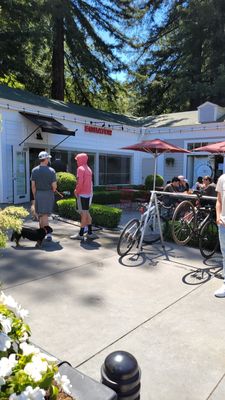
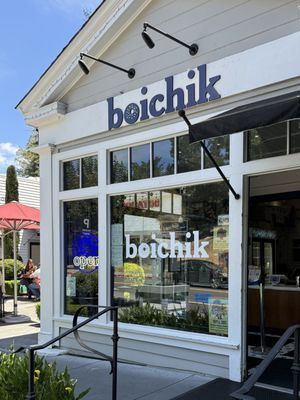
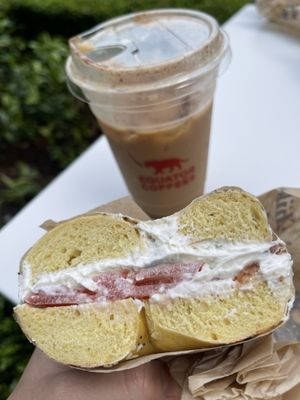
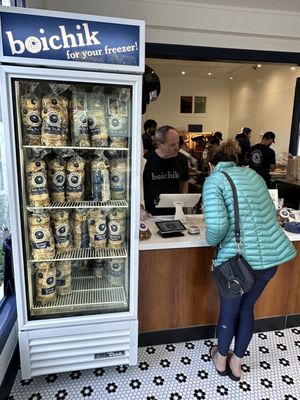
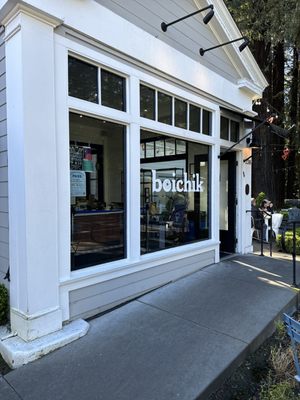
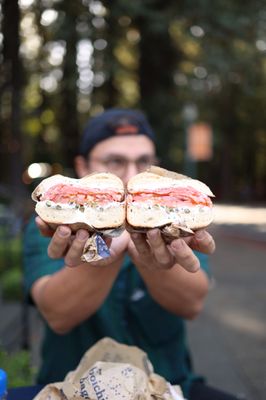
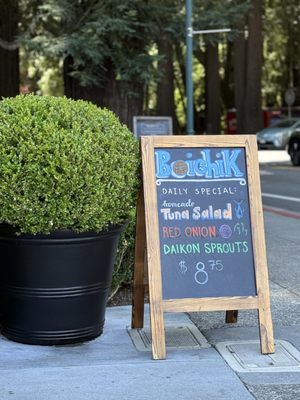
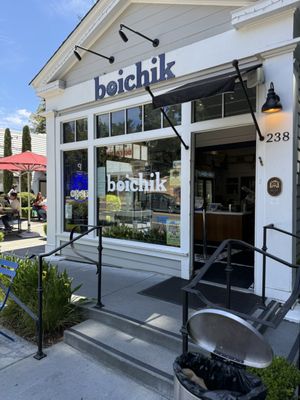
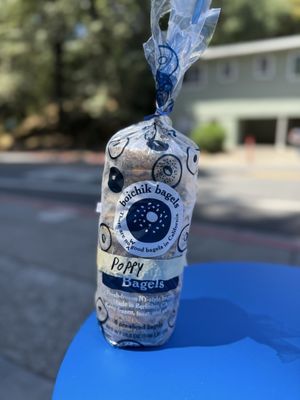
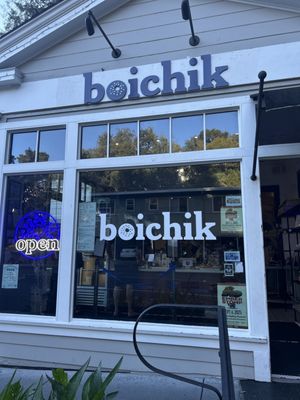
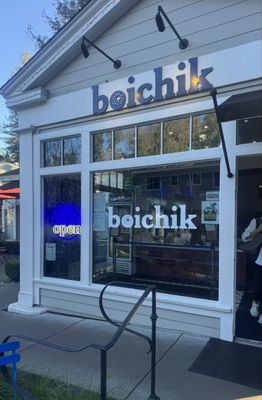
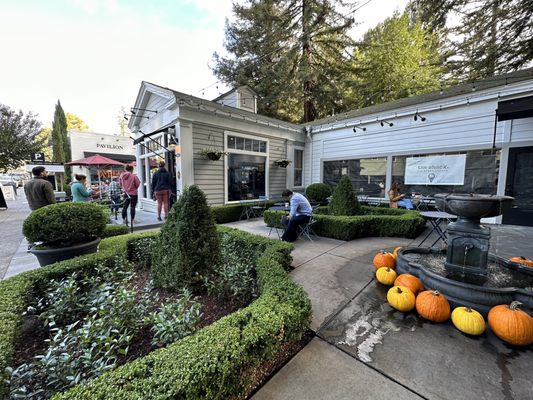
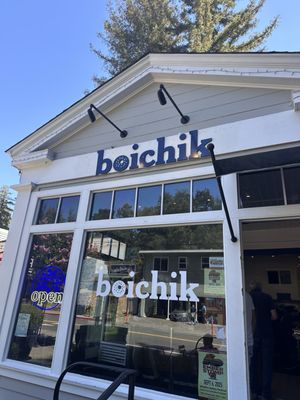
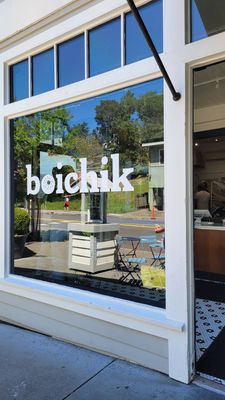
So this is what's here now, Boichik. It follows a long line of losers (rip Urban Remedy, et al) trying to turn a profit in this "historic" re-purposed gas station location (see movie "Impact" 1949) where sky-high rent requires prices that can keep up with landlord lifestyle. I suppose it makes a lot of sense, being next door to Equator coffee, darling of certain Marin wives with dogs and kids, hordes of weekend bikers from the city, those who bus commute the other way into the city, and... unfortunately for me since I'm the one with money... my daughter, who insists we come here for her $10 large cappuccino when she's home from Brown grad school. How fitting, being this particular bagel purveyor at this location, as it's an easy match to Equator, overpriced and overdone for what it is. For the sake of whoever the "boichik" might be, one can only hope the bagels don't ultimately reveal themselves to be what they are: over the top, in price as well as far more, compared with the original model.
The "original" was, according to Boichik founder, and perhaps still is in a way, H&H in Manhattan, itself founded in 1972 by a Puerto Rican who lived nearby. It turns out I also lived nearby then, about a block from this original location at 2239 W.80th St. So I know well what these "best in NY" were like, mainly even then overpriced compared with alternatives. (And in fact that location is the only reason the preeminent Jewish deli nearby that sported every kind known to man of dairy, salted fish, eggy knotted and seedy breads, chopped liver, briny olives, roasty coffee ("in the bean, please") plus preserved meats of every dimension suspended from hooks, the whole assembled slap-doodle bazarr style, such that you would sooner or later try everything in the place, Zabars by name, chose to sell these bagels "exclusively", not particularly because they were "the best" but simply that they were made right across the street, and all else being equal a fresh bagel is the best bagel.)
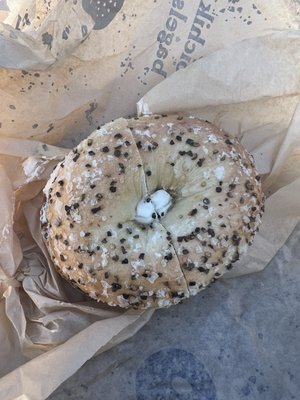
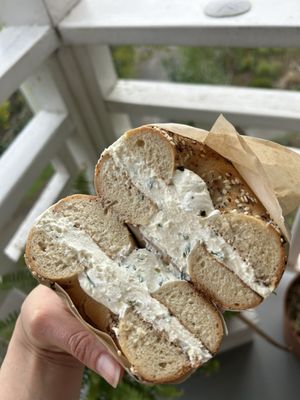
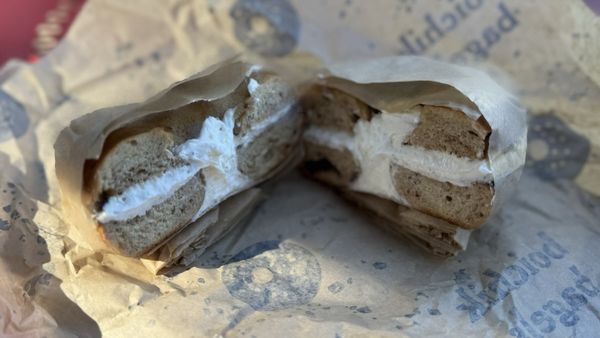
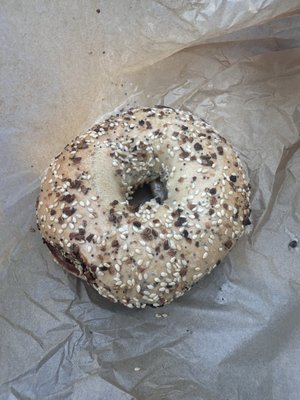
My favorite bagels from the 70s, and still today if memory serves, were made on the main level of Penn Station, where several bagel bakeries cranked out this breakfast staple fast as possible and served them still warm/hot from oven to thousands of folks catching early morning Amtrak, Boston to DC. I headed to Philly, usually at best simply hung over from previous night, for the briefest possible workday, and much preferred mine untoasted as they were already warm enough being fresh off the line, with butter AND cream cheese (younger then). But boichik bagels aren't quite as fresh, won't melt butter as is, made across the bay probably less than a day before but still in even such a short time they aren't as "toothy" nor melt butter without a brief stop in the toaster: in short, unless you choose to have a concoction that will deliver a day's worth of calories in one meal, you'll likely want them lightly toasted or at least warm with butter.
Bagels are like a lot of other simple peasant foods made from flour, essentially fried, baked or boiled carb-loaded dough-gobs. Italians have Gnocco Fritto, Germans Schmalzkuchen, who knows where southern bisquits and "dumplings" are from?, pancakes and beignets of course, matzah in all sorts of variations, and the recently revived faire-favorite, Penn Dutch "funnel cakes". Bagels are nothing more, nothing less, sans baking powder, eggs of course, and being blanched before baked become seriously dense, baked dough-gobs. The raw materials for fried/baked dough, regardless of how presented, are about as cheap as can be. So bakery products in general are hugely profitable (breakfast cereals? don't even mention).
Speaking of funnel cakes, an old friend, Frank by name, in Pennsylvania made a very fine living selling these things at festivals, football games and other venues. (Never feel superior by the way to the guy at the festival selling hot dogs or cotton candy, seemingly menial work. He may very well take home twice your salary.) I once helped Frank run a food concession at a street fair in Philly. By day's end we had crammed two five-gallon plastic tubs with cash (almost left this behind after dinner at a diner in Jersey!) despite having to pay a kickback to the fair organizer plus a dozen or so cutie-pie teens handsome sums just to make these things. He sold his product then for about $2, today the price is at least twice that and bulk flour is still cheap. I asked Frank how he could charge such a price for something that was mostly air. "The thing is," he said from experience, having made quite a living selling other foods at one time or another before specializing in funnel cakes, "fresh baked on site just justifies higher prices. Don't know why, I guess has to do with that baking smell that fills the air all around the place."
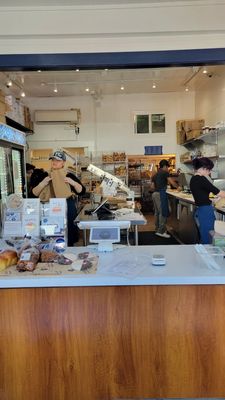
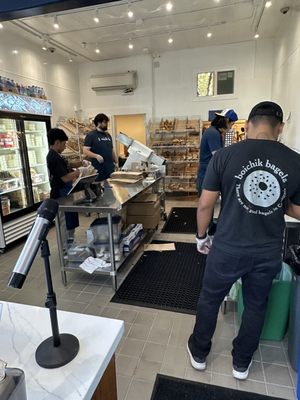
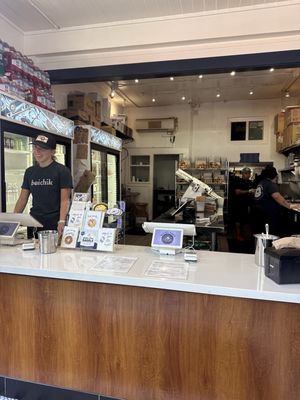
Hmmm, wonder how long before Boichik finds room in back of this store for a small oven?