Spirited R.
Yelp
We were told about Cades Cove mobile 11 mile loop that it's a 3 hour loop due to the slowness of everyone going through the trail. We were planning to go on Wednesday but the trail was closed to motorists. We waited and went on Thursday, because what else could we do on a day of nothing but raining.
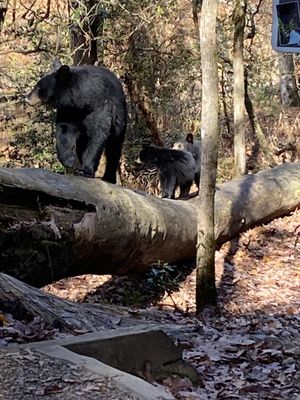
We actually went through the trail in 1 hour and 45 minutes. That wasn't as bad as I anticipated it would be. A lot of history that I've learned existed in this part of the Smokey Mountains. It's not all about visiting the area in hopes to run across a bear, elk and other wild life, but mainly bears.
Note, lots of areas to stop and pull off in the area. Must have a pass to park anywhere in the park. You can visit any of the welcome centers in the area, especially in the Gatlinburg area to pick up a pass. They have a week, day and monthly pass. We purchased (2) weekly passes for $15 each.
Now let's talk about the European settlement that happened on this land. John Oliver (1793-1863), a veteran of the War of 1812, and his wife Lurena Frazier (1795-1888) were the first permanent European settlers in Cades Cove. The Olivers, originally from Carter County, Tennessee, arrived in 1818.
Another well known piece of history is the chestnut flats area of Cades Cove, located at the base of Gregory Bald, was well known for producing high-quality corn liquor. Among the more prominent moonshine distillers was Josiah "Joe Banty" Gregory (1870-1933), the son of Matilda "Aunt Tildy" Shields by her first marriage.
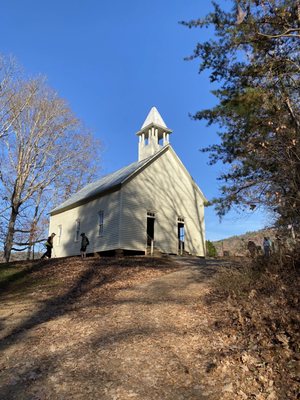
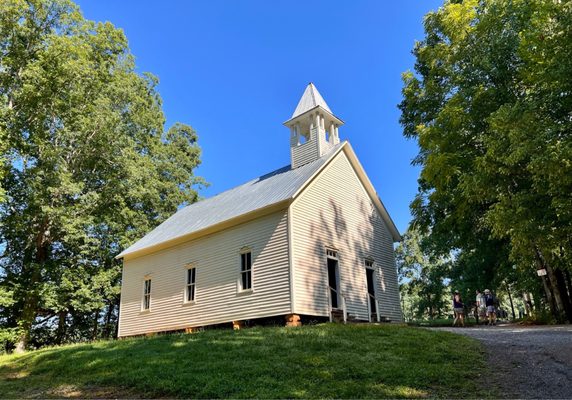
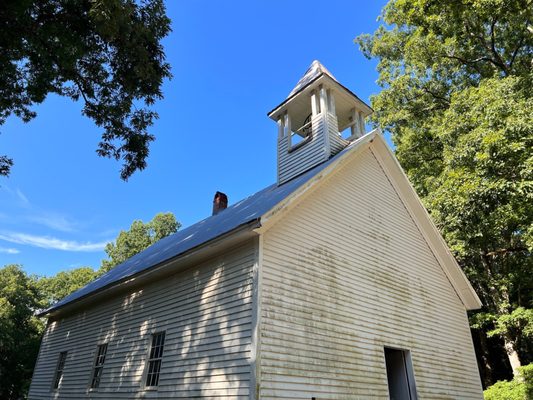
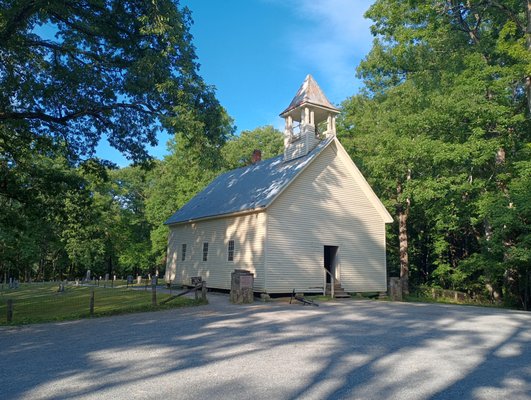
The Primitive Baptist Church, constructed in 1827. The church was organized as the Cades Cove Baptist Church in 1827, and renamed "Primitive Baptist" after the Anti-missions Split in 1841. The Olivers and Russell Gregory are buried in its cemetery.
The Cades Cove Missionary Baptist Church, current building constructed in 1915-1916.
The Myers Barn, constructed in 1920. The Myers Barn is a more modern-looking hay barn located along the trail to the Elijah Oliver Place.
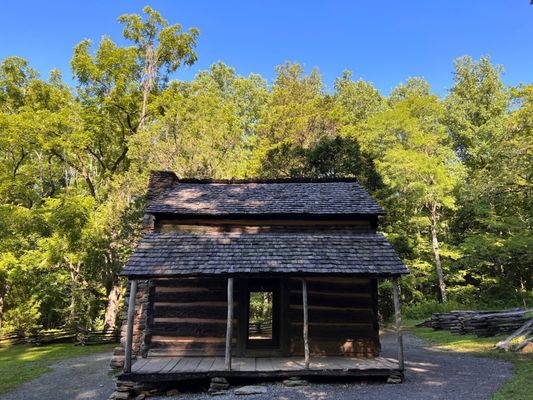
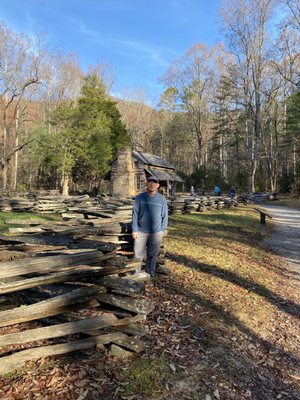
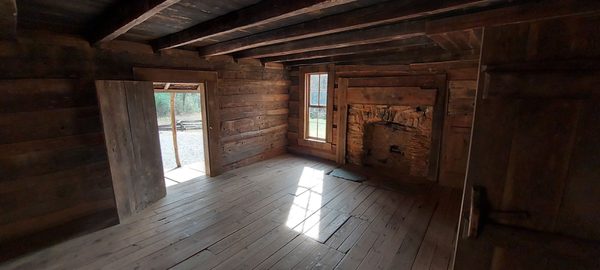
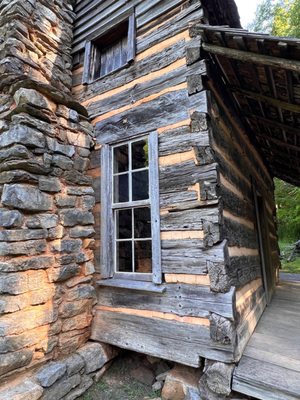
The Elijah Oliver Place, constructed in 1866. Elijah Oliver (1829-1905) was the son of John and Lucretia Oliver. His original farm was destroyed during the U.S. Civil War by Confederate marauders. The homestead includes a dog-trot cabin, a chicken coop, a corn crib, a spring house, and a crude stable.
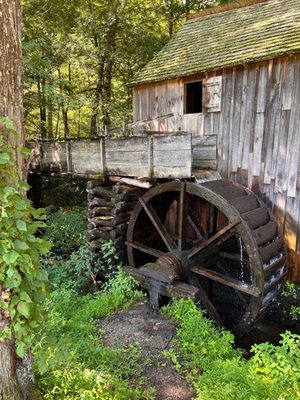
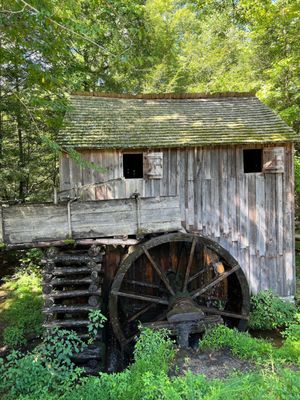
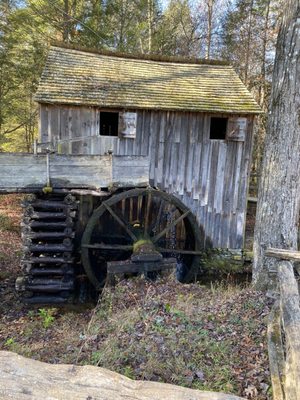
The John Cable Grist Mill, constructed in 1868. John P. Cable (1819-1891), a nephew of Peter Cable, had to construct a series of elaborate diversions along Mill Creek and Forge Creek to get enough water power for the mill's characteristic overshot wheel.
The Becky Cable House, constructed in 1879. This building, adjacent to the Cable Mill, was initially used by Leason Gregg as a general store. In 1887, he sold it to John Cable's spinster daughter, Rebecca Cable (1844-1940). A Cable family tradition says that Rebecca never forgave her father and refused to marry after her father broke off one of her childhood romances. Various buildings have been moved from elsewhere in the cove and placed near the Cable mill, including a barn, a carriage house, a chicken coop, a molasses still, a sorghum press, and a replica of a blacksmith shop.
The Henry Whitehead Cabin, constructed 1895-1896. This cabin, located on Forge Creek Road near Chestnut Flats, was built by Matilda "Aunt Tildy" Shields and her second husband, Henry Whitehead (1851-1914). Shields' sons from her first marriage were prominent figures in the cove's moonshine trade.
The Dan Lawson Place, built by Peter Cable in the 1840s and acquired by Dan Lawson (1827-1905) after he married Cable's daughter, Mary Jane. Lawson was the cove's wealthiest resident. The homestead includes a cabin (still called the Peter Cable cabin), a smokehouse, a chicken coop, and a hay barn.
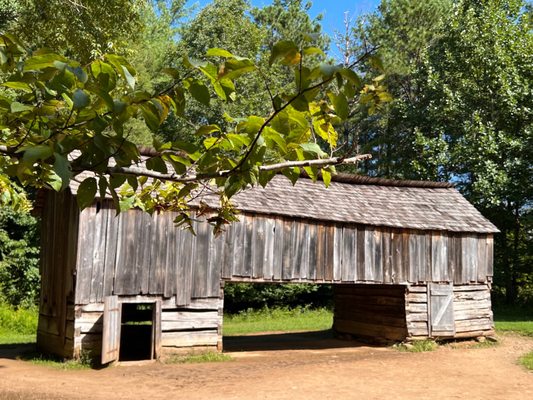
The Tipton Place, built in the 1880s by the descendants of Revolutionary War veteran William "Fighting Billy" Tipton. The paneling on the house was a later addition. Along with the cabin, the homestead includes a carriage house, a smokehouse, a woodshed, and the oft-photographed double-cantilever barn.
The Carter Shields Cabin, a rustic log cabin built in the 1880s.
The land as you can see has a lot of rich history. A lot more than searching for bears. We did see 2 bear sightings on our trip.