David J.
Yelp
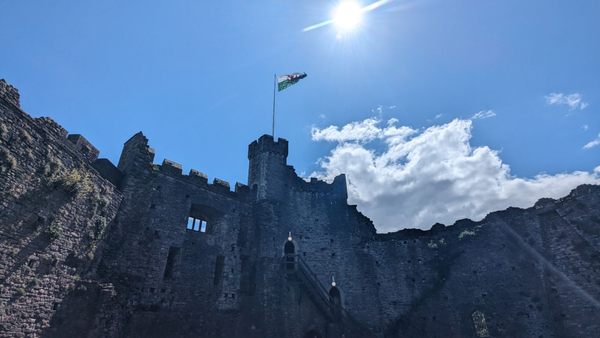
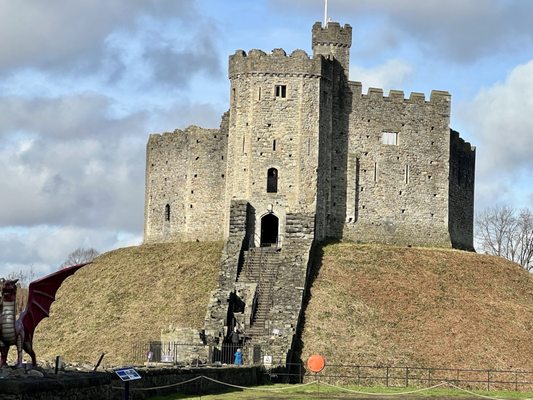
Cardiff Castle dominates the centre of the Welsh Capital, sitting at the end of the major shopping streets, and between the Millennium Stadium and the Civic Centre at Cathays Park.
The Castle is quite hard to read in an historical sense, which is perhaps not surprising, given that what you see now is a thoroughly Victorian fantasy, built over a real Mediaeval castle, which itself was built over the site of a Roman fort.
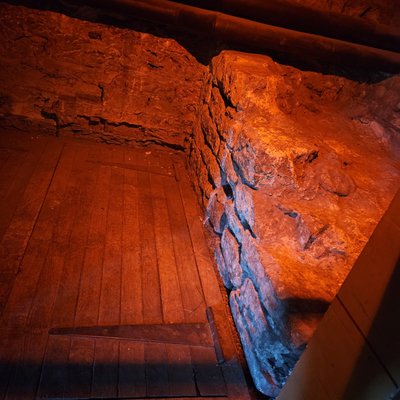
There may have been a Celtic settlement in Cardiff on the banks of the River Taff, but there is more substantive evidence that the Romans came to the area in the reign of the Emperor Nero (AD 54-68). They established a fort here, which was rebuilt around AD 75, and again - this time with 3m thick stone walls - around 250AD, possibly as a defence against sea-borne raids from pirates. It is these foundations which remain today, albeit thoroughly restored.
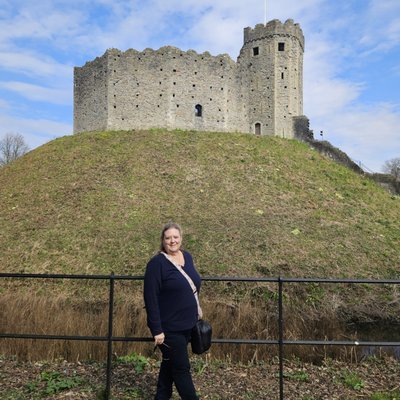
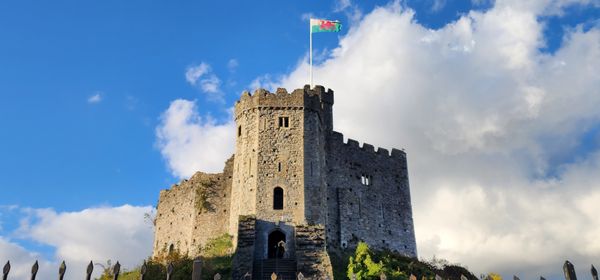
It is unclear what happened to the fort during the Dark Ages, but the Normans began building here again in 1091, with a motte (mound) and bailey in the western half of the Roman fort. The Normans Keep was rebuilt in stone by Robert, Earl of Gloucester, son of Henry I, some time after 1122, and survives in its original form. Robert, Duke of Normandy, the eldest son of William the Conqueror and unsuccessful claimant to the English throne was imprisoned here for 8 years until his death in 1154.
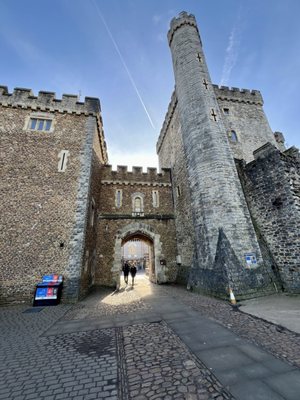
The Castle passed to the family of Gilbert de Clare in 1216, who erected a further defensive tower at the entrance called the 'Black Gate', linked to the keep by a defensive wall. After a spell in the ownership of the Despensers, the last period of building in the mediaeval period came in the 1400s, when Richard Beauchamp, Earl of Warwick, erected the Octagon tower and Hall block at the western end of the Castle.
Ownership of the castle then passed through the Nevilles, Tudors and then to he Herberts, Barons of Cardiff and Earls of Pembroke. The Herberts held the castle from 1550 until 1766. During this time the castle was damaged in the Civil War, and repairs were undertaken by the fifth Earl, Philip, some time after 1650.
It was the scene of more grisly goings-on during the life of the 7th Earl, Philip, (d. 1683) described in the Castle guide as a 'homicidal dipsomaniac'. He imprisoned two Catholic recusants, John Lloyd and Philip Evans, in the Black Tower, before they were hanged, drawn and quartered for high treason in 1679.
Thereafter, with more peaceful times, the little town of Cardiff began to encroach on the castle, with houses built right up against the wall on what is now Castle Street. In the 18th century, the castle became the property of the Marquesses of Bute, and the 1st Marquess commissioned Henry Holland to enlarge the living quarters adjacent to the hall, in a more modern and genteel style.
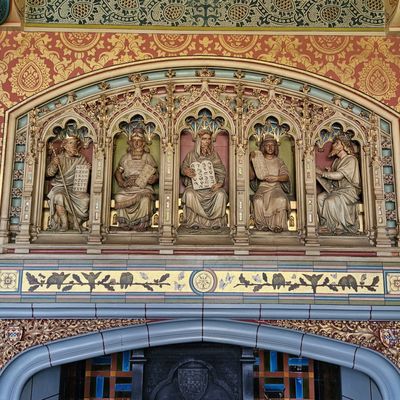
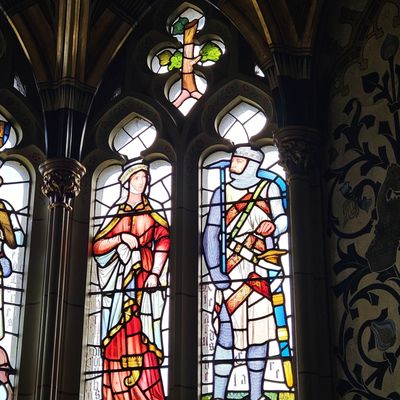
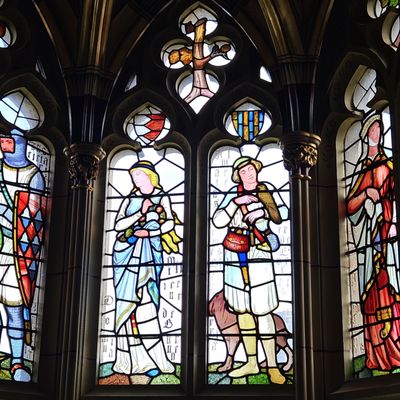
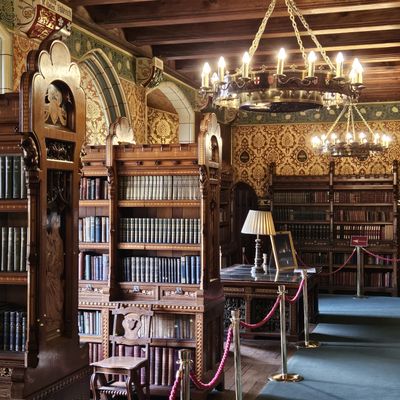
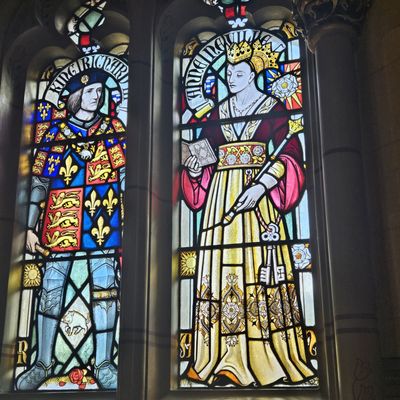
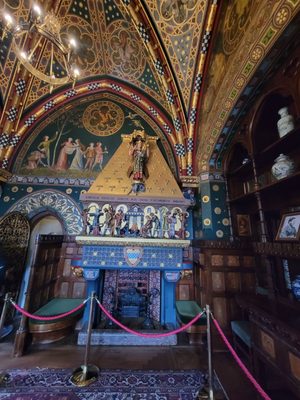
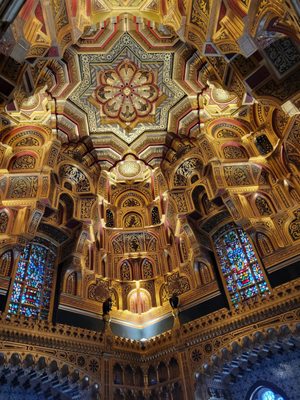
The next, and greatest phase of building began in 1868, when the 3rd Marquess commissioned William Burgess to completely refurbish the accommodation, building an extensive new wing, including the impressive clock tower, in the south west corner. The Roman walls were restored and raised to their present height, the encroaching houses swept away to provide a low, dry moat, and a a new library and banqueting hall were built on the site of the original hall. This reconstruction continued into the 20th century, and a new entrance hall was completed in 1927. The Castle was given to the City of Cardiff in 1947.
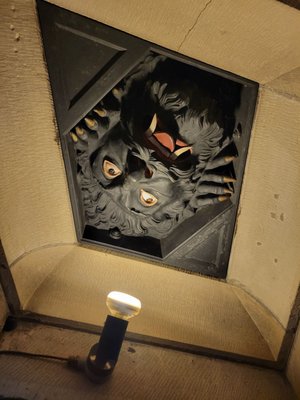
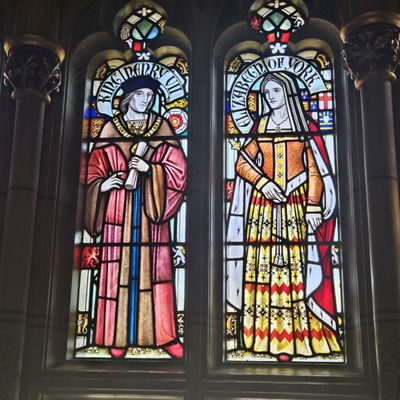
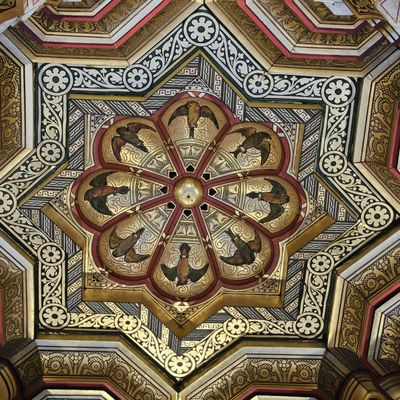
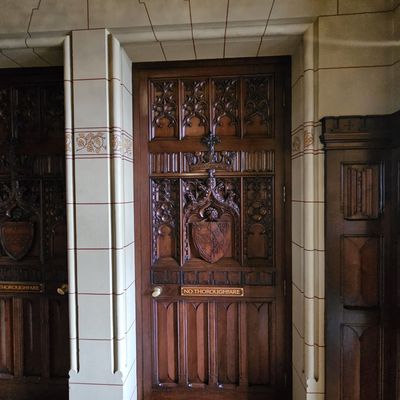
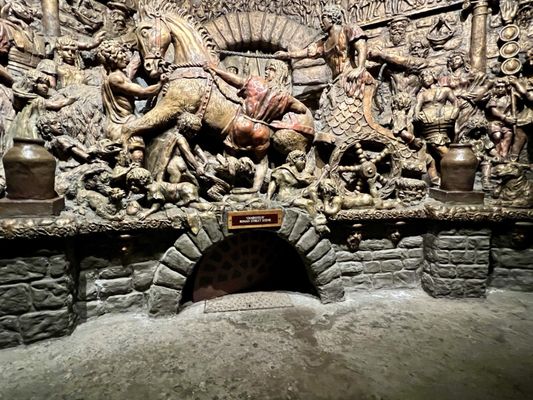
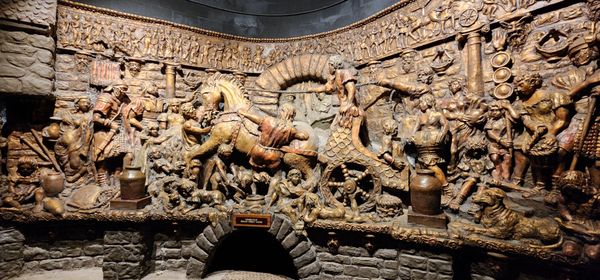
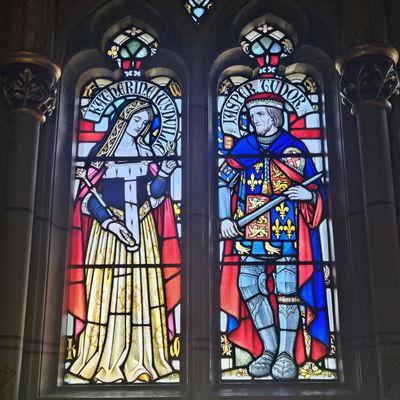
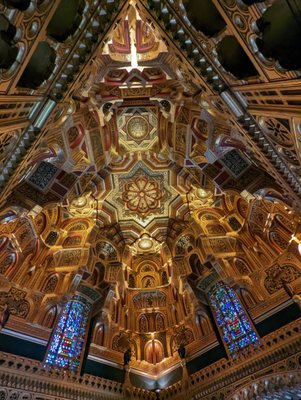
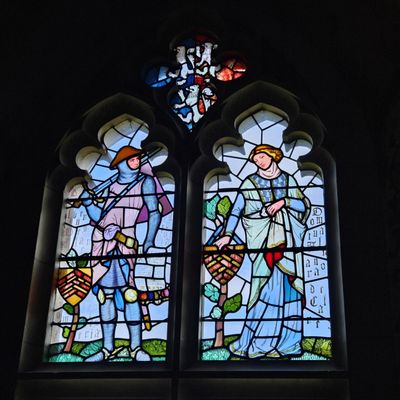
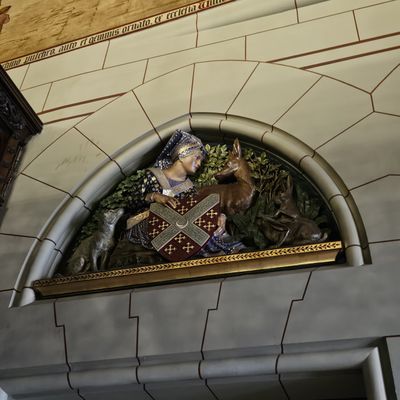
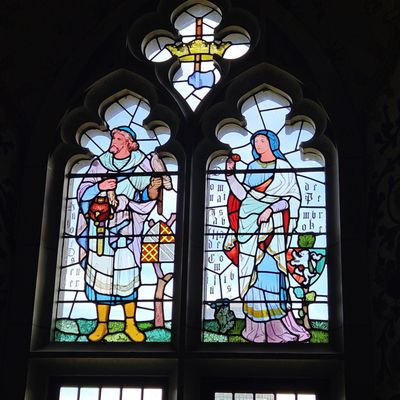
Burgess's style was an elaborate form of Victorian mediaevalism, and the interiors are suitably sumptuous and brilliantly decorated, and are not for the faint hearted. Whether you view them as a brilliant example of Victorian fantasy, or the appalling result of having more money than taste, they certainly merit a look. Ideally, they are not to be taken too seriously! My favourite is the Banqueting Hall fireplace, built in the form of a castle, complete with a knight on horseback entering a gate.
Other reviews have covered the present day facilities in some detail: whether you will enjoy the Burgess interiors, at £7.50 for a full tour, is a matter of money as well as taste, but for £3.75 you can enjoy the grounds, including the Norman Keep, the Tea Shop and the Welch Regimental Museum, housed within the Black and Barbican Towers. Entry to the Clock Tower is a separate £2.
The grounds are the setting for various concerts, festivals and fireworks displays during the year, and various rooms can be hired for weddings and other functions (see website for details). Perhaps the best event to go and watch is a mediaeval jousting match!