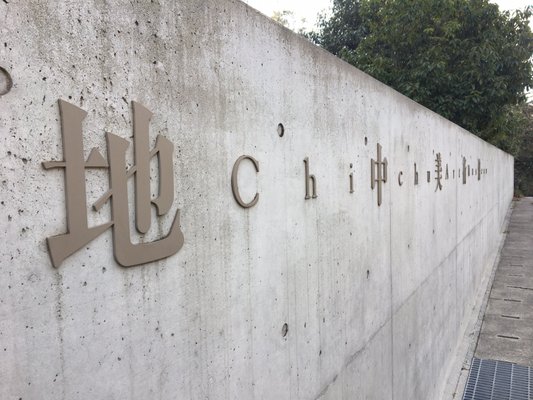
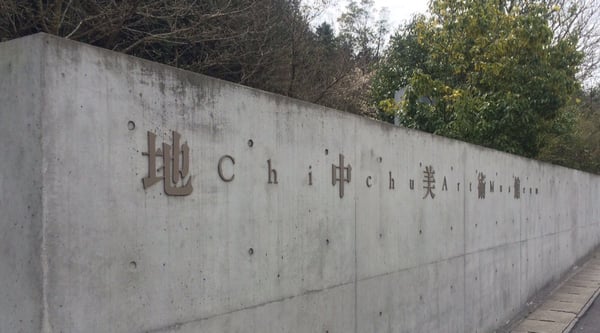
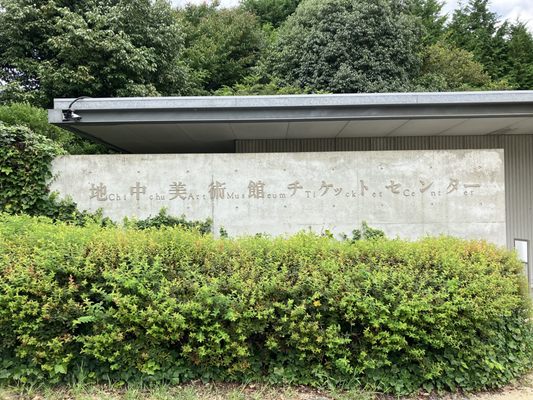
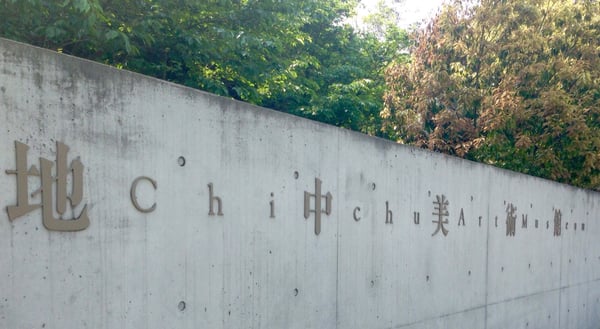
Chichu Art Museum
Art museum · Naoshima ·

Chichu Art Museum

Art museum · Naoshima ·

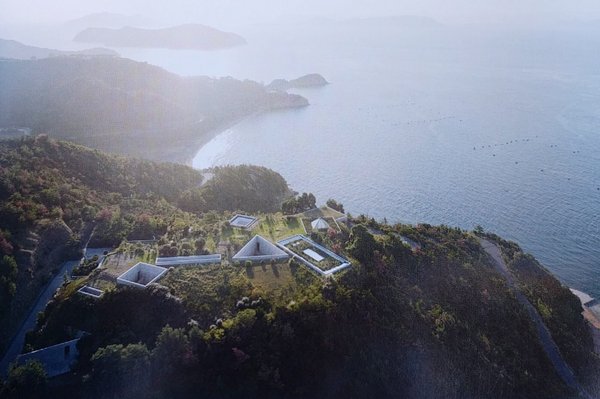
Underground museum blending architecture, light, and landscape

Chichu Art Museum by null

Information

3449-1, Naoshima, Kagawa District, Kagawa 761-3110, Japan Get directions

Information

Static Map

3449-1, Naoshima, Kagawa District, Kagawa 761-3110, Japan Get directions

+81 87 892 3755
benesse-artsite.jp
@benesse_artsite
𝕏
@benesse_artsite

Features

restroom
wheelchair accessible parking lot
wheelchair accessible entrance
wheelchair accessible restroom

Last updated

Dec 5, 2025

Powered By

You might also like

Terms of Use • Privacy Policy • Cookie Policy
 © 2025 Postcard Technologies, Inc.
@travelleisure
27,057 Postcards · 5,402 Cities

These are the Best Hidden Gems in Japan, according to A-List Travel Advisor Mark Lakin

"A museum on Naoshima that integrates architecture, light, and landscape to present major contemporary artworks; it is a central, thoughtfully designed cultural institution within the Art Islands' collection of avant-garde installations and galleries." - Mark Lakin Mark Lakin Mark Lakin is a renowned hospitality brand strategist, luxury travel expert, keynote speaker, fine art photographer, seasoned corporate lawyer, and more. He serves on the Travel + Leisure Travel Advisory Board and is recognized as a top travel specialist. Travel + Leisure Editorial Guidelines

https://www.travelandleisure.com/best-hidden-gems-japan-11768046
Chichu Art Museum
@silverkris
9,878 Postcards · 2,262 Cities

4 places in Asia to see a James Turrell - SilverKris

"Housed in Tadao Ando’s subterranean museum, Chichu Art Museum contains three permanent Turrell works from different stages of his career—Afrum, Pale Blue (1968), Open Field (2000) and Open Sky (2004)—each altering perception in different ways from a luminous cube hovering in space to a Ganzfeld room that erases depth; it offers one of the most concentrated encounters with Turrell’s art anywhere in the world and features a special sunset viewing for Open Sky, with Naoshima easiest to reach from Osaka via Okayama by Shinkansen and ferry." - James P. Ong

https://silverkris.singaporeair.com/inspiration/arts-culture/galleries-museums/places-in-asia-to-see-a-james-turrell/
Chichu Art Museum
@silverkris
9,878 Postcards · 2,262 Cities

Uncover the hidden gems of Setouchi, Japan - SilverKris

"A purpose-built museum designed to showcase artworks in natural light, notably exhibiting Claude Monet’s 'Water Lilies' series under conditions that emphasize the paintings’ relationship with changing daylight." - Mimi Tiu

https://silverkris.singaporeair.com/inspiration/nature-adventure/outdoors/hidden-gems-setouchi/
Chichu Art Museum
@silverkris
9,878 Postcards · 2,262 Cities

5 art-driven islands near Hiroshima worth exploring - SilverKris

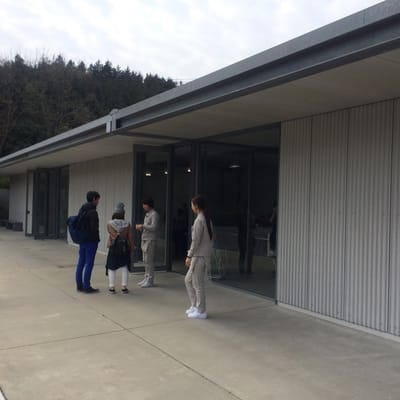
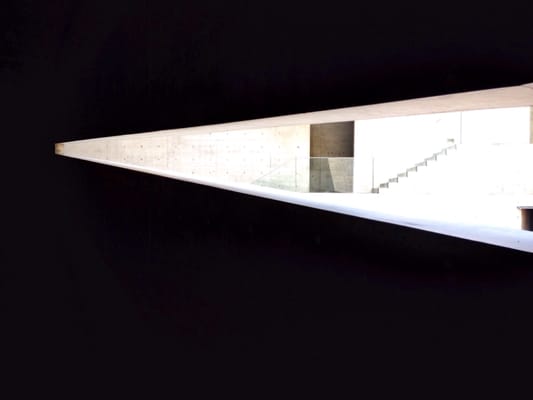
"A subterranean museum that appears virtually invisible from the outside, burrowed into a hill to create controlled, contemplative interior 'caverns' where works by artists such as James Turrell and Claude Monet are shown amid carefully choreographed light and sightlines." - Kit Nagamura

https://silverkris.singaporeair.com/inspiration/arts-culture/galleries-museums/5-art-islands-hiroshima/
Chichu Art Museum

Andjelka

Google
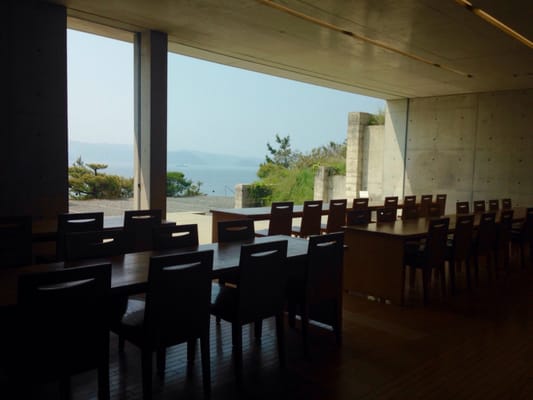
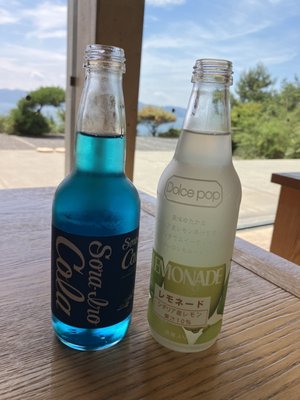
What an incredible place! One of the best art galleries I've ever been to, and I've seen quite a few! It felt so refreshing that you can’t take photos inside (except in a small area near the entrance). Without cameras, you’re free to just wander, take it all in, and really feel the space. That sense of wonder stays with you long after you leave. I booked my ticket online about a month in advance and chose the first morning slot, just to be sure I had enough time to get there — with the ferry and art bus, it takes a bit of coordination. It’s also nice that there aren’t any official photos of the interior online. A few people have shared some anyway, breaking the rules, but mostly what you see stays in your memory — and that makes the experience even more personal and powerful. In some rooms, you have to take off your shoes, but they provide foot covers, so it’s handy to bring socks with you. There’s a lovely little restaurant too, with great food. You find a seat first, then order — and if you can, grab a table with a view of the Seto Inland Sea. It’s the perfect way to wrap up your visit. And the museum shop is nice too.

Dennis ?

Google
Tadao Ando’s concrete masterpiece is literally carved into the hillside overlooking the Seto Inland Sea, so from the outside you barely notice it’s there – everything is designed to make the art and the natural light the absolute stars. You walk through unassuming corridors and suddenly step into massive, perfectly proportioned spaces that feel almost sacred. The permanent collection is small but insanely powerful: Monet’s Water Lilies in a room designed specifically for them (natural light only, white marble pebbles underfoot, and the paintings look like they’re glowing), James Turrell’s mind-bending light installations that make you question what “seeing” even means (HIGHLY RECOMMEND), and Walter De Maria’s giant sphere and polished stones that play with scale in a way photos could never capture (which is good, because photography is strictly forbidden inside, you can only take the photo outside the exhibition hall). No phone signal, no photos allowed, long queue inside– at first I thought “ugh,” but ten minutes in I realized it’s genius. You’re deeply focus to actually appreciate the art instead of looking at it through a screen. Also get to grab a bite before leaving this beautiful architecture, great food indeed! PRO TIP: • Book tickets online weeks ahead (they sell out). Total disconnection turned into total immersion.

Renée F.

Google
Don't skip this one! We were quite moved by some of the rooms. Incredible. Photos are only permitted in the beginning few rooms/spaces, so you will not see the best of it until you visit :)

Nikolas K.

Google
Wow – an extraordinary place. The museum is a masterpiece of architecture, with a perfect play of space, natural and artificial light, and materiality. Every corner feels carefully crafted to create a unique spatial and emotional experience. The attention to detail is incredible – the precision of the surfaces and the subtle design elements are executed at the highest level. Even the restrooms are designed as an architectural experience, showing how much thought went into every part of the museum. A must-visit for anyone coming to Naoshima, and an absolute highlight for architecture and art lovers alike.

Joseph L.

Google
I visited Naoshima last March 26 2025. The Chichu Art Museum designed by Tadao Ando was one of my priority destinations. It can be accessed by the Benesse shuttle bus, by bicycle or thru walking. It is located along side a hill. The atructure is embedded perfectly into the surrounding nature. They have a very strict no photographs and videos inside the art spaces. It is by far one of the most beautiful museum experiences ive ever had. The Monet Waterlilies with the perfectly cut white mosaic tiles around together with the daylight is very beautiful. Walter Di Maria's Granite garden and the Granite Sphere was a very mysterious experience. Finally the James Turrel Sky window space along with the purple rectangle was very fun. If you love art, i highly recommend visiting this in very good sunny weather.

Henri D.

Google
A wonderful place—truly one of the most beautiful and interesting museums I’ve ever visited. Though it’s not large, the way this museum is built is absolutely fascinating. The architecture itself is an artwork, perfectly integrated with the surrounding landscape and using natural light in remarkable ways to transform the viewing experience. The carefully curated selection of artworks (including Monet’s Water Lilies, Walter De Maria, and James Turrell installations) feels intimate and deeply thoughtful. It’s the kind of place that invites you to slow down, look closely, and experience art in a new way. On the practical side: you can take a shuttle to the entrance or park your bike very close by. In fact, biking on Naoshima is highly recommended—the island is small, scenic, and easy to get around, with all the main museums located quite close to one another.

AperolSpritz J

Google
Buy all your tickets online on Naoshima to get a discount. For Chichu you need to book a time slot since only a certain number of visitors is allowed at a time. It is a small but charming museum housing three major sections. No photo is allowed inside so google it. They look amazing.

Thomas W.

Google
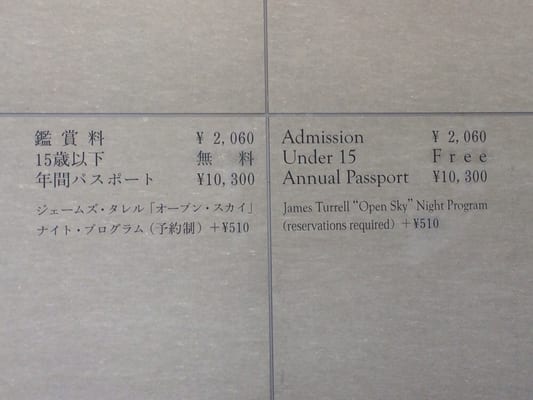
Spectacular and our favorite art experience on Naoshima! The architecture alone is worth the visit. Every path, every transition between spaces feels intentionally designed. You sense that Ando thought carefully about what you should see from each step and angle — and it’s spectacular. I also appreciated that the museum wasn’t overloaded. They chose to focus on just three artists and created spaces specifically for them, rather than forcing art into rooms that weren’t meant for it. It gives everything room to breathe. I’m totally not an "art-guy", but I do enjoy nice experiences. I didn’t even know James Turrell before coming to Chichu. His installations blew my mind. I won’t spoil anything, but Open Field was one of the most fascinating experiences I’ve had in a museum. Open Sky was also powerful - simply sitting there for a while, watching the light shift and the clouds pass by - and not even being sure in the beginning if it was screen or the real sky. Which brings me to one thing I found surprising: how quickly people rush through these works. We spent about 20 minutes in Open Sky (which is still shorter than the artist intends, I believe). In that time, nobody else (of 20+ people) sat down, even though that’s literally the point of the installation. People stepped in, glanced up for 3-5 seconds, and left and then perhaps even complain in reviews that “there isn’t much to see.” Perhaps for "art people" it really is boring, but for me personally, I enjoyed it a lot. That is why I honestly have a hard time understanding the negative reviews. Yes, you need to book in advance, the ticket is ¥2,500, and some installations have limitations. But without these restrictions, the experience would be completely diluted. Overall, the combination of architecture and art was outstanding. For both me and my partner, this was our favourite art experience on Naoshima. She loved the Monet presentation, and I left as a new James Turrell fan.

Jeff D.

Yelp
LOWER your expectations. Small gallery, with ~10 or fewer artworks, decent Monets and James Turrells. Overpriced admission for size, breadth of collection and experience. To see the Monets, you have to take off your shoes and wear undersized slippers. If you are a guy, your heels will hang over the back ends and you will walk like your are crippled. Dumb idea... get right size slippers for under-lit artwork on cloudy days. The Turrells were much less impressive than the works at other major museums and of course they are freakish about any photography. No buses at lunch - so if you don't want to eat at one of their overpriced restaurants - enjoy the. nature hike for several miles up and down hills... really annoying on hot days... or if you are not a good walker. Bikes not allowed in the Museum road area - limited restaurants in the museum area, no photography or we will pounce on you!!! Do it for the nature, architecture - but not the art.
google avatar

Liza H.

Yelp
I'm going to disagree with the other reviewers here and say this is the best art museum I've ever experienced. It's good to go in with the right expectations: this is unlikely to be like any museum you've been to in the past. It only has about 10 pieces but the architecture of the museum was designed with these permanent pieces in mind. Because of this, the works are displayed in the most elegant, perfect way possible to reach their full potential. Sometimes the staff members ask you to wear their slippers or to not speak, which enhances the experience further. A lot of the pieces play with natural light, making each of these works of art a different experience based on the time of day and the season. I had chills walking into a few of the exhibits. Also, there are only 10 works but did I mention 5 of them are Monets? Admission was a little pricey, but it was regarded by many to be the best museum on the island. No regrets! Of note, the museum is underground to not disturb the natural beauty of the island. Subsequently, it was super fun trying to determine which part of the museum we were in based on the aerial photo they gave us at the beginning.
google avatar

Leslie W.

Yelp
BOTTOM LINE: Go to IG to see pics of the amazing space and exhibits. I have mixed feelings about *all* of my museum visits on Naoshima. On the one hand, the most impressive aspect of these museums is easily the phenomenal design and vision of the spaces, all made to specifically highlight the exhibits (as such, the exhibits do NOT seem to change). The Chi Chu are museum is no different; in fact, for me, it was the most impressively designed museum on Naoshima. From the winding path to the entrance, the the multi-leveled spaces with cavernous rooms that play with light, sound and design, and outdoor verandas that meld into the landscape, it truly was an unforgettable experience. For me, walking through the dark ante room before being blinded and showered by light before you eyes can adjust to Monet's "Water Liliies" was pretty much the closest thing to a religious experience for me. HOWEVER, the aggressive "no picture" policy was so incredibly disruptive that even if you weren't taking pictures, the constant piercing gazes of staff and the bee-line they made for others who did try to take picture made for an incredibly jarring experience in what should've been relaxing and zen-like. Sure, a place can set their own rules, but if you feel that art should be shared and discussed (as many world class museums seem to shaer; e.g., the Broad, MOMA, the Pompidou, Tate Modern, etc.), then this will surely be a downer.
google avatar

Laura K.

Yelp
Chichuu is a work of art. I would love to return at different times of the year and day. For example, there's a space that's a square with an open roof. During my visit it was raining creating a monochromatic space. The rain fell into the room and made a Hypnos sound. Each space is designed in accentuate the works of art. This is a one of a kind place that should not be missed.
google avatar

Melissa T.

Yelp
Came to Naoshima for a day trip and did Benesse House, Chi Chu and Lee Ufan, in that order. This is probably the most interesting and worthwhile of the three museums, but you aren't allowed to take pictures in the museum and there are attendants in every room, so it's hard to break this rule. I thought this museum was more interesting, not necessarily because of the pieces themselves, but the way they are displayed in the museum. After this, I came away with more appreciation of the thought in curation and display. Note that I am not an art enthusiast, so I didn't particularly care about seeing Monets, but the way one particular one was shown was stunning.
google avatar

Xavier B.

Yelp
Probably one of the most overrated and overpriced museum (2060¥) that I have ever seen. The number of "art" works is very limited and highly disappointing. The only little interest was the building architecture by Ando Tadao. Except if you want to play it posh and pseudo intellectual, pass your way and rather go to the Benesse House Museum for half the price.