Jeremy E.
Google
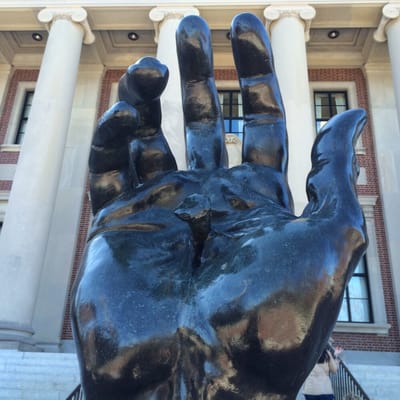
You climb that Worcester hill, and before the Gothic spires, before the manicured quad, something stops you cold: Enzo Plazzotta’s bronze hand—68 inches of oxidized metal thrust skyward like a prophet’s warning or a drowning man’s last reach. It’s called The Hand of Christ, but it reads like accusation. That’s Holy Cross in miniature: beauty on the surface, uncomfortable truths murmuring underneath.
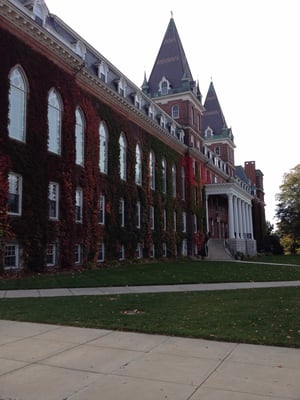
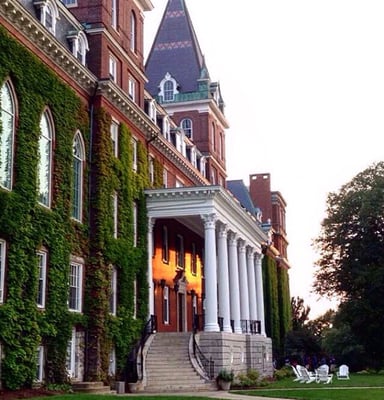
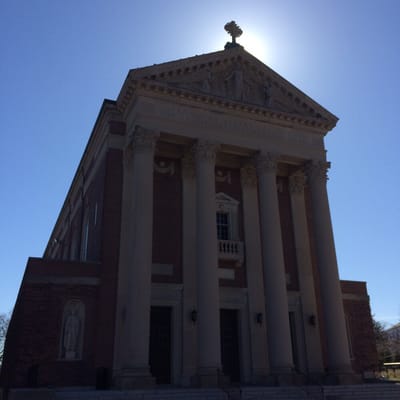
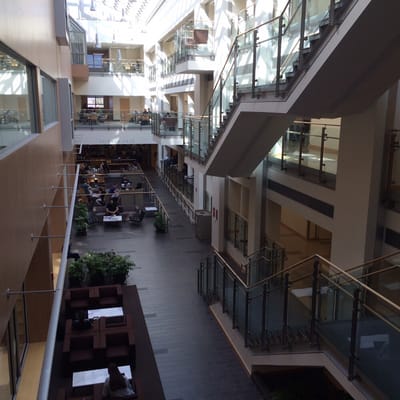
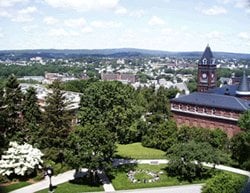
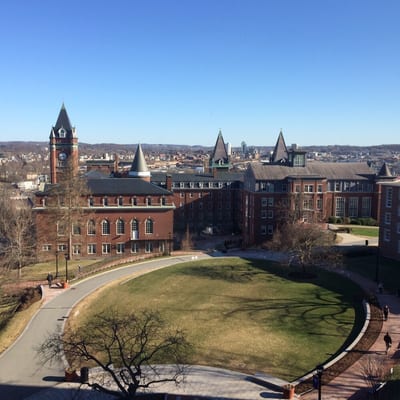
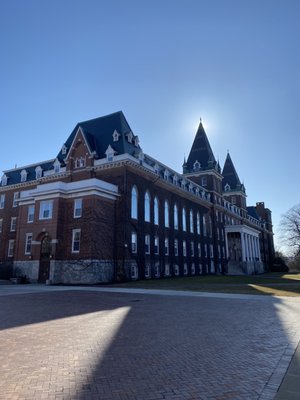
The campus dazzles. Mount Saint James earned its nickname—The Hill—through topography that doubles as metaphor: you are always climbing, always reminded of hierarchy, always breathless. The 175-acre arboretum sprawls across dramatic elevation changes. Fenwick Hall’s twin spires (added 1868–1875) puncture the sky with Gothic ambition. Eleven Rodins live here. The architecture shouts permanence, prestige, and a very specific strain of American Catholic aspiration.
But here’s what else they own: a founding story steeped in the economics of enslavement. Thomas Mulledy, Georgetown’s former president, became Holy Cross’s first president in 1843—fresh off being censured for selling 272 enslaved human beings. When fire gutted Fenwick Hall in 1852, the largest rebuilding gift came from Patrick Healy, using $2,300 from his father’s estate—money earned by selling 51 enslaved people. Patrick and his brother James (the school’s first valedictorian) were themselves legally enslaved but passed as white their entire lives—an American arrangement of terror and silence that this institution both enabled and depended upon.
You cannot separate the spires from the ledger. You cannot admire those Rodins without asking who paid—and how.
Today, the college is aggressively selective—21% acceptance rate, down from 43% in 2022—more applicants competing to inherit this gorgeous, compromised space. Controversies swirl like weather fronts: a $25 million donor suing over broken promises, the student newspaper abandoning “Crusader” because it shared a name with a KKK publication, a dispute with the local bishop over Pride flags. In 2019, they ended need-blind admissions. The wealthy climb easier now.
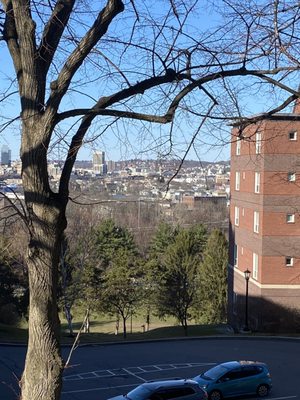
What does it mean to visit? It means confronting American Catholicism’s glittering façade and bloody foundations at once. It means understanding that elite education has always been about who gets to forget and who is forced to remember. From the hilltop, Worcester spreads below—panoramic, possessive, perfect for an institution that spent its first decade debating whether proceeds from enslaved children’s sale were acceptable fundraising.
Go see it. The hand reaches up, the spires reach up—everything here strains toward heaven while rooted in earth that remembers everything. That tension is the American story, and Holy Cross tells it with startling clarity if you look past the purple banners and polished bronze.
The art is world-class. The view is breathtaking. The history is what it is: ours.