Michael S.
Yelp
If someone had told me a year ago that I'd spend 2 hours and 15 minutes on a cold November morning willingly learning about mushroom identification and foraging, I would have laughed... and yet here we are. This experience with Forage Seattle (booked through Airbnb Experiences) was the perfect blend of education and exploration, and our guide Vassilissa made what could have been a dry lecture into a genuinely engaging forest adventure.
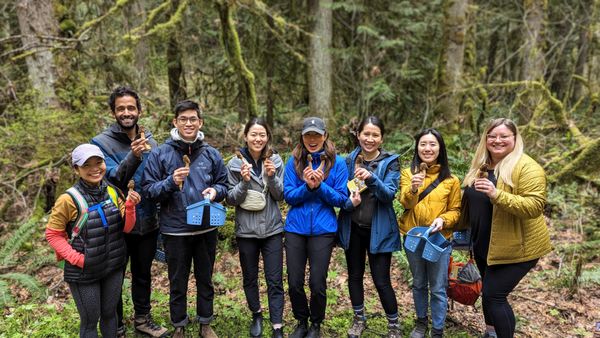
We arrived promptly at 9:30am on November 9th at Bridle Trails State Park (you'll need a Discover Pass to park, which costs $45 annually). The Google Maps pin was accurate, and the only minor hiccup was that the portable restroom was being serviced that morning - so plan accordingly. Our group of seven joined four other participants, making it an intimate 11-person experience that still felt personal and interactive.
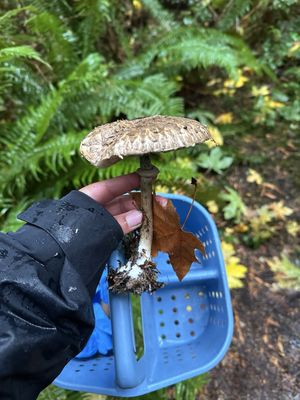
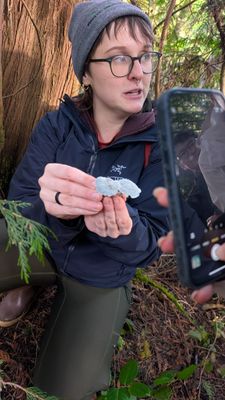
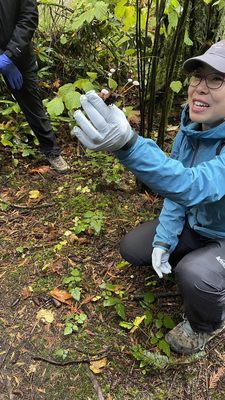
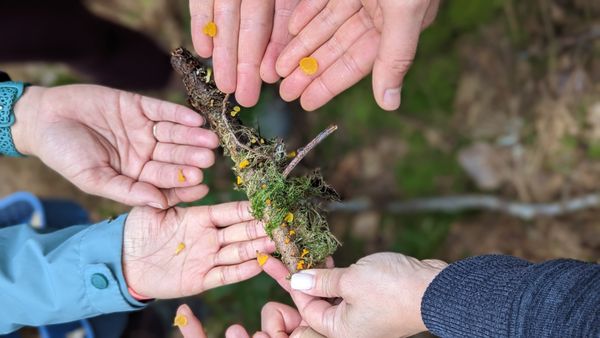
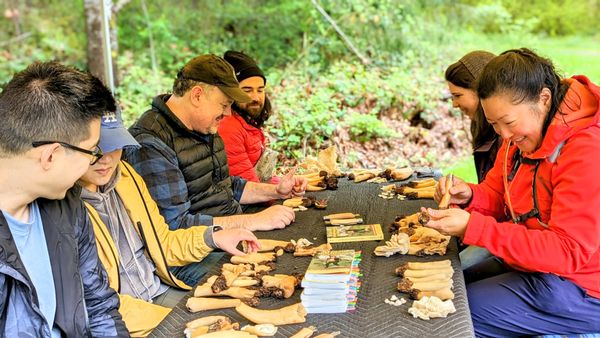
What struck me immediately was how knowledgeable Vassilissa was - until she casually mentioned (at the very end!) that she was relatively new to guiding, we would have NEVER known. She demonstrated her expertise through every identification, every answer to our random questions, and every teaching moment when we stumbled upon something unexpected.We spent the first hour at the picnic tables. The setup was beautiful - black tablecloths, mushroom identification guides, jars of foraged specimens, and all the tools we'd need spread before us. She walked us through essential safety tips (the most memorable being "when in doubt, throw it out"). We learned about the seasonality of mushrooms in the Pacific Northwest (you can forage 10 months out of the year!), how to identify a mushroom by examining the cap, stem, and gills/pores, and how to use the specialized foraging knife with its curved brush. She explained each tool: the perforated basket (to redistribute spores as you walk), the UV flashlight (which she demonstrated on fluorescent mushrooms - SO cool), the lighter (for the maple syrup smell on candy cap mushrooms), and the identification guide.One of my favourite revelations? The mushroom emoji is actually a poisonous mushroom (Amanita muscaria). Who knew?!
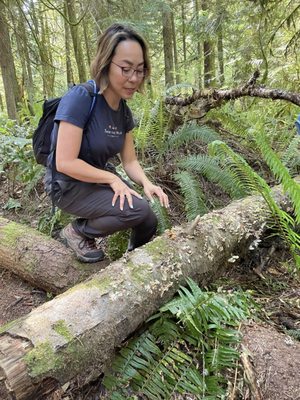
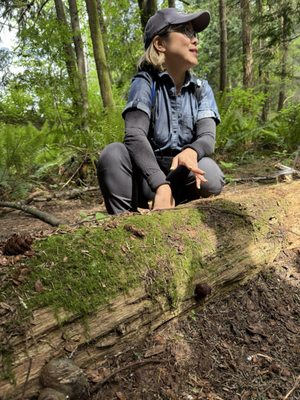
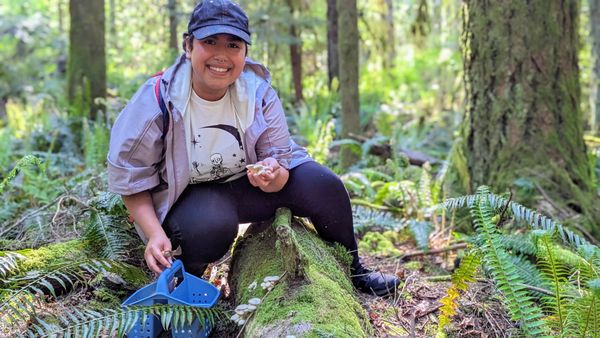
After our classroom session, we crossed into Bridle Trails State Park's forested trails. Vassilissa explained what to look for when hunting edible mushrooms: ideal conditions, the importance of "duff" (that thick layer of decomposing organic matter on the forest floor), and how to identify both edible and inedible specimens. We got INCREDIBLY lucky with the weather - a dry, sunny fall day that was cold but not uncomfortably chilly. Fun fact: if the forest is more than 50 percent red cedar, you won't find edible mushrooms!
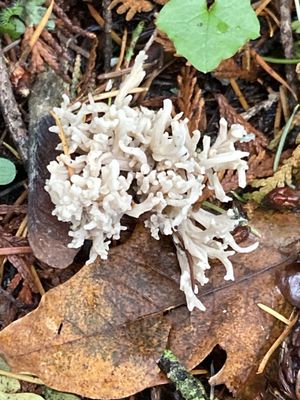
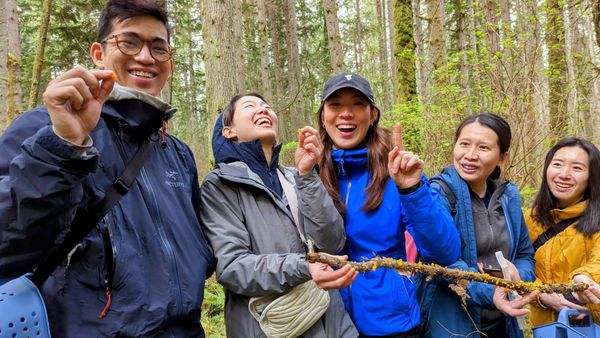
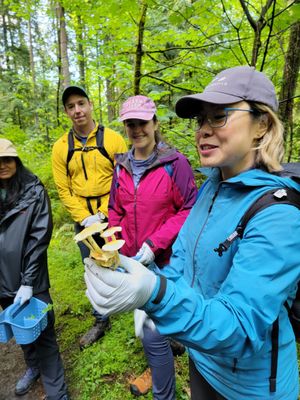
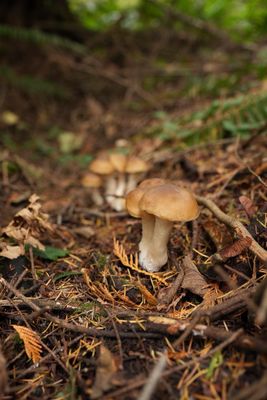
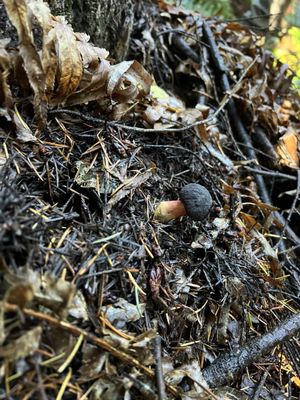
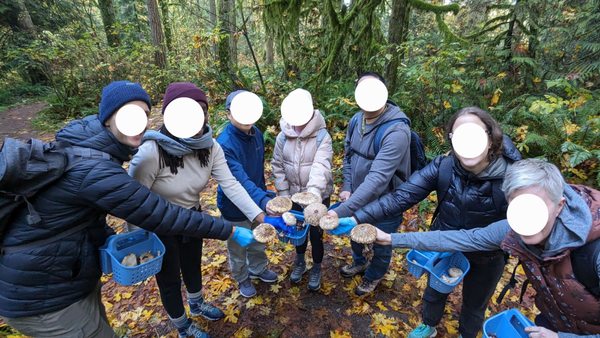
We primarily hunted for chanterelles but also found Zellers bolete mushrooms along the trail. While our collective bounty wasn't massive (each person walked away with a handful), the process of learning to spot them was incredibly satisfying. Every time someone found a mushroom, Vassilissa would get visibly excited and turn it into a teaching moment - examining characteristics, explaining what made it identifiable, and sharing fascinating facts.
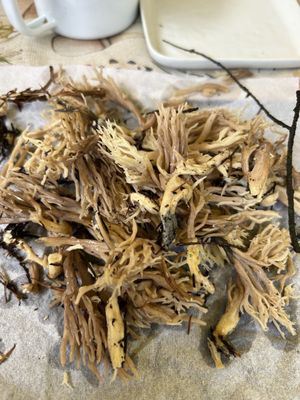
One memorable moment was when Vassilissa offered us homemade reishi tea that she'd brewed from mushrooms she personally foraged. The earthy, slightly bitter taste was fascinating (and apparently packed with immune-boosting properties).Beyond the practical skills, I learned genuinely surprising things. Did you know that ANY dog can be trained to be a truffle dog (chihuahuas and Burmese mountain dogs were examples)? Vassilissa's approach meant we could ask random questions and she'd thoughtfully explain her perspective (she's a self-proclaimed plucker!).
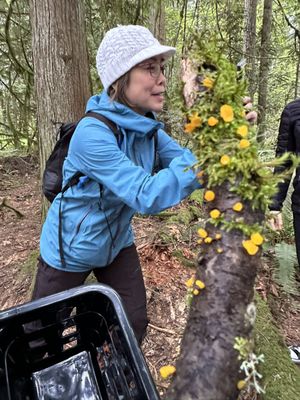
The experience felt less like an educational lecture and more like a fun field trip with an enthusiastic friend who happens to know EVERYTHING about fungi. That's the magic of good teaching - you don't even realize how much you're absorbing because you're genuinely engaged.
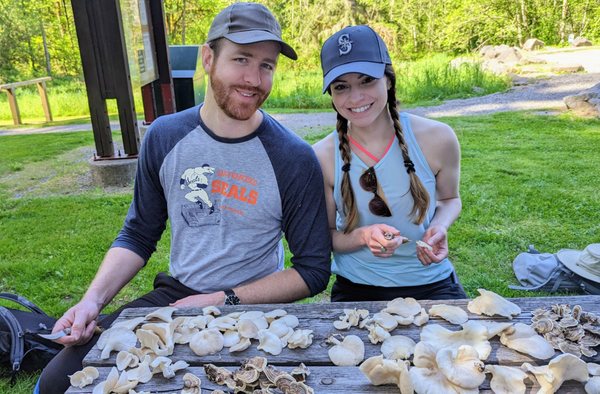
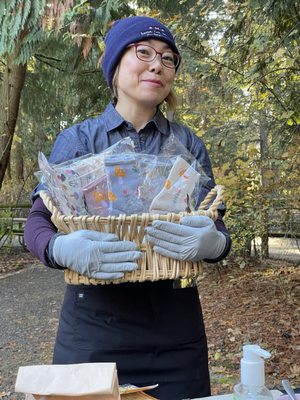
After foraging, we headed back where Vassilissa shared information about group trips, foraging permit requirements, and the best PNW spots (Mount Rainier but NOT the North Cascades!). She demonstrated how to properly clean mushrooms. As a parting gift, we each received a goody bag of cultivated King Oyster mushrooms grown in Seattle. There was also an opportunity to purchase the Opinel foraging knife or the tabbed identification book.
We were complete beginners, and Vassilissa met us exactly where we were with patience and enthusiasm. If you've ever been curious about mushroom foraging, or you're looking for a unique outdoor activity that combines education with gentle adventure, Forage Seattle delivers in every possible way. Just bring your curiosity (and maybe use the restroom before you arrive).