A J B.
Google
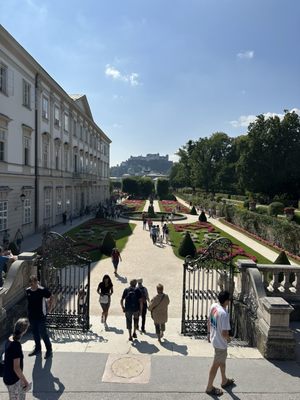
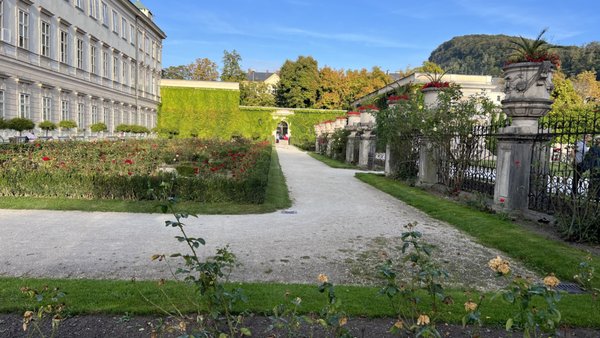
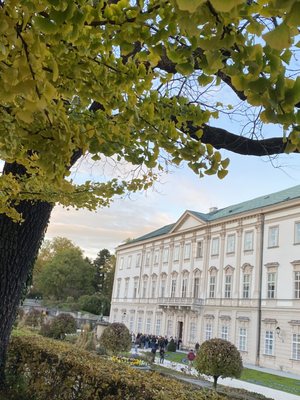
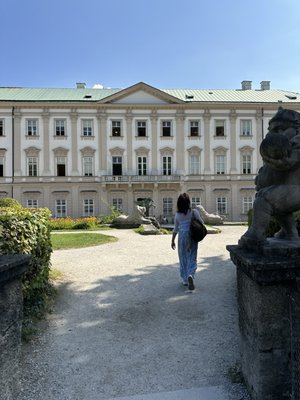
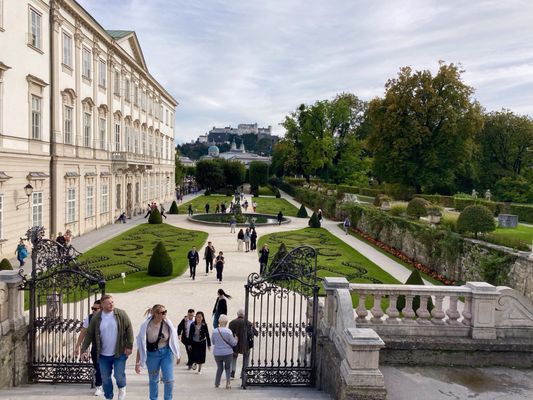
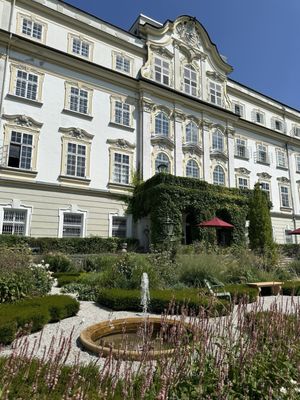
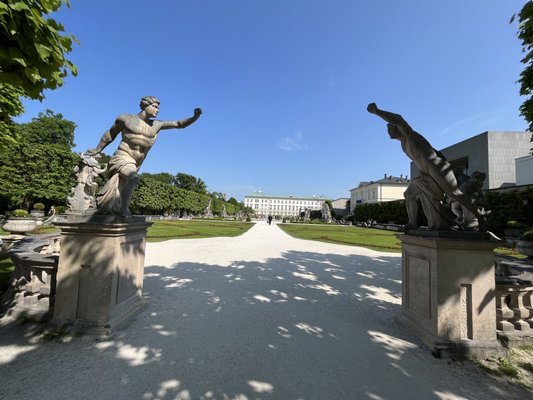
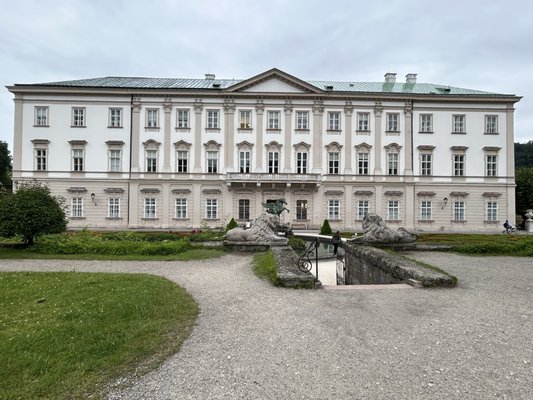
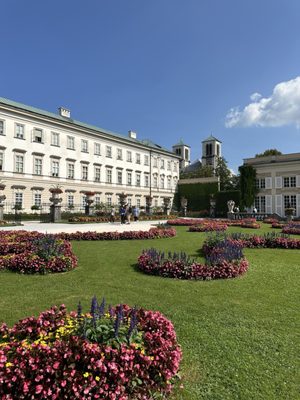
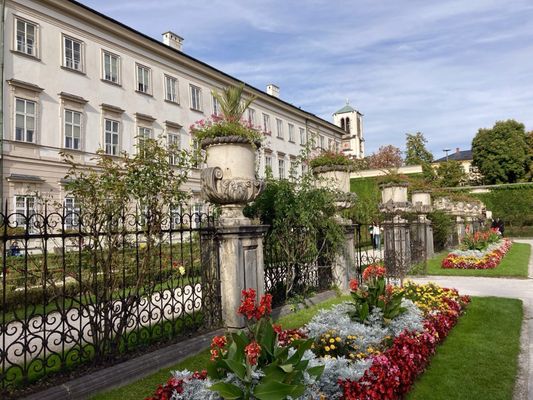
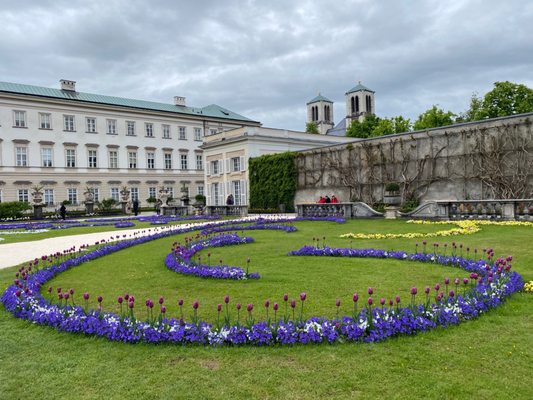
Mirabellgarden, located at Mirabellplatz 3 in the heart of Salzburg, Austria, is one of the most enchanting Baroque gardens in Europe and an integral part of the city’s UNESCO World Heritage landscape.
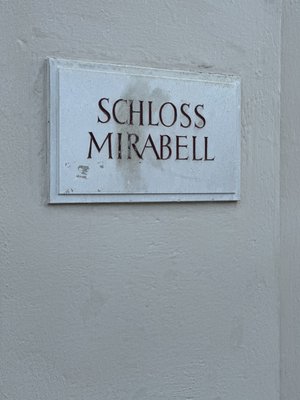
It forms the lush, symmetrical setting before Mirabell Palace, originally built in 1606 by Prince-Archbishop Wolf Dietrich von Raitenau as a residence for his beloved Salome Alt. He named it Schloss Altenau, but after his downfall, his successor, Archbishop Markus Sittikus, renamed it “Mirabell”, combining the Italian words *mirabile* and *bella* to mean “wonderful” and “beautiful.”
The gardens gained their current form in the early 18th century through the elaborate Baroque vision of Johann Bernhard Fischer von Erlach, one of Austria’s most celebrated architects of that era.
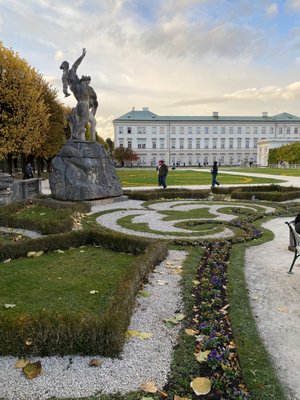
In its center stands a magnificent fountain encircled by statues sculpted by Ottavio Mosto in 1690, each representing one of the four elements, earth, air, fire, and water.
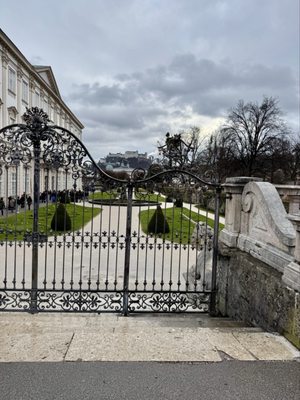
To the south of the Parterre, the eye is naturally drawn along an axis that perfectly aligns with the mighty Hohensalzburg Fortress rising in the background, creating one of Salzburg’s most iconic photographic compositions. The gardens exude a sense of theatricality and precision, capturing the ornate aesthetics that defined the Austrian Baroque period.
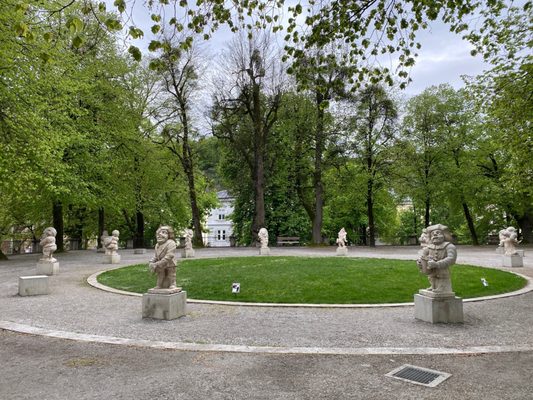
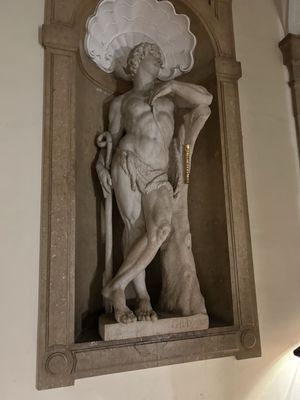
The Dwarf Garden, situated slightly apart on an old bastion, introduces a whimsical contrast. Here, twenty-eight marble dwarfs, each carved with peculiar, exaggerated expressions from Untersberg marble, stand as some of Europe’s oldest garden sculptures of their kind, believed to depict real members of the archbishop’s court.
Nearby, the Rose Garden offers a tranquil array of fragrant blooms, while the Hedge Theater, designed for open-air performances, evokes the leisurely entertainments of Salzburg’s aristocratic past.
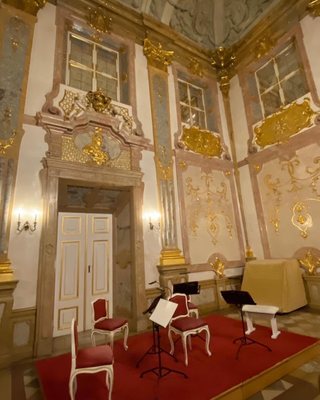
The palace itself, now largely used for municipal administration, holds within it the illustrious Marble Hall, renowned as one of the most romantic wedding venues in the world.
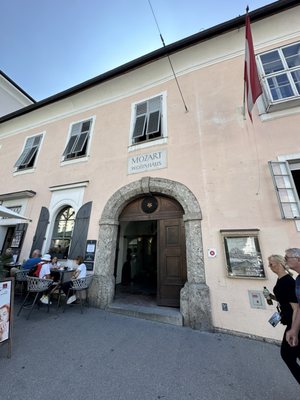
Mozart once performed there with his father and sister, filling the chamber with music that still finds echoes in modern-day concerts held beneath its glittering frescoes and marble columns. Its elegant Angel Staircase, sculpted by Georg Raphael Donner, remains a masterpiece of artistry, guarded by cherubic figures that seem to guide visitors upward through history and splendor.
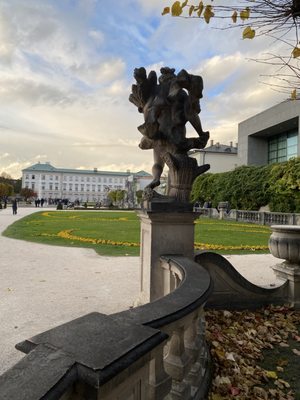
Having been opened to the public in 1854 by Emperor Franz Joseph, the gardens stands as a symbol of Salzburg’s cultural refinement and artistic continuity, a Baroque jewel that gracefully links history and romance. It is a place where architecture, sculpture, and landscape come together in harmonious dialogue, where every path leads the imagination between myth and memory.
Whether visited in the golden light of early morning or under the soft glow of evening, Mirabellgarden remains a poetic sanctuary at the heart of the city, its beauty timeless and its atmosphere profoundly inspiring.