Robert G.
Yelp
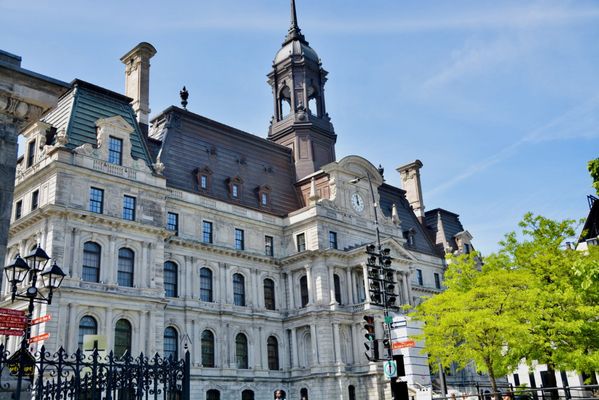
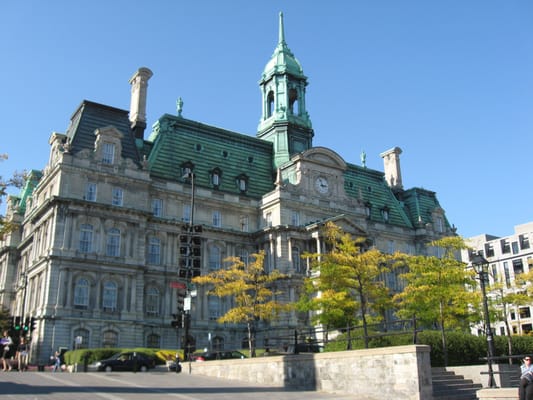
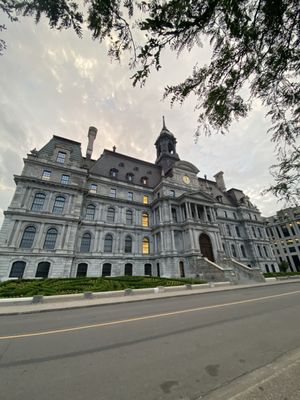
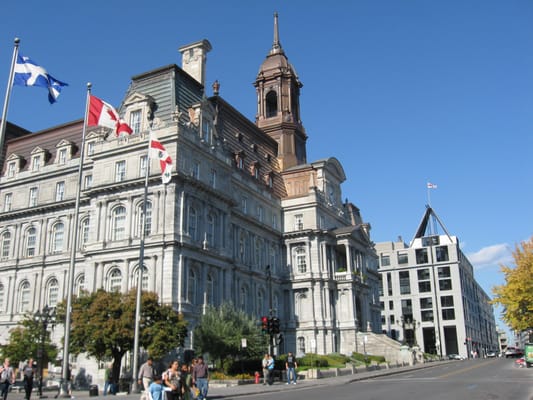
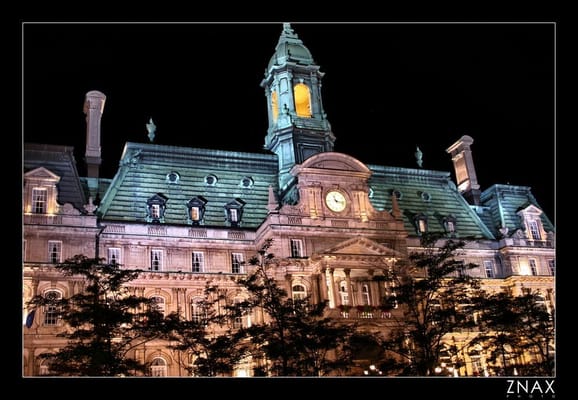
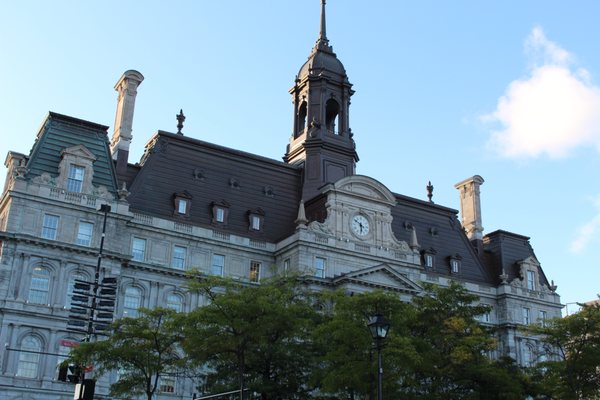
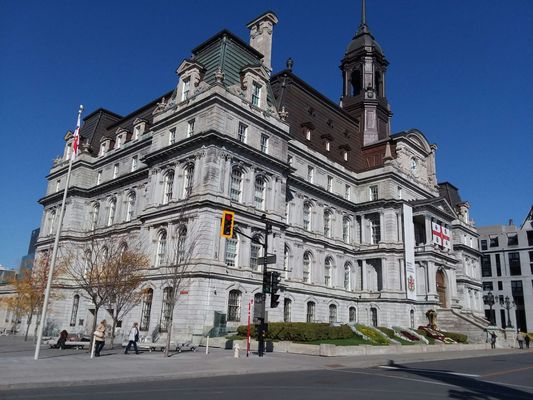
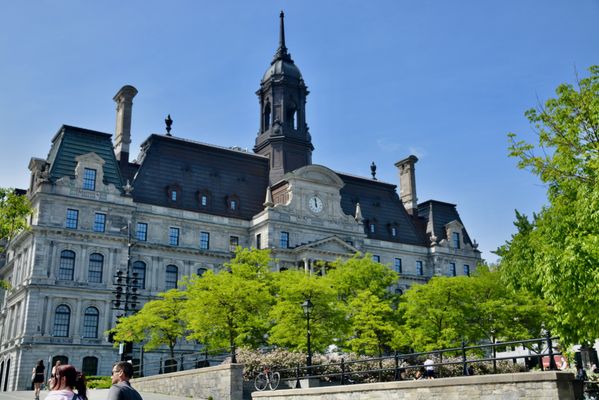
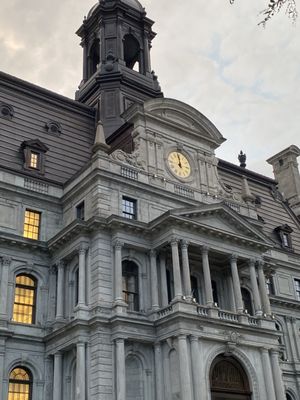
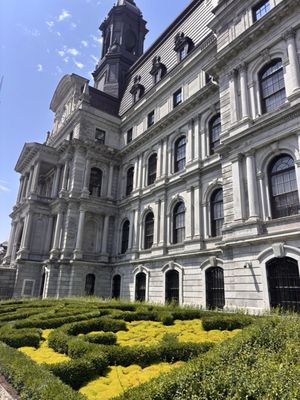
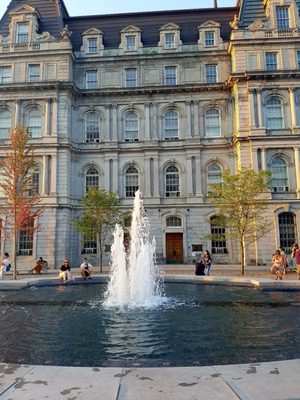
So you're walking through the streets of Old Montreal and the buildings and the general aura of the place captivate you. That's to be expected. But there is one building which is a little more propped up, more lavishly detailed, and evokes more of an air of importance which you can't help but notice. That building is Montreal's Hotel-de-Ville, or city hall in French.
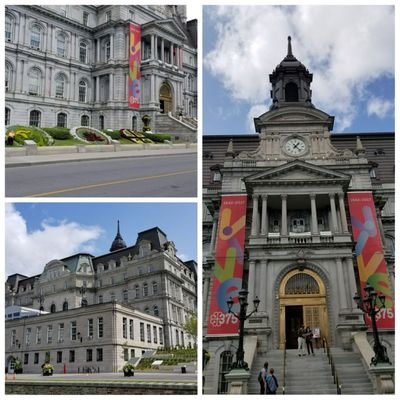
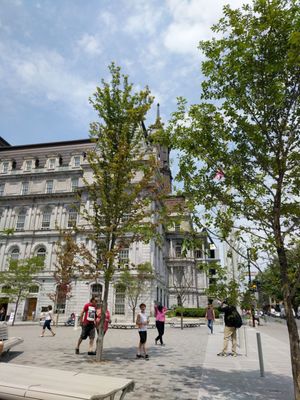
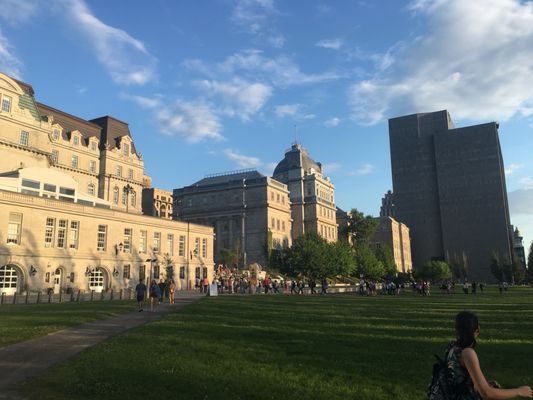
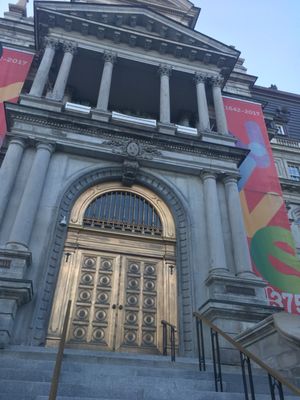
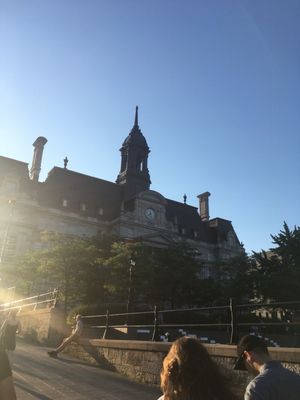
As is the case with some cities, city halls tend to be icons and featured on postcards and in tour books. Such is definitely the case with Montreal's Hotel-de-Ville of the late 19th century. It's style is eclectic and probably fuses French Second Empire (think mansards and the Bates Motel in the movie "Psycho"), neoclassical, and Baroque, but I'm not sure. All I know is that locals and tourists alike love it ... as a building. Its front and its sides are beautiful and that's what you see if walking along Rue Notre-Dame or if walking up Place Jacques-Cartier. Place Jacques-Cartier is not axially aligned to the front of city hall, but is immediately to the west of it, and begins its gradual ascent at the Vieux Port, or Old Port. However, with a park in front, Hotel-de-Ville can be viewed diagonally through the trees from some nicer eateries and watering holes toward the top end of Place Jacques-Cartier. Hotel-de-Ville's hind side is sadly not as attractive and, with the city's growth from the 19th century to the 21st century, that's what you see if on the Autoroute Ville-Marie (the 720) and from most of Centre-Ville. I guess those who designed and built it didn't plan on Montreal having over 1,000,000 residents from all over the world at some point in the future.
Not being a local, I can't comment on local politics, but some colorful and less than respectable mayors have presided over Montreal from this fine edifice through its existence. However, one of the more interesting mayors was spendthrift Jean-Drapeau, who was responsible for pushing ahead projects like the Metro, Expo 67, and the summer Olympics, along with the construction of the Olympic Village. When Quebec politics were on shakier ground and Montreal's status as Canada's most important city was seemingly going to Toronto, and which it did, Drapeau shrugged it off with the unforgettable comment, "Let Toronto become Milan, Montreal will always be Rome." When I first read that, I about fell off my chair.
So, why am I giving this historic and famous building I really like only 4 stars? First, as already mentioned, its hind side is sort of weak. Then, it needs to be compared to other great city halls. In Canada, it's their most impressive. That of Toronto, which is also an icon, will catch your attention but won't inspire you to study it. Not only that, mayor Rob Ford works there. As for Vancouver, their city hall is a forgettable and banal art deco block that could be mistaken for being a building for a lot of nondescript purposes. As for the U.S., not many city halls register with people, either, and I don't even recall what New York's and Chicago's look like. However, the U.S.'s city halls which are veritable icons and havens for photographers are those of Philadelphia, Los Angeles, San Francisco, and Boston, the latter of which is from the '70s, is modern, and has a great plaza next to it. Of these, though, Philadelphia's takes the cake and, interestingly enough, is crafted in roughly the same style as that of Montreal. The big difference is its height, the way it can be viewed down Benjamin Franklin Parkway from Philadelphia's art museum, and, of course, the statue of William Penn atop its clock tower. So, with all due respect to Philadelphia's famed city hall, I will give Montreal's Hotel-de-Ville 4 stars.
Also, since late mayor Jean-Drapeau would have seemingly wanted that all roads lead to "Rome" in perpetuity, I'll trust your hound dog-like sleuthing abilities to lead you to Hotel-de-Ville when you visit Montreal.