ARC
Google
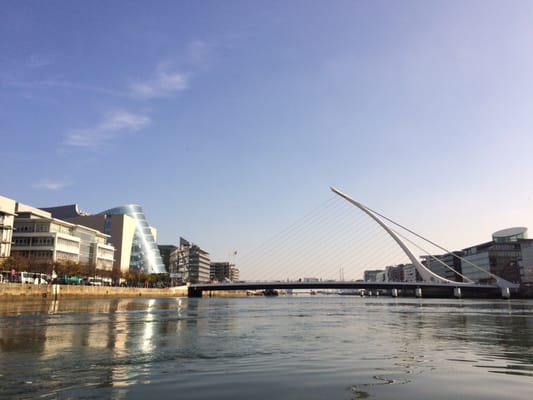
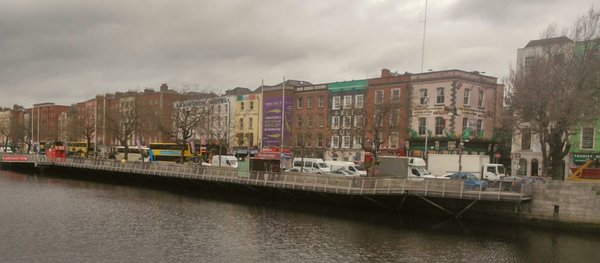
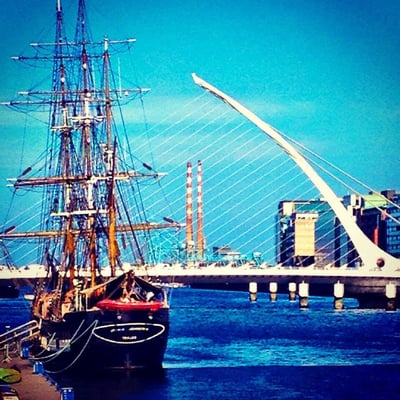
It is not supposed to be possible to walk the full length of the river Liffey - to do that you would be "off road" through bog and wetlands for a lot of the journey - the challenge is not for the faint hearted. However, proud to report that my son Marc finished his walk from the Liffey Head Bog to Poolbeg Lighthouse today, the 27th December 2023. Gwan Marc.
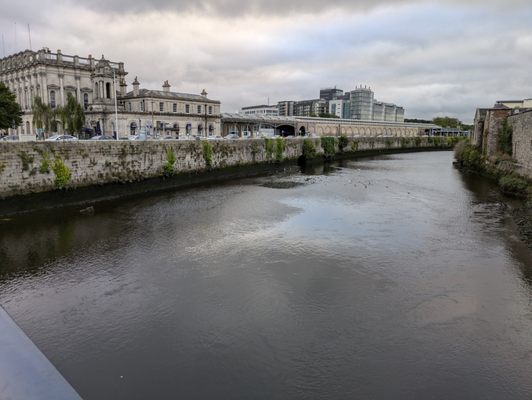
The Liffey rises in the Liffey Head Bog between the mountains of Kippure 742 metres (2,434 ft) and Tonduff 642 metres (2,106 ft) in the northern section of the Wicklow Mountains, forming from many streamlets near the Sally Gap. The underlying geology of this upland area has an impact on the river. The underlying granite bedrock was formed during the Devonian Period between 415 and 360 million years ago. There there are dams at three locations along the river - hydroelectric power stations (Poulaphouca, Golden Falls and Leixlip). There is one waterfall called Pol-a-Phuca or the Daemon's Hole, is about one mile from the village of Ballymore Eustace - in rainy seasons, when the river is much swollen, the fall is calculated at 150 feet in height. Leixlip, Lucan, Celbridge, Athgarvan and Ballymore Eustace are some towns in Ireland passed by River Liffley because it ends in Dublin. The Liffley has a number of tributaries, which include River Camac, River Poddle, River Dodder, and King’s River. Drinking water accounts for circa 60% of the water flow on the river (no Guinness was not created by usingthe water from the Liffey - although the brewery is located on the river).
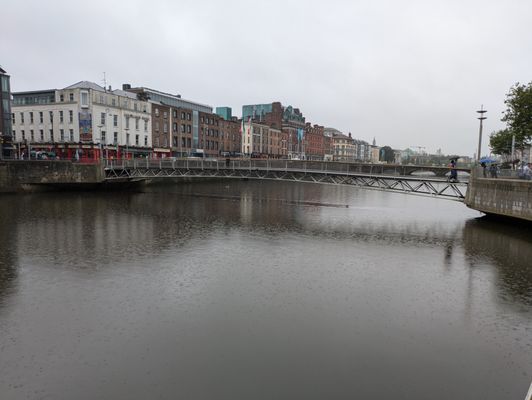
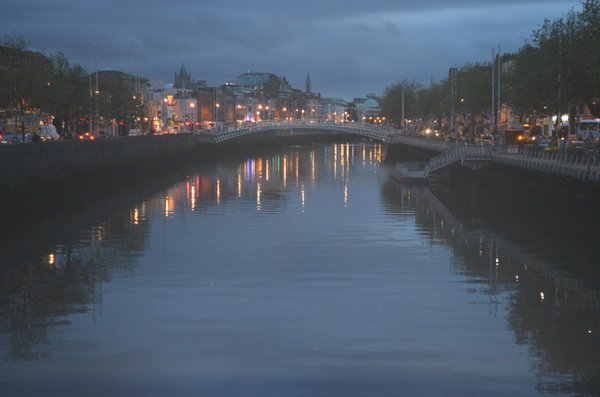
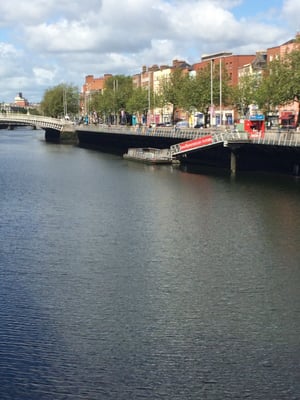
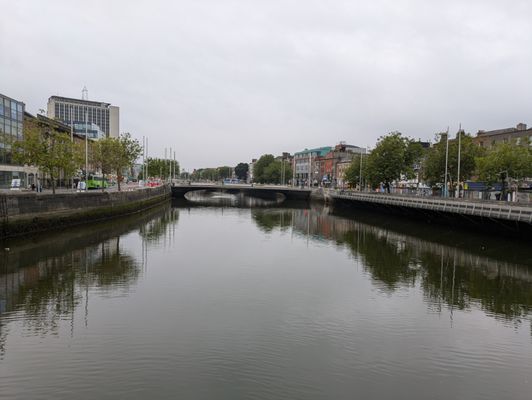
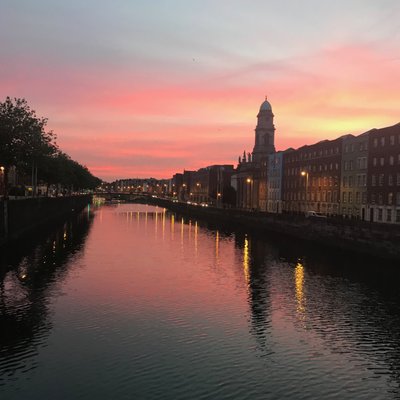
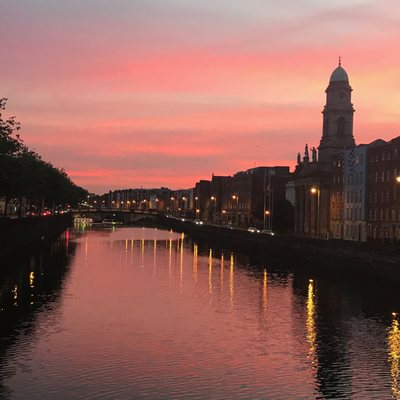
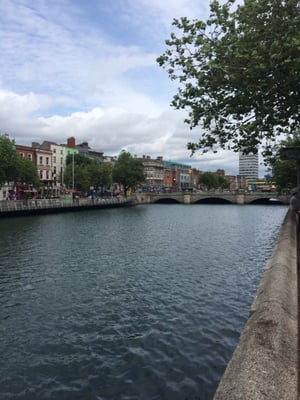
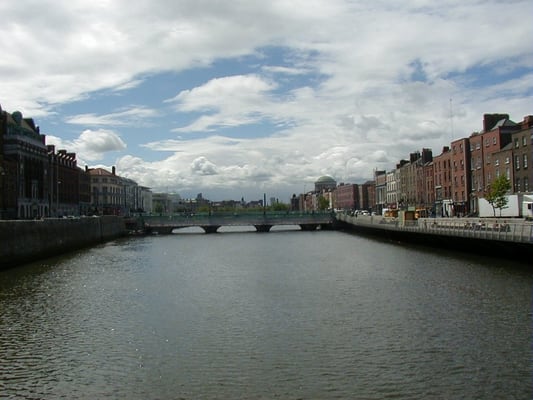
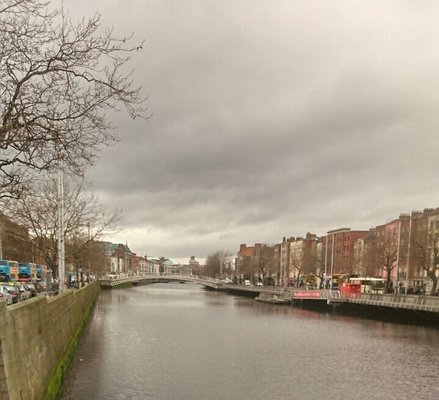
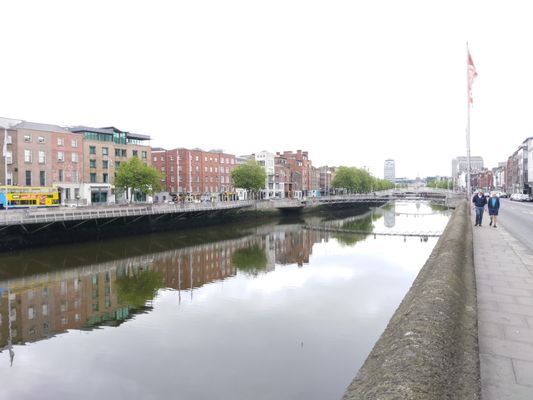
The river flows for 132 km through Wicklow, Kildare and Dublin before entering the Irish Sea in Dublin Bay - best way to see it out to sea is at the Poolbeg Lighthouse.
Who named this ancient river? The Liffey, Abhainn Life, Avenlif and Joyce's Anna Livia Plurabelle - all these names most likely derive from Magh Life, the rich plain or Magh of County Kildare through which the Liffey loops and curls on her way to the sea.